
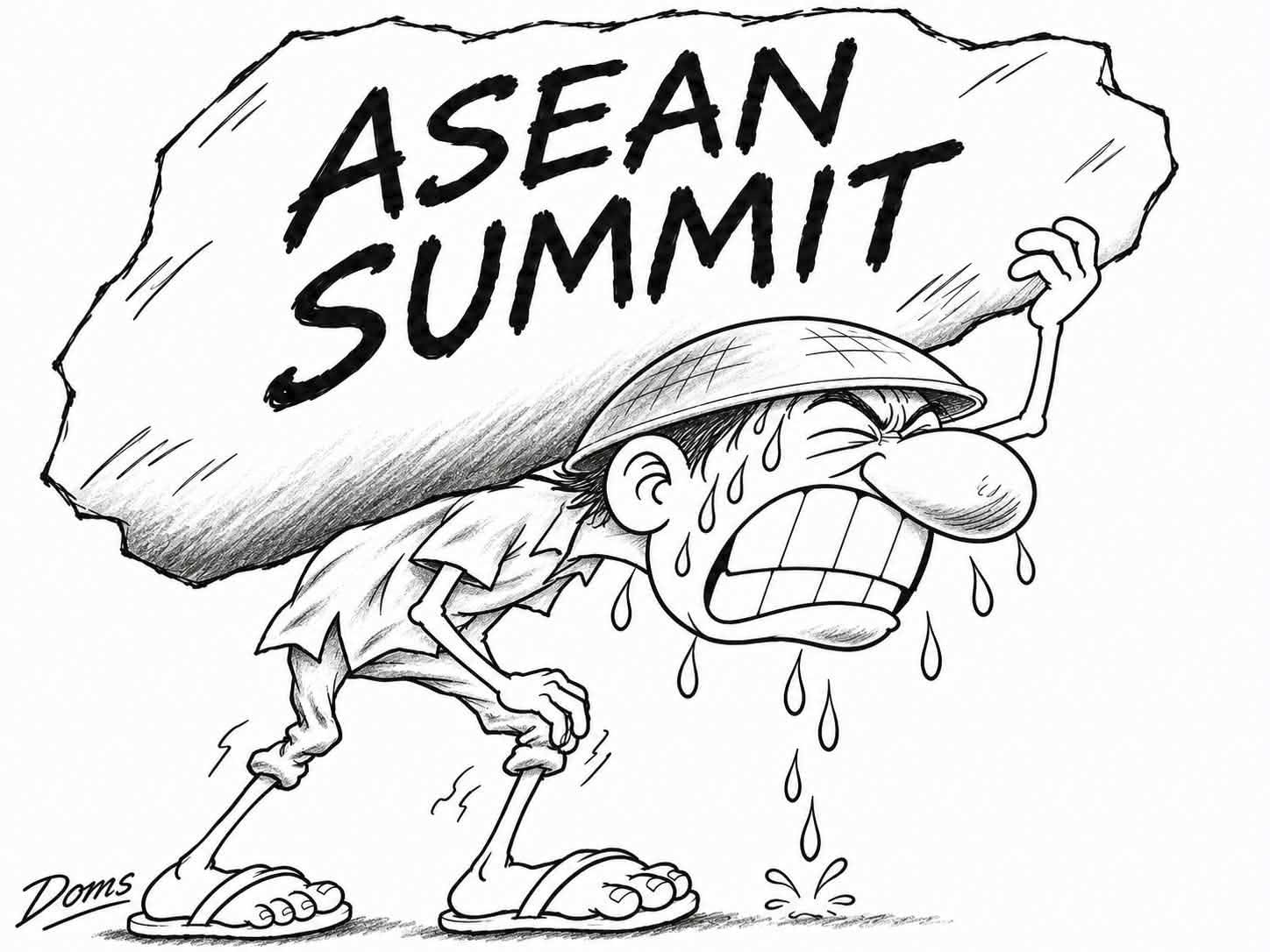
The Philippines risks falling short of the benefits it sought as ASEAN chair and summit host. That prospect deserves serious scrutiny, now and right after the hosted event. The government must answer for the gains it can deliver to Filipinos.
The clearest shortfall is in the South China Sea. Foreign Affairs Secretary Ma. Theresa Lazaro reported that ASEAN and China had provisionally agreed on about 80 percent of the draft Code of Conduct, but whether the code would be legally binding remained unsettled. For Filipino fishers repeatedly exposed to danger at sea, that unresolved question matters more than the percentage of text agreed upon. The Philippines should use the handover to Singapore to keep negotiations focused on clear rules against dangerous conduct and a workable procedure for reporting and addressing incidents.
The economic record gives the country more reason for guarded optimism. The signing of the ASEAN Digital Economy Framework Agreement creates an opening for Filipino businesses to reach customers across Southeast Asia. But a small producer in Leyte can take an order online and still lose the sale if shipping costs more than the product or if accepting payment from abroad is too difficult. The Department of Trade and Industry should make the agreement usable by helping provincial businesses understand cross-border requirements, accept payments, and find affordable ways to ship their goods. Otherwise, much of the opportunity will go to firms already equipped to sell abroad.
The government also identified migrant worker protection as a direct benefit of hosting. The practical test is what happens when a Filipino worker in another ASEAN country reports unpaid wages, passport confiscation, or abuse. Philippine labor officials should use the commitments made under the chairship to secure clear referral procedures with their counterparts, including who receives complaints and how quickly urgent cases must be acted upon. A worker who needs help should be able to reach an office with the authority to act.
After the summit, Malacañang should publish a public accounting of the commitments secured, the goals still outstanding, and the Philippine agencies responsible for carrying the work forward. Each agency should give a deadline for its next action and report what it delivered. The Philippines’ turn at the head of ASEAN’s table is brief. The work it undertook there must continue after the chair passes to Singapore.