TACLOBAN CITY – The remnants of the New People’s Army (NPA) in Samar Island now are classified as roving bandits with no single village official supporting their ideology, an Army official said Wednesday.
Maj. Gen. Camilo Ligayo, commander of the Philippine Army’s 8th Infantry Division told reporters that the remaining NPA rebels are jittery with the continued deaths, capture, and surrender of their leaders.
“The remaining 180 active regular NPA members are now roving bandits with the dismantling of two guerilla fronts and weakening of two others. They refuse to surrender since they are facing criminal charges,” Ligayo said in an interview Wednesday.
The official is confident in eradicating insurgents in three Samar provinces before the end of the year.
There are about 10 army battalions assigned in Samar province as the government heightened its fight against communist insurgents.
Only two NPA guerilla fronts in Samar Island remain in existence after the dismantling of one front and the weakening of another early this year.
But these fronts are already weakened with the surrender of mass supporters in communities.
Ligayo said the rebel’s Front Committee 2 that operated at the border of Samar and Northern Samar has been demolished after the capture and surrender of some of their combatants and recovery of firearms.
He said the NPA Front Committee 3, which operated near the borders of Northern and Eastern Samar, has been dismantled after a series of operations by government forces. (PNA)
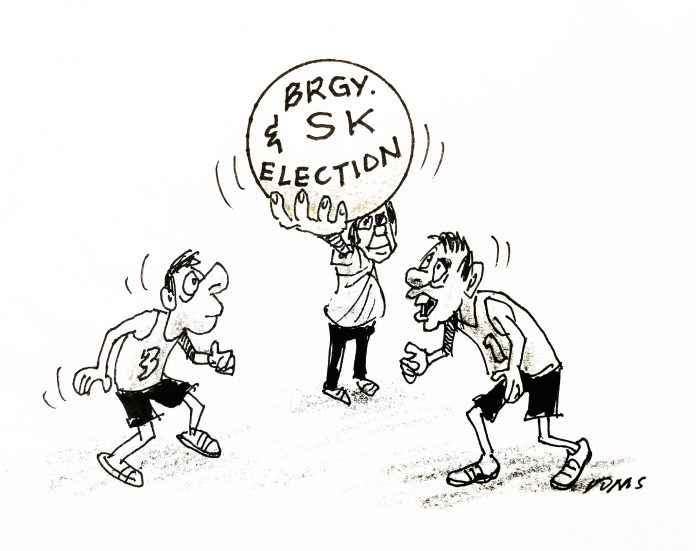
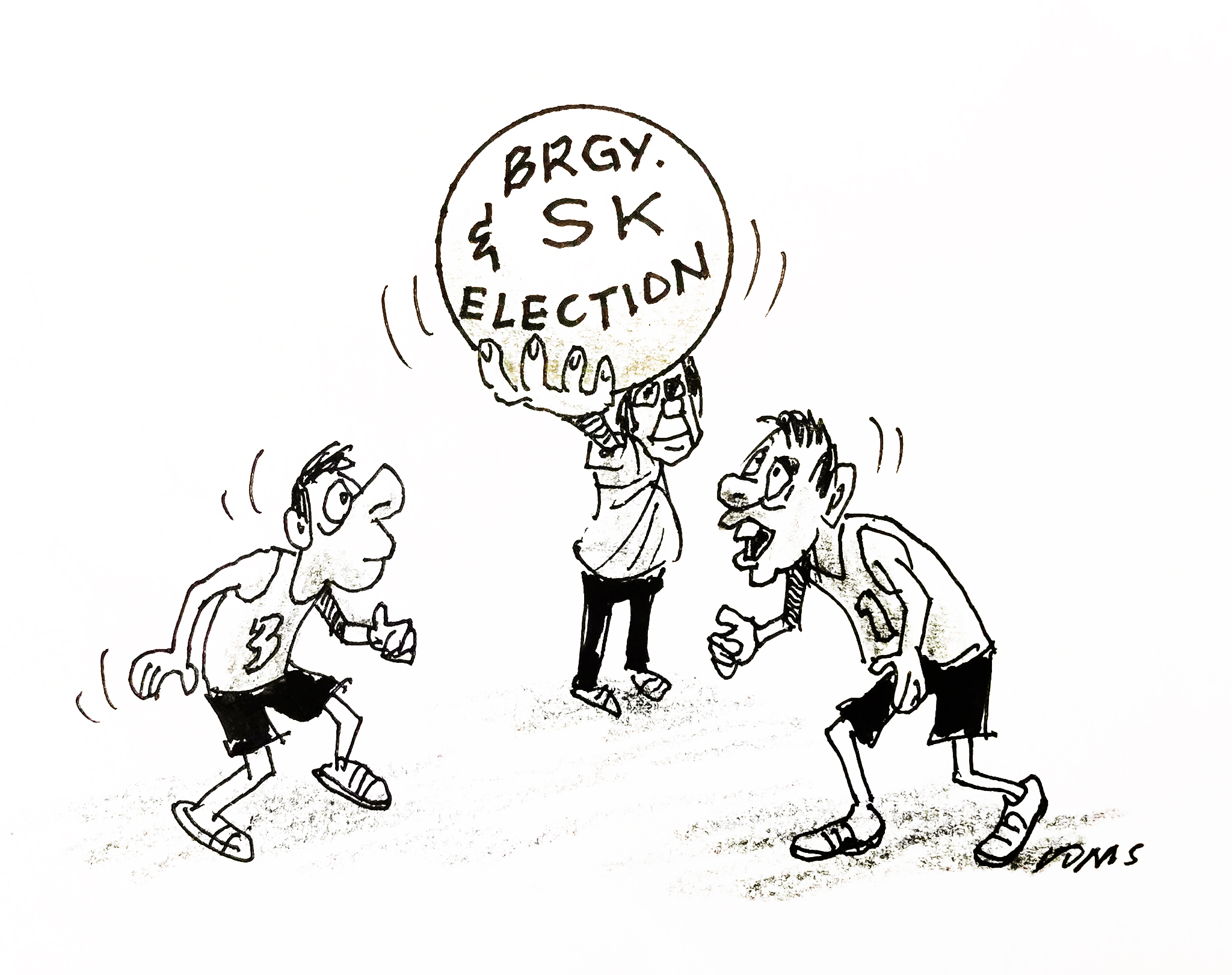
As the barangay election in the country approaches, we can all the more see how significant it is to local governance, and how it impacts local communities. It is because it serves as the foundation of the country’s political system, allowing citizens to elect officials who could lead and represent their respective communities.
It can be recalled that the Commission on Elections (COMELEC) has previously postponed the barangay election due to concerns over the COVID-19 pandemic. This decision emphasizes the government’s commitment to ensuring public safety and minimizing the risk of infections through mass gatherings. But that decision was politically criticized, and politicians feared the spread of the virus during campaign rallies and voting activities could potentially cause reputational damage for their candidacy.
That postponement of the barangay election has generated mixed reactions among constituents. Supporters argued that rescheduling the election would provide ample time to intensify efforts in voter education and ensure a more informed electorate. Critics, however, asserted that this decision further delayed the local governance process and deprived communities of the chance to choose leaders who can address immediate concerns and advocate for their respective barangays’ needs.
Somehow, the COMELEC has introduced reforms aimed at promoting fairer electoral processes, such as the implementation of voter registration through biometrics, stricter campaign finance regulations, and the utilization of automated voting systems. These initiatives ensure a more streamlined experience for voters while deterring fraudulent activities and reducing corruption risks.
Keeping up with the updates on the Philippine barangay election is essential as it allows for a deeper understanding of the country’s political landscape and the potential implications for local development. By critically examining these updates, we can contribute to informed discussions and analysis of the continually evolving Filipino political context at the barangay level.
Nowadays, dishonesty has unfortunately become synonymous with politics, with some asserting that it is the most effective strategy in this arena. But the idea that dishonesty is the best policy in politics is fundamentally flawed. True leadership should be based on integrity and transparency, as honesty fosters trust, promotes accountability, and enhances democracy.
Dishonesty in politics contributes to the gradual erosion of public trust. When leaders prioritize their personal agendas over the welfare of their constituents, public trust diminishes, leading to disillusionment and apathy among citizens. Political careers built on deceit are likely to face the consequences of distrust, hindering meaningful dialogue and progress. In contrast, honest politicians connect with the electorate on a deeper level, fostering trust, and inspiring civic engagement.
When politicians engage in dishonest practices, they undermine their responsibility to those they represent. Without accountability, transparency becomes elusive, and the interests of the public are overshadowed by personal gain. Conversely, honest politicians embrace transparency, willingly accept responsibility for their actions, and strive to be held accountable by their constituents.
Dishonesty distorts the decision-making processes in politics, as it is built on a foundation of misinformation and manipulation. When leaders consistently resort to dishonesty, they undermine the quality and efficacy of decision-making, as decisions are based on false or incomplete data. In contrast, honest politicians provide accurate information and engage in fair and open debates, resulting in better-informed decisions that address the needs and aspirations of society.
The acceptance of dishonesty in politics poses a significant threat to democratic institutions. Democracy is rooted in active citizen participation and a system of checks and balances. When dishonesty prevails, these principles crumble, enabling corruption and authoritarianism to take hold. In contrast, honest politicians serve as the guardians of democracy, preserving the integrity of institutions and safeguarding the rights and freedoms of citizens.
Dishonesty in politics exacerbates social divisions and deepens societal distrust. Manipulative tactics and false narratives employed by dishonest politicians exploit pre-existing divisions and foster animosity between different demographic groups. Conversely, honest politicians prioritize unity, inclusivity, and understanding, aiming to bridge gaps and create a cohesive society.
As a political strategy, dishonesty hampers long-term national development. By prioritizing short-term gains and personal interests, dishonest politicians neglect the implementation of sustainable policies that have the potential to improve the lives of citizens. Conversely, honest politicians are driven by a genuine commitment to societal progress, pursuing policies that foster sustainable development and long-term prosperity.
While some argue that dishonesty is the best policy in politics, it is crucial to recognize its detrimental impact on trust, accountability, decision-making, democracy, social cohesion, and national development. True leadership requires honesty as an unwavering guiding principle, as it cultivates trust, strengthens democratic institutions, and fosters progress. By embracing honesty, politicians can restore public confidence, deepen civic engagement, and contribute to the betterment of society as a whole.
The Philippine government, through Land Bank of the Philippines (LBP) and the Philippine Atmospheric Geological and Seismological Administration (PAGASA), will implement a P1.2 billion ($22 million) climate adaptation project, purposely to prepare disaster-prone communities from the adverse impacts of man- and nature caused calamities. More specifically, the twin government agencies plan is to establish an impact-based forecasting (IBF) and an early facility warning system for the calamity prone country (IBF-PH project).
Accordingly, the project is aimed “to enable communities, especially those frequently hit by disasters, to take better pre-emptive measures against natural and other forms of calamities. The same project has received P552.2 million funding grant from the Green Climate Fund (GCF) and another co-financing fund of P662.7 million from PAGASA through the DThe GCF, a creation of the United Nations Framework Convention on Climate Change (UNFCCC) and Paris Agreement of 2015, is an operating agency of the financial mechanism portfolio. Considered the world’s largest multilateral climate funding source, has nearly $11 billion approved fund and a total portfolio of over $40 billion. The Philippines, as signatory to the Paris Agreement, is qualified to avail of the fund for its climate adaptation initiatives.
MY COMMENT:
I am personally happy that the Philippines, a natural calamity-prone country, has vied for the GCF assistance for its climate change-oriented projects. It’s about time that the PBBM administration tap resources for its climate adaptation projects – to paraphrase his recent statement, thus “… either we adapt or we perish…” referring to natural calamities happening in the country.
ooo000ooo
NEXT TOPIC : “DBM has P21.5-Billion calamity fund”
SHARE S & T THOUGHTS through E-mail: drpacjr@yahoo.com
CHRIST describes for us what true fraternity among ourselves should be. It’s in that gospel episode were Christ told his disciples what they should do when one of them would sin against another. (cfr. Mt 18,15-20)
“If your brother sins against you, go and tell him his fault between you and him alone,” he said. “If he listens to you, you have won over your brother. If he does not listen, take one or two others along with you, so that every fact would be established on the testimony of two or three witnesses.”
True fraternity as taught and shown to us by Christ will always be filled with affection, understanding, compassion, patience, etc. It should never be a cold or something like an officious charity. It should always be warm and cordial, despite the inevitable differences and conflicts among ourselves.
But it should never compromise the truth which should also be shown and lived in charity. If need be, to proclaim and defend the truth, we may have to resort to making suggestions and fraternal corrections. But all this should be done without bitter zeal. That is, without charity.
We should see to it we are always mindful and thoughtful of others, learning how to be “all things to all men,” as St. Paul said. (1 Cor 9,19-23) Thus, it pays that we learn the art of listening, empathy, entering into the drama of the lives of others. We have to learn how to be flexible and versatile, resilient in adapting to the different temperaments and personalities of people.
And while we have to be delicate in our dealings with others, we should also cultivate a certain toughness so as to enable us to absorb the unavoidable sacrifices involved in developing true Christian fraternity.
Christian fraternity lives out what St. Paul once suggested. That is, that we should bear one another’s burdens. (cfr. Gal 6,2) In this, we have to learn how to take the initiative, not waiting for things to be forced on us. This may start in very little details like lending a hand in the tasks of others, or visiting and giving a warm accompaniment to a sick person, etc.
Another aspect of Christian fraternity is, again as St. Paul suggested, to regard the others as better than us. “Be humble,” St. Paul said. “Think of the others as better than yourselves. Don’t look out only for your own interests, but take an interest in others, too. You must have the same attitude that Christ Jesus had.” (Phil 2,3-5
We should have the eagerness to serve the others in the spirit shown by Christ himself when he washed the feet of his apostles. (cfr. Jn 13,1-17) We have to go that extent without thinking that we are doing something great or extraordinary. This should be something ordinary to us.
In a world where relations among people are becoming increasingly toxic, we should provide the happy antidote of living out true Christian fraternity. In this, of course, we should expect to do a lot of self-denial and sacrifices, but these are precisely what Christ told us to do if we want to follow him.
Let’s be thoroughly convinced that by developing this spirit of Christian fraternity, we are actually helping ourselves first in our own spiritual lives. And in that way, we become more effective in radiating far and wide this true spirit of fraternity among ourselves.
Failing to fulfill his deceptive campaign promise to bring down the price of rice to twenty pesos per kilo, the doubtful president has exposed his despotic tendency akin by ordering a price cap on the price of rice. The strategy is without a threat as the buying public is instructed to report any violation. Rice traders who are the middlemen raking huge profits by dictating farmgate prices of palay on one hand and dictating high prices of rice on the upper-hand.
The ploy had been successful as rice traders would resort to lending money to farmers during planting season at what appears to be usurious interest rates. With no fund support from government, or due to the intricate and difficult requirements to obtain loans, the quick recourse is to the loan sharks who require not more than a signature on a fine-print contract of adhesion, in some instances with a trust receipt agreement that could be used as basis for a criminal offense once the borrower-farmer fails to settle the loan.
With the directive from the doubtful president to set a price cap at twenty pesos per kilo, rice traders seem against the order and may not be abiding. Aside from the prospect of grossly reducing their usual huge profits, the price cap would affect their buying capacity to acquire voluminous stocks of palay to be sold when rice supply is scare, thereby commanding high prices in the market.
The skewed situation in the country is that rice traders are enjoying high returns on their investments with hapless farmers while the same impoverished farmers and the population living way below the poverty threshold suffer from controlled high rice prices that are hoarded until such time that rice supply is low. With low supply of rice that is often times artificial, causes high demand. Such situation is the convenient basis to set high prices of rice.
The strategy continues all year round as rice traders purposely release their stocks of rice to create an artificial over-supply which is used as basis in buying palay at low prices. The farmer could not refute the dictated low price of palay because the prevailing price of rice in the market is low due to the over-supply. Farmers just don’t have a choice where to sell their palay because they are tied to the loan sharks with their loans during the production season,
This is the sad reality where rice traders need not have farms to acquire rice at low prices. We have yet to hear our industrious farmers who are working in rice fields by their sweat and blood, be able to live decently as rice traders do. Living unfree from the proverbial bondage to the soil remains an endless agony for the hardworking farmer and his family are while rice traders live in luxurious lifestyle. Indeed, the price cap on rice prices is bound to be followed on the breach than in the compliance. comments to alellema@yahoo.com