29.2 C
Tacloban City
September 26, 2026 - Saturday | 10:21 AM
Home Blog Page 892

5 towns in Leyte and Eastern Samar declared as insurgency-free by the military

0

TACLOBAN CITY– At least three towns in Leyte and two municipalities in Eastern Samar were declared by the military to be insurgency-free.

These areas are part of the operations of the 802nd Infantry Brigade which is based in Ormoc City, Leyte whose coverage includes 25 towns and four cities, including the regional center of Tacloban City.

Their operations cover the provinces of Leyte, Southern Leyte, Biliran, Samar, and Eastern Samar.

The declaration, referred to by the military as achieving stable internal peace and security, signifies the absence of rebels and violent activities initiated by the armed groups in these localities.

Declared as insurgency-free on Wednesday (June 12), which coincided with the Philippine Independence Day celebration, were the municipalities of Hilongos, Isabel, and Merida, all in Leyte, and the towns of Sulat and San Julian, both in Eastern Samar.

These areas joined the towns of Bontoc in Southern Leyte; Palompon, Matag-ob, and Hilongos, all in Leyte; and Giporlos in Eastern Samar earlier been declared as insurgency-free by the military.

The mayors of these towns have expressed their gratitude to the Philippine Army of the 802nd IB, which is headed by B/Gen. Noel Vestuir, for the declaration.

With the declaration, not only they have been cleared of the threat or danger from the members of the communist armed group, the New People’s Army, but could now invite investors to their respective areas, they said in separate statements.

Vestuir, for his part, said that the declaration is not just a victory as they continue to battle against the NPA members but more so a strong indication that the villagers are now seeking for peace and stability.

“With the declaration, we send a strong message of unity in our quest to end local communist armed conflict and maintain a peaceful and secure environment for the peace-loving people of these towns,” he said.
(JOEY A. GABIETA)
A difficult journey

0

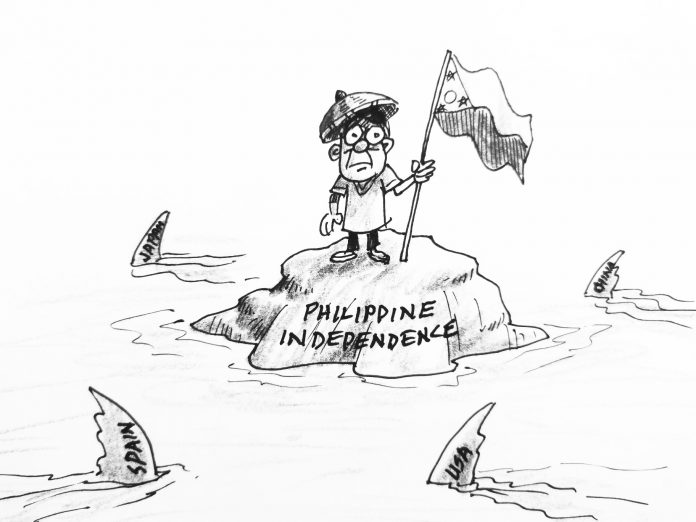
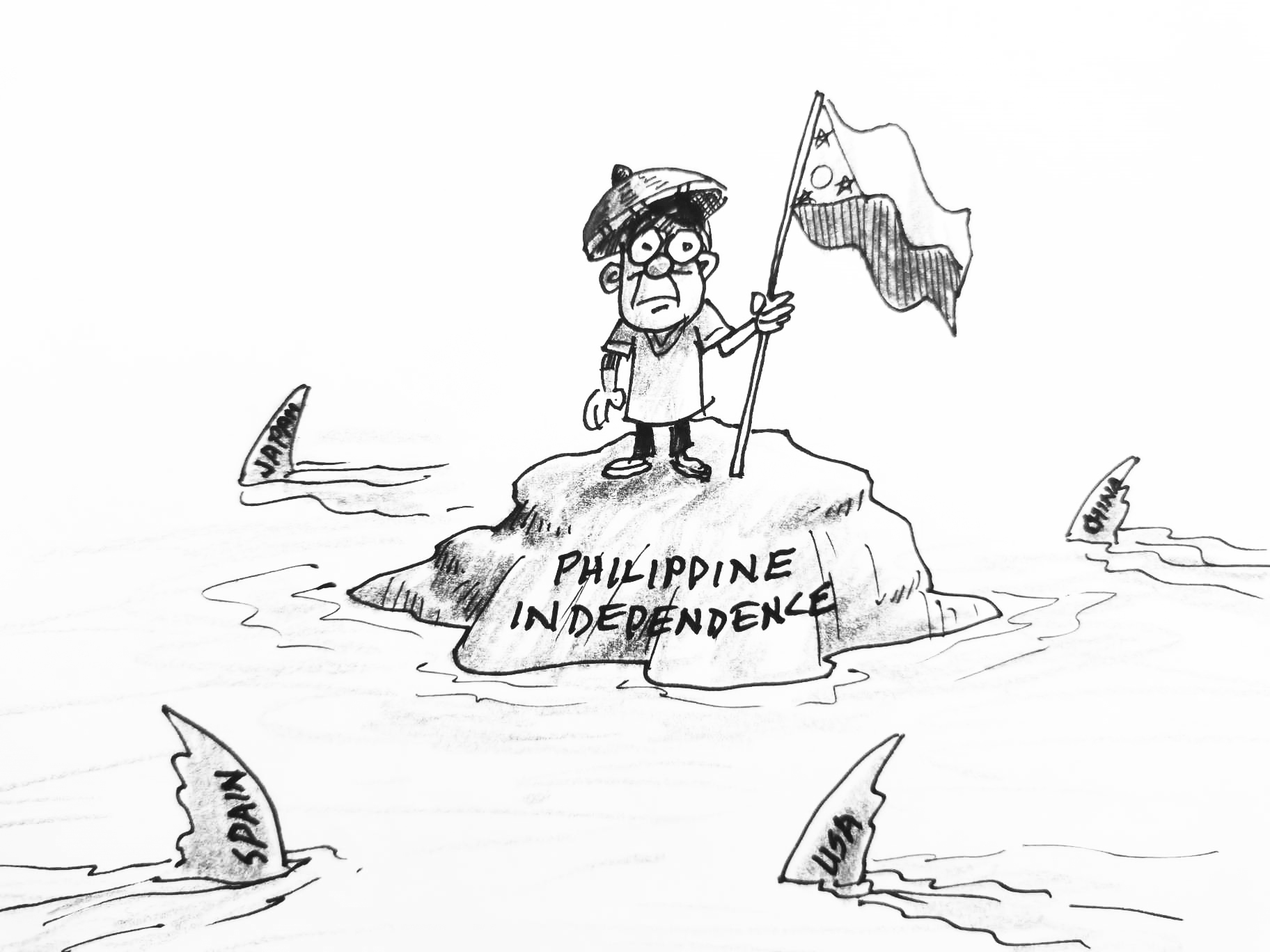
Our independence, celebrated every 12th of June, is a fundamental aspect of the nation’s identity, symbolizing sovereignty and self-determination. That journey was a long and arduous one, marked by a series of stains that tarnished the country’s struggle for freedom. These stains, brought about by external forces and internal conflicts, have continued to impact the nation’s quest for true independence.

The first stain on Philippine independence can be attributed to the Spanish colonial rule that lasted over 300 years. The oppressive and exploitative nature of Spanish colonization hindered the country’s growth and development, stifling any attempts at self-governance. The Filipino people were subjected to harsh treatment and discrimination, leading to widespread poverty and inequality. Despite numerous uprisings and revolutions, it was not until the Treaty of Paris in 1898 that the Philippines was officially ceded to the United States, marking the end of Spanish rule.

The second stain on Philippine independence came with the arrival of American forces, who quickly established their form of colonial rule over the country. While the Americans promised liberation and democracy, their true intentions were to exploit the Philippines for its resources and strategic location. The Filipino people once again found themselves under foreign domination, this time by a new imperial power. The struggle for independence continued, culminating in the Philippine-American War from 1899 to 1902, in which thousands of Filipinos lost their lives in the fight for freedom.

The third stain on Philippine independence can be seen in the dark period of Japanese occupation during World War II. The invasion of the Philippines by Japanese forces in 1941 brought about a new wave of oppression and brutality, with widespread destruction and loss of life. The Filipino people were once again subjected to foreign rule, this time by a ruthless and oppressive regime. The resistance movement against the Japanese occupation, led by Filipino guerrilla fighters and supported by American forces, played a crucial role in eventually liberating the Philippines from Japanese control.

Despite gaining formal independence from the United States in 1946, the stains of colonialism and foreign intervention have continued to haunt the Philippines. The legacy of Spanish, American, and Japanese rule still lingers in the country’s institutions and social fabric, shaping its political landscape and economic development. The struggle for true independence and self-determination remains an ongoing challenge for the Filipino people, as they continue to grapple with the stains of their past and strive towards a future of peace, prosperity, and freedom.

When hunger strikes

0
DOMS PAGLIAWAN

Our stomachs often take center stage in the grand drama of human survival, performing feats of gastronomic gymnastics that would make even the most seasoned chef gasp. Picture this: you’re stranded in the wilderness, your last granola bar devoured days ago, and your stomach growls louder than thunder at midnight. As hunger sets in, the line between “edible” and “unspeakable” starts to blur, and suddenly, that crunchy beetle scuttling by looks like a gourmet delicacy.

It’s in these moments that we humans exhibit our true, wild selves. The term “adventurous eater” takes on a whole new meaning when the alternative is gnawing on your shoes. Hunger has a way of turning the ordinary into the extraordinary. A plump, juicy caterpillar? Why, that’s just nature’s version of a protein bar! With a slight squint, those wriggly larvae begin to resemble artisanal pasta, a culinary creation that would make a Michelin-starred chef weep with envy.

Take a stroll through history, and you’ll find countless examples of our foraging forebears transforming desperation into delicacy. In the Philippines, this resourcefulness is nothing short of legendary. When the rice granary is bare and the fishing nets come up empty, the wilderness becomes a smorgasbord of survival. Bamboo shoots, once mere decorations in your backyard, now seem like succulent asparagus. In the clutch of hunger, the forest whispers secrets of sustenance that would otherwise go unnoticed.

But let’s not forget the pièce de résistance of this exotic menu: insects. Yes, those six-legged critters we usually swat away or squash underfoot. In times of dire need, these creepy crawlies morph into the heroes of our survival story. Deep-fried crickets? A crunchy delight! Sautéed grasshoppers? A protein-packed snack! It’s as if the insects themselves, long oppressed by the shoe-heel tyranny, are rising to claim their rightful place in the food chain – right above “empty stomach” and just below “gourmet meal.”

Plants, too, get their moment in the spotlight. Who knew that the unassuming fern could be a culinary superstar? When hunger strikes, the world becomes your garden, and every leaf, stem, and root holds potential. Suddenly, that bitter, prickly cactus seems like a juicy watermelon on a scorching day. Even the weeds that gardeners curse become manna from heaven, transforming a barren landscape into a buffet of possibilities.

Of course, this survival instinct isn’t just about eating; it’s about innovation. Desperate times call for desperate measures – and some truly inventive recipes. You might find yourself concocting a stew of snails and wild herbs, channeling your inner Bear Grylls with a dash of Gordon Ramsay. It’s a culinary adventure that makes for a great story – provided you survive to tell it.

There’s something universally human about this tendency to turn the inedible into the edible. It’s instinctive to our species’ ingenuity and sheer stubbornness. Faced with the choice between starvation and a plate of grilled tarantulas, we choose the tarantulas every time. Not because we want to, but because we have to. And in doing so, we find that maybe – just maybe – they’re not so bad after all.

The next time you find yourself bemoaning an empty fridge or a skipped meal, remember the resourcefulness of our Philippine friends. Take a moment to appreciate the art of survival dining, where necessity isn’t just the mother of invention – it’s also the chef. In the wild world of hunger, everything is on the menu, and the only limit is your imagination (and perhaps your gag reflex). Bon appétit!

Independence?

0
AL ELLEMA
AL ELLEMA

Our generation is blessed with the independence that our forefathers fought for with their lives. What we now enjoy is the fruit of the blood and lives that were offered at the altar of our freedom and democracy. After centuries of slavery under abusive colonial masters, our brave countrymen fought long battles that won us back our lost freedom. Armed with inferior weapons, our heroes fought with courage against the artillery of our foreign oppressors. They could have opted the convenient road to self-preservation and lived longer under the rule of their foreign masters. But our forebears decided to fight a justified war that will win freedom for the future generations to enjoy. Ours was that future generation that now reaps the benefits of their hard won battles.

As we mark this 126th commemoration of that momentous victory for our freedom and independence, it is but apt to look back at the heroic act our heroes took. Their unselfish concern for our generation led to the attainment of our independence from our oppressors. We were able to establish our own government and fly our flag independently. Our colonizers placed us under an authoritarian regime that considered us no more than slaves under the Spanish crown. After the Spanish rule, we still have to be ruled by American and Japanese invaders before we obtained liberation by a victory in a war whose credit was grabbed by the Americans, obliterating as it did, the win of our Filipino soldiers.

We could take the sacrifice of our forefathers as their decisive move to free us from the burden of oppression and slavery. They risked their lives fighting a battle against well armed foreign invaders, so that we could enjoy a life of freedom and liberty. We got an inheritance that was the offshoot of their struggles and sacrifices to see our nation and people free. We got our independence in the battle seven years more than a century ago. We have turned undeserving of that supreme sacrifice but we got our share of the freedom and liberty we inherited no matter what. Taking a look at our present setup, we seem to have lost our worthiness to the cause our heroes fought for.

Our country may have been granted independence during that historical rites more than a century ago but we seem to have lost its essence over the years. After that raising of our country’s flag as a sign of our independence during that historic event on June 12, 1898, it looks like we have bungled the great benefits of that feat. Our political and economic landscape had been bastardized by foreign intervention. We have been held captive by our foreign creditors to the point that we no longer have the right to set the course of our destiny. We owe so much and we have to pay at all costs even if it means trampling upon our constitution and our sovereignty.

On another front, the independence that we have may have pushed us too far in the exercise and enjoyment of our freedom. We are a people that are prone to abusing the freedom and liberty that we have. Our democratic setup had been chaotic in many instances because of our tendency to play beyond the limits of our freedom. By and large, people with vested interests and hidden agenda are toying with our freedom to do the things as they will without regard to its consequences to our democratic institutions that ensures the protection of our freedom and . . . independence?
comments alellema@yahoo.com

God’s grace and our effort

0
FR. ROY CIMAGALA
FR. ROY CIMAGALA

THOSE two parables Christ told his disciples that compared the Kingdom of God to some seed that when planted on earth would just grow, become big and bear fruit (cfr. Mk 4,26-34) highlight the truth of our faith that God always provides for our needs but we also have to do our part.

And yet, if I may, we can ask the question—that if God is that compassionate and generous, then why is there so much suffering, poverty and misery around? It would even look like God is completely indifferent to this sad condition worldwide. It would look like many people are left to rot in their miserable condition.

The answer, of course, is that, yes, God is always compassionate. He cannot tolerate seeing people suffer. He will always provide for all our needs. He even went to the extent of becoming man in Christ who had to offer his life to attain the greatest need of mankind—our salvation. With that supreme act of compassion and generosity freely done, what other need do we have that would not be taken care of by God?

The truth is that God has provided us with everything. From our life with all its natural endowments to the air and water, to the abundant food from plants and animals and other resources, he has given them all for us to use and to live with the dignity of being children of God.

The problem is that we do not know how to manage them, how to care and help one another. There is so much indifference and self-indulgence, the germs that would develop into a worldwide pandemic of social injustice and inequality.

In those two parables that compared the kingdom of God to some seeds, we are made to understand that we just have to do a little to correspond to what God is giving us, and things would just work out. That detail of the parables tells us that with a little help from us, the full wonder of God’s grace would be revealed to us.

In other words, we have to be reminded that as long as we do our part, no matter how meager it is, God will astound us with his own tremendous power. The prodigy of God’s powerful compassion can take place.

We simply have to do our part of helping one another, starting with the little things until we would be challenged to tackle bigger issues that would require extraordinary effort and sacrifice. But then again, whatever investment of effort, money and sacrifice we have to give, even if in our own estimation it is already quite sizable, is nothing compared to what God will give us in return.

Corresponding to God’s will in our own small way is the highest yielding investment we can make. Let us remember that God can never be outdone in generosity. Christ himself said: “Whoever has (referring to one’s faith and trust in God) will be given more, and he will have an abundance. Whoever does not have, even what he has will be taken away from him.” (Mt 13,12)

Let’s not forget that when we are sparing in our self-giving to God and to others, God will take away even the little that we have. The law that should rule our life is that of love, of total self-giving no matter what it would cost, though most times, the cost is really little only.

The brighter side of everything

0
CLEMELLE L. MONTALLANA,DM, CESE ASSOCIATE PROFESSOR III
CLEMELLE L. MONTALLANA,DM, CESE
ASSOCIATE PROFESSOR III

The pessimist finds difficulty in every situation.
The optimist finds an opportunity in every difficulty .

Social media had been a vital partner for most of us. It put forward our message, aspirations and feelings so to speak. Similarly, social media had been very quick to judge on people’s intentions, reactions and even it goes beyond by making interpretations that are clearly gathered from a wide latitude of data either positive or negative highlighted to a spin and packaged to forward a censure or an appreciation, depending on the slant the web focused on, it can be a negative thing or a positive one.

The pessimist finds difficulty in every situation. The optimist finds an opportunity in every difficulty. These quote is an overly used line attributed to Winston Churchill and many more. I tell you the web or the net can be either of the two.

Today, while reading a reply of a congratulatory comment I made when our School Organ won 2nd Runner Up in the Kultura Sinirangan Depratment of Tourism Video Infomercial Contest, I was able to come across this.

Thank you very much, sir Clemelle! Salamat san imo unwavering support sir, encouragements, and for always showing us the bright side in everything, more than enough to keep us fighting They have won Php50,000 price money from a measly Php. 5,000 budget.

The bright side in everything made my day ,it was a thing that was spawned from the simple encouraging we do and the rather small amount of money we contribute to a cause that is both institutional and community focused effort.

We sometimes forgot the power of positivism in the efforts that we do.

There is one phenomena that I want to share its called the Positivity Effect. This psychological phenomenon suggests that positive emotions enhance self-perception, self-esteem, and performance. It creates a virtuous circle where positivity reinforces positive thoughts and emotions. Psychologist call this as the Cognitive Flexibility: Positive emotions enhance cognitive flexibility, allowing us to adapt to changing circumstances. This flexibility aids problem-solving and creativity.

Thus, based on Real Science Positivity clearly helps in enhancing performance and thus, creating good results. This is proven every single day, every time!

Recent Posts

DALMACIO C. GRAFIL
PUBLISHER

ALMA GRAFIL
EDITOR-IN-CHIEF

ROMEO CEBREROS
OFFICE IN-CHARGE

OFFICE
BRGY. SONGCO, BORONGAN CITY

CONTACT NUMBERS
(055) 261 – 3319 | 0955 251 1533 | 0917 771 0320 | 0915 897 7439 | 0921 511 0010

DALMACIO C. GRAFIL
PUBLISHER

RICKY J. BAUTISTA
EDITOR

ALMA GRAFIL
BUS. MANAGER

OFFICE
RIZAL AVENUE, CATBALOGAN
(INFRONT OF FIRE DEPARTMENT, NEAR CITY HALL)

CONTACT NUMBERS
0917 771 0320 | 0915 897 7439 | 0921 511 0010

EMAIL
lsdaily2@yahoo.com

WEBSITE
www.issuu.com/samarweeklyexpress