29.3 C
Tacloban City
September 30, 2026 - Wednesday | 11:11 AM
Home Blog Page 820

Rep. Acidre rebukes VP Duterte for her refusal to answer questions of her 2025 budget proposal

0
Tingog party-list Rep. Jude Acidre openly rebuked Vice President Sara Duterte for her refusal to answer questions during the hearing of her 2025 proposed budget on Tuesday, August 27.

TACLOBAN CITY – Rep. Jude A. Acidre of the Tingog party-list did not mince words and confronted Vice President Sara Duterte saying it is the right of the congressmen to ask and get clarify on the budget proposal of any office like that of the Office of Vice President.

Acidre, who is also a deputy majority floor leader, made this remark after Duterte refused repeatedly to answer questions from the lawmakers during the budget hearing of her office last Tuesday, August 27.

“Given the esteemed position of the Office of the Vice President (OVP), could the honorable Vice President kindly enlighten this committee on how the proposed budget reflects the core mandate of the Office of the Vice President,” Acidre said.

“We are sincerely eager to understand how these resources will be used to fulfill the critical responsibilities, particularly the constitutional mandate of the Office of the Vice President,” he added.

Despite of the Vice President’s refusal to answer him during the deliberations, Rep. Acidre continued to question Duterte about her office’s plans for utilizing the requested P2.03 billion budget.

Duterte’s refusal to engage in a discussion about the proposed budget for the OVP, Rep. Acidre suggested, indicates a lack of interest in accountability and meaningful dialogue about her plans to serve the Filipino people.

“With humility and respect for the Vice President, we wish to remind her that public office remains a public trust. Our position demands a level of accountability to the people we serve, and this includes explaining how we intend to utilize taxpayers’ money,” Rep. Acidre stressed.
(LIZBETH ANN A.ABELLA)
DAR fast tracks individual land titling in Leyte

0

TACLOBAN CITY– The Department of Agrarian Reform (DAR) in Eastern Visayas has expedited the issuance of individual land titles to agrarian reform beneficiaries in Hilongos, Leyte, under the Support to Parcelization of Lands for Individual Titling (Split) project.

Jose Alsmith Soria, DAR regional information officer, stated that their office is “working double time by conducting simultaneous subdivision surveys and inspections of surveyed lots,” with five survey teams assigned to Hilongos.

“Three teams conducted subdivision surveys on 11 lots covered by collective certificates of land ownership award (CLOAs), while two teams inspected eight previously surveyed lots to ensure monuments are properly in place,” Soria said in a statement.

Municipal Agrarian Reform Program Officer (MARPO) Ruben Rebato added that the 11 subdivided lots, with a combined area of 63 hectares, are located in the upland villages of Agutayan, Cacao, and Hitupdan.

According to Rebato, 55 agrarian reform beneficiaries (ARBs) on these 11 lots are awaiting their individual land titles.

Meanwhile, DAR-8 successfully completed the inspection of eight previously surveyed lots, covering a total area of 45 hectares, by placing monuments to mark boundaries.

“These lots are situated in Barangays Agutayan, San Isidro, Sta. Margarita, and Marangog. Survey documents will then be forwarded to the Department of Environment and Natural Resources (DENR) for the approval of survey plans,” Soria said.

The Split project, funded by the World Bank, aims to subdivide landholdings covered by collective CLOAs issued under the Comprehensive Agrarian Reform Program (CARP). (RONALD O. REYES)

Outbreaks to contain

0

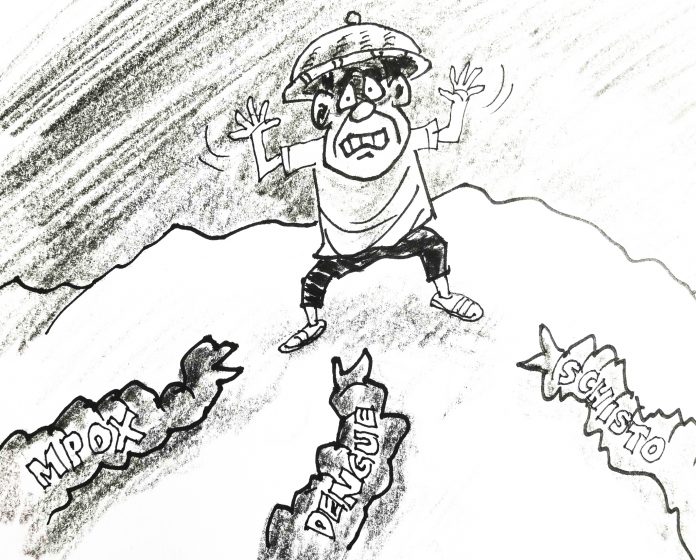
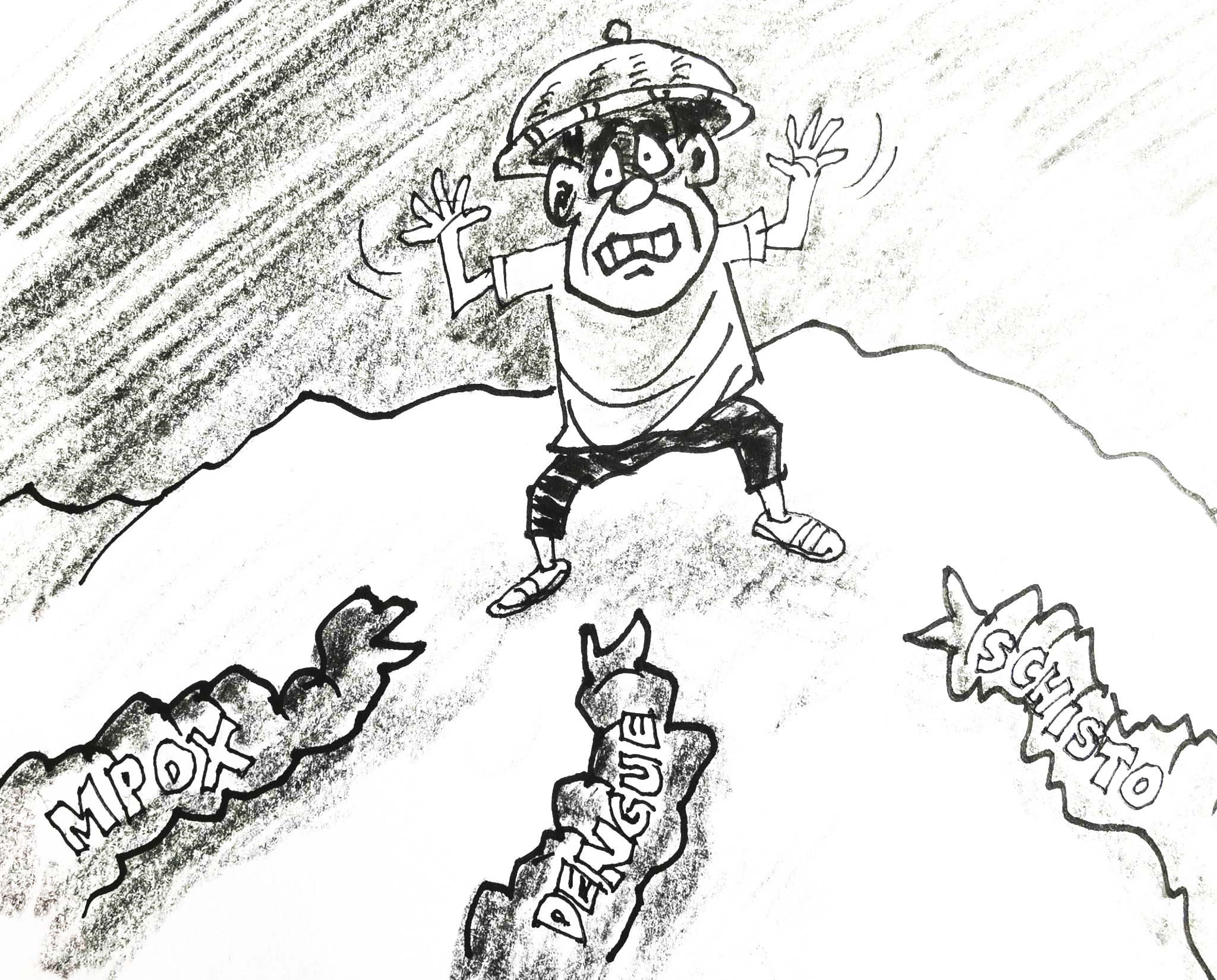
As our country grapples with multiple health crises, the rising cases of dengue, monkeypox, and local schistosomiasis demand immediate attention. These outbreaks are not just isolated incidents but indicators of a broader public health challenge that requires urgent action. While government efforts are crucial, it is also the responsibility of each individual to prepare, address, and avoid these diseases to protect themselves and their communities. Failure to act now could lead to devastating consequences that strain our healthcare system and endanger lives.

Dengue, a mosquito-borne disease, has been a persistent threat in our country for years, with cases surging during the rainy season. The ongoing outbreaks highlight the need for enhanced community involvement in preventive measures, such as eliminating breeding grounds for mosquitoes, using insect repellents, and seeking early medical intervention when symptoms arise. Public awareness campaigns have repeatedly emphasized these steps, yet many still neglect basic precautions. We must take responsibility at the household level to prevent the spread of dengue by keeping our surroundings clean and staying vigilant against the disease.

Monkeypox, a viral disease that has recently spread to various regions, adds another layer of complexity to our public health landscape. Although less deadly than some other viral diseases, monkeypox can still cause severe symptoms and complications, especially in vulnerable populations. To curb its spread, individuals must practice good hygiene, avoid contact with suspected cases, and adhere to health advisories on vaccination and isolation. Community awareness and cooperation are key; the stigma surrounding monkeypox needs to be replaced with informed actions that protect public health rather than incite fear or discrimination.

Schistosomiasis, often overlooked compared to the other two, is a parasitic infection that affects communities with poor sanitation and limited access to clean water. The disease silently impacts rural populations, causing chronic illness and impairing quality of life.

Addressing schistosomiasis requires a multi-pronged approach that includes improving sanitation infrastructure, providing access to clean water, and conducting regular mass deworming programs in affected areas. Beyond government interventions, individuals in high-risk communities must be proactive in maintaining proper hygiene, avoiding contact with contaminated water, and participating in community health initiatives.

In facing these simultaneous outbreaks, the collective effort of the government, communities, and individuals is crucial. Preparedness is not just about reacting to outbreaks but about creating a culture of prevention. This means staying informed about the diseases that threaten us, taking necessary precautions, and supporting public health measures that aim to reduce transmission. We cannot afford to be complacent; our actions today will determine the health and safety of our families and communities tomorrow.

Inviting dangers

0
DOMS PAGLIAWAN

It’s impossible nowadays to deny how engrossed we are with our gadgets and digital apps. I often find myself glued to my phone, laptop, or tablet, jumping from one app to another—whether it’s for work, socializing, or just passing the time. But as convenient as these devices are, I’ve seen firsthand and heard countless stories of how their misuse can lead to dangerous, sometimes fatal, accidents. The line between convenience and recklessness has blurred, and too often, we find ourselves paying the price.

One of the most alarming instances is when people use their phones while driving. I’ve caught myself doing it more times than I’d like to admit—just a glance at a text message or a tap to skip a song. But I know that those few seconds of distraction could mean the difference between life and death. I remember reading about a young driver who, in a split second of looking at her phone, veered off the road and crashed. She didn’t survive, and neither did the elderly couple in the oncoming car. It’s horrifying to think that something as small as a text message could lead to such a tragedy.

It’s not just driving; accidents happen everywhere. I’ve seen people nearly walk into traffic because they were too engrossed in their phones. I even had a close call once while crossing a busy intersection, my eyes glued to an urgent email. I was yanked back by a friend just in time, and the blaring horn of a speeding car still haunts me. It’s a reminder of how vulnerable we become when we let our devices distract us from our surroundings.

Apps are also culprits in other, more unexpected ways. Fitness apps that push people to their limits, navigation apps that suggest risky routes, or even augmented reality games that encourage players to chase virtual prizes without regard for real-world dangers. I remember the frenzy of a popular game where people were injured—or worse—because they were too focused on their screens to notice cliffs, traffic, or even other people. It’s shocking how a harmless app can turn deadly when we don’t exercise caution.

Social media is another double-edged sword. The quest for the perfect selfie or video content has led to a disturbing trend of people putting themselves in harm’s way. I’ve seen news stories about influencers who climbed dangerous heights or balanced precariously on ledges for the sake of likes and views, only to fall to their deaths. It’s heartbreaking that in our quest to capture the perfect moment, we often ignore the very real dangers around us.

I’ve also noticed how the constant need to be connected and available affects our mental alertness. Multitasking between work, social notifications, and messages while trying to navigate daily life has dulled my awareness more times than I’d like to admit. There’s always the temptation to check my phone when I shouldn’t, and I’m constantly battling the pull of digital distractions that can lead to careless mistakes, like leaving a stove on or missing important cues in my environment.

What’s scarier is that these accidents aren’t just limited to adults. I’ve seen kids with tablets, totally unaware of their surroundings, running into objects or even wandering into dangerous areas. As someone who grew up with fewer digital distractions, I can’t help but worry about how this constant connectivity is conditioning us—and the next generation—to be less present, less careful, and more prone to accidents.

Ultimately, the responsibility lies with us to recognize when our gadgets are becoming a hazard. I’ve made a conscious effort to put my phone away when I’m behind the wheel or in situations that demand my full attention. I’ve learned to set boundaries with my apps and notifications to avoid the trap of constant distraction. Because as much as I love my devices and the convenience they bring, I know that no message, game, or social media post is worth risking my safety—or my life.

The revolutionary spirit

0
CLEMELLE L. MONTALLANA,DM, CESE ASSOCIATE PROFESSOR III
CLEMELLE L. MONTALLANA,DM, CESE
ASSOCIATE PROFESSOR III

The Philippines’ rich history is adorned with the tales of heroes who have fought valiantly for the nation’s freedom and identity. From the intellectual prowess of Jose Rizal to the revolutionary fervor of Andres Bonifacio, these figures have left an indelible mark on the Filipino consciousness. But beyond the pages of history books and the statues in parks, what do these heroes mean to the daily struggles of Filipinos today?

Are they m the heroes still relevant and if I may say, inspiring?

For a minimum wage fellow, the names of heroes are no more than names of streets and yes holidays. It may be brands, trade marks and even adjectives without much thought. For a career person, the same lump of names are a mandatory study and reference but never a really significant matter because as we knew the bottom-line in serving the agency where you are at, hinges on outputs and wages. Believe it or not, heroes to the working class are not that significant. To them, they are busy earning a living.

But in all. We need heroes, much as we need celebrities!

Heroes can inspire. The moral and ethical standards set by heroes such as Jose Rizal provide a guiding light for Filipinos. Rizal’s advocacy for education and reform through peaceful means highlights the importance of knowledge and integrity. In a society where corruption and inequality persist, his ideals serve as a reminder of the values that should guide personal and collective actions.

Heroes are steadfast and has the progressive spirit to engage in society. The revolutionary spirit of heroes like Andres Bonifacio continues to inspire activism and social movements in the Philippines. Bonifacio’s call for independence and his willingness to fight for justice resonate with modern-day activists who champion various causes, from human rights to environmental protection3. His legacy empowers Filipinos to stand up against oppression and advocate for a better future.

Like it or not, heroes are vital to our existence . The revolutionary spirit is good for everyone, when the chips are down and the funds are low, the revolutionary spirit can push us forward.

Heroes are things of the past but still it is an ever present inspirational. we must not disregard nor put them in the dustbins, they are exemplars of resiliency and positive spirit.

When we just go through the motions

0
FR. ROY CIMAGALA
FR. ROY CIMAGALA

WE have to be wary of this tendency of ours. We should not just follow rules and practices blindly and would just go through the motions for the sake of mere compliance. As much as possible, we should know the reason and motive behind our actions and mean them as sincerely as possible.

We are reminded of this danger in that gospel episode where Christ lamented over certain practices of the Jews of his time that showed they were just doing them more for the sake of appearance rather than out of a sincere heart. (cfr. Mk 7)

“This people honor me with their lips, but their hearts are far from me,” he said and continued to say, “in vain do they worship me, teaching as doctrines human precepts.” (Mk 7,6-7)

To be guarded against this tendency, we need to pause from time to time, and check whether our actuations truly come from the heart, and our intentions are pure. In fact, as much as possible we should make our intention actual, and not just habitual or virtual.
This is to protect us from falling into routine that deadens our intentions and leads us to do things just mechanically. As much as possible we should not allow our routinary tasks to muffle our enthusiasm and love for God and others.

The challenge is how to keep ourselves burning with love in spite of our routinary tasks. In fact, if we are clever enough like the serpent that Christ talked about, (cfr. Mt 10,16) we can even make use of these routinary tasks as a way to nourish our love for God and others.

For this, we have to see to it that we are always activating our faith, hope and charity by making frequent acts of faith, hope and charity in spite of the lack of gusto for them. Much like everything else in our life, there are things that we should just do even if do not feel like doing them simply because they are necessary to us. These frequent acts of faith, hope and charity can do a lot of wonder and can fan into a flame our waning enthusiasm and love for God and others.

These theological virtues, these God-given gifts are the ones that enable us to live our life in a way that is full of love, the love that comes from God himself. It’s a love that always renews itself, not allowing itself to get accustomed, much less, bored by what we do every day.

As the Catechism would put it, these theological virtues “bestow on one the capacity to live in a relationship with the Trinity. They are the foundation and the energizing force of the Christian’s moral activity and they give life to the human virtues.” (CCC 384)
Also, when we do things with the zeal of love for God and for others, we would effectively protect ourselves from the attacks of our own weaknesses and the many temptations around.

We need to see to it that every move we make is always done with actual love, a love that should be a channeling of the very love of God as shown to us by Christ. It is a love that knows how to handle any situation in our life, whether good or bad in human terms. It is a supernatural love, not just human love.

It is this love, more than anything else, that truly matters in our relation with God and with others.

Recent Posts

DALMACIO C. GRAFIL
PUBLISHER

ALMA GRAFIL
EDITOR-IN-CHIEF

ROMEO CEBREROS
OFFICE IN-CHARGE

OFFICE
BRGY. SONGCO, BORONGAN CITY

CONTACT NUMBERS
(055) 261 – 3319 | 0955 251 1533 | 0917 771 0320 | 0915 897 7439 | 0921 511 0010

DALMACIO C. GRAFIL
PUBLISHER

RICKY J. BAUTISTA
EDITOR

ALMA GRAFIL
BUS. MANAGER

OFFICE
RIZAL AVENUE, CATBALOGAN
(INFRONT OF FIRE DEPARTMENT, NEAR CITY HALL)

CONTACT NUMBERS
0917 771 0320 | 0915 897 7439 | 0921 511 0010

EMAIL
lsdaily2@yahoo.com

WEBSITE
www.issuu.com/samarweeklyexpress