24.6 C
Tacloban City
September 30, 2026 - Wednesday | 8:11 AM
Home Blog Page 817

Corruption prevails

0

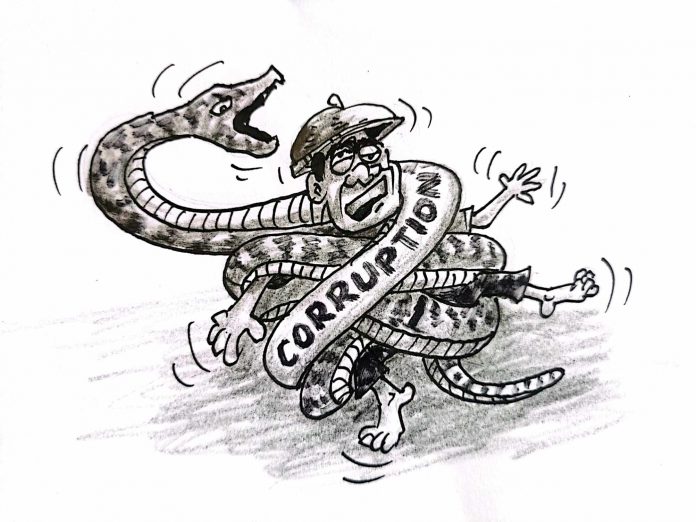
Corruption in the Philippines is so persistent it has become an institution in itself, deeply rooted in both the private and public sectors. The perpetrators—often the very people entrusted with the nation’s welfare—never seem to run out of ways to exploit their positions for personal gain. From rigged transactions to bribery schemes, the culture of corruption is pervasive, and those responsible constantly invent new methods to line their pockets, often at the expense of those who can least afford it.

One of the most blatant forms of corruption lies in the manipulation of official transactions. It is no secret that in many government agencies, officials conspire to skim off funds intended for legitimate purposes. One example is inviting speakers or trainers for seminars, and then letting them sign blank payment forms. These trainers receive only a fraction of the supposed honorarium, while the bulk of the funds disappear into the pockets of corrupt personnel. Such schemes reveal how those in power exploit every opportunity to siphon money, even from initiatives meant to educate and empower. The bureaucratic sleight of hand is not just theft; it is a deliberate assault on public trust, with the guilty parties feeling no shame as they profit off the goodwill and efforts of others.

Nepotism and cronyism are other insidious forms of corruption that thrive unchecked. Key government positions are often handed to relatives and friends of agency heads, bypassing more qualified and deserving applicants. This practice not only erodes the integrity of the hiring process but also ensures that incompetence reigns, as these handpicked individuals often lack the necessary skills and expertise. In some cases, these vacant positions are outright sold, with prices running into hundreds of thousands of pesos. The result is a public service staffed by individuals who are loyal not to their duties or the public they serve, but to the officials who installed them. Such corruption compromises the quality of service delivery, further weakening institutions that are supposed to safeguard the public interest.

There are government bodies where fines and penalties are wielded as tools of extortion rather than instruments of justice. These agencies target individuals and businesses with deep pockets, imposing exorbitant fines for minor infractions—or sometimes for fabricated offenses—knowing full well that paying off these fines is often the only way to escape prolonged harassment. This predatory behavior masquerades as enforcement of the law, but it is, in reality, nothing more than organized extortion by those entrusted to uphold fairness. The exploitation of regulatory power for personal gain distorts the very essence of governance and further alienates the citizenry from the state.

These examples only scratch the surface of the many faces of corruption in the Philippines. The truth is, the web of deceit and self-interest runs much deeper and spreads far wider than anyone dares to admit. From low-level clerks to high-ranking officials, the culture of corruption infects every level of society, perpetuating a system where unethical behavior is normalized and often rewarded. The schemes are multifarious, constantly evolving to evade detection, making the fight against corruption seem futile. Until accountability is enforced, and a genuine effort is made to dismantle these well-entrenched networks of deceit, corruption will remain a cancer that continues to eat away at the soul of the nation. Solving it may indeed be next to impossible—but the greater tragedy is that, for many, it is all too convenient to simply let it be.
Worrisome

0
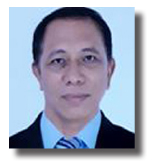
DOMS PAGLIAWAN
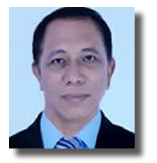
DOMS PAGLIAWAN

When I think about the prospect of nuclear war, a deep, gnawing fear takes hold of me. It’s a fear that doesn’t just linger in the background but often grips me with a stark realization of how fragile everything I hold dear truly is. I worry for myself, my family, my relatives, my friends, and my country. The very thought of a nuclear war is terrifying, and the potential effects are beyond comprehension. The destruction, the loss of life, and the irreversible damage to our world are nightmares I can’t easily shake off. Survival feels like a distant hope when faced with such overwhelming devastation.

One of the things that worry me most is the immediate impact of a nuclear strike— the sheer, unimaginable force that could wipe out entire cities in an instant. I think about my family and the people I love, and I can’t help but feel utterly powerless. A single detonation could mean the end of everything familiar: our homes, our neighborhoods, and all the places that hold our memories. There would be no time to say goodbye, no chance to shield my loved ones from the horror. The thought of losing them in a blinding flash of heat and fire is a fear I find almost unbearable. It’s not just the physical destruction but the abruptness of it all—the suddenness with which everything we know could be reduced to nothing.

Then there are the lingering effects, the silent killers that follow in the aftermath: radiation and nuclear fallout. Even if we somehow survive the initial blast, the air, the water, and the very ground we walk on would be poisoned. I imagine my friends and relatives trying to find food and water, only to realize that everything is contaminated. There would be no safe place, no refuge from the invisible threats that seep into every corner of the environment. I worry about the long-term health effects—radiation sickness, cancer, and the genetic damage that could haunt future generations. The idea that the very air we breathe could be a death sentence is horrifying. The world would become a hostile, toxic place, and the chances of rebuilding a normal life would be slim to none.

I also fear the collapse of society in the wake of such a catastrophe. With infrastructure obliterated and resources scarce, there would be chaos and lawlessness. People would be driven to extremes just to survive. I worry about what kind of world my loved ones would face in those desperate times—a world where necessities like food, water, and medical care would be nearly impossible to secure. I think about my country, struggling to maintain order amid the wreckage, and I fear that our shared sense of community would dissolve into a brutal fight for survival. The loss of humanity in the face of such desperation is a prospect that terrifies me.

Most of all, I am haunted by the sense of futility—the realization that, despite all our advancements and achievements, it could all be wiped out in an instant. The dreams I have for myself and the hopes I hold for the future of my family and friends could be obliterated by a decision made far beyond my control. I feel tremendous sadness when I consider that everything we’ve built could be undone, not by some natural disaster, but by our own hands. The senselessness of it all is what makes it so hard to bear. I worry that we would be left not just with the ruins of our cities, but with the crushing weight of knowing that we brought this devastation upon ourselves.

In the end, my fear of nuclear war isn’t just about the loss of life or the physical destruction—it’s about the loss of hope. It’s the fear that the world I’ve known, the people I care about, and the future I dream of could all be swept away in an instant. The thought that survival would be nearly impossible and that we would be left to endure a grim, inhospitable world keeps me up at night. I pray that we never reach that point, that somehow, reason will prevail over madness, and that the nightmare of nuclear war remains just that—a nightmare, never to become our reality.

Sharing Christ’s powers

0
FR. ROY CIMAGALA
FR. ROY CIMAGALA

IF Christ is the pattern of our humanity, if we truly are meant to be “alter Christus” (another Christ), then we can also conclude that we are meant to also share the very powers of Christ.

This thought can come to our mind when we consider that gospel episode where the people were amazed when at Christ’s word, a devil that possessed a man was rebuked and thrown out. (cfr. Lk 4,31-37) “What word is this, for with authority and power he commands the unclean spirits, and they go out?” the crowd said.

Yes, we can share the supernatural powers of Christ if we would just allow ourselves to be truly identified with him. This possibility should not be far-fetched. Christ himself assured us of this possibility when he said:

“Truly I tell you, if you have faith as small as a mustard seed, you can say to this mountain, ‘Move from here to there,’ and it will move. Nothing will be impossible for you.

However, this kind does not go out except by prayer and fasting.” (M5 17,20-21)
Indeed, through the years, we have seen some men and women who have shown some extraordinary powers because of their faith-driven identification with Christ. We can start to cite St. Peter himself who managed to raise Tabitha from the dead in Lydda. (cfr. Act 9,36-43)

We should at least be open to this possibility though it may not be advisable for us to insist on it, since it can show a trace of pride and arrogance on our part. God can share his special powers with us if he wants to and if we are open to it also.

Let’s remember that gospel episode where Christ, after choosing his apostles in some random way, gave them tremendous powers. “Jesus summoned the Twelve and gave them power and authority over all demons and to cure diseases, and he sent them to proclaim the Kingdom of God and to heal the sick.” (Lk 9,1)

We have to be most aware of what we can have in our hands. We may feel unworthy of all this, as we should, but the undeniable truth is that Christ can share his powers with us. Let us do our part in corresponding to this stupendous truth of our faith.

And the only way to do that is to give our all to God. Let us be generous and magnanimous as God is overwhelmingly generous and magnanimous to all of us. There has to be that mutual dynamic of love and self-giving that has been initiated by God himself. God loves us first, and we have to learn to love him in return, a love that is also expressed in loving everybody just as God loves everybody irrespective of how they are!

This is a call to generosity. “Without cost you have received, without cost you are to give,” Christ told his disciples. (Mt 10,8) Christ himself embodied this principle when he, being God became man, and not contented with that, he went to the extent of offering his life to conquer all our sins. He finally gave himself to us in the sacraments, especially in the sacrament of the Holy Eucharist, which is a real madness of love.

Everyday, let us grow in our identification with Christ. Let’s hope that slowly but steadily we can feel the conviction that we are becoming “other Christ” (alter Christus), if not “Christ himself” (ipse Christus). This will open the way for us to share Christ’s special powers.

Fuzzing

0
AL ELLEMA
AL ELLEMA

When the at least two foreign nationals believed to have links to a Philippine Offshore Gaming Operators (POGO) firm were apprehended at the house in Tuba, Benguet reportedly owned by one attorney Herminio “Harry” Lopez, Jr. (Atty. Roque) for brevity, the senate investigation committee invited him to shed light on his link to POGO.

He however admitted that he was the lawyer of Whirlwind by Katherine Cassandra “Cassy” Li Ong, who is Lucky South’s representative to regulator Philippine Amusement and Gaming Corporation (PAGCOR) in Porac, Pampanga. The said house was the subject of a mission order of the Bureau of Immigration (BI) and the Presidential Anti-Organized Crime Commission (PAOCC) where documents linked to him were found.

During the hearing that Atty. Roque disclosed that he is in the process of obtaining a controlling interest in the corporation by buying out the shares of its incorporators, including the share of Alberto Rodulfo “AR” de la Serna, his executive assistant who he allowed to live in his house.He also stated that the property is registered to a corporation called Biancham Holdings Inc., in which he admitted he had an interest.

He further said that the property’s current registered lessee is a Chinese national named Huan Yun, who is also registered with the homeowners’ association. He admitted having stayed in the said house when he left government service but the property is now leased to a foreign national whose name he could not recall.

In a display of legalese, Atty. Roque vehemently denied having lawyered for any POGO as he claimed that there is no contract where he entered to show any lawyer-client relationship. Even when he was pressed that he was lawyering for Whirlwind company, but the effect, the implication of lawyering for this company, will in effect benefit Lucky South 99. In fact, he accompanied Cassy Ong to PAGCOR and followed up with said agency regarding a financial obligation to the said agency.

The investigation which aims to gather information that would clarify the involvement of Atty. Roque as lawyer of POGOs had been obfuscated by the intertwined tales that seemed to cover the real connections of the persons involved. With all the legal jargon used by Atty. Roque to show that he is not lawyering for POGOs, his attention was called by a member of the investigating team who is a lawyer where a recent jurisprudence was cited on how to determine the so-called lawyer-client relationship.

He went mum when the Supreme Court ruling was read where it was declared that even if there is no contract and even if the services are free, as long as the lawyer represented the client in any capacity, there is a lawyer-client relations. That statement cleared all the intended fuzzing.
comments to alellema@yahoo.com

Budget for the People

0
CLEMELLE L. MONTALLANA,DM, CESE ASSOCIATE PROFESSOR III
CLEMELLE MONTALLANA

In the face of the budget hearings, we are seeing nowadays, here is a good read for the people, officials and the legislators.

In the Philippines, the national budget is more than just a financial document; it is a powerful tool that shapes the nation’s future. The budget’s primary purpose should be to serve the people, ensuring that resources are allocated to improve the quality of life for all Filipinos, rather than being used for political gain.

The budget is a reflection of the government’s priorities and a roadmap for achieving its goals. It encompasses everything from healthcare and education to infrastructure and social services. By carefully planning and allocating resources, the government can address the most pressing needs of its citizens and promote sustainable development.

A budget that truly serves the people focuses on essential services that directly impact their daily lives. This includes:

1. Healthcare: Ensuring that every Filipino has access to quality healthcare services is paramount. This means allocating sufficient funds to public hospitals, health centers, and preventive care programs.

2. Education: Investing in education is investing in the future. The budget should prioritize funding for schools, teacher training, and educational materials to provide every child with the opportunity to succeed.

3. Infrastructure: Building and maintaining infrastructure such as roads, bridges, and public transportation systems can significantly improve the quality of life and economic opportunities for citizens.

4. Social Services: Programs that support the most vulnerable populations, including the elderly, disabled, and low-income families, should be adequately funded to ensure that no one is left behind.

For the budget to effectively serve the people, transparency and accountability are crucial. The government must ensure that the budgeting process is open and participatory, allowing citizens to have a say in how their money is spent. Regular audits and public reporting can help prevent corruption and ensure that funds are used efficiently and effectively.
While the goal of serving the people is clear, the path is often fraught with challenges. Political interests can sometimes overshadow the needs of the populace, leading to misallocation of resources. However, there are also opportunities to improve the budgeting process:

• Participatory Budgeting: Engaging citizens in the budgeting process can help ensure that their needs and priorities are reflected in the final budget.

• Performance-Based Budgeting: Linking budget allocations to performance outcomes can help ensure that funds are used effectively to achieve desired results.

• Technology and Innovation: Leveraging technology can improve transparency and efficiency in the budgeting process, making it easier for citizens to track how funds are being used.

The primacy of the budget in the government of the Philippines lies in its potential to serve the people. By prioritizing public welfare, ensuring transparency and accountability, and overcoming challenges through innovative solutions, the government can create a budget that truly reflects the needs and aspirations of its citizens.

Navigating Shifting Workforce Dynamics

0
MARIA JENILEEN CORDERO-ALANO

Since the pandemic, the landscape of work has undergone a transformative shift, with remote work emerging as a prevalent trend reshaping traditional workforce dynamics. As organizations adapt to this changing paradigm, it becomes increasingly crucial to explore the profound effects of remote work on both employers and employees.

Flexibility and Work-Life Balance:

One of the primary impacts of remote work is the newfound flexibility it offers to employees. The ability to work from anywhere not only eliminates the constraints of a traditional office setting but also empowers individuals to manage their schedules more effectively. This flexibility, in turn, contributes to improved work-life balance by allowing employees to allocate time for personal commitments without compromising their professional duties.

I have tried working as a Virtual Assistant back in 2010, when it was not as popular as it is now. It was a great opportunity for me because I was able to earn within the comforts of my home and at the same time look after my kids. My work back then comprised of different tasks from different clients. I can join online meetings (without a cam) while doing chores at home.

Productivity and Performance:

Contrary to initial skepticism, remote work has proven to enhance productivity for many individuals. Freed from the distractions of a bustling office environment, employees often find themselves more focused and efficient when working remotely. With the right tools and technology in place, remote workers can maintain high levels of performance while enjoying the comforts of their chosen workspace.

Indeed, it can be a challenge not to be distracted while working at home. But somehow, I have developed to stop for a few minutes to attend to important things at home. Before, I could not work as much as I can when I see people walking in front of me or with the television on. I would say, it still depends on the individual on how the person can adjust to this kind of set-up.

Cost Savings and Global Talent Access:

From a business perspective, remote work presents a myriad of benefits, including significant cost savings. By reducing overhead expenses associated with maintaining physical office spaces, organizations can allocate resources more strategically, fostering financial sustainability and growth. Moreover, remote work opens doors to a diverse talent pool on a global scale, enabling companies to tap into a broader range of skills and expertise without geographical limitations.

When I started working online, I had the faintest idea on how it works. But slowly, I was able to grasp all the basic knowledge I needed in just a few months. It was also the time when I discovered that I had the ability to write when I was given a task to become a Social Media Manager for an Australian account.

Employee Satisfaction and Engagement:

As remote work becomes more prevalent, it has become increasingly clear that offering flexible work arrangements can significantly impact employee satisfaction and engagement. Empowered by the autonomy to structure their workdays according to individual preferences, remote workers often report higher levels of job satisfaction and overall happiness. By prioritizing employee well-being and providing remote work options, organizations can boost morale and foster a positive company culture.

Challenges and Solutions:

Despite its numerous advantages, remote work does present challenges that require careful consideration. Communication barriers, feelings of isolation, and difficulties in maintaining team cohesion are common hurdles that organizations must address proactively. Implementing robust communication strategies, fostering a sense of community through virtual interactions, and promoting work-life boundaries are essential steps toward overcoming these challenges and ensuring a successful transition to remote work.

In conclusion, the future of remote work holds immense potential for organizations willing to embrace change and adapt to evolving workforce dynamics. By recognizing the transformative effects of remote work on flexibility, productivity, cost savings, talent access, employee satisfaction, and engagement, businesses can position themselves for success in an increasingly digital world. Embracing remote work not only paves the way for innovation and growth but also fosters a more resilient and agile workforce ready to thrive in the ever-changing landscape of work.
——–
If you have any questions or would like to share your thoughts on the column, feel free to send an email to jca.bblueprint@gmail.com. Looking forward to connecting with you!

Recent Posts

DALMACIO C. GRAFIL
PUBLISHER

ALMA GRAFIL
EDITOR-IN-CHIEF

ROMEO CEBREROS
OFFICE IN-CHARGE

OFFICE
BRGY. SONGCO, BORONGAN CITY

CONTACT NUMBERS
(055) 261 – 3319 | 0955 251 1533 | 0917 771 0320 | 0915 897 7439 | 0921 511 0010

DALMACIO C. GRAFIL
PUBLISHER

RICKY J. BAUTISTA
EDITOR

ALMA GRAFIL
BUS. MANAGER

OFFICE
RIZAL AVENUE, CATBALOGAN
(INFRONT OF FIRE DEPARTMENT, NEAR CITY HALL)

CONTACT NUMBERS
0917 771 0320 | 0915 897 7439 | 0921 511 0010

EMAIL
lsdaily2@yahoo.com

WEBSITE
www.issuu.com/samarweeklyexpress