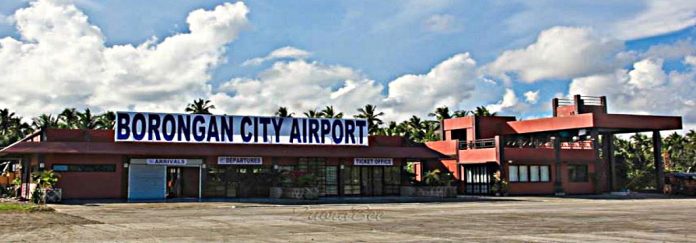
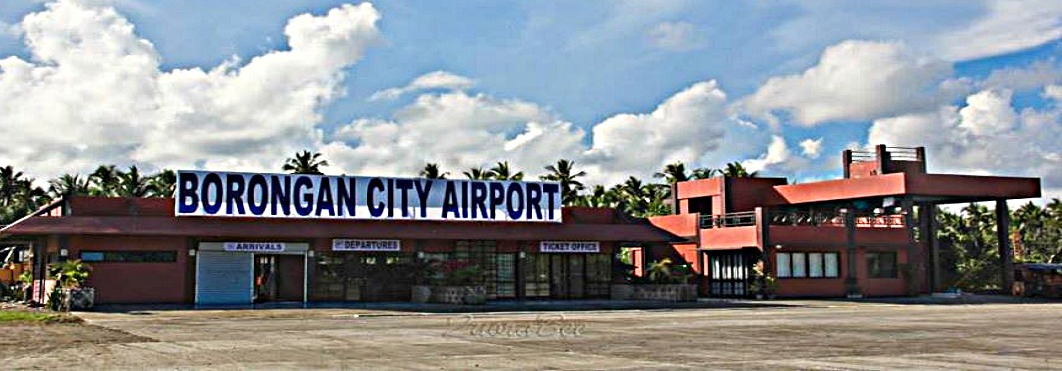
ADDITIONAL FLIGHT. The city government of Borongan through Mayor Jose Ivan Dayan Agda announced that state carrier, the Philippine Airlines, is to add a new flight to Borongan from Cebu.
(PHOTO COURTESY)
ADDITIONAL FLIGHT. The city government of Borongan through Mayor Jose Ivan Dayan Agda announced that state carrier, the Philippine Airlines, is to add a new flight to Borongan from Cebu. (PHOTO COURTESY)
TACLOBAN CITY– Philippine Airlines (PAL) will soon operate three weekly flights on the Borongan-Cebu route in response to the growing demand since the route’s launch in 2022, Borongan City Mayor Jose Ivan Dayan Agda announced.
“This is a significant step in making travel more accessible for Boronganons and residents of nearby towns, not only in our province but also in the adjacent areas of Northern Samar,” Agda said on Wednesday, September 4.
“The new Wednesday flight will complement the existing Monday and Friday schedule, with the expanded service set to begin before the end of September,” the city mayor added, commending the “strong support from the community and the riding public.”
Rupert Ambil, chairman of flight operations and city information officer, emphasized that their team is focused on continuously enhancing systems to support the needs of national agencies and streamline travel for everyone.
“Our initial goal was to create a sustainable model for a commercial airline operator to partner with us, and we have now surpassed those expectations. The key takeaway is that we need more frequent flights with the same aircraft capacity, rather than a larger aircraft, to maintain sustainability,” he said in a statement.
Borongan City is the only local government unit in the country that has donated a passenger departure terminal to the Civil Aviation Authority of the Philippines (CAAP), aside from a shuttle service.
TACLOBAN CITY – Dengue fever cases in Eastern Visayas have surged, with the Department of Health (DOH) reporting a 297% increase over the past eight months compared to the same period last year.
The DOH also confirmed 22 deaths due to dengue fever from January 1 to August 31, significantly higher than the nine deaths recorded during the same period last year.
In response, the health office has renewed its call for the public and local government units to intensify cleanup drives to eliminate mosquito breeding sites, which are the primary cause of dengue fever.
“We are urging hospitals and all health facilities to establish dengue fast lanes, ensure adequate healthcare providers, and maintain sufficient dengue commodities and medicines to deliver prompt services,” the DOH stated in an advisory issued on Thursday, September 5.
From January 1 to August 31 this year, the region has recorded 10,807 dengue fever cases, a sharp rise from the 2,723 cases during the same period last year—a 297% increase.
Of these patients, 22 have died, more than double the number of fatalities last year, which stood at nine.
The province of Samar reported the highest number of dengue-related deaths, with 11 fatalities, followed by Leyte with five, Eastern Samar with three, Northern Samar with two, and Southern Leyte with one.
Leyte province, including its capital city Tacloban, recorded the most dengue cases, with 4,633, followed by Samar with 2,832 cases.
TACLOBAN CITY– A buy-bust operation turned into an armed confrontation, leaving one suspect dead and a police officer injured on the evening of September 8, 2024, in Barangay Obrero, Calbayog City, Samar.
The suspect, known by the alias “Kado,” was a high-value individual (HVI) in the local drug watchlist.
Meanwhile, the victim, identified as alias “Binok,” is an active member of the Philippine National Police (PNP), assigned to the Calbayog City Police Station as an intelligence/drug enforcement officer.
According to the Calbayog City Police Station, their operatives were conducting a buy-bust operation targeting “Kado” when the situation escalated.
During the drug transaction, the suspect realized he was dealing with a police officer. In response, “Kado” quickly drew a .45 caliber Colt pistol and fired at the police team, striking alias “Binok” in the pelvis.
The operating team immediately returned fire, neutralizing the suspect.
The wounded police officer was rushed to St. Camillus Hospital, where he received immediate medical treatment and is now reported to be in stable condition.
The suspect, on the other hand, was brought to Calbayog District Hospital but was pronounced dead on arrival by his attending physician.
The Calbayog City Forensic Unit processed the crime scene and recovered the one .45 caliber Colt pistol loaded with four rounds of ammunition; nine fired cartridge cases; three fired bullets; one magazine loaded with seven rounds of ammunition; and two heat-sealed transparent plastic sachets containing suspected shabu, weighing approximately a gram with a commercial value of P6,800. (LIZBETH ANN A. ABELLA)
ORMOC CITY– The Department of Public Works and Highways (DPWH) Leyte 4th District Engineering Office (DEO) breaks ground on the construction of a P 70 million multi-purpose facility (Bagsakan) in Ormoc City, Leyte, funded under the General Appropriations Act (GAA) 2024.
The two-story building, which includes a mezzanine, will span a total floor area of 2,731.59 sq. m. The ground and second floors cover 1,946.34 sq. m. while the mezzanine adds 785.25 sq. m.
The facility will be equipped with 128 stalls for wet and dry goods, male and female comfort rooms, an administrative office, utility room, cold storage, view decks and an elevator for improved accessibility.
Once completed, the Bagsakan Facility will help improve and organize the city’s market operations by offering proper stalls for street vendors and those without designated selling spaces. This will ensure a safer and more efficient environment for both vendors and customers.
Congressman Richard I. Gomez and city councilors attended the groundbreaking ceremony on Wednesday, September 4, 2024. (PR)
Like a cancer, the pervasive culture of bribery in the Philippines infects everything from government operations to daily interactions between citizens and authorities, revealing itself in countless ways: from the high-profile criminals who evade justice by paying off law enforcement to the common practice of greasing palms in government offices to expedite services. Corruption is not just a minor inconvenience; it is a systemic issue that undermines the rule of law and perpetuates a cycle of dishonesty.
Look at the impunity enjoyed by those in power or those with financial means. High-profile criminality, from drug trafficking to large-scale corruption, continues unabated because perpetrators can simply pay their way out of trouble. Law enforcement, tasked with upholding justice, often finds itself compromised by bribes, turning a blind eye to illegal activities in exchange for quick cash. This not only demoralizes honest officers but also sends a dangerous message to the public: justice is for sale, and those with the means can bypass accountability. The result is a society where laws exist only for the poor and powerless, while the rich manipulate the system with impunity.
This obsession with money has also seeped into the political arena, particularly during elections. Vote-buying and electoral fraud have become disturbingly normalized, with candidates openly using their wealth to influence outcomes. For many voters, the immediate financial gain from selling their vote outweighs the long-term impact of electing corrupt leaders. This vicious cycle ensures that those in power remain unchallenged, as they continue to exploit their positions to amass wealth, which they then use to secure future elections. This endless loop of bribery and corruption not only undermines democratic processes but also stifles genuine political change, leaving the country trapped in a perpetual state of poor governance.
Beyond the high-stakes world of politics and crime, the culture of bribery trickles down into everyday life. Simple tasks like processing documents, obtaining permits, or accessing public services often involve some form of “facilitation fee” to get things moving faster. For many Filipinos, these bribes have become so commonplace that they are seen not as unethical but as a necessary part of dealing with bureaucratic red tape. This normalization of bribery further entrenches corruption into the fabric of society, making it increasingly difficult to root out. It creates an environment where those who refuse to participate in such practices are at a disadvantage, pressured to either adapt or be left behind.
The endemic nature of bribery in the Philippines reflects a deeper societal ailment—one rooted in desperation, lack of accountability, and the glorification of wealth over ethics. Combating this issue requires more than just anti-corruption laws or punitive measures; it demands a fundamental shift in societal values. It calls for a collective reckoning with the destructive impact of bribery on the nation’s future. Until Filipinos as a whole reject the allure of easy money and demand integrity from themselves and their leaders, this cancer will continue to spread, stifling progress and leaving the nation struggling to rise above its challenges.
I never thought I would see the day when the Philippines would face a problem that seemed so foreign, so distant from our shores. The dwindling population was something we often associated with countries like Japan and South Korea—nations struggling with an aging society and shrinking workforce. It felt like their problem, not ours. Yet, here we are, slowly but surely inching toward the same demographic cliff.
The evidence of this can be somehow seen in our schools: the decreasing number of students in nurseries, kindergartens, and grade levels onward is telling us a story that we have perhaps been too preoccupied to notice. As I browse the records of some schools, I can’t help but notice this. Gone are the days when parents would line up with their little ones, eager to begin a new school year. Teachers, once overwhelmed by bustling classrooms, now find themselves with fewer students to manage. The impact is not just confined to a few classrooms; it is systemic, cutting across various levels of education. Some schools are even merging classes or closing certain grade levels altogether due to a lack of enrollees. This trend is alarming because it’s not just a statistic—it’s a glimpse into our future as a society.
The reasons behind this decline are complex but undeniable. Many young Filipinos today are prioritizing their careers over starting a family. And who could blame them? The rising cost of living, housing, and education makes the idea of raising children daunting, if not downright impossible, for some. I have friends who have chosen to delay marriage or opt out of parenthood altogether, not because they don’t love children but because they want financial stability and personal fulfillment first. They often say, “Maybe later,” but as the years go by, “later” becomes more uncertain.
Even for those who do decide to marry, the mindset around family size has shifted dramatically. Unlike previous generations where having a big family was almost a given, many couples now intentionally limit the number of children they have. One or two seems to be the norm, a conscious decision driven by a desire to provide a better quality of life for a smaller brood. I see it in my family circles—relatives who once dreamed of large families now settle for just one child, focusing their resources and attention on raising them in the best possible way.
Compounding the issue is the fact that a significant portion of our population now embraces diverse gender orientations that do not traditionally result in childbirth. This is not a criticism but an acknowledgment of a societal shift. More people are openly identifying as LGBTQ+, and many are choosing to build their lives in ways that do not involve having children. It’s a celebration of individual freedom and love, yet it also subtly contributes to the overall decline in our birth rate.
The consequences of this demographic shift may not be immediately visible, but they are brewing just beneath the surface. Teachers, a once highly sought-after profession, are finding fewer students to teach. Schools are struggling to fill classrooms, and some are even forced to shut down certain grade levels due to insufficient enrollment. The ripple effects extend beyond education; they touch every aspect of our society. A dwindling population means a shrinking workforce, fewer taxpayers, and eventually, a heavier burden on social services as the population ages.
If we continue on this path, we will find ourselves facing challenges we are not prepared for. An aging population without enough young people to support it can lead to economic stagnation, increased healthcare costs, and a diminished quality of life for everyone. We must begin to have honest conversations about this issue—not to shame anyone’s personal choices but to understand and address the broader implications of a shrinking population.
The question that haunts me is this: How do we balance the dreams and aspirations of the individual with the needs of society as a whole? There are no easy answers, but acknowledging the problem is the first step. The dwindling number of students in some classrooms is a silent alarm bell ringing in the background. We can choose to ignore it, or we can start thinking about what kind of future we want for the Philippines—and what we are willing to do to ensure it is a bright one.