25.7 C
Tacloban City
May 13, 2026 - Wednesday | 4:25 AM
Home Blog Page 8

What help?

0

Government dole-outs are growing at an alarming rate, and what should have been temporary relief has become a permanent political instrument. A nation cannot survive when dependency becomes state policy and productive labor is forced to support an ever-expanding population sustained by subsidies rather than opportunity.

There is nothing wrong with helping the truly needy during calamities, economic collapse, or personal hardship. A civilized society must protect its vulnerable citizens. But the problem begins when poverty itself becomes massive and permanent, while government response remains limited to endless cash assistance. That approach does not solve poverty; it merely manages it for political convenience. A country where millions survive through recurring handouts is not progressing. It is slowly normalizing helplessness.

Instead of developing industries, strengthening agriculture, encouraging entrepreneurship, and creating stable employment, the government keeps distributing aid as though envelopes, sacks of rice, and cash cards can cure poverty. It cannot. No nation in history rose from poverty by training its people to wait for the next payout.

Even worse, these programs quietly punish the working and productive sectors of society. The taxes of ordinary employees, small business owners, professionals, vendors, and laborers are continually extracted to sustain a system that often rewards idleness more than effort. Many workers now carry the bitter sentiment that they labor endlessly only to finance a growing culture of dependence. The injustice becomes sharper when some beneficiaries begin treating assistance not as emergency support but as an entitlement that must continue regardless of personal initiative. The state should uplift citizens toward self-reliance, not condition them to survive through perpetual dependence on public funds. A government that constantly feeds people without teaching them how to earn eventually weakens the discipline, ambition, and responsibility needed for national growth.

Behind this system lies a political machinery that thrives on dependency. Politicians understand that jobs, factories, irrigation systems, livelihood programs, and long-term investments do not produce immediate political loyalty. But cash assistance does. Those who control the list of beneficiaries control a reliable voting bloc. This is why some public officials prefer highly visible dole-out programs over serious economic reforms that take years to bear fruit. Poverty becomes politically useful because dependent citizens are easier to influence during elections. The assistance may appear charitable on the surface, but beneath it often lies a calculated strategy of securing gratitude and obedience from economically desperate voters. In many areas, government aid has become a modern form of vote buying financed not by private money but by taxpayers themselves.

The country must abandon the dangerous illusion that endless handouts are compassion. Real compassion equips people to stand on their own feet. Government resources should focus on employment generation, agricultural modernization, skills training, small-business support, infrastructure development, and industries that generate lasting income.

Assistance must remain temporary, targeted, and tied to programs that lead beneficiaries toward productivity. Otherwise, the nation will continue sinking into a cycle where politicians preserve poverty to preserve power, while the working population carries an ever-heavier burden. A state that truly respects the poor does not keep them dependent forever; it gives them the means to escape poverty with dignity.

Our hostility to snakes

0

The scream usually comes first. In many Philippine barrios, a snake crossing a footpath is enough to send grown men scrambling for sticks, stones, bolo knives, and whatever object can strike fear faster than the reptile can disappear into the grass. The snake is rarely given the benefit of distance, much less mercy. I have always found this hostility both understandable and troubling: understandable because fear has deep roots in our history and landscape, troubling because fear, once inherited blindly, can turn even a useful creature into a condemned outcast.

I grew up noticing how Filipinos speak of snakes the way old people speak of curses. The names alone carry a certain chill. “Ahas” is not just an animal in ordinary conversation; it is an insult, a warning, a personality type. Call someone a snake, and you are not merely saying the person is dangerous. You are accusing them of betrayal, deceit, and poisoning of the soul. Even our language has wrapped the reptile in moral darkness. It did not help that many of us first encountered snakes not in biology books but in whispered stories beside kerosene lamps, where cobras rose like hooded spirits and pythons swallowed goats whole somewhere beyond the rice fields. In a tropical country where venomous species truly exist, imagination does not need much encouragement.

And the fear is not entirely irrational. The Philippines is home to genuinely dangerous snakes, including the Philippine cobra, whose venom is among the deadliest in the world. Farmers, coconut gatherers, and rural children historically faced real danger while working barefoot in fields thick with talahib and mud. One can hardly preach tenderness toward snakes to a farmer who remembers a neighbor dying hours after a bite because the nearest clinic was two towns away. Fear, in that sense, became a form of survival training. Suspicion saved lives. A quick strike with a stick was often faster than identifying whether the snake was harmless or lethal. In a country where poverty has long dictated how close humans live to forests, farms, and waterways, coexistence with wildlife has rarely been romantic.

Still, I sometimes think Filipinos inherited not only caution but a kind of theatrical hatred toward snakes. The reaction often exceeds self-defense and enters the territory of vengeance. One dead snake is not enough; it must be hacked repeatedly, displayed on a road, or burned like an executed criminal. I have seen people laugh nervously after killing one, as though they had defeated not an animal but a supernatural enemy. Perhaps this comes from the way fear humiliates us. Few creatures can reduce a confident man into a jumping, shrieking acrobat faster than a snake suddenly appearing near his feet. We kill what exposes our fragility. The snake becomes a moving reminder that human beings are not always kings of the landscape.

Religion added another layer to this hostility. For many Filipinos raised in Christian households, the snake already entered consciousness wearing the shadow of Eden. Long before science classes explained ecosystems and food chains, many children heard of the serpent as tempter, corrupter, whisperer of ruin. Even without formal theology, the symbolism lingered. The snake slithered through stories carrying suspicion on its scales. Hollywood worsened the reputation. Giant killer anacondas, venomous monsters in jungle films, cobras swaying before hypnotized victims—popular culture practically turned snakes into celebrities of terror. Poor turtles and frogs never received such dramatic publicity.
What fascinates me, though, is the irony that snakes quietly help the very people who despise them. They control rats that destroy rice harvests and spread disease. Without snakes, rodent populations would explode in many agricultural areas. Nature designed them as silent pest-control officers, working unpaid overtime. Yet humans often erase them at sight, then complain about rats chewing through grain sacks and ceilings. There is something tragically comic about this arrangement. We slaughter one of the farmer’s allies while protecting the thief who steals from the harvest at night. Sometimes our fear blinds us to usefulness; we judge by shape and movement rather than ecological purpose.

I also suspect that snakes disturb Filipinos because they move in ways unlike those of creatures we easily domesticate emotionally. Dogs wag their tails, cats purr, carabaos lumber with visible heaviness. Snakes glide. They arrive quietly, without footsteps, without warning, like living streams of muscle. There is something ancient in the human brain that recoils from that motion. Scientists have even suggested that primates evolved a rapid visual response to snakes because identifying them quickly aided survival. Perhaps every startled leap backward carries millions of years of instinct inside it. But instinct, while useful, should not become cruelty. Fear explains behavior; it does not automatically justify excess.

As I grow older, I find myself less interested in glorifying bravery against snakes and more interested in learning restraint. Not every snake is a cobra waiting to strike. Many are harmless and would rather escape than fight. Environmental groups in the Philippines now encourage rescue and relocation instead of immediate killing, especially as habitats shrink and wildlife increasingly wanders into human settlements. That seems wiser to me—not sentimental worship of snakes, but a calmer understanding that they are part of the land long before we poured concrete over it. Perhaps the better measure of civilization is not how fiercely people destroy what they fear, but how intelligently they respond to it.

Data-driven entrepreneurship: Navigating the new frontier

0

The entrepreneurial landscape has undergone a seismic shift. Gone are the days when gut instinct and sheer luck were the primary drivers of success. Today, data reigns supreme. Data-driven entrepreneurship, the practice of using data analysis to inform every stage of a business, from ideation to scaling, is no longer a competitive advantage; it’s a necessity. This approach allows entrepreneurs to make informed decisions, minimize risks, and maximize opportunities, ultimately increasing their chances of building a thriving and sustainable venture.

The Pillars of Data-Driven Entrepreneurship

Several key pillars support the foundation of a successful data-driven entrepreneurial strategy. Firstly, data collection is paramount. This involves identifying relevant data points across all aspects of the business. For example, website analytics, customer feedback surveys, social media engagement, sales figures, and market research reports all contribute to a comprehensive data profile. The quality and breadth of this data directly impact the accuracy and usefulness of subsequent analysis.

Secondly, data analysis is the crucial process of transforming raw data into actionable insights. This isn’t simply about crunching numbers; it’s about understanding the underlying trends, patterns, and correlations within the data. This often involves employing statistical methods, data visualization techniques, and potentially, machine learning algorithms to uncover hidden opportunities and potential problems. Tools like Google Analytics, Excel, and specialized business intelligence software are invaluable in this process.

Thirdly, data-informed decision-making is the ultimate goal. The insights gleaned from data analysis should directly inform strategic decisions across the entire business lifecycle. This includes product development, marketing campaigns, customer service strategies, and resource allocation. For example, analyzing customer feedback might reveal a need for product improvement, while website analytics could pinpoint areas for optimization in the user experience. The ability to translate data insights into concrete actions is a defining characteristic of data-driven entrepreneurship.

Finally, iterative improvement is essential. Data-driven entrepreneurship is not a one-time process; it’s an ongoing cycle of data collection, analysis, action, and evaluation. Regularly reviewing the results of implemented strategies and adjusting accordingly is crucial for continuous improvement and adaptation to changing market conditions. This iterative approach allows entrepreneurs to learn from their mistakes, refine their strategies, and ultimately achieve greater success.

Real-World Applications

The power of data-driven entrepreneurship is evident in numerous successful businesses. Consider the impact of A/B testing on marketing campaigns. By testing different versions of advertisements or website designs, entrepreneurs can identify the most effective strategies and optimize their return on investment. Similarly, analyzing customer purchase history can reveal valuable insights into consumer behavior, enabling businesses to personalize their offerings and improve customer retention. E-commerce giants like Amazon are prime examples of companies that leverage data to personalize recommendations, optimize pricing, and streamline their supply chains.

In the realm of product development, data can be instrumental in identifying unmet needs and validating product ideas. Analyzing market trends, competitor offerings, and customer feedback can help entrepreneurs develop products that resonate with their target audience and achieve market success. This data-driven approach minimizes the risk of launching products that fail to gain traction, saving valuable time and resources.

Challenges and Considerations

While the benefits of data-driven entrepreneurship are undeniable, it’s important to acknowledge the challenges. Access to sufficient and high-quality data can be a significant hurdle, particularly for startups with limited resources. Furthermore, the ability to effectively analyze and interpret complex data requires specialized skills and expertise. Many entrepreneurs may need to invest in training or hire data analysts to support this process. Finally, it’s crucial to avoid relying solely on data; human intuition and creativity still play a vital role in entrepreneurship. Data should inform decisions, not replace them entirely.

The Future of Data-Driven Entrepreneurship

As data becomes increasingly accessible and affordable, data-driven entrepreneurship will only become more prevalent. The rise of big data, artificial intelligence, and machine learning will further enhance the capabilities of entrepreneurs to analyze data and extract valuable insights. This will lead to more innovative products, more effective marketing strategies, and ultimately, more successful businesses. The entrepreneurs who embrace this data-driven approach will be best positioned to thrive in the increasingly competitive and dynamic business environment of the future. The ability to harness the power of data will be the defining characteristic of successful entrepreneurs in the years to come.
————–
If you have any questions or would like to share your thoughts on the column, feel free to send an email to jca.bblueprint@gmail.com. Looking forward to connecting with you!

Our true hunger and genuine fulfillment

0

IN the gospel, Christ tells us about what is involved if we want to truly love him. “If you love me,” he said, “keep my commandments.” And he makes this promise: “And I will ask the Father, and he shall give you another Paraclete, that he may abide with you forever.” (Jn 14,15-16)

He further explained why the Paraclete or the spirit of truth is needed. “The spirit of truth, whom the world cannot receive, because it sees him not, nor knows him; but you shall know him because he shall abide with you, and shall be in you,” he said. (Jn14,17)
The question to ask is, how can we manage to comply with the condition of keeping his commandments to be able to love him, and in so doing, be guided by the spirit of truth in this very complicated and confusing world?

Given how demanding Christ’s teachings are, we would likely struggle to live up to them. Yes, Christ’s commands and the high standard of Christ’s teachings are so rigorous that we would be in a tough spot trying to keep them.

I believe the secret is found in what Christ himself had recommended. That is, that we do some fasting that would induce a special kind of hunger that is not only a hunger for natural food but rather a hunger for the ultimate spiritual and supernatural food that is God himself.

Said another way, it should be a natural hunger that should lead us to this spiritual and supernatural hunger, a hunger for God. We need to train our natural hunger to have the greatest longing for God.

In other words, it should be God whom we regard as the true satisfaction of our hunger. It is he who should give us the greatest joy and pleasure. We should not get stuck in the natural level of satisfaction, joy and pleasure only, the effect only of food and other natural things. But our craving for God, while eminently spiritual and supernatural, should first of all be felt in our body.

This way we can manage to keep the commandments of Christ no matter how tough, rigorous and challenging they are. And by keeping the commandments, we would feel the presence of the Paraclete, the spirit of truth, as promised by Christ, who will guide us and give us the proper direction in our life, marked as it is with chaotic conditions.

With this spirit of truth, we would not be trapped in our temporal world only, playing the game of self-indulgence and simply pursuing self-interest, unmindful of the spiritual, supernatural and eternal destination meant for us.

We would know how to relate our temporal affairs to our ultimate goal. We would know how to give the proper priority to all the elements in this life, and how to be firmly guarded against distractions.

We really should make this serious business of developing this true hunger a top priority among the things that we need to learn. We cannot take this duty lightly. We have to learn to live in the natural and temporal world while pursuing our supernatural and eternal goal.
As St. Paul once said: “Set your minds on things above, not on earthly things.” (Col 3,2) He was practically telling us that we should prioritize heaven, eternal values over temporary worldly pursuits. He was asking us for a shift in perspective to align our thoughts, actions and desires with the teachings and example Christ who shows us the way to heaven.

Merchandiser gunned down in Calbayog City night shooting

0

ORMOC CITY— A 23-year-old merchandiser was shot dead by still-unidentified assailants in a late-night attack on Saturday, May 2 in Calbayog City, prompting an ongoing police investigation.

Police identified the victim only as “Kevin,” a resident of the city. He was declared dead at the scene after sustaining a fatal gunshot wound.

According to a report from the Calbayog City Police Station to the Police Regional Office 8 (PRO8), authorities received information about the shooting around 10:12 p.m. from a barangay official, just minutes after the incident occurred at Purok 7, Pido Extension.
Responding officers and the investigator-on-case immediately proceeded to the area, where they found the victim’s lifeless body lying beside the road near his motorcycle.
Initial investigation revealed that the victim had just arrived home from work and later left again, heading toward the city proper on his motorcycle. Upon reaching the area of the incident, a suspect—also riding a motorcycle—allegedly approached from behind and opened fire.

The victim sustained a gunshot wound to the left arm that penetrated his chest, causing fatal injuries.

The suspect fled the scene immediately after the attack and remains unidentified.
Crime scene investigators recovered five spent cartridge cases and one fired bullet believed to be from a .45 caliber firearm.

Authorities have coordinated with the local forensic unit for further examination of evidence.

The victim’s body was brought to a funeral service facility for post-mortem examination in coordination with the City Health Office.

Police have yet to determine the motive behind the killing and are continuing their investigation to identify and locate the suspect.

(ROBERT DEJON)

DPWH completes replacement of Sabang Bridge in Lavezares Northern Samar

0

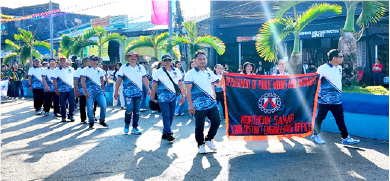
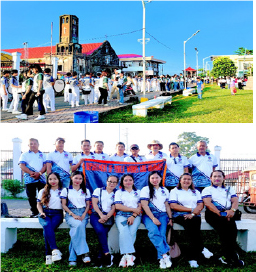
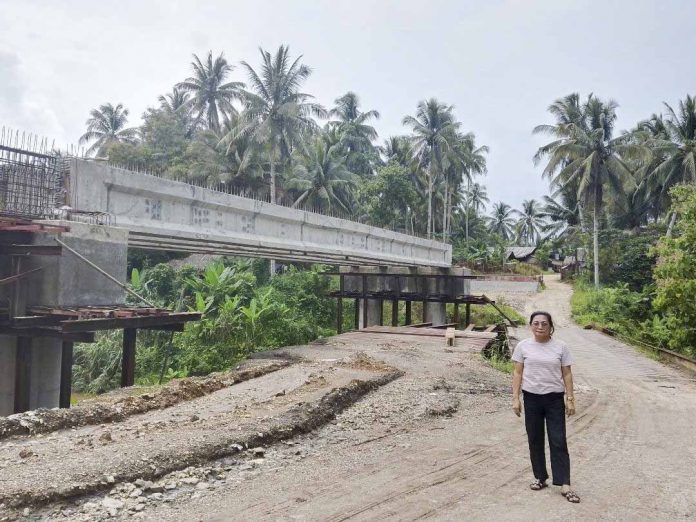
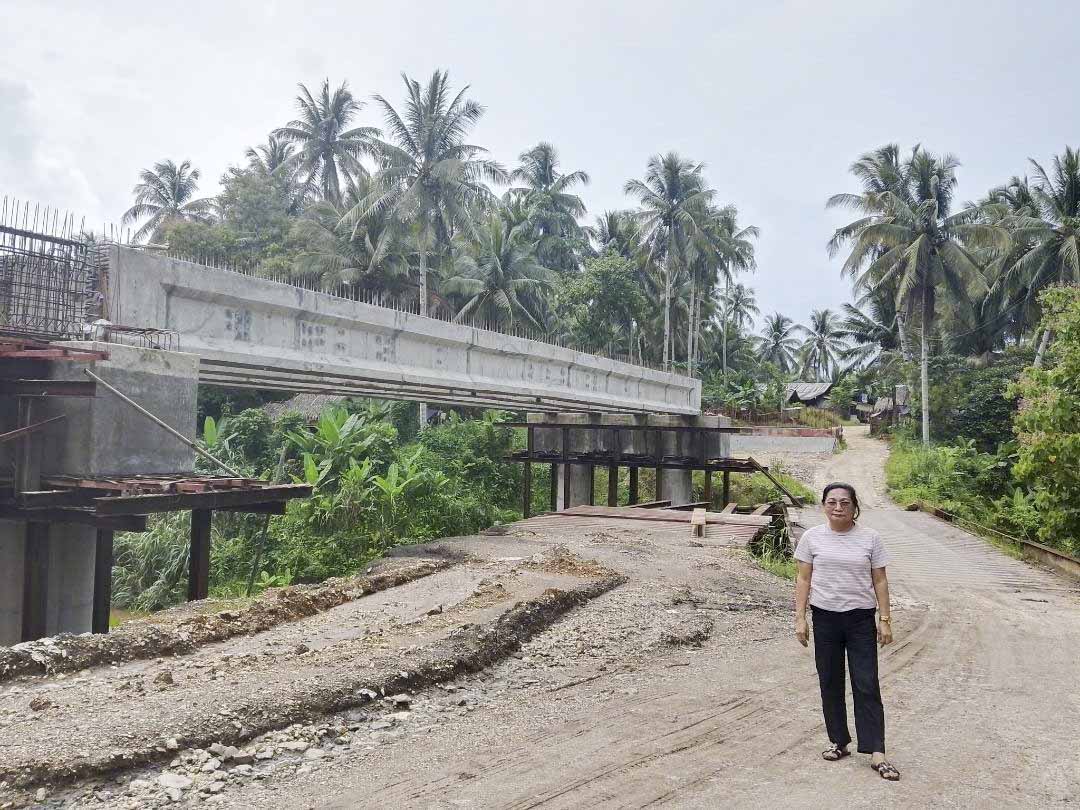
Catarman N. Samar– The Department of Public Works and Highways- Northern Samar 1st has recently completed the replacement of Sabang Bridge in lavezares, Northern Samar.
The project involves the replacement of old Bridge with a new 33m length by 7.32m width Single-Span Pre-Stress Concrete Girder (PSCG) bridge, built on a pre-cast reinforced concrete Pile Foundation. Major components of the project included the construction of detour bridge, installation of a cut-off wall with riprap for abutment protection, slope protection (18m at downstream and 55.70m at upstream of abutment A), painting works along railings, installation of metal guardrail, provision of 6 pcs solar street lights and installation of yellow and white thermoplastic pavement markings.

District Engineer Alvin A. Ignacio said that the project addresses long-standing safety concerns associated with old bridge, which had become structurally unsafe for regular use.
In an interview, Ulito Olevario, a 45-year-old habal-habal driver and a resident of Sabang Tabok shared how the replacement works helps them.

“Ine nga tulay, dako-dako nga bulig saam nga mga parag-habal-haba, una,apiki na am pag-agi na deri pareho sadto nga nag-aalang-alang kami kay nagbabay-og an tulay, pero ine yana okay na, maupay na, hataas na. Diri na gud sagkaon ura-ura. Kaurugan mga estudyante ak mga sakay, tapos pag may-ada sin karyada na mga kopras, karga din kami. Dito din kami dumadaan sa tulay na ito.” said Oliverio said.

Another resident, Eva Billiones, also expressed her gratitude.

“Nagpapaslamat kami nga ginbag-o ine niyan kay tungod ine nga tulay an dati pa ng-uuga-uga,makaharadok na siya again sa mga dagko nga sarakyan.kaya pasalamat kami nga gin-bag-o. Mas marig-on ine kaysa sa dati. Irog san mga nag-aaragi nga mga estudyante nga nagbabaraktas la,mao iton an kaupayan sine kaya mas safe na sira ngade mag-agi kesa san una” Eva Billiones further stated.

The replacement of Sabang Bridge costing P49.52-million came after it was identified by the DPWH Bridge Management System (BMS) Inventory as among the weak bridges requiring replacement due to 40 years of wear and tear.

With the completion of the new Sabang Bridge, commuters and transport vehicles will soon experience safer, more efficient, and seamless travel significantly improving connectivity along the Allen–Catarman route.

(ANALIZA A. PABIA/PR)

Recent Posts

DALMACIO C. GRAFIL
PUBLISHER

ALMA GRAFIL
EDITOR-IN-CHIEF

ROMEO CEBREROS
OFFICE IN-CHARGE

OFFICE
BRGY. SONGCO, BORONGAN CITY

CONTACT NUMBERS
(055) 261 – 3319 | 0955 251 1533 | 0917 771 0320 | 0915 897 7439 | 0921 511 0010

DALMACIO C. GRAFIL
PUBLISHER

RICKY J. BAUTISTA
EDITOR

ALMA GRAFIL
BUS. MANAGER

OFFICE
RIZAL AVENUE, CATBALOGAN
(INFRONT OF FIRE DEPARTMENT, NEAR CITY HALL)

CONTACT NUMBERS
0917 771 0320 | 0915 897 7439 | 0921 511 0010

EMAIL
lsdaily2@yahoo.com

WEBSITE
www.issuu.com/samarweeklyexpress