26.5 C
Tacloban City
July 09, 2026 - Thursday | 9:04 AM
Home Blog Page 785

DSWD conducts benchmarking study and field research on peace programs in Samar and Leyte

0

TACLOBAN CITY – The Department of Social Welfare and Development (DSWD) has completed its benchmarking study and field research on the agency’s peace and development programs in the provinces of Samar and Leyte conducted from June 26 to 28.
“The results of the benchmarking study and field research will be included in the enhancements to the Case Management Guide for handling cases of former members of non-state armed groups (FMNSG) and utilized for enhancing the peace and development programs and services for the members of FMNSG’s eventual reintegration into the community,” said Salvador Arcangel VIII, social healing unit head of the DSWD’s newly established Peace and Development Buong Bansa Mapayapa-National Program Management Office (PDBBM-NPMO).

The team, composed of members from the Office of the Undersecretary for Inclusive-Sustainable Peace and Special Concerns (OUSISPSC), PDBBM-NPMO, and the DSWD Field Office-8 (Eastern Visayas), partnered with the local government units (LGUs) of the two provinces.

They were joined by regional representatives from the Armed Forces of the Philippines (AFP), the Philippine National Police (PNP), and the Department of the Interior and Local Government (DILG).

Over three days, the team visited the town of San Isidro in Leyte province and Calbiga in Samar.

They conducted focus group discussions (FGDs) with former Communist Party of the Philippines-New People’s Army (CPP-NPA) and ‘militia ng bayan’ members.

They also interviewed provincial and municipal social welfare and development officers, E-CLIP focal persons, local leaders, and the president of the Eastern Visayas Federation of former CPP-NPA members.

The field research completes the six phases of data gathering for the FMNSGs, which include the Abu Sayyaf Group, Cordillera Bodong Administration-Cordillera People’s Liberation Army (CBA-CPLA), Dawlah Islamiyah (Maute Group), KAPATIRAN, and the CPP-NPA.

“The CM Guide enhancement is in line with DSWD Secretary Rex Gatchalian’s directive to identify effective psychosocial interventions, in addition to short-term cash and material assistance, for the former rebels’ full transformation as they get reintegrated into their communities,” Arcangel added.
(ROEL T. AMAZONA)

Leyte 4TH DEO conducts exit conference with Bureau of Maintenance

0

ORMOC CITY-Key personnel from the Department of Public Works and Highways (DPWH) Leyte 4th District Engineering Office (DEO), led by Maintenance Section Chief Joel V. Perez, held an exit conference with representatives from the Bureau of Maintenance on Monday, July 1, 2024.

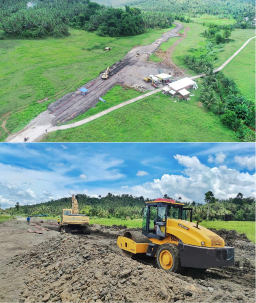
The meeting focused on discussing Department Order No. 47, series of 2024 or the “Comprehensive Policy Guidelines on the Maintenance of National Roads and Bridges”.

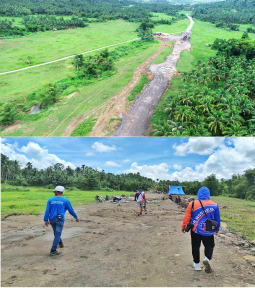
During the session, substantial insights were shared on the implementation of these guidelines, ensuring safe, convenient and well-maintained roads. It also marked the conclusion of the second round of road rating assessments, aimed at evaluating the current condition and maintenance needs of the national roads within the district. (PR)

Tourist potential

0

Many of us know that Samar Island boasts an array of natural beauty spots that remain largely untouched and unexplored. With pristine beaches, majestic waterfalls, lush forests, and historical landmarks, Samar holds a treasure trove of attractions that could rival the country’s more famous destinations. But the island’s potential for tourism remains underutilized, primarily due to inadequate infrastructure and accessibility issues.

The island’s diverse landscapes offer unique experiences for nature lovers and adventure seekers. Calbiga Caves, one of the largest cave systems in Southeast Asia, promises an exhilarating spelunking experience. The picturesque Sohoton Natural Bridge National Park, with its stunning limestone formations and pristine waters, could draw eco-tourists and photographers alike. Moreover, the untouched beaches of Marabut and the breathtaking Lulugayan Falls in Calbiga could easily become major attractions if properly promoted and developed. These sites, if made accessible, could contribute significantly to the local economy and enhance the Philippines’ overall tourism portfolio.

Improving transportation infrastructure is crucial for unlocking Samar’s tourism potential. Currently, many of these beauty spots are difficult to reach due to poor road conditions and limited public transportation options. The government must ensure that tourists can reach these destinations safely and comfortably. This would not only boost tourist arrivals but also improve the quality of life for local residents by providing better connectivity and promoting regional development.

In addition to infrastructure improvements, strategic marketing, and community involvement are essential for sustainable tourism development. The government and private sector must collaborate to create awareness about Samar’s attractions through targeted marketing campaigns. Showcasing the island’s unique offerings at international travel fairs, social media platforms, and travel blogs can attract a global audience.

Furthermore, involving local communities in tourism activities can ensure that development is inclusive and benefits the residents. Training programs for tour guides, hospitality services, and eco-tourism initiatives can empower locals and promote a sense of pride and ownership over their natural heritage.

Ultimately, developing Samar Island for tourism is not just about attracting visitors; it is about preserving and celebrating its natural and cultural wealth. By investing in infrastructure, promoting sustainable practices, and engaging the local community, Samar can become a shining example of responsible tourism. The island has the potential to offer unparalleled experiences that showcase the best of what the Philippines has to offer, creating lasting memories for tourists and generating economic growth for the region.

Now is the time for the government to take decisive action and unlock the full potential of Samar Island as a premier tourist destination. The government must prioritize developing transportation highways and making these scenic spots accessible to both local and international tourists.

Grappling with apps

0
DOMS PAGLIAWAN

I often find myself overwhelmed by the sheer number of apps available for virtually every aspect of life. There are educational apps that promise to make me smarter, entertaining apps designed to amuse, and productivity apps meant to help me stay organized. Despite their intended benefits, the constant influx of new apps leaves me feeling confused and unable to catch up. It’s as if every day, there’s a new must-have app that everyone is talking about, and I’m perpetually stuck trying to understand yesterday’s technology.

In particular, educational apps are both a blessing and a curse. On one hand, I appreciate the accessibility to learning resources that these apps provide. I can learn a new language, pick up coding skills, or dive into history lessons with just a few taps. However, the sheer number of these apps is daunting. Which one is the best? Which will suit my learning style? The options are so vast that I often end up downloading several, only to abandon them because I can’t commit to any single one. This indecisiveness makes me feel even more behind, as if I’m not utilizing the technological tools at my disposal effectively.

Entertainment apps add another layer to my dilemma. There are streaming services, gaming apps, and social media platforms constantly vying for my attention. Each one offers a unique experience, but juggling them all is exhausting. I find myself caught in a cycle of downloading new apps, trying them out briefly, and then forgetting about them. The result is a cluttered phone and a sense of frustration that I’m not fully engaging with any of these platforms. Instead of being entertained, I feel more stressed, trying to keep up with the latest trends and updates.

Productivity and project management apps are supposed to help me stay organized and efficient, but often they have the opposite effect. Each app claims to be the ultimate solution for managing tasks, collaborating with teams, or planning projects. Yet, I struggle to integrate these apps into my daily routine. The learning curve for each new tool is steep, and by the time I start to get the hang of one, a newer, supposedly better app emerges. This constant churn leaves me feeling technologically inept as if I’m always playing catch-up.

Helpful guide apps are another category that contributes to my overwhelm. These apps can assist with everything from cooking recipes to travel planning. While they offer valuable information, the bulky volume of options is paralyzing. I spend more time comparing different apps and reading reviews than actually using them to enhance my life. The promise of convenience quickly turns into a burden, as I feel pressured to master each app to truly benefit from its features.

The rapid pace at which new apps are created and released makes it impossible for me to stay current. I often hear friends and colleagues raving about the latest app that has transformed their lives, but by the time I get around to trying it, they’ve moved on to something else. This constant turnover exacerbates my sense of being left behind, reinforcing the idea that I’m not as tech-savvy as I should be. It’s a relentless race that I can never seem to win.

Moreover, the multifarious nature of these apps means that I’m bombarded with information and functionalities that I don’t necessarily need. It’s challenging to filter out the noise and focus on what’s truly beneficial for me. The result is a digital overload, where my phone is filled with apps that I rarely use but can’t bring myself to delete. Each app represents a potential that I haven’t realized, a promise of improvement that remains unfulfilled.

Yes, the speedy creation of numerous apps with multifarious usage overwhelms me, leaving me feeling confused and technologically ignorant. While these apps are designed to educate, entertain, assist, and enhance my life, the huge volume and rapid pace of development create a sense of perpetual inadequacy. I long for a simpler digital landscape where I can fully engage with and benefit from a select few tools, rather than being constantly bombarded by an ever-expanding array of apps. Until then, I remain in a state of technological limbo, striving to keep up but always feeling one step behind.

“Strategies for clear and impactful interactions”

0
MARIA JENILEEN CORDERO-ALANO

Misunderstanding is often the result for not being able to right message to another individual. This leads to unending exchange of hurtful words that leads to broken relationships. Be it in the professional or private life, effective communication is extremely important. When we convey our thoughts clearly, individuals are able to understand better, build strong relationships, and achieve their objectives.

Effective communication serves as the cornerstone of productive relationships, both personal and professional. It facilitates a deep understanding between individuals, fostering mutual respect, trust, and empathy. In our increasingly interconnected world, the ability to communicate effectively is more crucial than ever. This skill transcends the mere exchange of information; it involves understanding the emotions and intentions behind the information.

How can we enhance our communication skills?

Communication is a two-way street. This means that when one talks, the other should listen. But more than listening and talking, the right words should be conveyed without the need to hurt or to mislead each other.

The first strategy revolves around active listening, a cornerstone of effective communication. Beyond merely hearing the spoken words, active listening encompasses full concentration on the speaker, understanding the conveyed message, responding thoughtfully, and retaining the shared information. The essence lies in comprehending the thoughts, ideas, and feelings embedded in the words.

Reflection: “How often do you genuinely listen to those who communicate with you?”
Non-verbal communication forms another significant strategy. This aspect transcends verbal exchanges and involves body language, facial expressions, gestures, eye contact, and tone of voice. These non-verbal cues can convey a wealth of information beyond mere words, and awareness of these signals can significantly enhance the clarity and understanding of interactions.

Reflection: “Are your actions aligned with the messages you are conveying to the other person?”

Clarity and conciseness constitute the third strategy. The key is to avoid unnecessary jargon or complex language that might confuse the audience. The message should be straightforward, succinct, and to the point, which aids in preventing misunderstandings and respects the listener’s time.

Reflection: “Do your words possess sufficient clarity for easy comprehension?”
Empathy, the ability to understand and share the feelings of others, forms the fourth strategy. By empathizing with the communication partner, one can better understand their viewpoint and respond respectfully and understandingly. This approach fosters trust and strengthens relationships.

Reflection: “To what extent do you demonstrate empathy towards others?”
The fifth strategy, open-mindedness, is essential for effective communication. It is crucial to remain open to understanding others’ perspectives, even when they diverge from one’s own. This approach can lead to more productive conversations and a more profound understanding of others.

Reflection: “Are you receptive to understanding different perspectives and viewpoints?”
The sixth strategy involves feedback, an integral part of communication. Constructive feedback can offer valuable insights into how one’s communication is perceived and how it can be improved.

Reflection: “How do you effectively manage and respond to criticisms?”
Respect, the seventh strategy, is fundamental to any communication. It involves treating everyone with kindness and respect, regardless of their views or opinions, which fosters an environment conducive to open and honest communication.

Reflection: “Do you value and respect the feedback you receive from others?”
The eighth strategy, emotional intelligence, involves recognizing, understanding, and managing our own emotions and the emotions of others. This skill enhances communication effectiveness, helps navigate social complexities, and aids in making personal decisions that yield positive results.

Reflection: “How do you cultivate self-awareness and mindfulness to enhance emotional intelligence?”

The ninth strategy is the effective use of technology. In the digital age, tools such as email, social media, video conferencing, and instant messaging can enhance communication. However, it’s crucial to use these tools appropriately and maintain a balance between digital and face-to-face communication.

Reflection: “Are you making the most of the available technology to enhance your communication abilities?”

Effective communication, therefore, involves not just speaking and conveying thoughts, but also listening actively and responding thoughtfully. It requires a delicate balance of articulating one’s own ideas and understanding others’ perspectives. By fostering clarity, preventing misunderstandings, and promoting transparency, effective communication paves the way for better understanding and improved relationships. It is an indispensable tool that, when utilized properly, can enhance collaboration and harmony in various social and professional contexts.
————–
If you have any questions or would like to share your thoughts on the column, feel free to send an email to jca.bblueprint@gmail.com. Looking forward to connecting with you!

Passing grades

0
AL ELLEMA
AL ELLEMA

We had been captive of an educational system where students are trained to pass exams as a measure of success. It is not surprising that students fix their focus on the hows of passing the multifarious examinations they are to face in the course of their studies. Here is where many students develop the wrong notion that passing is the be all and end all of their schooling. There is no other purpose for schooling than to pass the tests in order to succeed. This passing mentality had been ingrained in the minds of our students and many of them do not care about the essence of learning anymore. What becomes the primordial concern for the student is passing by all means and at all costs, setting aside or making learning merely incidental.

While passing examinations is one good measure of one’s learning, it is not a foolproof indicator that the passer is indeed a learned person. As passing is attained in many ways under our system, there is no guaranty that the passer is truly equipped with the knowledge he ought to possess. There are students who struggle just to get the correct answers of examinations without giving value to the learning process. Many students resort to pointers and tips and even to the extent of cheating just to get a passing grade. There are those who rely on coached answers from classmates who are brighter and knowledgeable. This crop of students finds the many ways to pass without learning.

It is now an acute syndrome to cure the system that had inculcated the passing mentality at the expense of true learning. We had been used to such system and making radical changes will surely be on a collision course with many fixated concepts that are too rigid for change. But our educators and authorities must realize that the system is getting overrun by the fast changing demands for functional education. The need to develop new methods where knowledge and competence could be measured better than by mere passing grades that are obtained without validation is very much in order.

One clear indicator that defines the infirmity of the present system is how many of our college graduates are still failures for being incompetent on the job despite passing the many tests all throughout their schooling from pre-elementary to college. It is really a cause for concern that graduates of our educational system fall incompetent on the job. While the situation may be connected to the convenient excuse of the mismatches in education and job needs, it still needs serious attention and consideration for reforms in our educational system.

There must be a way of measuring knowledge on one hand and competence on the other hand in order to ensure that the educated person is ready to become a functional and competent worker. Requiring students to pass is not entirely wrong. It affords a good measure of ones knowledge if administered properly. But the same must be coupled with measures of competence which is more necessary on the job than mere passing grades.
Comments to alellema@hotmail.com

Recent Posts

DALMACIO C. GRAFIL
PUBLISHER

ALMA GRAFIL
EDITOR-IN-CHIEF

ROMEO CEBREROS
OFFICE IN-CHARGE

OFFICE
BRGY. SONGCO, BORONGAN CITY

CONTACT NUMBERS
(055) 261 – 3319 | 0955 251 1533 | 0917 771 0320 | 0915 897 7439 | 0921 511 0010

DALMACIO C. GRAFIL
PUBLISHER

RICKY J. BAUTISTA
EDITOR

ALMA GRAFIL
BUS. MANAGER

OFFICE
RIZAL AVENUE, CATBALOGAN
(INFRONT OF FIRE DEPARTMENT, NEAR CITY HALL)

CONTACT NUMBERS
0917 771 0320 | 0915 897 7439 | 0921 511 0010

EMAIL
lsdaily2@yahoo.com

WEBSITE
www.issuu.com/samarweeklyexpress