29.8 C
Tacloban City
September 28, 2026 - Monday | 5:04 PM
Home Blog Page 780

DOH reports significant drop in dengue cases in EV but cautions against complacency

0
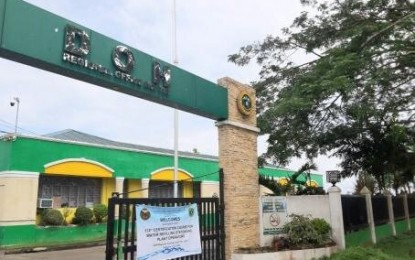
DECLINING DENGUE FEVER CASES. The regional office of the Department of Health reported of a decreasing cases of dengue fever in Eastern Samar, attributed to the cooperation of various local governments and the private sector. (PHOTO COURTESY)

TACLOBAN CITY — The Department of Health (DOH) has reported a sharp decrease in dengue cases across the region, raising hopes for an easing of the ongoing outbreak.
From September 15 to 21, 2024, or Morbidity Week 38, the DOH recorded 469 dengue cases, reflecting a 34% reduction compared to the 838 cases reported in the previous week (Morbidity Week 37, September 8-14).

Leyte continues to bear the brunt of the outbreak, accounting for 195 of the 469 cases. Southern Leyte followed with 114 cases, Samar with 101, Northern Samar with 38, Eastern Samar with 20, and Biliran with just one reported case.

Despite the encouraging decline, DOH regional information officer Jelyn Malibago Lopez emphasized that continued vigilance is essential.

“While the drop in cases is a promising sign, we cannot let our guard down. We are hopeful that this declining trend will persist throughout the rest of the year,” she said.

Lopez stressed that sustained cooperation from the public, particularly in organizing and participating in cleanup drives to eliminate mosquito breeding grounds, is crucial to maintaining this downward trend.

Lopez also underscored the importance of community involvement in preventing future outbreaks, urging residents and local agencies to follow the advisories and guidelines issued by the DOH.

“We appeal to all sectors to remain engaged and compliant with the health protocols we’ve put in place. Community effort is key in the fight against dengue,” she added.

Despite the recent reduction in weekly cases, Eastern Visayas has reported alarmingly high cumulative dengue numbers for the year.

From January 1 to September 21, 2024, the region has logged a total of 12,931 cases, with 24 fatalities. This marks a staggering 335% increase from the same period in 2023, which saw only 2,970 cases and 9 deaths.

In response to the persistent threat of dengue, the DOH continues to urge the public to intensify the 4S Strategy, a comprehensive approach to combat the disease.

The 4S Strategy includes search and destroy mosquito breeding sites by eliminating stagnant water where mosquitoes can lay eggs; seek early consultation by visiting healthcare providers at the first sign of symptoms, such as sudden high fever;self-protection by using insect repellent, wearing long-sleeved, light-colored clothing, and covering exposed skin to prevent mosquito bites; and support fogging operations in areas where outbreaks are predicted or ongoing.

To further bolster the region’s dengue response, hospitals and healthcare facilities across Eastern Visayas have been instructed to maintain dengue fast lanes, ensure adequate staffing, and stock essential dengue medications and supplies to provide prompt and effective care to patients.

The DOH Eastern Visayas remains committed to curbing the dengue outbreak and will continue to monitor the situation closely while working with local communities to prevent a resurgence in cases.
(JOEY A. GABIETA)
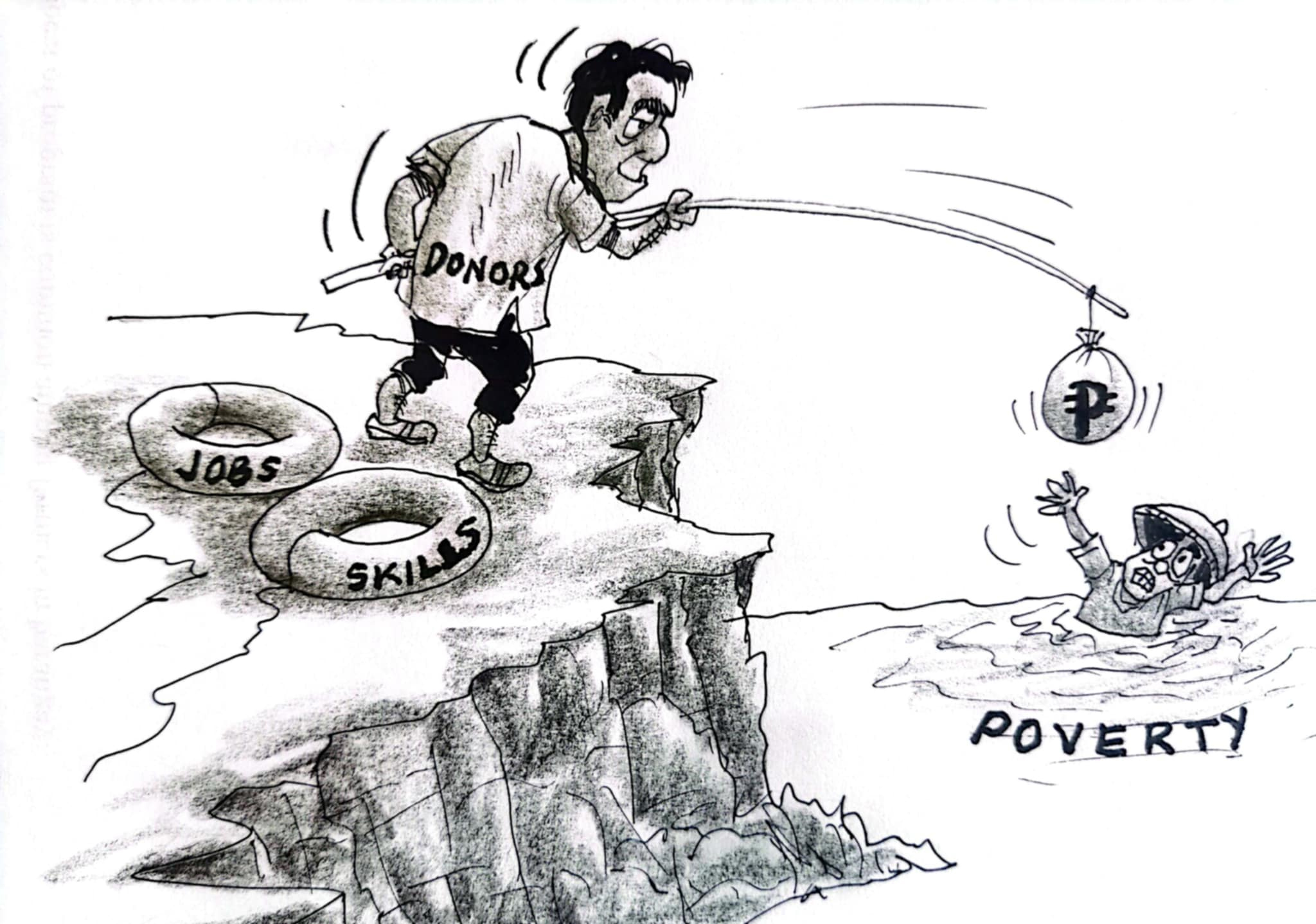
Sustainability, not dependency

0

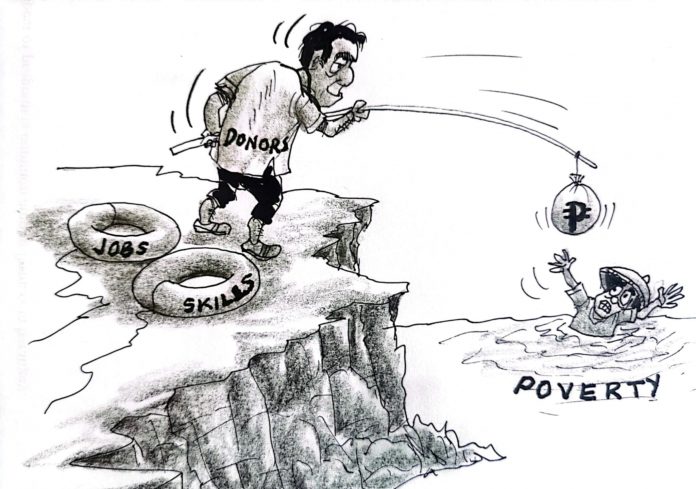
The saying “Don’t give me a fish; teach me how and where to fish” perfectly encapsulates the deeper issues surrounding patronage, where people in authority dole out cash and goods to secure votes. This culture of dependency hinders true progress, as it offers short-term relief but no long-term solution. What the people need is empowerment through sustainable livelihood opportunities, not temporary handouts that only deepen their indebtedness to the benefactors who exploit their vulnerabilities.

At the heart of this issue is a system that thrives on keeping people dependent. By giving cash or necessities, politicians create a false sense of benevolence, masking the real problem: the lack of access to stable employment. Instead of offering real solutions, these handouts are transactional, designed to secure votes and political loyalty. This perpetuates a vicious cycle where citizens are kept in a state of need, unable to break free from poverty because their only lifeline is the very people exploiting their desperation.

The solution lies in shifting from temporary aid to long-term opportunities for growth. Jobs, skills training, and entrepreneurship programs can provide people with the tools they need to be self-sufficient. When families have reliable income sources, they can support their needs independently, which eliminates the need to rely on donors for survival. Moreover, empowering individuals through meaningful work fosters dignity and self-worth, creating citizens who are more engaged in civic life, rather than beholden to those in power.

In addition to creating jobs, there must be an emphasis on fairness in hiring and job creation. Transparent systems that prioritize qualifications and skills, rather than political allegiance, should be at the core of employment initiatives. This not only ensures that the most capable individuals are given opportunities, but it also reduces the culture of political dependency, ensuring a more merit-based society. Employment opportunities should be linked with economic policies that boost local industries, making job creation a key component of national development.

If we want to see real change, we must break the chains of dependency created by political patronage. Teaching people how to fish, figuratively speaking, means providing them with the resources and opportunities to secure their futures independently. To address this issue, the government must focus on sustainable job creation, accessible skills development, and transparent hiring practices. By doing so, we can create a more equitable society where citizens are empowered to provide for themselves and their families, free from the control of donors.

Catastrophic reminders

0
DOMS PAGLIAWAN
DOMS PAGLIAWAN

The recent flooding in parts of the United States caused by a hurricane brought back vivid memories of what I went through during Typhoon Yolanda. The scenes of destruction, homes submerged in water, and lives upended are all too familiar. Having personally experienced such devastation, I know all too well how overwhelming it is to be surrounded by muddy water filled with debris and dangerous materials. It’s not just the immediate physical threat that haunts you, but the knowledge that the disaster could have been mitigated with better preparation and infrastructure.

I remember how, during Yolanda, many of us in Tacloban City felt helpless as the water rose faster than we could react. Houses were swept away, entire neighborhoods drowned, and in the midst of it all, there was the heart-wrenching reality that some of our neighbors and friends wouldn’t survive. It wasn’t just a storm—it was a failure of systems meant to protect us. Much like what I’ve seen in the U.S. today, there are questions to be asked about whether the right steps were taken to prepare and protect people from the inevitable dangers of such powerful storms.

The flooding in the U.S. reminds me of how, in Yolanda’s aftermath, the lack of proper drainage systems, inadequate infrastructure, and delayed government response made the situation far worse than it needed to be. In our case, lives were lost not just because of the storm itself, but because we weren’t prepared. The water that flooded our homes was filled with debris—broken glass, sharp metals, and toxic waste—turning a natural disaster into a man-made tragedy. How many of those deaths could have been avoided if we had been better equipped to handle such a catastrophe?

I see similar patterns in the U.S. floods. While the country might have more advanced technology and resources, it doesn’t mean they are immune to the mistakes we’ve made. Disasters like these expose the weaknesses in any society’s preparedness. Whether it’s the failure to properly maintain flood control systems, the lack of evacuation planning, or simply underestimating the severity of the storm, the consequences of these lapses are all too familiar to me. I understand what it feels like to have trust in the system broken, to watch as the very institutions meant to protect you fall apart in the face of disaster.

What strikes me most about both situations is how quickly things can spiral out of control when people aren’t properly informed or given the tools to protect themselves. In the case of Yolanda, many of us didn’t fully understand the scale of the storm or what a storm surge could mean. In the U.S. floods, I imagine many families were caught off-guard, thinking that their homes would be safe or that the storm wouldn’t be as bad as predicted. When the water starts rushing in, there’s no time left for second-guessing.

It also reminds me of the dangers that lurk in floodwaters—something many people don’t immediately realize. During Yolanda, we had to wade through dirty, debris-filled water, not knowing if we’d step on something sharp or come into contact with harmful chemicals. Floodwaters are not just water; they are a mix of sewage, hazardous materials, and debris that can cause infections and injuries. I’m sure that the people in the U.S. are facing the same hidden dangers, and it’s terrifying to think how easily someone could be hurt simply trying to find safety.

Looking back, I believe that better planning, more resilient infrastructure, and clearer communication could have saved lives during Yolanda, and the same is true for the U.S. today. We can’t stop hurricanes from happening, but we can take steps to minimize their impact. It’s not just about reacting after the fact, but about investing in prevention—building stronger flood barriers, ensuring communities are educated about the risks, and having emergency response systems in place that work when needed.

The lesson is clear: we need to take these warnings seriously and be proactive in protecting communities from the devastating effects of floods and hurricanes. Both in my experience with Yolanda and in watching the U.S. floods, the cost of inaction is far too high. Governments, local leaders, and individuals must come together to improve infrastructure, enforce stricter building codes, and ensure that disaster preparedness isn’t an afterthought. We hope to prevent future tragedies and keep people safe.

Costly read

0
AL ELLEMA
AL ELLEMA

The vice-president was irked by a simple question about a one hundred million pesos allocation for children’s books that she wrote. The books are for distribution to young learners to practically all nooks of the archipelago. The reading materials purposely targets non-readers who are young children that are still to start schooling. Like food chains targeting children with their advertisements as parents or their elders would surely accompany them to patronize their food, the toddlers would surely leave the books to their parents or guardians. Except for the child-friendly drawings and illustrations, children would hardly understand its contents.

It would be the children’s parents who will end-up reading the book, if they would even be interested in reading and share its tales to their children. What will meet the eyes of anyone who gets hold of the book is the name of the vice president who tried hard authoring such reading materials. In retorting to the asker of the question, she wailed that the initiative of educating children is being politicized. She surmised that the query was aimed at her name which is in the course of a self-destination to the presidency. She questioned the timing as a ploy to put her ambition and the name of her father, siblings and husband in a bad light.

With the query on the budget item for her book, the senate investigation committee was led into a proverbial can of worms. It led the committee to unearth an audit finding on alleged fund mismanagement. There were documents showing that the education department was not able to utilize its approved appropriation for school buildings. There too were huge funds intended for laptops for issuance to teachers but there were irregularities in its bidding and purchase. The issues were serious but the vice president was unwilling to provide answers that will enlighten the public.

All these were connected to the poor performance of school children as public schools were ranked at the nadir in this part of Asia and the world. Over the years, books being used in schools had been found to contain many errors. Facts contained in various books contained factual errors. There are errors that appear intentional, especially in the history of the country where efforts to revise history and misled the people are getting momentum with the strong push from the present administration. This will eventually result in making the readers blind of the true history of our country.

It would be a disgrace to our country and people if in the next generations people will carry in their minds the many wrong information that they obtained from uncorrected books. The challenge is for the present generation to do its share in righting the wrongs by exposing the errors in the books used in schools. Indeed, it is hard for learners to unlearn whatever they have obtained. Following the teaching principle of tabula rasa, the aim must be to teach correct information into the proverbial empty minds of learners. Else, cowardly stooping to the capricious ambition of a first-time author would be a costly read.
comments to alellema@yahoo.com

Despite contradictions, let’s be constant in doing good

0
FR. ROY CIMAGALA
FR. ROY CIMAGALA

THIS is the lesson we can learn from that gospel episode where Christ corrected his disciples who wanted to bring fire on a Samaritan village that did not welcome them. (cfr. Lk 9,51-16)

We cannot deny that in our life, in spite of our good intentions and deeds, there will be times when we still can be rejected and even ridiculed by some people for one reason or another. We have to be guarded against reacting on these occasions in a purely human way, not the Christian way.

Indeed, our zeal to follow Christ can intriguingly counter what to be a true Christian is. We should not be too surprised by this phenomenon. It’s part of our wounded human condition here on earth. But we should correct ourselves as soon as possible.

A true Christian loves everyone, including one’s enemies. He is willing to suffer, and even to die, if necessary, out of love for God and for everyone else. The contradictions he encounters in life do not snuff out his eagerness to continue doing a lot of good.

Yes, we will always be hounded by contradictions in our life, but let’s learn the art of converting them into occasions to go to God more closely. And that’s when, with God, we can manage to derive good from evil.

On our part, we just have to be humble enough to accept this fact of life, and more, to go to God to ask for forgiveness and help every time we are feel the sting of evil. It is pure pride when we refuse to acknowledge this fact of life, and more so, when we refuse to go to God for forgiveness and help.

We have to realize that the root of this all-too-human reactions of ours before certain contradictions is the fact that we are not yet as spiritual and supernatural as God wants us to be. St. Paul offers some explanation in his Letter to the Romans:

“We know that the law is spiritual; but I am unspiritual, sold as a slave to sin. I do not understand what I do. For what I want to do I do not do but what I hate I do. And if I do what I do not want to do, I agree that the law is good. As it is, it is no longer I myself who do it, but it is sin living in me.

“For I know that good itself does not dwell in me, that is, in my sinful nature. For I have the desire to do what is good, but I cannot carry it out. For I do not do the good I want to do, but the evil I do not want to do—this I keep on doing. Now if I do what I do not want to do, it is no longer I who do it, but it is sin living in me that does it.

“So, I find this law at work: Although I want to do good, evil is right there with me. For in my inner being I delight in God’s law; but I see another law at work in me, waging war against the law of my mind and making me a prisoner of the law of sin at work with me. What a wretched man I am! Who will rescue from this body that is subject to death? Thanks be to God, who delivers me through Jesus Christ our Lord!

“So then, I myself in my mind am a slave to God’s law, but in my sinful nature a slave to the law of sin.” (7,14-25)

The vow to represent and Perform

0
CLEMELLE L. MONTALLANA,DM, CESE ASSOCIATE PROFESSOR III
CLEMELLE L. MONTALLANA,DM, CESE
ASSOCIATE PROFESSOR III

When the people starts its process for the election of its leaders , we are supposed to venture into selecting good leaders not merely popular personalities. The purpose of the exercise is to select the best and the brightest regardless of the real outcome . The leaders are there to represent and perform not really to harvest our funds and grab power . It must be the vow , it must be the goal! Now as the filing of candidacy comes , it must be what the candidates will have in mind.

The filing of candidacy for public officials in the Philippines is a pivotal moment in the democratic process, marking the formal entry of individuals into the electoral race. This process, governed by the Commission on Elections (Comelec), is not just a bureaucratic formality but a significant step that holds the promise of change, representation, and the potential for progress in the country.

Rappler.com had stipulated these important steps .

The filing of certificates of candidacy (COC) typically occurs over a week-long period at the beginning of October, as stipulated by Comelec. During this time, aspiring public officials submit their candidacy documents, signaling their intent to run for various elective positions. This includes positions from the national level, such as senators and representatives, to local government roles like mayors and councilors1.

Candidates must meet specific qualifications, including citizenship, age, residency, and literacy requirements, which vary depending on the office sought. This ensures that only those who are adequately prepared and eligible can vie for public office, maintaining the integrity of the electoral process.

One of the most significant promises that the filing of candidacy holds is the potential for true representation. The Philippines, with its diverse population and myriad of localities, requires leaders who can genuinely represent the interests and needs of their constituents. The candidacy filing period allows voters to see who is stepping up to take on this responsibility and to evaluate their platforms and qualifications.

The candidacy filing process also holds the promise of accountability. By formally declaring their intent to run, candidates are subject to public scrutiny. Their backgrounds, qualifications, and platforms are examined by the electorate, the media, and their opponents. This transparency is crucial in ensuring that only those who are truly capable and committed to public service are elected.

Recent Posts

DALMACIO C. GRAFIL
PUBLISHER

ALMA GRAFIL
EDITOR-IN-CHIEF

ROMEO CEBREROS
OFFICE IN-CHARGE

OFFICE
BRGY. SONGCO, BORONGAN CITY

CONTACT NUMBERS
(055) 261 – 3319 | 0955 251 1533 | 0917 771 0320 | 0915 897 7439 | 0921 511 0010

DALMACIO C. GRAFIL
PUBLISHER

RICKY J. BAUTISTA
EDITOR

ALMA GRAFIL
BUS. MANAGER

OFFICE
RIZAL AVENUE, CATBALOGAN
(INFRONT OF FIRE DEPARTMENT, NEAR CITY HALL)

CONTACT NUMBERS
0917 771 0320 | 0915 897 7439 | 0921 511 0010

EMAIL
lsdaily2@yahoo.com

WEBSITE
www.issuu.com/samarweeklyexpress