In today’s fast-paced business world, the adoption of innovative technology has become a crucial determinant of success. Among these advancements, artificial intelligence (AI) stands out as a transformative force, revolutionizing the way businesses operate and make decisions. This article delves into the application of AI in business and how it enhances efficiency and decision-making processes.
The Role of Artificial Intelligence in Business
Artificial intelligence, a field within computer science, replicates human intelligence in machines. These machines are designed to learn from experience, adjust to new inputs, and perform tasks that typically require human intellect, such as interpreting data, recognizing speech, and solving problems. Within the business realm, AI is utilized to automate repetitive tasks, glean valuable insights from vast datasets, and improve the efficacy of decision-making procedures.
Enhancing Efficiency through AI
AI significantly improves business efficiency by automating routine tasks. By employing AI-powered tools, businesses can automate various operations, ranging from customer service through chatbots to inventory management through AI-powered supply chain systems. Automation not only saves time and reduces operational costs but also improves accuracy and consistency, minimizing human errors.
AI also enhances efficiency by streamlining workflow processes. Machine learning algorithms have the capability to pinpoint bottlenecks and inefficiencies within workflows, offering suggestions for enhancement. This leads to improved productivity and operational efficiency.
Influencing Decision-Making through AI
AI plays a pivotal role in business decision-making. AI’s major advantage lies in its capacity to swiftly and precisely analyze extensive datasets, proving to be one of its most substantial benefits. Through AI-powered analytics, businesses can extract valuable insights from data that would be impossible for humans to process manually. These insights can inform strategic decisions, ranging from product development to market expansion.
Predictive analytics, a subset of AI, allows businesses to forecast future trends and outcomes based on historical data. This capability is crucial in various business areas, such as sales forecasting, risk assessment, and demand planning. By leveraging predictive analytics, businesses can make proactive, data-driven decisions, gaining a competitive edge in the market.
Artificial intelligence serves as a powerful tool in the business realm, significantly enhancing efficiency and decision-making. As AI technology continues to advance, its influence on business operations and strategies will continue to grow. It is therefore crucial for businesses to understand and embrace AI, leveraging its capabilities to drive operational efficiency, inform strategic decisions, and ultimately, achieve business success. Indeed, AI is not just a technological innovation; it is a transformative force that is reshaping the business landscape.
The Future of AI in Business
The future of AI in business is poised for exponential growth and innovation. AI technologies will continue to streamline processes, enhance decision-making, and drive personalized customer experiences. Businesses will increasingly leverage AI for predictive analytics, automation, and real-time insights, leading to improved operational efficiency and strategic decision-making. AI-powered chatbots and virtual assistants will revolutionize customer service, while machine learning algorithms will optimize supply chains and forecast trends. As AI becomes more integrated into business operations, companies that embrace and adapt to these advancements will gain a competitive edge, fostering a landscape where AI is not just a tool but a strategic imperative for success.
————–
If you have any questions or would like to share your thoughts on the column, feel free to send an email to jca.bblueprint@gmail.com. Looking forward to connecting with you!
ORMOC CITY– A drug personality listed by the Philippine National Police (PNP) in Kawayan, Biliran voluntarily surrendered to local authorities in Kawayan, Biliran to clear his name from the PNP’s drug watchlist.
The individual, known by the alias “Nick,” a 24-year-old farmer from Barangay Inhasuyan turned himself in at the Kawayan Municipal Police Station around 1 pm on September 24, 2024, as part of the PNP’s Oplan Tokhang program.
Upon his surrender, Nick underwent the standard procedures, including an interview, documentation, mugshots, and police booking. He also executed an affidavit, pledging to refrain from any involvement in illegal drug activities.
After the required process, authorities confirmed that his name had been removed from the drug watchlist, allowing him to return home. (ROBERT DEJON)
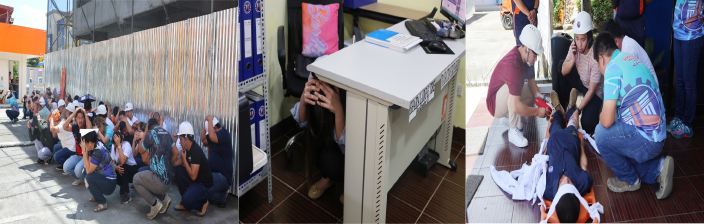
TACLOBAN CITY – The Tacloban City District Engineering Office (TCDEO) conducted the National Simultaneous Earthquake Drill (NSED) for the 3rd Quarter on September 26, 2024, aimed at strengthening the office’s preparedness for earthquake emergencies.
The drill was led by TCDEO’s Emergency Response Team (ERT), along with representatives from the Bureau of Fire Protection (BFP) Tacloban City, including Senior Fire Officer 1 (SFO1) Rowena C Bulawan, SFO1 Rodevic B Sipaco, and Fire Officer 2 (FO2) Eric Kim M Inovejas.
Following the drill, the evaluation committee, composed of SFO1 Bulawan, SFO1 Sipaco, and FO2 Inovejas, gave positive feedback on the office’s performance, awarding an impressive rating of 80%. The committee commended the efforts but also provided key recommendations to further improve future drills and enhance preparedness.
The recommendations included the need for proper first aid and Basic Life Support (BLS) training for the emergency response team (ERT), relocating evacuation area outside the immediate vicinity, and providing a tent for the Incident Command Post (ICP) and triage during the drill.
OIC- Assistant District Engineer Marichu T. Eduarte highlighted the importance of readiness, stating, “Our goal is to cultivate a culture of safety and preparedness within the office. Every drill brings us closer to ensuring that, in the face of a real disaster, our response will be swift, coordinated, and effective.”
The TCDEO continues to prioritize the safety of its personnel by conducting these drills and implementing the recommendations to be better prepared for any future earthquake situations. (PUBLIC INFORMATION UNIT)
SWIMMING COMPETITION. The city government of Borongan initiated the first ever open water swim meet held on Sept.21 participated by 80 swimming enthusiasts.
(BORONGAN INFORMATION OFFICE)
TACLOBAN CITY – Over 80 swimmers from various parts of Eastern Samar participated in the first-ever Borongan City Open Water Swim Meet held on September 21.
SWIMMING COMPETITION. The city government of Borongan initiated the first ever open water swim meet held on Sept.21 participated by 80 swimming enthusiasts. (BORONGAN INFORMATION OFFICE)
Unlike regular swimming competitions that take place in swimming pools, open water swimming is conducted in outdoor bodies of water, such as seas, lakes, oceans, or rivers.
The Borongan City Open Water Swim Meet was divided into four categories: Class A: 12 years old and below; Class B: 13 to 17 years old; Class C: 18 years old and above; and Open Category which was open to all contenders from Classes A, B, and C.
Initially scheduled for September 1, the event was postponed to September 21 by the city government due to inclement weather.
Each category’s winners received a trophy and cash prizes: P1, 000 for bronze, P1, 500 for silver, and P2, 000 for gold. (ROEL T. AMAZONA)
MEDICAL SCHOLARSHIP. The provincial government of Northern Samar renews its program offering scholarship for those who want to be a doctor. Once they finish their medical studies and passes the board, they are required to serve medical health facilities in the province.
MEDICAL SCHOLARSHIP. The provincial government of Northern Samar renews its program offering scholarship for those who want to be a doctor. Once they finish their medical studies and passes the board, they are required to serve medical health facilities in the province.
TACLOBAN CITY – The provincial government of Northern Samar is reopening applications for its medical scholarship program, specifically targeting fourth-year medical students, post-graduate interns (PGIs), and reviewees who are residents of the province.
The Northern Samar Medical Scholarship Board will begin accepting applications on October 14, 2024.
To qualify for the scholarship, applicants must meet the following criteria: a Filipino citizen and resident of Northern Samar; no pending administrative or criminal cases; good moral character, certified by the dean of the last school attended; physically and mentally fit; certified by a government physician; not more than 35 years old for incoming first-year students; and not more than 45 years old for upperclassmen
The applicant must have passed the National Medical Admission Test (NMAT) with a score of at least 50% and currently enrolled in a medical degree program at a school accredited by the Commission on Higher Education.
The applicant should not also be a related by affinity or consanguinity within the fourth civil degree to any owner of a pharmacy or laboratory operating in Northern Samar.
Successful applicants will receive a scholarship benefit package that includes tuition and review fees, along with allowances for living expenses, books, and uniforms.
Fourth-year medical students are entitled to a tuition fees of up to P100,000 per semester, paid directly to the school; stipend of P35,000 per semester; book allowance of P30,000 per semester; and a uniform allowance of P5,000 per semester.
Also, review class participants for the Medical Licensure Examination are eligible for: review fees of up to P60,000, paid to the review center; stipend of P35,000; book allowance of P30,000; and uniform allowance of P5,000.
Among the needed documents include a certified true copy of NMAT result (at least 50%); Philippine Statistics Authority authenticated birth certificate; clearance from the National Bureau of Investigation; voter’s certificate from the Commission on Elections; certificate of registration or other proof of enrollment; and certified true copy of transcript of records for the pre-medical course.
For indigents include certificate of indigency issued by the MSWDO where the applicant’s parent resides; medical certificate issued by a government physician within the last three months; drug test result within the last three months; psychological test result within the last 12 months; and certificate of good moral character from the last attended school.
Since the program was initiated by the provincial government in 2020, it has already accepted 22 scholars, according to John Allen Berbon, Chief of the Provincial Information Office.
“So far, we have four doctors already serving the province,” Berbon added.
Beneficiaries of the scholarship program will be required to provide service in government hospitals in the province after becoming licensed doctors, depending on the number of years they availed of the program. (ROEL T. AMAZONA)
EARTHQUAKE DRILL. Students and teachers from Siljagon Elementary School in Mapanas, Northern Samar, took part in a nationwide earthquake drill held on Thursday, Sept.26. The exercise aimed to prepare participants on how to respond effectively in the event of an earthquake. The drill focused on safety protocols, including “duck, cover, and hold” techniques, evacuation procedures, and the importance of staying calm during an emergency.
(JOE LOUIS GAJUTOS/MDRRMO)
EARTHQUAKE DRILL. Students and teachers from Siljagon Elementary School in Mapanas, Northern Samar, took part in a nationwide earthquake drill held on Thursday, Sept.26. The exercise aimed to prepare participants on how to respond effectively in the event of an earthquake. The drill focused on safety protocols, including “duck, cover, and hold” techniques, evacuation procedures, and the importance of staying calm during an emergency. (JOE LOUIS GAJUTOS/MDRRMO)
With causeway and convention center projects
TACLOBAN CITY — The city is set to undergo a dramatic transformation into a “Singapore-like” urban landscape, anchored by the ongoing construction of the Tacloban causeway and the planned International Convention Center (ICC).
These major infrastructure projects are part of a broader vision to turn Tacloban into a regional hub for tourism, business, and investment.
The national government has already earmarked P2.8 billion for the 2.56-kilometer causeway, which will connect downtown Tacloban, starting at Magsaysay Boulevard near City Hall, to the Daniel Z. Romualdez (DZR) Airport, traversing the picturesque Cancabato Bay.
The DZR Airport itself is now under major modernization plan to make it as airport of international standards.
According to Department of Public Works and Highways (DPWH) Regional Director Edgar Tabacon, the project is not just about building a faster route—it’s about transforming the city into a world-class destination.
“Our vision goes beyond infrastructure,” said Tabacon during a media interview.
“We aim to create a visually appealing structure that will draw tourists and investments to the city. The causeway and the nearby International Convention Center will help create a Singapore-like landscape that elevates Tacloban’s profile,” he added.
Currently, the causeway project is 9.66% complete, with civil works having begun in February last year.
The total cost is estimated at P4.79 billion, with P2.8 billion already allocated by the national government.
The remaining P1.99 billion is expected to be secured in 2025 and 2026, with support from Speaker Martin Romualdez and the House of Representatives.
Once completed, the causeway will reduce travel time between the city center and the airport from 45 minutes to just 10 minutes, featuring a four-lane road embankment, a central bridge, bike lanes, sidewalks, and wave deflectors for coastal protection.
However, what sets the project apart is its potential to be a key driver of tourism.
In coordination with the Department of Tourism, the DPWH is working on enhancing the causeway’s aesthetics to create a destination in its own right.
Plans include designated spaces for restaurants along both sides of Magsaysay Boulevard and near the airport, contributing to a vibrant, waterfront atmosphere.
“We’re committed to creating a Singapore-like landscape,” Tabacon said, highlighting that the planned International Convention Center, to be built nearby at the site of the former Leyte Park Resort and Hotel, will further complement the city’s development.
The ICC is envisioned to be a world-class venue for international conferences, exhibitions, and cultural events, cementing Tacloban’s status as a key player in the region.
As Tacloban moves forward with these transformative projects, the city is positioning itself as a prime destination for business and tourism, with the goal of creating a modern, resilient, and economically vibrant urban environment.








“Artificial intelligence in business: Leveraging AI for enhanced efficiency and decision-making”
In today’s fast-paced business world, the adoption of innovative technology has become a crucial determinant of success. Among these advancements, artificial intelligence (AI) stands out as a transformative force, revolutionizing the way businesses operate and make decisions. This article delves into the application of AI in business and how it enhances efficiency and decision-making processes.
The Role of Artificial Intelligence in Business
Artificial intelligence, a field within computer science, replicates human intelligence in machines. These machines are designed to learn from experience, adjust to new inputs, and perform tasks that typically require human intellect, such as interpreting data, recognizing speech, and solving problems. Within the business realm, AI is utilized to automate repetitive tasks, glean valuable insights from vast datasets, and improve the efficacy of decision-making procedures.
Enhancing Efficiency through AI
AI significantly improves business efficiency by automating routine tasks. By employing AI-powered tools, businesses can automate various operations, ranging from customer service through chatbots to inventory management through AI-powered supply chain systems. Automation not only saves time and reduces operational costs but also improves accuracy and consistency, minimizing human errors.
AI also enhances efficiency by streamlining workflow processes. Machine learning algorithms have the capability to pinpoint bottlenecks and inefficiencies within workflows, offering suggestions for enhancement. This leads to improved productivity and operational efficiency.
Influencing Decision-Making through AI
AI plays a pivotal role in business decision-making. AI’s major advantage lies in its capacity to swiftly and precisely analyze extensive datasets, proving to be one of its most substantial benefits. Through AI-powered analytics, businesses can extract valuable insights from data that would be impossible for humans to process manually. These insights can inform strategic decisions, ranging from product development to market expansion.
Predictive analytics, a subset of AI, allows businesses to forecast future trends and outcomes based on historical data. This capability is crucial in various business areas, such as sales forecasting, risk assessment, and demand planning. By leveraging predictive analytics, businesses can make proactive, data-driven decisions, gaining a competitive edge in the market.
Artificial intelligence serves as a powerful tool in the business realm, significantly enhancing efficiency and decision-making. As AI technology continues to advance, its influence on business operations and strategies will continue to grow. It is therefore crucial for businesses to understand and embrace AI, leveraging its capabilities to drive operational efficiency, inform strategic decisions, and ultimately, achieve business success. Indeed, AI is not just a technological innovation; it is a transformative force that is reshaping the business landscape.
The Future of AI in Business
The future of AI in business is poised for exponential growth and innovation. AI technologies will continue to streamline processes, enhance decision-making, and drive personalized customer experiences. Businesses will increasingly leverage AI for predictive analytics, automation, and real-time insights, leading to improved operational efficiency and strategic decision-making. AI-powered chatbots and virtual assistants will revolutionize customer service, while machine learning algorithms will optimize supply chains and forecast trends. As AI becomes more integrated into business operations, companies that embrace and adapt to these advancements will gain a competitive edge, fostering a landscape where AI is not just a tool but a strategic imperative for success.
————–
If you have any questions or would like to share your thoughts on the column, feel free to send an email to jca.bblueprint@gmail.com. Looking forward to connecting with you!