25.9 C
Tacloban City
June 28, 2026 - Sunday | 10:21 PM
Home Blog Page 497

DepEd Leyte exec lauds stakeholders for new school building in San Isidro town

0
Leyte Division Superintendent Mariza Magan
Leyte Division Superintendent
Mariza Magan

TACLOBAN CITY– Department of Education (DepEd) Leyte Division Superintendent Mariza Magan lauded the collective efforts of local stakeholders for the successful construction of a two-story, four-classroom building that will soon serve high school students in Barangay Basud, San Isidro, Leyte.

“Our partners have done everything to establish this building. I also commit that we will do everything to establish this school,” she said during the recent turnover ceremony.
Magan expressed her gratitude to local officials in the district like Rep. Anna Victoria Veloso-Tuazon (3rd district) and the Cabahug family, which donated the lot for their support in building the new facility.

In her speech, Magan praised the residents for having leaders who prioritize the education of their youth. “DepEd is only one sector of our community. We appreciate the leaders who have love for education. As the saying goes, ‘It takes a village to educate a child.’ Barangay Basud is blessed to have these leaders,” she said, urging parents to also contribute to their children’s education beyond the classroom.

Magan assured that DepEd Leyte continues to work to make education accessible to students in their own communities.

The new school building, constructed on a 1.1-hectare lot, will cater to more than 200 students from Basud and neighboring interior barangays, Banat-e and Biasong.
Rep. Veloso-Tuazon, known for her climate-related and sustainability efforts, highlighted the building’s role in addressing climate change impacts and fostering community resilience.

“We invest in human capital and in each other sustainably—through this building, through education,” she said, adding that the structure would serve as a “learning laboratory” for youth collaboration on nature-based solutions, data computing, natural resource accounting, and science-based decision-making.

Veloso-Tuazon also thanked the Department of Public Works and Highways (DPWH) for flood control mitigation in the building area, emphasizing that the facility would bring substantial benefits to the community.

(RONALD O. REYES)
PRO-8, DA- 8 launch Kadiwa Store to support PNP personnel and local farmers

0
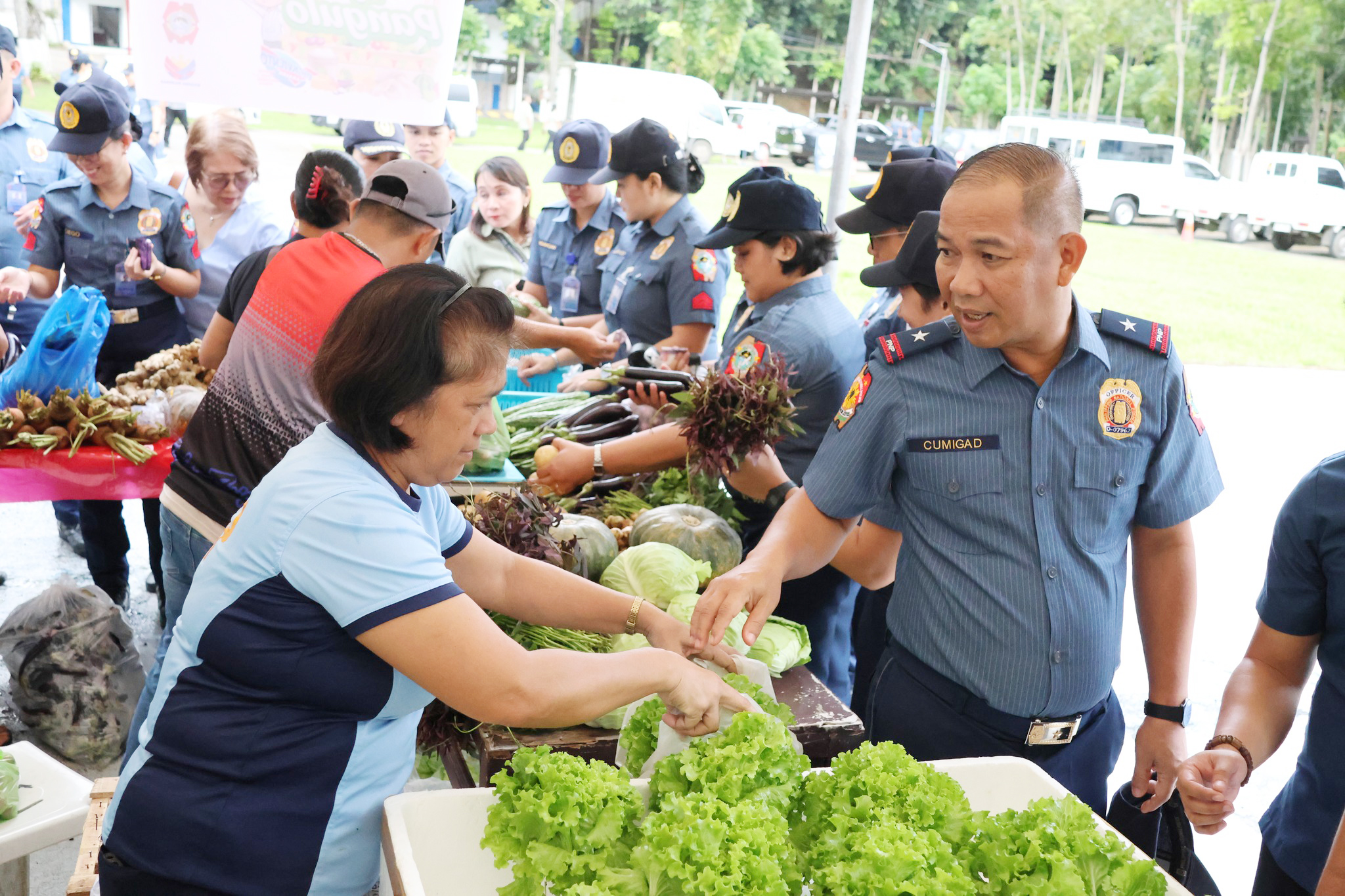
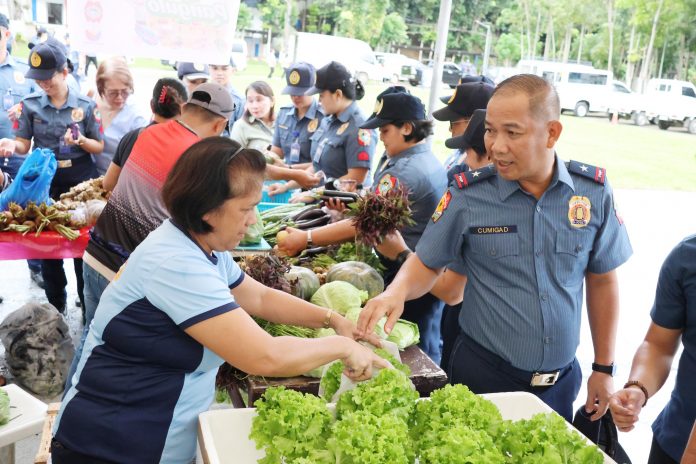
KADIWA FOR COPS. A memorandum of agreement was entered between the regional headquarters of the Philippine National Police under the leadership of B/Gen. Jay Cumigad, and the Department of Agriculture-8, for the putting up a Kadiwa right at the PNP headquarter, offering affordable agriculture products to the police personnel.(PRO-8)

TACLOBAN CITY – A meaningful partnership between the Police Regional Office 8 (PRO-8) and the Department of Agriculture (DA-8) was formalized through a memorandum of understanding (MOU) signed on April 4, 2025, at the PRO-8 Multipurpose Hall.
The initiative aims to bring affordable, accessible, and government-subsidized agricultural products closer to the personnel of PRO-8.

KADIWA FOR COPS. A memorandum of agreement was entered between the regional headquarters of the Philippine National Police under the leadership of B/Gen. Jay Cumigad, and the Department of Agriculture-8, for the putting up a Kadiwa right at the PNP headquarter, offering affordable agriculture products to the police personnel.(PRO-8)

The program is part of the national ‘Kadiwa ng Pangulo’ (KNP) initiative, designed to help both consumers and local producers by creating direct market access for farmers and fisherfolk while offering affordable, high-quality products to public servants.
DA Regional Executive Director Andrew Rodolfo Orais, who served as the guest of honor, underscored the value of inter-agency cooperation in tackling food security and economic accessibility.

“With this partnership, we aim to address two major challenges: increasing market access for producers and providing affordable food for consumers,” he said.

“Let us continue to cooperate, collaborate, and converge—for our farmers, fishers, and for our agri-fishery sector. Padayon ha pag-uswag para ha Sinirangan Bisayas!” Orais added.
Following the MOU signing, the ceremonial launch of the Kadiwa store was held at the PRO-8 Grandstand. Strategically located within the PRO-8 compound, the store will provide easy access to fresh produce and other agricultural products for police personnel and their families.

PRO-8 Regional Director PB/Gen. Jay Cumigad expressed strong support for the program, emphasizing its social and economic benefits.

“We fully support the Kadiwa ng Pangulo Program—not only for making affordable goods accessible to our personnel and their families, but also for empowering our farmers and small entrepreneurs,” he said.

“We remain committed to working hand in hand with partner agencies to help build a more inclusive and sustainable future.”

(LIZBETH ANN A. ABELLA/RONALD O. REYES)

Church says park was deteriorating; statue was already ‘severely damaged’

0

On the Pieta statue demolition

TACLOBAN CITY– The Diocese of Calbayog has addressed public outrage over the demolition of the Pieta monument and surrounding memorial park in downtown Catbalogan City, Samar explaining that the area had long deteriorated and lacked the resources for proper upkeep.

In a three-page statement released on Monday, April 7, Fr. Noel Labendia, diocesan judicial vicar, said the Church had to make a difficult decision to enter into an agreement with private investors to develop and maintain the site, which had become a “public urinal, a mini dumpsite, and a favorite hub for peddlers and vendors.”

The lot, which housed the Pieta statue commemorating the more than 4,000 victims of the 1987 M/V Doña Paz maritime disaster, many of whom were from Catbalogan, is owned by the Roman Catholic Bishop of Calbayog.

The monument was first developed in 1995 through the efforts of the Katbalogan-Metro Manila Residents Association and a partnership between the diocese and during the administration of former mayor Jesus Redaja.

Fr. Labendia stressed that the memorial had not been properly maintained for decades, and with no group stepping up to take responsibility, the Church had to turn to investors who could commit to developing the space sustainably.

“No single Catbaloganon or group ever stood out to develop it, until recently when feelers were sent to us. The Diocese does not have those [logistical] resources,” he said.

According to the priest, the Katbaloganon Foundation had expressed interest in developing the park as early as three years ago, but failed to proceed due to lack of funds.

The Diocese later engaged with several private firms like 7-Eleven, McDonald’s, Jollibee, and ultimately Shakey’s, which entered into an agreement to fund the park’s redevelopment, Labendia said.

The diocese said it pushed for certain conditions, including the preservation of the memory of the Pieta, proper public information, and an accessible design.

Fr. Labendia also claimed that the plan had been disclosed to the mayor’s office days prior to the demolition and was met with cordial acknowledgment.

Regarding the removal of the Pieta statue itself, Labendia clarified that the image had been severely damaged by time and the elements, becoming “so brittle and fragile” that it could no longer be preserved.

He said the diocese has asked the developer to replace it with a more durable replica, possibly in marble.

“Let’s all be clear: the image was just an ordinary cement material, not marble—a replica of the original Michelangelo from Italy,” he noted.

To recall, those who opposed the demolition of the Pieta statute claimed that it was made of marble from Italy and designed by a local artist, Alejandro Villarin.

The diocese also took a swipe at critics of the redevelopment, pointing out the lack of similar public outcry when other heritage sites like the Catbalogan Grandstand and Samar Sports Complex were converted into commercial spaces.

He ended the statement thanking those who continue to advocate for the preservation of heritage, but urged the public to also recognize the need for sustainable development and responsibility in maintaining memorial spaces.

(JOEY A. GABIETA)

Bracing for election

0

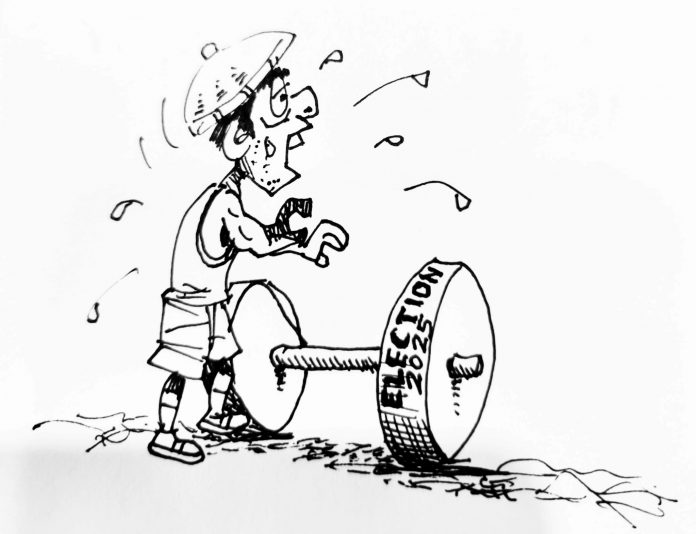
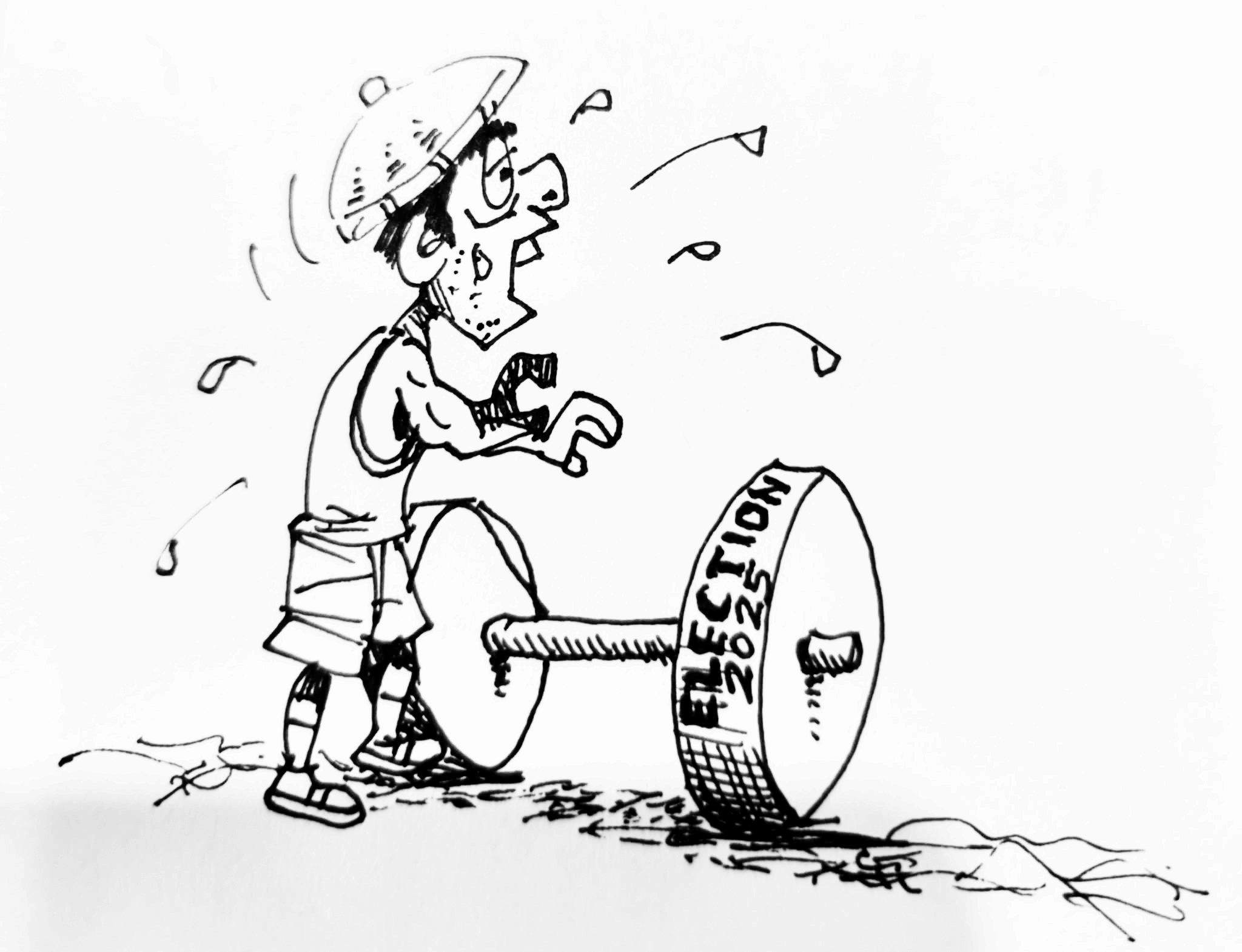
As the country draws near the election period, the ominous shadow of corruption, dynasties, and vote-buying political campaign vows returns. Voters once more bear the challenge of existing in a political climate replete with the usual dominating families, opportunistic political hopefuls, and convenience-coalitions-of-patronage political alliances. Lacking vigilance and discrimination, poor leadership, broken promises, and swarms of disillusionment will continue.

The campaign promised tidal wave will soon be inundating the public with most of its empty rhetoric designed to tug at emotions rather than articulating real policy. The candidates will parade their self-styled accomplishments, but scant few will reveal practical remedies for the country’s longstanding problems. Political rallies will turn into imperial pageants, funded by questionable means, with real issues like poverty, unemployment, and national security lost in the pomp and politics of personality. Without accountability, these vows will once more crumble after the votes are cast.

Vote-buying will continue to be an endemic blemish in the electoral process, with money, grocery bags, and other types of bribes being traded for political allegiance. In the rural areas, where poverty situations are most dire, the burden of a few hundred pesos may be more intimidating than worries about ability or honesty. Meanwhile, the internet will be an arena of disinformation where trolls and manufactured myths will try to influence the collective mind. The legitimacy of the election hinges on the ability of the voters to stand firm against such moves and prioritize merit over wealth.

Political dynasties continue to block genuine progress by influential clans with their name capital and popularity working to perpetuate the grip on power in their hands. These traditional clans, taking turns holding office among relatives, view politics not as a duty but as an inheritance. With limited fresh blood from the grassroots level, hopes for genuine reform do not seem bright. Political dullness crushes unconventional thinking and continues with the same political missteps that have tormented the country incessantly.

Our people need to exercise their critical thinking, look beyond the candidate’s slogans, and vote out those who abuse the system for personal interests. We need to demand clear, actionable platforms and hold the leaders accountable on election day and beyond. The ability to make a difference is not in the politicians’ hands but in an educated, ethical, and determined citizenry that will not settle for another six years of empty promises.

Insurmountable roadblocks

0

A farmer bends in his rice field under the scorching sun, smoothing his fingers over golden seeds he knows will not be enough. At harvest season, a middleman will come and negotiate him down to a price so low it will not even cover the seed and fertilizer. He’ll sigh, take the loss, and do it again next year—if he can afford to. This is the Filipino cycle of despair in agriculture, where sweat and toil end in heartbreak, not wealth.

The middlemen are vultures who come just in time to swoop in and grab what they can, leaving the farmers with leftovers. They set prices, knowing that farmers cannot bargain. If a sack of palay should be sold for twenty pesos per kilo, they will give ten. Take it or leave it. And leaving alone is not because the farmers themselves are already living in debt borrowed from loan sharks, fertilizer company suppliers, and machine rentals. These men toil under the blistering heat only to lose their sweat from the fruits of their labor as they fall into the hands of traders who take advantage of their misery.

And more so for people living in areas infested by NPA members. Armed men come knocking on doors, not to purchase crops, but to extort a “revolutionary tax” at gunpoint. It does not matter that the farmer is already making pennies. He has to pay, or else. Those who attempt to refuse may never be heard of again. Others escape to the city to evade extortion, leaving their land, their inheritance, and their sole source of livelihood. If the government can’t protect them, who can? Farming is difficult enough, but farming in fear is impossible.

And then there are the typhoons—ferocious, relentless, and merciless. Farmers don’t sow crops; they bet on the sky. When rains pour more violently than they should and the winds blow more strongly than they should, fields are cut to zero in a night’s sweep. A year’s work wiped out in hours. No insurance, no subsidies, no opportunity to recover. Farmers who lose each crop season just refrain from planting altogether. Why suffer again and again if nature herself appears to have a mind to defraud them?

And so, with all these calamities, it is not surprising that Filipino farmers have been minimized to subsistence-level agriculture. They do plant because they need to eat and not sell in markets. It’s not laziness, nor is it a lack of ambition—it’s sheer survival. The economy dictates mass production, but how can one produce at a large scale when the system itself guarantees failure? No one chooses to be poor; poverty is set up as a trap for them, and every road forward leads to another dead end.

Some critics will counter with, “Then why not change crops? Why not innovate? “ These are the sentiments of one who has never once mastered a plow. Farming is not business; it’s a way of life, subject to the caprices of weather, custom, and custom of long habitude. An irrigator rice farmer can’t be a cacao grower overnight. Experiment funds are lacking, quality training is out of reach, and no government scheme trickles down to reach those who are truly in need.

The large farm owners can diversify—but small farmers cannot. And thus, the exodus continues. Farmers abandon farms to migrate to the cities and labor on Manila’s construction sites, in Cavite factories, for whatever better-paying jobs than in the soil they used to till. The provinces, or the food pillar of the country, are forsaken. And when the farmers are away, then who will feed us? Who will bend their backs in the sun so rice keeps our plates full? The country is losing answers, and it is running out of farmers.

The answer is not complex. Farmers require honest prices, genuine government assistance, safety from insurgent groups, and protection from weather calamities. They require respect—not sympathy. As long as the system continues to treat them like throwaway trash, as long as middlemen continue to take them for a ride, and as long as farming becomes an unprofitable career once more, our fields will continue to vacate. And someday, we shall wake up to a nation that no longer knows how to feed itself.

Beyond the hype: An unfiltered look at the world of entrepreneurship

0

The entrepreneurial world is often portrayed as a glamorous, fast-paced journey to success, filled with innovation, disruption, and the thrill of building something from scratch. While this narrative holds some truth, it’s a heavily filtered lens that often overlooks the grit, uncertainty, and sheer hard work that fuels the entrepreneurial spirit.

This article aims to peel back the layers of the entrepreneurial myth and offer an unfiltered look at the reality of building a business. It’s a glimpse into the world of sleepless nights, relentless hustle, and the constant battle against doubt, all fueled by a burning passion and a relentless pursuit of a dream.

The Grind is Real:

Let’s start with the elephant in the room: entrepreneurship is hard work. It’s not a 9-to-5 job with predictable hours and guaranteed weekends. It’s a 24/7 commitment, demanding relentless dedication and a willingness to push yourself beyond your comfort zone. Expect long hours, late nights, and weekends spent working on your business, often sacrificing personal time and social activities.

Uncertainty is Your Constant Companion:

The entrepreneurial journey is riddled with uncertainty. You’re constantly navigating uncharted territory, facing unforeseen challenges, and adapting to a rapidly changing landscape. There are no guarantees of success, and failure is a real possibility. You need to be comfortable with ambiguity, embrace flexibility, and be prepared to pivot your strategy as needed.

The Rollercoaster of Emotions:

Entrepreneurship is an emotional rollercoaster. You’ll experience highs of exhilaration when you achieve a breakthrough, secure funding, or land a major client. But you’ll also face lows of frustration, disappointment, and self-doubt when things don’t go according to plan. Learning to manage your emotions, maintain resilience, and stay motivated through the inevitable ups and downs is crucial.

The Importance of Building a Strong Support System:

While entrepreneurship is often portrayed as a solo endeavor, it’s essential to build a strong support system. Surround yourself with mentors, advisors, and a network of like-minded individuals who can offer guidance, encouragement, and a listening ear. Seek out communities and events where you can connect with other entrepreneurs and learn from their experiences.

The Financial Reality:

The financial realities of entrepreneurship can be daunting. You’ll likely face periods of financial instability, tight budgets, and the constant pressure to generate revenue. Be prepared to make sacrifices, manage your finances wisely, and be patient as your business grows.

Beyond the Hype:

While the entrepreneurial journey is challenging, it’s also incredibly rewarding. The opportunity to create something from nothing, solve problems, and make a positive impact is a powerful motivator. The sense of accomplishment, the freedom to shape your own destiny, and the potential for growth and impact are all compelling aspects of the entrepreneurial life.

The Unfiltered Truth:

Entrepreneurship is not for everyone. It requires a unique blend of passion, resilience, and a willingness to embrace uncertainty. But for those who are driven by a vision, a desire to make a difference, and a relentless pursuit of their dreams, the entrepreneurial journey can be a transformative experience.

Final Thoughts:

The entrepreneurial world is a complex and multifaceted landscape. It’s a journey filled with challenges, rewards, and lessons learned. By embracing the unfiltered truth, understanding the realities, and building a strong support system, you can navigate the entrepreneurial path with greater clarity, resilience, and the potential to achieve your goals.
————–
If you have any questions or would like to share your thoughts on the column, feel free to send an email to jca.bblueprint@gmail.com. Looking forward to connecting with you!

Recent Posts

DALMACIO C. GRAFIL
PUBLISHER

ALMA GRAFIL
EDITOR-IN-CHIEF

ROMEO CEBREROS
OFFICE IN-CHARGE

OFFICE
BRGY. SONGCO, BORONGAN CITY

CONTACT NUMBERS
(055) 261 – 3319 | 0955 251 1533 | 0917 771 0320 | 0915 897 7439 | 0921 511 0010

DALMACIO C. GRAFIL
PUBLISHER

RICKY J. BAUTISTA
EDITOR

ALMA GRAFIL
BUS. MANAGER

OFFICE
RIZAL AVENUE, CATBALOGAN
(INFRONT OF FIRE DEPARTMENT, NEAR CITY HALL)

CONTACT NUMBERS
0917 771 0320 | 0915 897 7439 | 0921 511 0010

EMAIL
lsdaily2@yahoo.com

WEBSITE
www.issuu.com/samarweeklyexpress