TACLOBAN CITY — Police arrested Leyte’s No. 1 provincial most wanted person in Babatngon, Leyte on Friday in connection with a murder case filed in Eastern Samar, authorities said.
Arrested was Derick Sona, 18, jobless and a resident of Sta. Rita, Samar, at about 12:37 p.m. on Sept. 11 in Barangay Guintigi-an, Babatngon.
Sona was arrested by joint elements of the Quinapondan Municipal Police Station, Eastern Samar Police Provincial Office, Provincial Intelligence Unit, 805th Maneuver Company, Criminal Investigation and Detection Group–Eastern Samar Provincial Field Unit, Police Intelligence Team–Eastern Samar and Regional Intelligence Unit-8.
Police served a warrant of arrest issued by Judge Angelo Montallana Raagas of Branch 42 of the Regional Trial Court, Eighth Judicial Region, in Balangiga, Eastern Samar, dated Sept. 7, 2026.
The warrant was issued for murder under Article 248 of the Revised Penal Code, with no bail recommended.
Police said Sona is currently under the custody of the Quinapondan Municipal Police Station for proper disposition and further legal proceedings.
The arrest was carried out through a joint law enforcement operation based on the warrant issued by the court.
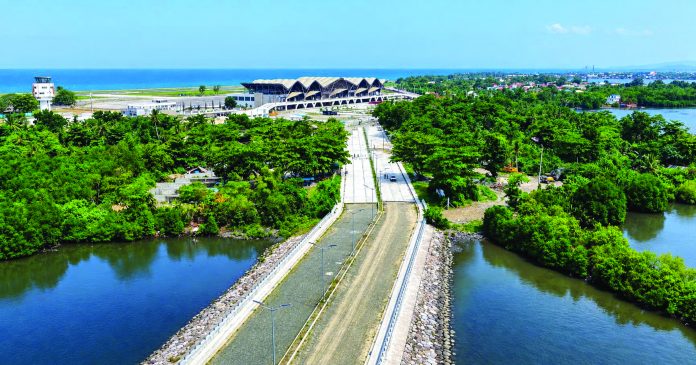
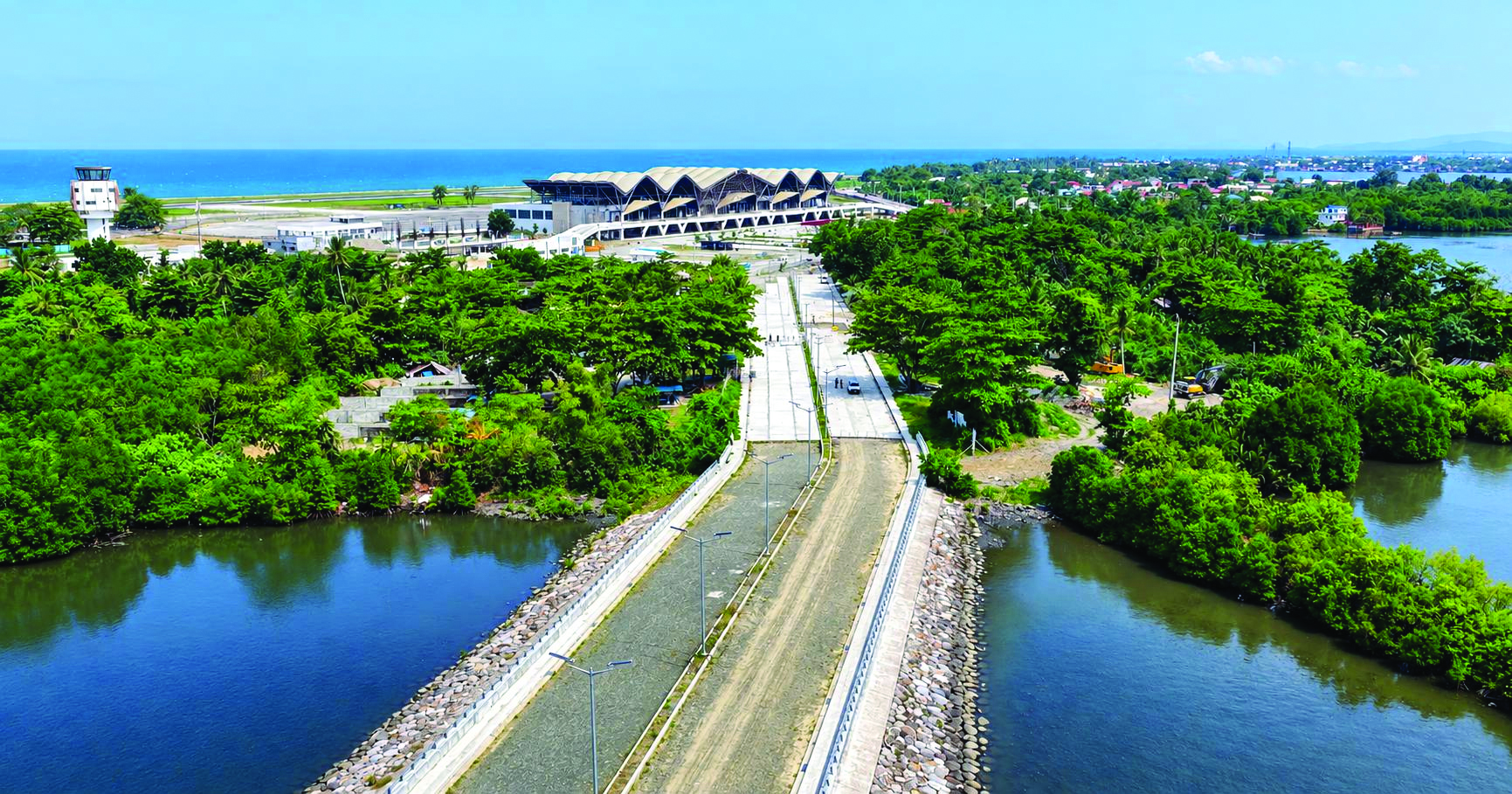
CAUSEWAY PROJECT. The 2.55-kilometer Tacloban City Causeway Project, which will connect downtown Tacloban with the Daniel Z. Romualdez Airport area, will continue despite the termination of six of its eight contracts. The DPWH Eastern Visayas office said it will conduct an inventory and assessment of completed and unfinished portions to determine which components can be pursued through rebidding or future funding. (DPWH-8)
CAUSEWAY PROJECT. The 2.55-kilometer Tacloban City Causeway Project, which will connect downtown Tacloban with the Daniel Z. Romualdez Airport area, will continue despite the termination of six of its eight contracts. The DPWH Eastern Visayas office said it will conduct an inventory and assessment of completed and unfinished portions to determine which components can be pursued through rebidding or future funding. (DPWH-8)
TACLOBAN CITY — The Department of Public Works and Highways (DPWH) in the region will reassess the P4.59-billion Tacloban City Causeway Project after six of its eight contracts were terminated, with the agency looking at which portions can still be completed through rebidding or future funding.
The DPWH said a joint inventory inspection with the Commission on Audit (COA) will be conducted to validate the actual accomplishments under the terminated contracts and determine the remaining components that can be pursued.
One of the project’s eight contracts, funded under the 2022 General Appropriations Act (GAA), has already been completed.
The remaining active contract, meanwhile, has been suspended because of obstructions involving electric posts and perimeter fences along the road leading to the new Daniel Z. Romualdez (DZR) Airport.
The DPWH said it is coordinating with the Leyte Electric Cooperative II (Leyeco II) and the Civil Aviation Authority of the Philippines (CAAP) to clear the obstructions and allow construction and paving works to resume.
The agency said the results of the inventory and assessment will guide decisions on whether to rebid unfinished portions or seek funding under future national government appropriations.
Completed portions under the terminated contracts will also be maintained to prevent deterioration and preserve their structural integrity while the assessment and procurement processes are being undertaken.
The DPWH said succeeding works would comply with applicable technical, environmental and other regulatory requirements.
The 2.55-kilometer, four-lane causeway will cross Cancabato Bay and connect downtown Tacloban, particularly the City Hall area along Magsaysay Boulevard, to the DZR Airport area in San Jose District.
Construction formally began in February 2023.
The project was initially announced in 2022 with an estimated cost of P3.46 billion, including an initial P990-million allocation for a 586-meter section. Subsequent funding increased the total project cost to about P4.59 billion.
The causeway includes a road embankment, bridge section, concrete canals, bike lanes, sidewalks and wave deflectors.
It is intended to provide an alternative route between downtown Tacloban and the airport, potentially cutting travel time from about 45 minutes through existing roads to around five to 10 minutes.
The project is also expected to improve traffic flow, shorten travel distance and reduce vehicle operating costs, while providing additional protection against storm surges and other weather-related hazards.
The Regional Development Council has sought enhancements to the project, including tourism features, aesthetic improvements and additional facilities.
The project has also faced environmental concerns because it traverses Cancabato Bay, which has mangroves and other marine resources.
In 2023, the Tacloban City Council temporarily halted construction over environmental concerns before the suspension was lifted. The DPWH later said it was considering design revisions, including a longer bridge and other measures to address environmental concerns.
DRY SPELL HITS RICE FARMS. Parched rice fields in Eastern Visayas show the impact of prolonged dry conditions on rain-fed farms. Farmers in parts of Samar and Leyte are facing potential crop losses and higher production costs as rainfall remains scarce and water sources decline. (Mark Gil Baldonado/Waraynon Vlog)
Impact of El Niño
DRY SPELL HITS RICE FARMS. Parched rice fields in Eastern Visayas show the impact of prolonged dry conditions on rain-fed farms. Farmers in parts of Samar and Leyte are facing potential crop losses and higher production costs as rainfall remains scarce and water sources decline. (Mark Gil Baldonado/Waraynon Vlog)
TACLOBAN CITY — Prolonged dry conditions have damaged at least 350 hectares of rice fields in parts of Eastern Visayas, with farmers facing an estimated P10 million in losses in Calbiga, Samar, and the prospect of sharply lower harvests in Alangalang, Leyte.
In Calbiga, the dry spell has affected at least 150 hectares of mostly rice fields involving 215 farmers in 38 of the town’s 41 barangays, according to the Municipal Agriculture Office.
Municipal Agriculture Officer Paolo Cabueñas said the affected fields are mostly rain-fed and have become vulnerable to the lack of rainfall that has persisted in the town for months.
“As of this time, this dry spell has affected 38 of our barangays involving 215 farmers covering 150 hectares with estimated losses of about P10 million,” Cabueñas said in a phone interview Tuesday, Sept. 8.
Calbiga has more than 3,000 hectares devoted to rice production, but only about 780 hectares are covered by irrigation systems, benefiting more than 490 farmers.
To help farmers cope, the municipal government has asked barangay officials to consider using their calamity funds to purchase water pumps that could draw water from nearby rivers.
However, Cabueñas said the local government is also promoting vegetable and high-value crop production by distributing seedlings to farmers as an alternative source of food and income.
In Alangalang, Leyte, the prolonged dry spell has also raised concerns over the town’s rice harvest.
Municipal Agriculture Officer Cesar Anade said the monitoring and validation of affected farmers is still ongoing, but initial estimates show that about 5% of the town’s 4,569 registered farmers may have been affected.
This translates to roughly 100 farmers cultivating at least 200 hectares of rice fields.
Anade said the dry spell has affected Alangalang since June and is expected to significantly reduce rice production this year.
“We can say that this dry spell will really result in the drop of our rice production for this year,” he said.
He estimated that the town could produce only about 20,000 metric tons of palay this year, half of its usual output of around 40,000 metric tons.
Alangalang has more than 6,000 hectares of agricultural land devoted to rice, making it one of Leyte’s major rice-producing areas.
Anade encouraged affected farmers to temporarily shift to vegetables and other heat-tolerant crops to supplement their income.
But providing water pumps to all affected farmers may not be feasible because water levels in rivers have also declined, he said.
The dry spell has also increased production costs for farmers who have access to water pumps.
A farmer in Alangalang, who requested anonymity, said she has been using an impounding well to irrigate her three-hectare non-irrigated rice farm.
“This was supposed to be supplemental because there was usually rain. But now that there is no rain, we have to operate the pump every day to irrigate the fields,” she said in Waray.
She said the prolonged dry spell has added more than P7,000 to their production expenses.
Under normal conditions, she said, one hectare could produce more than 100 cavans of palay. This year, however, she is uncertain how much she will harvest.
The situation underscores the vulnerability of rain-fed rice farms to prolonged dry conditions, as declining water supplies threaten yields while farmers with access to pumps face higher irrigation and fuel costs.
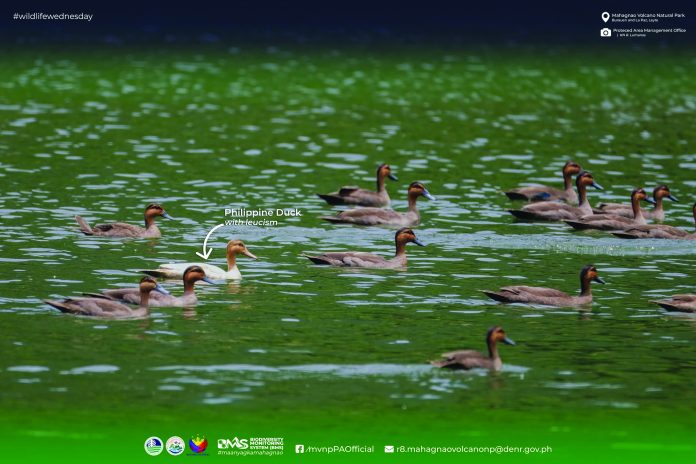
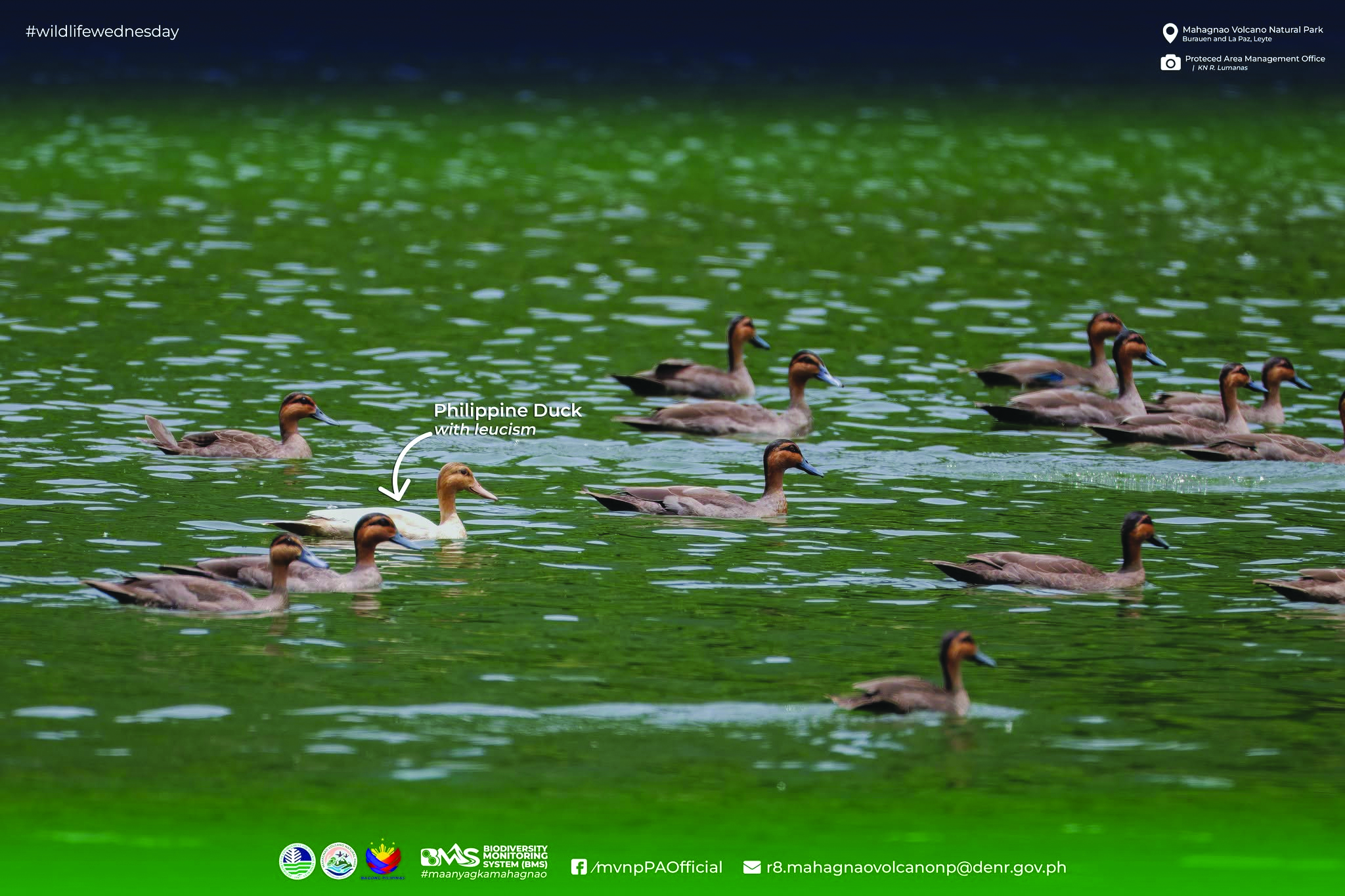
RARE SIGHTING. A leucistic Philippine duck (Anas luzonica) was documented for the first time at Lake Malagsum inside the Mahagnao Volcano Natural Park in Burauen, Leyte, on Sept. 7, 2026. The rare sighting was recorded by the park’s Biodiversity Monitoring Team during a routine patrol. (Photo courtesy of DENR-8)
RARE SIGHTING. A leucistic Philippine duck (Anas luzonica) was documented for the first time at Lake Malagsum inside the Mahagnao Volcano Natural Park in Burauen, Leyte, on Sept. 7, 2026. The rare sighting was recorded by the park’s Biodiversity Monitoring Team during a routine patrol. (Photo courtesy of DENR-8)
TACLOBAN CITY — A rare leucistic Philippine duck has been documented for the first time at the Mahagnao Volcano Natural Park (MVNP) in Burauen, Leyte, highlighting the protected area’s importance as a habitat for threatened and unique wildlife, the Department of Environment and Natural Resources (DENR) Region 8 said on Wednesday, Sept. 9.
The park’s Biodiversity Monitoring Team, under the Protected Area Management Office, recorded a single Philippine duck (Anas luzonica) at Lake Malagsum during a routine patrol by protected area rangers.
The DENR said the Sept. 7 sighting is the first documented occurrence of a leucistic Philippine duck in the protected area.
Leucism is a rare condition characterized by reduced pigmentation, resulting in unusually pale or white feathers. Unlike albinism, however, leucistic animals do not completely lose pigmentation.
The discovery adds to the biodiversity records of MVNP and underscores the importance of protecting its lakes, forests and wetlands, which provide habitat for various wildlife species.
The Philippine duck, a species endemic to the country, is classified as Vulnerable under DENR Administrative Order No. 2019-09. Its conservation is therefore covered by the provisions of Republic Act No. 9147, or the Wildlife Resources Conservation and Protection Act.
Under the law, killing or destroying a vulnerable wildlife species carries penalties of two years and one day to four years of imprisonment and a fine of P30,000 to P300,000.
Hunting, capturing or possessing vulnerable wildlife may also result in six months and one day to two years of imprisonment and a fine of P10,000 to P100,000, subject to the circumstances and applicable provisions of the law.
The DENR said the rare sighting demonstrates the value of regular biodiversity monitoring and patrols in protected areas, which help document wildlife populations and identify habitats that need continued protection.
Mahagnao Volcano Natural Park is a protected area in Burauen, Leyte, about 18 kilometers from the town center and roughly 50 to 65 kilometers south of Tacloban City. It is known for its volcanic landscape, lakes, forests, waterfalls, hot springs and wetlands.
The park was originally proclaimed a national park in 1937 and was later renamed Mahagnao Volcano Natural Park in 1998. Its lakes and surrounding forests provide important habitats for wildlife, including wild ducks.
The discovery of the leucistic Philippine duck at Lake Malagsum adds another significant biodiversity record to the protected area and reinforces the need to safeguard its natural habitats from disturbance and illegal wildlife activities.
TACLOBAN CITY — Eighty-seven farmers and fisherfolk in Leyte have received low-interest livelihood loans from the provincial government to help expand their agricultural and fishery enterprises.
The financial assistance, provided under the provincial government’s Community Assistance Program (CAP), ranged from P50,000 to P100,000 per beneficiary. Loan checks were released at the Provincial Government Complex.
The loans will support various livelihood activities, including fisheries, vegetable production and livestock raising.
The provincial government said the loans are payable on an installment basis, with first-time borrowers enjoying zero-interest financing. Those with good repayment records may qualify for re-loans to sustain or expand their enterprises.
Among the beneficiaries was 71-year-old Geronimo Belleza of Barangay Sta. Isabel in MacArthur, who received a P50,000 loan to cover major expenses for his tilapia farming operation.
Also availing of the program was 19-year-old college student Bejie Urtola of Barangay Villa Aurora in Burauen, who plans to use the loan to purchase hogs for a fattening venture.
With support from his parents, Urtola plans to raise the hogs and sell them after about four months. He said proceeds from the venture will help finance his education while giving him experience in managing a small agricultural enterprise.
The provincial government said the CAP is intended to provide small farmers and fisherfolk with access to affordable capital, allowing them to sustain their livelihoods and create opportunities for business expansion.
The program is among the priorities of Gov. Carlos Jericho “Icot” Petilla, who has emphasized accessible and affordable financing to help small farmers and fisherfolk start, sustain and strengthen their livelihood enterprises.
RELIEF FOR FIRE VICTIMS. Eastern Samar Gov. Ralph Vincent Evardone leads the distribution of food and construction materials to 28 families displaced by a fire that destroyed and damaged houses in Barangay 2, Maslog, Eastern Samar, on Sept. 5. The provincial government also pledged financial assistance to families whose homes were totally or partially damaged.
(Eastern Samar Provincial Information Office)
RELIEF FOR FIRE VICTIMS. Eastern Samar Gov. Ralph Vincent Evardone leads the distribution of food and construction materials to 28 families displaced by a fire that destroyed and damaged houses in Barangay 2, Maslog, Eastern Samar, on Sept. 5. The provincial government also pledged financial assistance to families whose homes were totally or partially damaged. (Eastern Samar Provincial Information Office)
TACLOBAN CITY — Twenty-eight families displaced by a fire that destroyed and damaged houses in Barangay 2, Maslog, Eastern Samar, have received immediate relief and rebuilding assistance from the provincial government.
Gov. Ralph Vincent Evardone led the distribution of aid, with each affected family receiving a sack of rice, a box of canned goods and construction materials, including galvanized iron sheets and plywood.
The fire broke out at around 6:18 p.m. on Sept. 5, leaving several families with totally or partially damaged homes, based on a partial assessment by the Municipal Social Welfare and Development Office (MSWDO).
Families whose houses were totally destroyed will also receive P25,000 each in financial assistance from the provincial government. Assistance for partially damaged houses will be determined after the completion of the damage assessment.
Evardone personally met with the affected families and assured them of continued provincial government support as they recover from the disaster.
The Department of Social Welfare and Development (DSWD) also extended assistance, providing sleeping kits, family kits and P10,000 in financial aid to the affected households.
The DSWD assistance followed a request from Eastern Samar Lone District Rep. Christopher Sheen Gonzales and House Minority Floor Leader and 4Ps Party-list Rep. Marcelino “Nonoy” Libanan.
Maslog Mayor Septemio Santiago thanked the provincial government, DSWD and other agencies for their immediate response, as well as the Bureau of Fire Protection (BFP) units from Maslog and Taft for their firefighting efforts.
Santiago also acknowledged Gonzales for visiting the affected families and Bishop Crispin Varquez for offering prayers and visiting the fire site.
The MSWDO continues to validate the extent of damage to the affected households. Further assistance may be extended once the assessment and the BFP’s official fire incident report are completed.
The municipal government said it will continue coordinating with national and provincial agencies to assist the affected families in rebuilding their homes and recovering from the incident.