
25.1 C
Tacloban City
June 28, 2026 - Sunday | 1:32 AM
Home Blog Page 1900

Drug leader, live-in partner arrested by Tacloban police in a sting operation

0

TACLOBAN CITY- One of the city’s high value target on drug watch was arrested by police authorities together with his live-in partner during a buy-bust operation.
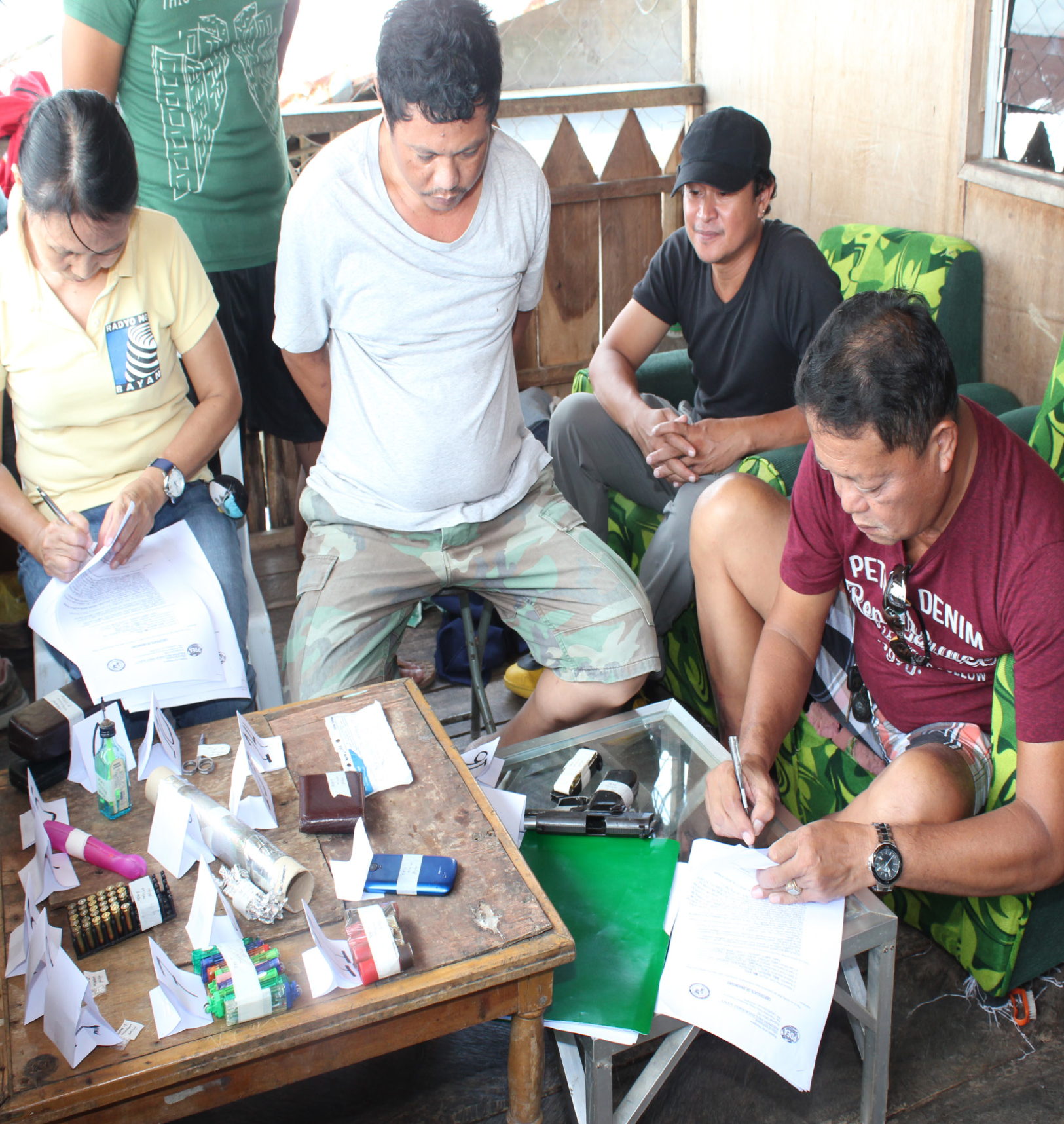
Arrested was Sherwin Costibolo, 37, during a sting operation Tuesday (Oct.11) at around 3:30 pm in Barangay 91, Abucay district, this city.
Also arrested was Costibolo’s live-in partner, Vida Sorayda Omlang.
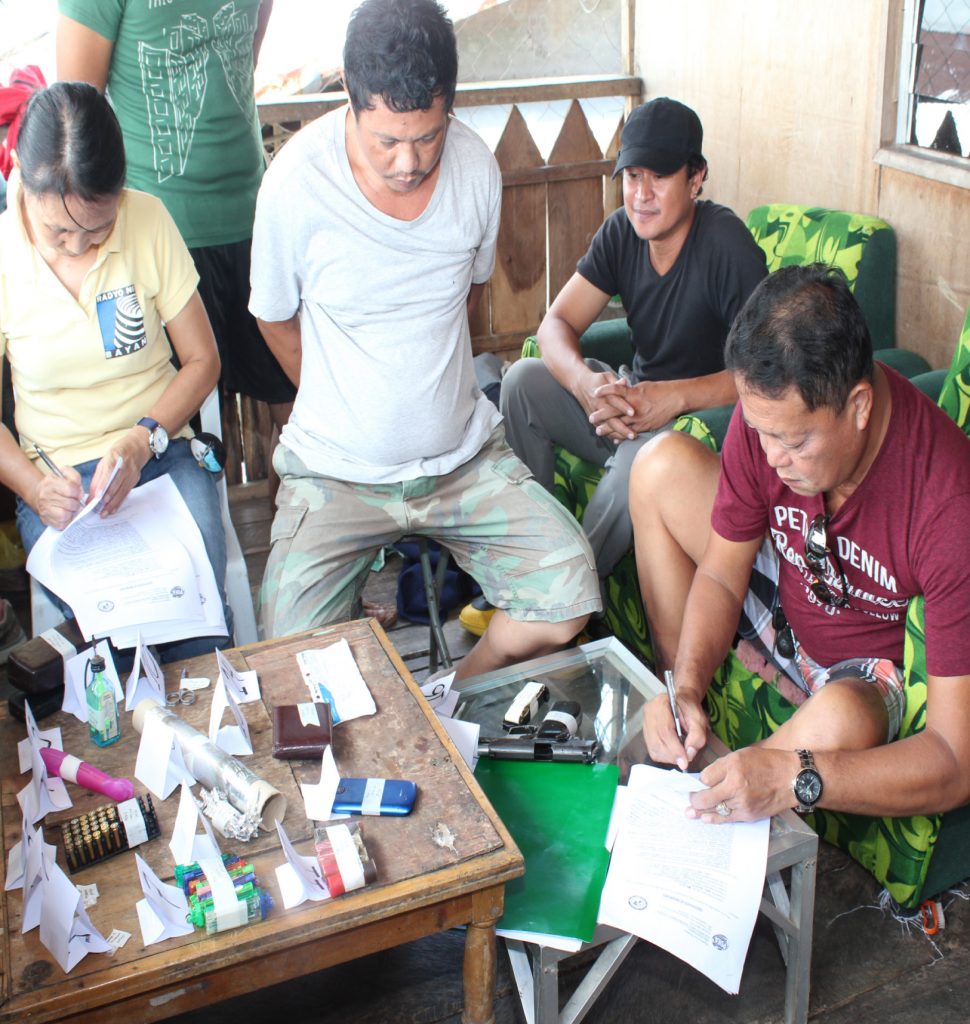
Seized from the two suspects were six pieces of medium size heat sealed transparent sachet containing suspected shabu, one unit Cherry Mobile cellular phone and three pieces of P100 bills being used as marked money.
Both suspects were listed as high value targets (HVTs) level 2 being Sub-Leaders of Quintana Group by the Tacloban City Police Station.
Confiscated pieces of drug evidence were turned over to the Regional Crime Laboratory Office (RCLO8) for qualitative and quantitative analysis while the pieces of non-drug evidence were turned over to TCPO evidence custodian.
Suspects are now under the custody of TCPO custodial facility while cases for violation of sections 5 & 11 of RA 9165 are being prepared for filing before the City Prosecutor’s Office.
The operation was conducted in coordination with Philippine Drug Enforcement Agency (PDEA) 8 under the supervision of S/Supt.Rolando Bade, acting city director of Tacloban City Police Office. (PR)

Popcom-8 chief optimistic on full implementation of RH law under Duterte administration

0

TACLOBAN CITY- The controversial reproductive health (RH) law is seen to be fully enforced under the current administration of President Rodrigo Duterte.
Thus said the regional director of the Commission on Population (Popcom) Elnora Pulma who said that there are still sectors that continue to refuse to implement the law approved in 2013.
Pres. Duterte had earlier said that he is committed in implementing Republic Act 10354, otherwise known as the Responsible Parenthood and Reproductive Health Act.
He made this commitment when he delivered his first State of the Nation Address (Sona) last July 25.
“Since its approval on January 17, 2013 and the signing of the internal rules and regulations on March 15, 2013, the road to the implementation of the law was not easy,” Pulma said.
The Catholic Church mainly opposes the passage of the law describing it as promoting abortion and even encouraging premarital sex.
Pulma said that the law, contrary to the perception and position of those who opposes it, will help the right of individuals like the right to health and right to sustainable development, among others.
The Popcom regional chief urged the media to help them to inform the public, particularly those who are against it, on its benefits.
“We need the media (and) the local government units as the primary implementer of the law,” Pulma said.
Pulma lamented that they have received reports that even those in the health sectors are also adamant in implementing RA 10354 on ground of their personal or religious convictions.
(LIZBETH ANN A. ABELLA)

Sec. Taguiwalo recommends livelihood program of DSWD for consideration of poor Filipinos

0

Department of Social Welfare and Development (DSWD) Secretary Judy M. Taguiwalo said that so long as there are surveys that reveal findings that the poverty or hunger incidence in the country remains high, the national government and all its agencies should take survey results to heart and push to improve and expand access to their services, especially if these services have directly to do with the immediate welfare of Filipinos.
The Social Weather Station (SWS) recently released its 3rd quarter survey on self-rated poverty. It showed that 42% of Filipino families rated themselves as poor, or an estimated 9.2 million individuals – this is a record-low.
Also, 30% of Filipino families or an estimated 6.7 million individuals consider the food they eat as food poor, again a new record-low. The survey was conducted on Sept 24 to 27.
“As we have said previously, there has to be a genuine agrarian reform program in the Philippines because this will benefit the greatest number of Filipinos. The largest percentage of our population is comprised of farmers – very poor and mostly landless farmers. A genuine agrarian reform program and sufficient agrarian support services will address the root causes of their poverty, and this immediately lowers the poverty incidence levels in the country,” Sec. Taguiwalo said.
As for the DSWD, Sec. Taguiwalo said that the Department will strengthen its Sustainable Livelihood Program (SLP) to complement the cash grants provided by the Pantawid Pamilyang Pilipino Program (Pantawid Pamilya) to its beneficiaries.
The program is also open to non-members who have been identified as poor by the DSWD’s Listahanan and come from marginalized and vulnerable sectors from 1,605 municipalities all over the country.
“As a community-based capacity building program, the SLP seeks to increase the economic opportunities of Filipinos through the Community-Driven Enterprise Development Approach. We want the SLP to equip poor Filipinos so they can actively contribute to production and labor markets by looking at available resources and accessible markets,” said Sec. Taguiwalo.
Towards this end, the SLP offers two tracks for Filipinos in the program: 1) micro-enterprise development which supports micro enterprises to become organizationally and economically viable; and 2) Employment facilitation which assists Filipinos to access appropriate employment opportunities.
In the meantime, Sec. Taguiwalo said that the DSWD is all set to launch “Kamustahan” which is essentially a verification campaign involving the members of Pantawid Pamilya. She said that the department will check on the true status of families under the program to see if they may have to graduate to the other programs so they will not slide back economically at the slightest shock or emergency. (PR)

15 Southern Leyte employees to complete drug rehab program

0

MAASIN CITY- The 15 employees of the Department of Public Works and Highways-Southern Leyte District Engineering Office (DPWH-SLDEO) who were found positive of illegal drugs use last year will complete the 11-month rigid recovery program on October 21.
District Engineer Ma. Margarita C. Junia is pleased with the progress of these workers. At least 14 of them received the “fit to work” certificate from the Department of Health Treatment and Rehabilitation Center (DOH-TRC).
“I’ve seen how their performance has improved during the rehabilitation process. After their graduation, they will be monitored regularly by the DOH-TRC to ensure that they will completely abandon illegal drugs,” Junia said.
Key officials of the DPWH-SLDEO and DOH-TRC will witness the graduation rites.
To recall, 23 employees were found positive of illegal drugs use – 17 are job order workers and six permanent personnel – during the August 17, 2015 drug test.
Junia initiated the rehabilitation program of 23 workers giving them “chances to change”, but only 16 of them opted to join the weekly outpatient service program sessions being done by DOH-TRC.
The district office required permanent employees to undergo a mandatory rehabilitation program. Dismissed job order workers were given the option to go through the recovery process.
The SLDEO provided a space at the SLDEO Area Equipment Service compound for the conduct of weekly session for drug users. The weekly sessions started on October 2015.
The battle is not yet over for six regular employees who are facing administrative cases at the DPWH central office for drugs use.
Recently, lawyers from the DPWH main office legal division came to Southern Leyte to conduct hearing of their administrative case as a means to mitigate possible consequences
After the hearing, DPWH Secretary Mark Villar will decide whether to dismiss or impose disciplinary actions to the six regular workers. (PR)

Indian national draws portrait of ‘Digong’

0
indain
Neeraj George

du30

TACLOBAN CITY- Neeraj George is an Indian national but is proud to say that President Rodrigo “Digong” Duterte is an idol of him.
The 49-year old George idolized the country’s controversial President so much that he made a portrait of Mr. Duterte using a computer application known as Microsoft paint.
The Indian national, who now considers Guiuan in Eastern Samar as his second home next to New Delhi, said that he painstakingly drew the portrait of the President as a proof how he admires the country’s 16th Chief Executive.
According to Neeraj, it took him “hours” to finish working on the portrait of the President.
“Duterte is an idol. He walks the talk. He is not a politician because politicians lie. He makes good of his promises when he was campaigning for President,” George said.
“He is real and he is doing a good job,” he added, referring to the President.
According to him, he campaigned for the former mayor of Davao City when he ran for the presidency during the May 9, 2016 elections.
What struck George to Mr. Duterte was his campaign to address the country’s problem on the proliferation of illegal drugs.
George said that he hates illegal drugs so much, particularly methamphetamine hydrochloride or shabu, that he asked his son, Shaolin, to stop his studies for fear that that he might fall victim to the drug menace.
“I am supportive of his campaign on the illegal drugs because that is for the future of our children and of this country,” he said.
Pres. Duterte is waging a controversial and brutal war against the proliferation of shabu in the country that earned him criticisms from various foreign governments and organizations like the United States and the United Nations.
Human rights group and the influential Catholic Church in the country have also voiced their opposition to the campaign as these resulted to so-called extrajudicial killings.
But for George, the President is doing the right thing on his campaign to stamp out shabu in the country.
“My advice to the people is to pray for his safety because the more he stays with us, the Philippines will be safer,” George said.
He said that if given the chance, he would like to personally give his computer-generated painting to the President himself.
“I just want to show my appreciation and love, as an Indian national, to the President of the Philippines, “George added referring the reason why he made a portrait of Mr. Duterte.
Incidentally, George made a similar portrait of Sheik Zayed bin Sultan Al Nahyan, president of the United Arab Emirates where he worked in a shopping mall.
George said that he idolized the late sheik because he led in transforming his country into what it is now as among the most economically developed in the world.
It was in Dubai, the capital of UAE, where he met his future wife, Monalisa Cabanban, who worked in the same shopping mall as a cashier.
Cabanban, who is from Pamplona, Cagayan Valley, has a son from a previous marriage, Francis, who is married to a native of Guiuan, Alma, reason why she and George now live there.
They have been in Guiuan for six years now where they put up six computer shops and a restaurant offering Indian foods.
Shaolin helps his father manage their businesses.
When Guiuan was devastated by supertyphoon ‘Yolanda’ in 2013, they opened their computer shops for free to allow the local residents to inform their loved ones of their conditions.
For now George said that, aside from admiring the President, he also fell in love with Guiuan and wants to stay there for good. (JOEY A. GABIETA)

SC decision on RH law could result in a thousand maternal deaths a year

0

GOVERNMENT CENTER,PALO,Leyte- The struggle for the full and unrestrained implementation of the Responsible Parenthood and Reproductive Health Law of 2012 (RA 10354) has reached a crucial level today as the Department of Health contests the recent Supreme Court decision of August 24, 2016 by filing a motion for reconsideration before the highest court.
The SC decision, if uncontested, could put to a halt the most effective methods of the Family Planning program which is being implemented by the DOH and the Commission on Population (Popcom) through local government units and civil society nationwide and lead to increased mortality and morbidity among women and infants.
“If carried out, the SC decision could result in over 900 additional maternal deaths every year arising from almost 1 million unintended pregnancies that could have been addressed by the full implementation of the Family Planning Program,” POPCOM Executive Director Juan Antonio Perez III asserted.
“This would mean a 30% rise in maternal deaths in the country,” Perez said.
Although the RH Law was passed in 2012 and its implementing rules and regulations were approved in March 2013, there have been restraints through TROs on its implementation for 28 months in the last 3 and a half years.
President Rodrigo Duterte called for the full implementation of the law in his State of the Nation Address as late as last July.
The DOH’s National Implementation Team (NIT) for the RH Law headed by former Secretary Esperanza Cabral had recommended an Executive Order that would accelerate the implementation of the law through community-based, house to house campaigns to reach out to the 4 million women and men who wanted to avail of the program.
“Those who opposed the law in the legislative arena are now trying to reverse the judgment of history through backdoor judicial dilatory tactics, but the millions of Filipinos who stand to benefit from the law will surely bring all of this to an end. The inevitable deaths of hundreds of women and unborn infants will surely haunt those who want to undo an essential public health program,” Perez stated.
The Popcom has headed the Secretariat of the RH Law National Implementation Team (NIT) since January, 2015. In its annual reports, the NIT has noted the steady progress of the law’s implementation as the number of women and men using modern family planning methods have increased from 38% in 2013 to 43% in 2015.
However, the TRO on the popular progesterone subdermal implant (PSI) since June 2015 has hampered the further expansion of the family planning program.
The Supreme Court has also stopped the re-registration of current contraceptive methods approved by the Food and Drug Authority (FDA) since June, 2015. This has led to the withdrawal from the market (and family planning program) of 14 out of 48 registered contraceptives in the country. New contraceptives are also effectively barred by the SC TRO.
“By the end of 2017, more than half of the contraceptives will lose their registration and Filipino consumers will be faced with more expensive products while the government will also be limited in the choice of methods to procure. This is certainly a far cry from the expectations of the people in 2012 when the law was approved by the people’s legislators,” Perez stressed.
The Commission on Population called on the Supreme Court to reverse its decision and lift the TRO and allow the unrestrained implementation of RA 10354. (PR)

Recent Posts

DALMACIO C. GRAFIL
PUBLISHER

ALMA GRAFIL
EDITOR-IN-CHIEF

ROMEO CEBREROS
OFFICE IN-CHARGE

OFFICE
BRGY. SONGCO, BORONGAN CITY

CONTACT NUMBERS
(055) 261 – 3319 | 0955 251 1533 | 0917 771 0320 | 0915 897 7439 | 0921 511 0010

DALMACIO C. GRAFIL
PUBLISHER

RICKY J. BAUTISTA
EDITOR

ALMA GRAFIL
BUS. MANAGER

OFFICE
RIZAL AVENUE, CATBALOGAN
(INFRONT OF FIRE DEPARTMENT, NEAR CITY HALL)

CONTACT NUMBERS
0917 771 0320 | 0915 897 7439 | 0921 511 0010

EMAIL
lsdaily2@yahoo.com

WEBSITE
www.issuu.com/samarweeklyexpress