ECO-TOURISM IN THE MAKING — Samar Governor Sharee Ann Tan and Mayor Via Mabag inspect the proposed mangrove safari site in Pinabacdao, a 575-hectare mangrove forest being developed as a future eco-tourism destination. The project aims to promote environmental conservation while creating livelihood opportunities for coastal communities.(GOVERNOR ANN TAN FACEBOOK)
ECO-TOURISM IN THE MAKING — Samar Governor Sharee Ann Tan and Mayor Via Mabag inspect the proposed mangrove safari site in Pinabacdao, a 575-hectare mangrove forest being developed as a future eco-tourism destination. The project aims to promote environmental conservation while creating livelihood opportunities for coastal communities.(GOVERNOR ANN TAN FACEBOOK)
TACLOBAN CITY — Provincial and local officials are pushing to develop a mangrove safari in Pinabacdao town into a key eco-tourism destination in Samar, highlighting its vast mangrove ecosystem and potential to generate sustainable livelihood for communities.
An on-site inspection was recently conducted by Governor Sharee Ann Tan and Mayor Via Mabag to assess the site’s readiness and prospects as part of the province’s growing tourism portfolio.
The project is anchored on the provincial government’s push for community-based and environmentally sustainable tourism, with a focus on protecting and showcasing Samar’s rich coastal resources.
The Pinabacdao Mangrove Safari spans around 575 hectares of mangrove forest across seven coastal barangays and is home to 19 to 20 mangrove species, including some endemic to the area.
Once developed, the site is expected to offer guided tours and nature-based activities such as kayaking and boating, giving visitors an immersive experience of the mangrove ecosystem while promoting environmental awareness.
Governor Tan underscored the importance of striking a balance between economic development and environmental conservation, noting that eco-tourism projects like the mangrove safari can create income opportunities for residents without compromising natural resources.
Mayor Mabag, for her part, said the initiative could position Pinabacdao as an emerging eco-tourism hub, boosting local economic activity and attracting more visitors to the area.
The mangrove safari is also being eyed for inclusion in the Spark Samar Tandaya Trail Tourism Circuit, a provincial program that links various destinations to offer a more integrated travel experience across Samar.
Officials expressed optimism that with its unique landscape and biodiversity, the Pinabacdao Mangrove Safari will soon become a major addition to the province’s list of nature-based attractions.
MODERN FISH PORT PUSH — Eastern Samar Lone District Rep. Christopher Sheen Gonzales highlights the benefits of modern fish ports with cold storage facilities, saying these infrastructure projects aim to improve fisherfolk income, reduce post-harvest losses, and stabilize seafood supply in coastal communities across Eastern Samar.
(CONGRESSMAN SHEEN GONZALES FACEBOOK)
MODERN FISH PORT PUSH — Eastern Samar Lone District Rep. Christopher Sheen Gonzales highlights the benefits of modern fish ports with cold storage facilities, saying these infrastructure projects aim to improve fisherfolk income, reduce post-harvest losses, and stabilize seafood supply in coastal communities across Eastern Samar. (CONGRESSMAN SHEEN GONZALES FACEBOOK)
TACLOBAN CITY — The push to modernize fish port infrastructure with cold storage facilities is expected to significantly improve incomes and living conditions in coastal communities, according to Eastern Samar Lone District Rep. Christopher Sheen Gonzales.
Gonzales, a member of the House committee on aquaculture and fisheries, said modern fish ports create wider economic opportunities beyond fishing, strengthening the entire fisheries value chain from production to processing and distribution.
“The development of modern fish ports with cold storage creates a ripple effect of economic opportunities. It strengthens the fisheries sector while opening doors for processing, logistics, and related industries,” Gonzales said in a statement.
He added that such facilities also benefit consumers by ensuring access to fresher seafood at more stable prices while reducing post-harvest losses common in traditional fish handling systems.
Gonzales, together with 4Ps Party-list Rep. Marcelino Libanan, authored bills seeking to establish state-run fish ports with cold storage facilities in the coastal municipalities of Dolores and Oras.
The lawmaker outlined several key benefits of the proposed infrastructure, including job creation in port operations, ice production, fish processing, transport, and logistics services, as well as reduced fish spoilage due to improved storage systems.
He also said the facilities would allow small-scale fisherfolk to avoid “rush selling,” enabling them to wait for better market prices and reducing dependence on middlemen and informal lenders.
Other expected benefits include more stable seafood prices in local markets, expansion of value-added seafood industries such as dried and processed fish products, and improved access to larger markets including Metro Manila and other urban centers.
Gonzales also noted that cold storage systems can serve as a buffer during disasters, ensuring continuous seafood supply even when fishing operations are disrupted by typhoons.
He emphasized that investing in modern fish port infrastructure is a long-term strategy for strengthening food security, boosting economic resilience, and promoting inclusive growth in coastal communities.
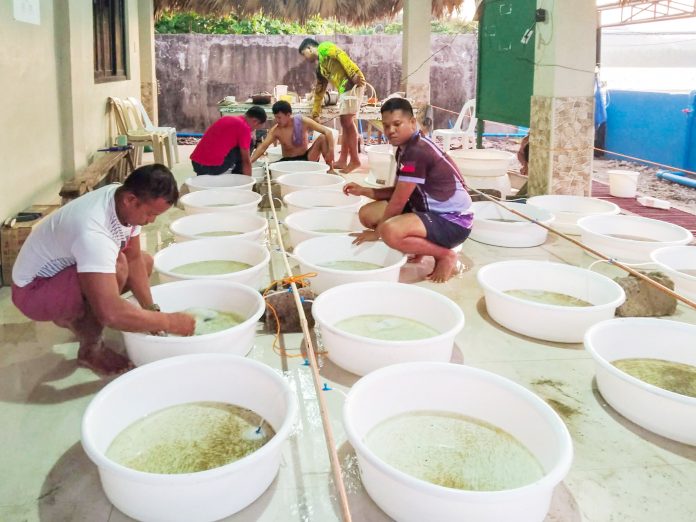
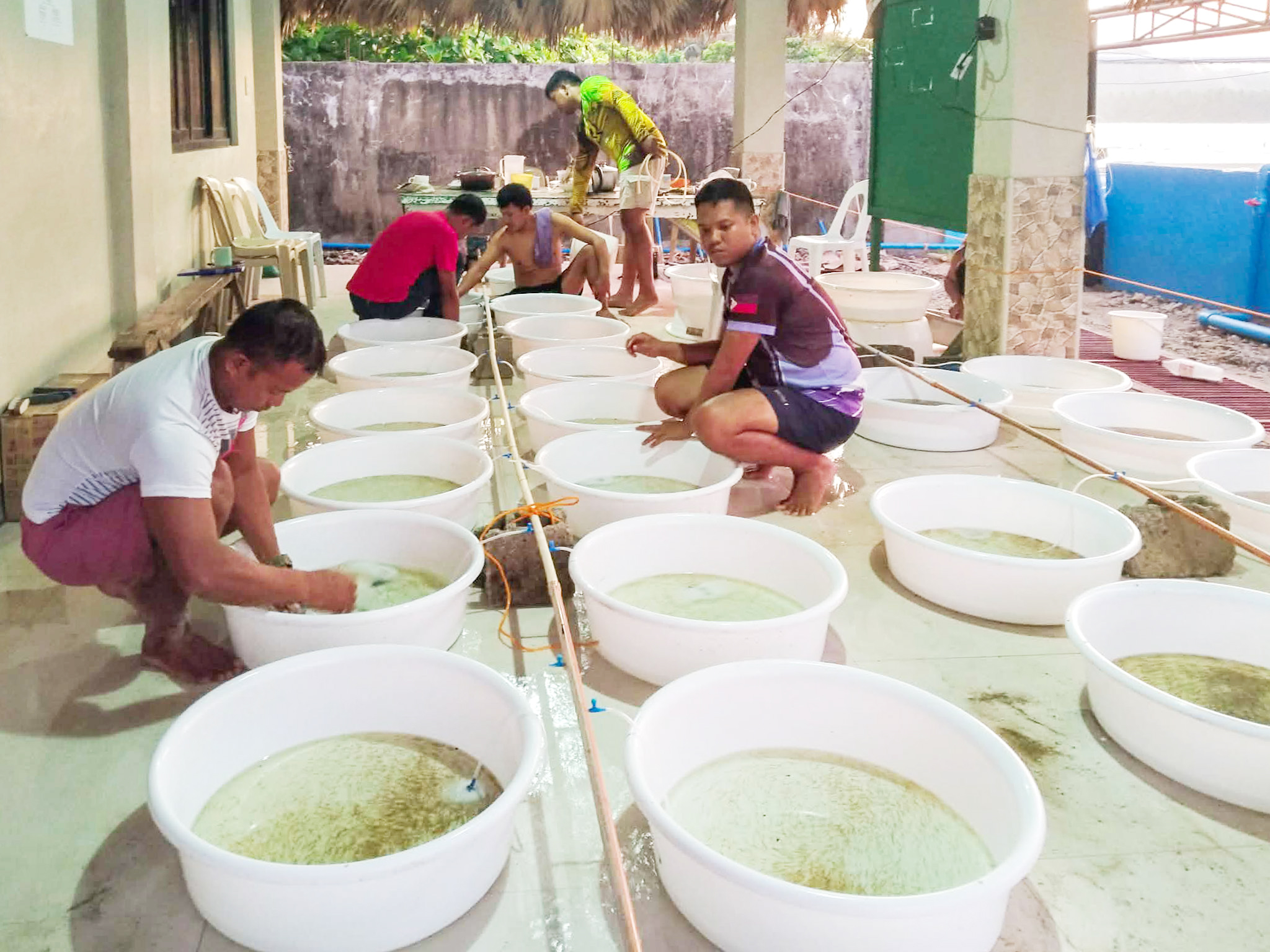
BOOSTING BANGUS PRODUCTION — Personnel from the Bureau of Fisheries and Aquatic Resources transport milkfish (bangus) fry to aquaculture facilities in Samar and Northern Samar as part of efforts to strengthen fish production in Eastern Visayas. The initiative supports local fish growers under a program that ensures a steady supply of fingerlings for fish ponds and cages.
(BFAR EASTERN VISAYAS)
BOOSTING BANGUS PRODUCTION — Personnel from the Bureau of Fisheries and Aquatic Resources transport milkfish (bangus) fry to aquaculture facilities in Samar and Northern Samar as part of efforts to strengthen fish production in Eastern Visayas. The initiative supports local fish growers under a program that ensures a steady supply of fingerlings for fish ponds and cages. (BFAR EASTERN VISAYAS)
TACLOBAN CITY — The Bureau of Fisheries and Aquatic Resources(BFAR) in Eastern Visayas has ramped up its aquaculture support program with the distribution of 895,000 milkfish (bangus) fry to key production facilities in Samar and Northern Samar, aiming to boost fish supply and support local growers.
The fry were transported between March and April 2026 to the Jiabong Aquaculture Production and Technology Center and the Regional Brackishwater Aquaculture Production Center, where these will be raised into fingerlings for eventual stocking in fish cages and ponds across the region.
BFAR-8 said the fry were sourced from government hatcheries, including the Guiuan Marine Fisheries Development Center, Laoang Multi-Species Hatchery, and San Jose Legislated Hatchery, which produced 65,000, 610,000, and 220,000 fry, respectively.
Once matured over one to two months, the fingerlings will be distributed to at least 78 aquaculture operators under the agency’s Stock Now, Pay Later Program.
The scheme allows beneficiaries to pay after harvest, either in cash or by returning a portion of their yield, which can then be redistributed to other fisherfolk.
The initiative is part of BFAR’s broader effort to strengthen aquaculture production in Eastern Visayas by ensuring a steady supply of quality stocking materials while easing financial burden on small-scale operators.
Complementing the program, BFAR-8 is also conducting consultative forums with private stakeholders to increase fry and fingerling production and enhance collaboration between the government and the aquaculture sector.
The agency currently operates nine production stations across the region, serving as sources of quality fish stocks to sustain the growth of the aquaculture industry.
Fishpond and fish cage operators interested in joining the program are encouraged to coordinate with their respective provincial fisheries offices or BFAR’s Fisheries Production and Support Services Division for application details.
Jacqueline Gulrajani of Tacloban City showcases her national costume titled “Waves of Courage, The Heart of Hope” during the Miss Universe Philippines 2026 National Costume Competition held on April 16, 2026, at the Urdaneta City Cultural and Sports Center, where she placed in the Top 6 and highlighted Tacloban’s resilience after Super Typhoon Yolanda (Haiyan).(Photo Courtesy)
Jacqueline Gulrajani of Tacloban City showcases her national costume titled “Waves of Courage, The Heart of Hope” during the Miss Universe Philippines 2026 National Costume Competition held on April 16, 2026, at the Urdaneta City Cultural and Sports Center, where she placed in the Top 6 and highlighted Tacloban’s resilience after Super Typhoon Yolanda (Haiyan).(Photo Courtesy)
TACLOBAN CITY — Tacloban City’s representative to Miss Universe Philippines 2026, Jacqueline Gulrajani, earned a Top 6 finish in the Best in National Costume category, drawing attention for a deeply symbolic ensemble that paid tribute to the city’s resilience after Super Typhoon ‘Yolanda’ (international name:Haiyan).
Her costume, titled “Waves of Courage, The Heart of Hope,” was showcased during the national costume competition held on April 16, 2026, at the Urdaneta City Cultural and Sports Center.
Designed by Charlotte Rodriguez, the outfit was inspired by Tacloban’s experience in the aftermath of one of the country’s most devastating natural disasters. It featured wave-like structures that represented both destruction and renewal, reflecting the city’s journey from tragedy to recovery.
Beyond its visual impact, the costume conveyed a narrative of endurance and collective strength, portraying Tacloban as a community that rebuilt itself through determination and hope. The flowing design elements symbolized forward movement and the continued rebuilding of lives and livelihoods.
Gulrajani’s placement in the Top 6 highlighted the growing role of storytelling in pageant presentations, where cultural identity and historical reflection are increasingly central to competition.
The Miss Universe Philippines 2026 pageant continues toward its grand coronation night scheduled for May 2, 2026, at the SM Mall of Asia Arena, where Gulrajani will compete for the national crown.
OUTSTANDING MOTHER. Rosario Amor(4th from left), a 44-year-old solo parent from Tacloban City, shares her story of resilience as she raises five children—three with autism spectrum disorder—while working as a tricycle driver, a role she took on to provide for her family amid hardship and adversity. (AILEEN GRAFIL)
OUTSTANDING MOTHER. Rosario Amor(4th from left), a 44-year-old solo parent from Tacloban City, shares her story of resilience as she raises five children—three with autism spectrum disorder—while working as a tricycle driver, a role she took on to provide for her family amid hardship and adversity. (AILEEN GRAFIL)
TACLOBAN CITY — In a quiet corner of San Jose District, this city, a small house holds a story of endurance that reads like a ‘teleserye’—only this one is real, lived daily by 44-year-old Rosario Amor, a solo mother raising five children, three of whom are diagnosed with autism spectrum disorder.
For Amor, each day is a balancing act between survival and sacrifice. Her eldest is 18 girl, followed by children aged 15, 13, both boys and all with the disorder; 12, and four, both boys.
Despite the challenges of raising children with special needs, she remains firm in her resolve to keep her family together.
“I have to continue living and remain strong for my young children, especially the three of them,” Amor said in an interview.
Amor was recently recognized as Tacloban City’s Most Outstanding Solo Parent during the Solo Parent Week celebration, a rare moment of acknowledgment for years of quiet struggle.
She admitted she does not know exactly why three of her children are on the autism spectrum, though she suspects genetics may have played a role, noting that relatives on her estranged husband’s side had similar conditions.
Her journey as a mother has been shaped not only by poverty but also by domestic abuse.
Amor revealed that she left her husband after enduring repeated violence during their marriage, including incidents while she was pregnant.
“He would hit my head and stomach. At one time, he even hit me with a frying pan,” she recalled.
With no stable income and no formal work experience after marriage, she returned to her family home and began rebuilding her life from scratch. She tried working at a food stall, but the income was not enough to sustain her growing household.
Eventually, Amor made a difficult but necessary decision—she became a tricycle driver, a job dominated by men, just to provide food for her children.
“At least as a driver, I have a daily income to buy food for them,” she said.
Her work, however, comes with added challenges at home. While she is on the road, she often locks her children inside their house to ensure their safety. On one occasion, her 12-year-old child managed to leave unnoticed and was later found in Dulag, Leyte after two days.
“It’s not easy having children like them, but I have no choice. I am the only one they have,” she said.
Despite everything, Amor holds on to gratitude and determination.
She said the P10,000 cash prize she received as Outstanding Solo Parent will be used partly to repair their deteriorating home and ensure it can withstand harsh weather, with the rest allocated for daily necessities.
Above all, she clings to a simple wish: strength and good health so she can continue caring for her children.
“I just hope I can still take care of them for as long as I live,” she said.
EDUCATION FIRST. President Ferdinand Marcos Jr. engages with educators during his visit to Tacloban City on Wednesday, April 15, where the government highlighted its twin efforts to strengthen the education sector—reintegrating returning overseas Filipino worker (OFW) teachers through the SPIMS program and accelerating promotions under the Expanded Career Progression System. Joined by Education Secretary Sonny Angara, the President also witnessed the mass oath-taking of more than 2,100 newly promoted teachers and school heads from across Eastern Visayas, underscoring the administration’s push to provide job security, career growth, and improved welfare for Filipino educators.
(PRESIDENTIAL COMMUNICATIONS OFFICE)
Education as among his top priorities
EDUCATION FIRST. President Ferdinand Marcos Jr. engages with educators during his visit to Tacloban City on Wednesday, April 15, where the government highlighted its twin efforts to strengthen the education sector—reintegrating returning overseas Filipino worker (OFW) teachers through the SPIMS program and accelerating promotions under the Expanded Career Progression System. Joined by Education Secretary Sonny Angara, the President also witnessed the mass oath-taking of more than 2,100 newly promoted teachers and school heads from across Eastern Visayas, underscoring the administration’s push to provide job security, career growth, and improved welfare for Filipino educators. (PRESIDENTIAL COMMUNICATIONS OFFICE)
TACLOBAN CITY — The administration of Ferdinand Marcos Jr. has stepped up efforts to strengthen the country’s education sector by both reintegrating overseas Filipino worker (OFW) teachers and accelerating long-delayed promotions for public school educators.
This dual push was highlighted during the President’s two major engagements in Tacloban on Wednesday, April 15: the regional launch of the “Sa Pinas, Ikaw ang Ma’am at Sir” (SPIMS) program at Leyte National High School and a mass oath-taking of newly promoted teachers and school heads at the Tacloban Convention Center.
The SPIMS program, part of the government’s reintegration strategy for returning OFWs, aims to bring experienced Filipino teachers back into the country’s classrooms while addressing persistent shortages in public schools.
Education Secretary Sonny Angara said the initiative reflects the President’s directive to ensure that returning educators are given immediate and stable employment opportunities.
“The directive of the President is to make sure that decent jobs are ready for our returning teachers so they will no longer have to be separated from their families again,” Angara said.
The program falls under the broader Bayanihan para sa Balikbayang Manggagawa framework, a whole-of-government effort to assist displaced or returning OFWs in rebuilding their careers in the Philippines.
At the Leyte National High School gym, former migrant teachers from across Eastern Visayas gathered as among the first batch of beneficiaries. Many cited family reasons and long-term security as key factors in their decision to return.
Evan Jose Deyra, a music teacher who spent nearly two decades in Thailand, said he chose stability over higher pay abroad, noting the lack of retirement security overseas. Similarly, Gemrose Cabardo, a mother of two who taught in Bangkok, said the opportunity to be with her family ultimately drove her home.
First introduced in 2014 with only 10 beneficiaries, SPIMS has expanded significantly, serving 1,958 teachers in 2025 and allocating 2,500 slots this year—underscoring the government’s intensified reintegration efforts.
Complementing this initiative is the administration’s aggressive push to reform career progression within the education sector.
Speaking before more than 2,100 newly promoted teachers and school leaders, President Marcos assured educators that the longstanding stagnation in promotions is being dismantled.
“Wala nang teacher ang magre-retire na Teacher I,” he said, emphasizing that no teacher should remain in the entry-level position until retirement.
A total of 2,121 educators from across Eastern Visayas were inducted into higher posts, with 1,679 promoted under the Expanded Career Progression (ECP) System and 442 through the regular track.
Angara revealed that some of the promotees had waited more than 30 years for advancement under the previous system—delays that, according to the President, contributed to teacher attrition and shortages.
To address this, the administration introduced structural reforms through Executive Order No. 174 and the Career Progression System for Public School Teachers and School Leaders Act, creating clearer and faster promotion pathways.
The ECP System establishes two career tracks—classroom teaching and school administration—while opening up higher-ranking positions such as Teacher IV to VII and Master Teacher V to VI, allowing educators to advance without leaving the classroom.
From August 2025 to April 2026, more than 65,000 teachers and school heads nationwide have already been promoted, the President said, with more expected in the coming months.
Marcos also cited parallel efforts to improve teachers’ welfare, including the hiring of additional personnel, creation of non-teaching positions to ease administrative burdens, and the release of the full P10,000 teaching supply allowance for School Year 2025–2026.
He stressed that both SPIMS and the expanded promotion system form part of a broader strategy to build a stronger, more stable teaching workforce.
“You do not only teach knowledge—you also teach discipline, perseverance, and resilience,” the President told educators.
By reintegrating seasoned OFW teachers and ensuring career growth for those already in service, the administration aims to address gaps in the education system while recognizing the vital role of teachers in nation-building under its “Bagong Pilipinas” agenda.