24.3 C
Tacloban City
November 15, 2026 - Sunday | 8:07 AM
Home Blog Page 171

DPWH completes P27 million concrete road project benefiting farmers and students in Carigara town

0
CONCRETE ROAD. Residents, farmers, and students in Barangay Canlampay, Carigara, Leyte benefit from the newly completed 2.115-kilometer concrete road project worth P27.2 million implemented by the Department of Public Works and Highways (DPWH) Leyte 2nd District Engineering Office under the 2025 General Appropriations Act.(L2DEO)

In Leyte

CONCRETE ROAD. Residents, farmers, and students in Barangay Canlampay, Carigara, Leyte benefit from the newly completed 2.115-kilometer concrete road project worth P27.2 million implemented by the Department of Public Works and Highways (DPWH) Leyte 2nd District Engineering Office under the 2025 General Appropriations Act.(L2DEO)

TACLOBAN CITY – Residents and farmers in Barangay Canlampay, Carigara, Leyte now have safer and faster access to schools, markets, and essential services following the completion of a P27.2-million concrete road project by the Department of Public Works and Highways (DPWH) Leyte 2nd District Engineering Office (L2DEO).

The newly completed infrastructure project involves the construction of a 2.115-kilometer Portland Cement Concrete Pavement (PCCP) road with a width of five meters and a thickness of 0.20 meters.

The road is also equipped with reflectorized thermoplastic pavement markings to improve visibility and ensure safer travel, especially at night.

The project is expected to significantly improve mobility within the community by reducing travel time, easing the transport of agricultural products, and supporting local economic activities. Farmers, students, and residents are among those who will directly benefit from the improved road condition.

Barangay councilor Leticia Agumbay shared that residents previously struggled with muddy and difficult road conditions, especially during bad weather.

She said students had difficulty going to school, while farmers encountered challenges transporting their products to the town proper due to the lack of a reliable road network.
Agumbay expressed her gratitude to DPWH for providing the community with a better and more accessible road, noting that farmers can now transport their goods more conveniently and students no longer have to pass through muddy roads on their way to school. She added that the entire barangay council and residents of Barangay Canlampay are thankful for the completed project.

Funded under the 2025 General Appropriations Act (GAA), the project was implemented with a total allocation of Php 27,200,000.00 by Just In Enterprises.

(LIZBETH ANN A. ABELLA)

DOLE-TUPAD expands impact in Naval: Emergency jobs linked to eco-tourism, food security projects

0
ECO-TOURISM WORK. TUPAD beneficiaries in Naval, Biliran work on eco-tourism and livelihood projects, including rehabilitation of bamboo areas and maintenance of the Green Lagoon, as part of DOLE’s expanded community development program linking emergency employment with food security and environmental initiatives.(DOLE-8)

TACLOBAN CITY — The Department of Labor and Employment (DOLE) has broadened its Tulong Panghanapbuhay sa Ating Disadvantaged Workers (TUPAD) program in Naval, Biliran transforming emergency employment into community-driven development efforts that support eco-tourism, environmental rehabilitation, and local food production.

From March 24 to April 20, 2026, the DOLE-Biliran Field Office (BFO) mobilized hundreds of displaced and disadvantaged workers across several barangays in Naval, assigning them to projects that combined temporary income opportunities with long-term community benefits.

In Barangay San Pablo, 100 beneficiaries were deployed to improve and maintain the Green Lagoon, undertaking works such as pond gate construction, dike heightening for flood protection, and net installation to help safeguard fish stocks and enhance water management.

Another 100 beneficiaries from the villages of Lico, Lucsoon, Calumpang, and Larrazabal worked at Sitio Puro Kube under the supervision of the Public Employment Service Office (PESO) and the Municipal Agricultural Office (MAO). Their tasks included rehabilitating bamboo areas to support eco-tourism development and establishing community vegetable gardens to strengthen local food security.

Each beneficiary received P9,040 in wages during a payout ceremony organized by the DOLE-Biliran Field Office. The agency said the initiative reflects how TUPAD is evolving beyond short-term employment to support sustainable local development and livelihood opportunities.

(ROEL T. AMAZONA)

DOST-8 assesses Calbayog hot spring for geothermal-based crop drying technology

0
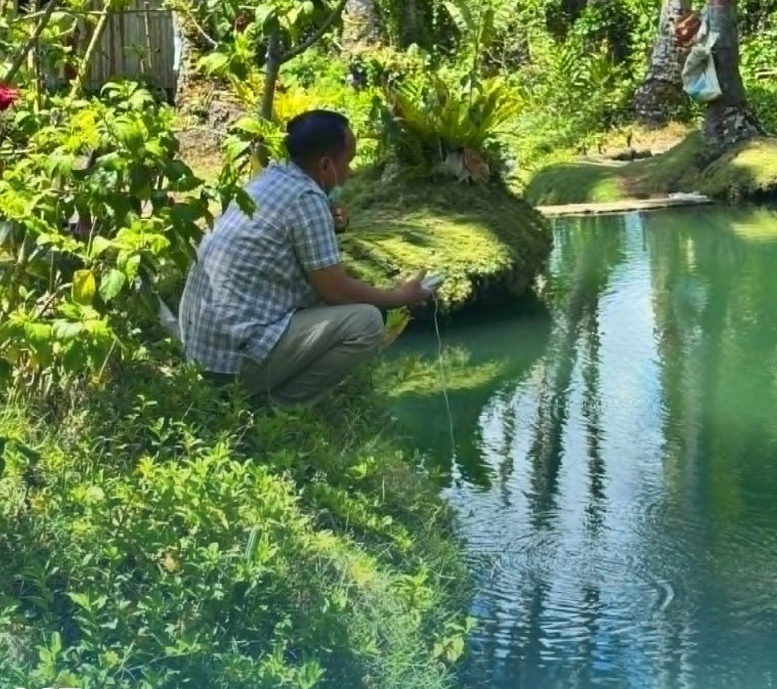
ASSESSMENT. The Department of Science and Technology (DOST) will conduct an assessment on the potential of a hot spring in Calbayog City as a possible site for an innovative geothermal-assisted food processing facility aimed at improving post-harvest preservation for local farmers and fisherfolk. (DOST-8)

TACLOBAN CITY — The Department of Science and Technology (DOST) regional office is evaluating the potential of a natural hot spring in Calbayog City as a possible site for an innovative geothermal-assisted food processing facility aimed at improving post-harvest preservation for local farmers and fisherfolk.

The DOST-8, through its Samar Provincial Science and Technology Office (PSTO), recently conducted a technical site assessment at the Mapaso Hot Spring in Barangay Rizal II, Calbayog City, in coordination with the local government unit.

The assessment seeks to determine the suitability of the area for the installation of a Solarized Hydrothermal Dehydrator, a technology developed by DOST that utilizes geothermal heat from natural sources such as hot springs to dry agricultural and fishery products.

By integrating hydrothermal energy with solar support, the system is designed to reduce dependence on fuel- or electricity-powered drying methods, offering a more sustainable and cost-efficient alternative for rural communities. It also promotes cleaner production practices by tapping renewable heat sources available in the environment.

The evaluation team, led by DOST Samar Provincial Director Evelyn Bacarra-Tablante and Senior Science Research Specialist Engr. Joseph Albert Lledo, examined key factors such as the stability and temperature of the thermal resource, site accessibility, and proximity to farming and fishing communities that would benefit from the technology.

They also assessed how the equipment could be integrated into the existing landscape of the area.

According to DOST Samar, if the site is deemed suitable, the project could help strengthen post-harvest systems in Calbayog’s rural communities by improving product quality, reducing spoilage, and enhancing overall productivity in the agricultural and fisheries sectors.

(ROEL T. AMAZONA)

DPWH Leyte 4th DEO supports EODB Month 2026

0
The DPWH Leyte 4th DEO kicks off Ease of Doing Business (EODB) Month 2026 during a flag-raising ceremony on May 4, led by OIC-District Engineer Peter Scheler V. Soco, reaffirming the office’s commitment to faster, transparent, and client-centered public service in line with RA 11032.(DPWH Leyte 4th DEO)

ORMOC CITY– The Department of Public Works and Highways (DPWH) Leyte 4th District Engineering Office (DEO) officially opened the Ease of Doing Business (EODB) Month 2026 during the flag raising ceremony held on Monday, May 4, 2026.

The observance, held in compliance with the directives of the Anti-Red Tape Authority (ARTA) and in support of Republic Act No. 11032 or the Ease of Doing Business and Efficient Government Service Delivery Act, was led by OIC-District Engineer Peter Scheler V. Soco.

In his remarks, OIC-DE Soco said, “As public servants, we recognize that efficient, transparent, and client-centered service is not just a mandate — but a responsibility we owe to the public.” He highlighted the practical improvements the office has implemented in recent months, including reducing delays and ensuring clear coordination with the clients, adding that “every small improvement in our work creates a real impact on the people we serve.”

The opening of EODB Month signals the Leyte 4th DEO’s renewed drive toward minimizing red tape and improving accountability within its operations, in keeping with DPWH standards and the broader goals of Bagong Pilipinas.(PR)

What help?

0

Government dole-outs are growing at an alarming rate, and what should have been temporary relief has become a permanent political instrument. A nation cannot survive when dependency becomes state policy and productive labor is forced to support an ever-expanding population sustained by subsidies rather than opportunity.

There is nothing wrong with helping the truly needy during calamities, economic collapse, or personal hardship. A civilized society must protect its vulnerable citizens. But the problem begins when poverty itself becomes massive and permanent, while government response remains limited to endless cash assistance. That approach does not solve poverty; it merely manages it for political convenience. A country where millions survive through recurring handouts is not progressing. It is slowly normalizing helplessness.

Instead of developing industries, strengthening agriculture, encouraging entrepreneurship, and creating stable employment, the government keeps distributing aid as though envelopes, sacks of rice, and cash cards can cure poverty. It cannot. No nation in history rose from poverty by training its people to wait for the next payout.

Even worse, these programs quietly punish the working and productive sectors of society. The taxes of ordinary employees, small business owners, professionals, vendors, and laborers are continually extracted to sustain a system that often rewards idleness more than effort. Many workers now carry the bitter sentiment that they labor endlessly only to finance a growing culture of dependence. The injustice becomes sharper when some beneficiaries begin treating assistance not as emergency support but as an entitlement that must continue regardless of personal initiative. The state should uplift citizens toward self-reliance, not condition them to survive through perpetual dependence on public funds. A government that constantly feeds people without teaching them how to earn eventually weakens the discipline, ambition, and responsibility needed for national growth.

Behind this system lies a political machinery that thrives on dependency. Politicians understand that jobs, factories, irrigation systems, livelihood programs, and long-term investments do not produce immediate political loyalty. But cash assistance does. Those who control the list of beneficiaries control a reliable voting bloc. This is why some public officials prefer highly visible dole-out programs over serious economic reforms that take years to bear fruit. Poverty becomes politically useful because dependent citizens are easier to influence during elections. The assistance may appear charitable on the surface, but beneath it often lies a calculated strategy of securing gratitude and obedience from economically desperate voters. In many areas, government aid has become a modern form of vote buying financed not by private money but by taxpayers themselves.

The country must abandon the dangerous illusion that endless handouts are compassion. Real compassion equips people to stand on their own feet. Government resources should focus on employment generation, agricultural modernization, skills training, small-business support, infrastructure development, and industries that generate lasting income.

Assistance must remain temporary, targeted, and tied to programs that lead beneficiaries toward productivity. Otherwise, the nation will continue sinking into a cycle where politicians preserve poverty to preserve power, while the working population carries an ever-heavier burden. A state that truly respects the poor does not keep them dependent forever; it gives them the means to escape poverty with dignity.

Our hostility to snakes

0

The scream usually comes first. In many Philippine barrios, a snake crossing a footpath is enough to send grown men scrambling for sticks, stones, bolo knives, and whatever object can strike fear faster than the reptile can disappear into the grass. The snake is rarely given the benefit of distance, much less mercy. I have always found this hostility both understandable and troubling: understandable because fear has deep roots in our history and landscape, troubling because fear, once inherited blindly, can turn even a useful creature into a condemned outcast.

I grew up noticing how Filipinos speak of snakes the way old people speak of curses. The names alone carry a certain chill. “Ahas” is not just an animal in ordinary conversation; it is an insult, a warning, a personality type. Call someone a snake, and you are not merely saying the person is dangerous. You are accusing them of betrayal, deceit, and poisoning of the soul. Even our language has wrapped the reptile in moral darkness. It did not help that many of us first encountered snakes not in biology books but in whispered stories beside kerosene lamps, where cobras rose like hooded spirits and pythons swallowed goats whole somewhere beyond the rice fields. In a tropical country where venomous species truly exist, imagination does not need much encouragement.

And the fear is not entirely irrational. The Philippines is home to genuinely dangerous snakes, including the Philippine cobra, whose venom is among the deadliest in the world. Farmers, coconut gatherers, and rural children historically faced real danger while working barefoot in fields thick with talahib and mud. One can hardly preach tenderness toward snakes to a farmer who remembers a neighbor dying hours after a bite because the nearest clinic was two towns away. Fear, in that sense, became a form of survival training. Suspicion saved lives. A quick strike with a stick was often faster than identifying whether the snake was harmless or lethal. In a country where poverty has long dictated how close humans live to forests, farms, and waterways, coexistence with wildlife has rarely been romantic.

Still, I sometimes think Filipinos inherited not only caution but a kind of theatrical hatred toward snakes. The reaction often exceeds self-defense and enters the territory of vengeance. One dead snake is not enough; it must be hacked repeatedly, displayed on a road, or burned like an executed criminal. I have seen people laugh nervously after killing one, as though they had defeated not an animal but a supernatural enemy. Perhaps this comes from the way fear humiliates us. Few creatures can reduce a confident man into a jumping, shrieking acrobat faster than a snake suddenly appearing near his feet. We kill what exposes our fragility. The snake becomes a moving reminder that human beings are not always kings of the landscape.

Religion added another layer to this hostility. For many Filipinos raised in Christian households, the snake already entered consciousness wearing the shadow of Eden. Long before science classes explained ecosystems and food chains, many children heard of the serpent as tempter, corrupter, whisperer of ruin. Even without formal theology, the symbolism lingered. The snake slithered through stories carrying suspicion on its scales. Hollywood worsened the reputation. Giant killer anacondas, venomous monsters in jungle films, cobras swaying before hypnotized victims—popular culture practically turned snakes into celebrities of terror. Poor turtles and frogs never received such dramatic publicity.
What fascinates me, though, is the irony that snakes quietly help the very people who despise them. They control rats that destroy rice harvests and spread disease. Without snakes, rodent populations would explode in many agricultural areas. Nature designed them as silent pest-control officers, working unpaid overtime. Yet humans often erase them at sight, then complain about rats chewing through grain sacks and ceilings. There is something tragically comic about this arrangement. We slaughter one of the farmer’s allies while protecting the thief who steals from the harvest at night. Sometimes our fear blinds us to usefulness; we judge by shape and movement rather than ecological purpose.

I also suspect that snakes disturb Filipinos because they move in ways unlike those of creatures we easily domesticate emotionally. Dogs wag their tails, cats purr, carabaos lumber with visible heaviness. Snakes glide. They arrive quietly, without footsteps, without warning, like living streams of muscle. There is something ancient in the human brain that recoils from that motion. Scientists have even suggested that primates evolved a rapid visual response to snakes because identifying them quickly aided survival. Perhaps every startled leap backward carries millions of years of instinct inside it. But instinct, while useful, should not become cruelty. Fear explains behavior; it does not automatically justify excess.

As I grow older, I find myself less interested in glorifying bravery against snakes and more interested in learning restraint. Not every snake is a cobra waiting to strike. Many are harmless and would rather escape than fight. Environmental groups in the Philippines now encourage rescue and relocation instead of immediate killing, especially as habitats shrink and wildlife increasingly wanders into human settlements. That seems wiser to me—not sentimental worship of snakes, but a calmer understanding that they are part of the land long before we poured concrete over it. Perhaps the better measure of civilization is not how fiercely people destroy what they fear, but how intelligently they respond to it.

Recent Posts

DALMACIO C. GRAFIL
PUBLISHER

ALMA GRAFIL
EDITOR-IN-CHIEF

ROMEO CEBREROS
OFFICE IN-CHARGE

OFFICE
BRGY. SONGCO, BORONGAN CITY

CONTACT NUMBERS
(055) 261 – 3319 | 0955 251 1533 | 0917 771 0320 | 0915 897 7439 | 0921 511 0010

DALMACIO C. GRAFIL
PUBLISHER

RICKY J. BAUTISTA
EDITOR

ALMA GRAFIL
BUS. MANAGER

OFFICE
RIZAL AVENUE, CATBALOGAN
(INFRONT OF FIRE DEPARTMENT, NEAR CITY HALL)

CONTACT NUMBERS
0917 771 0320 | 0915 897 7439 | 0921 511 0010

EMAIL
lsdaily2@yahoo.com

WEBSITE
www.issuu.com/samarweeklyexpress