
The Globe Group has clinched the coveted Gold for Best Video Storytelling at the PR Awards Asia 2023, recognized for its potent and impactful #MakeITSafePH cyberbullying campaign. The international award was received by RG Orense, Globe Group Digital and Social Strategy Head, at the ceremony gala event held at The St. Regis Hong Kong.
This win for Globe and its partners, international agency Culture Group and award-winning local production outfit Unitel Straightshooters (UxS), emphasizes the company’s Tech for Good philosophy, driving meaningful digital innovation to tackle cyberbullying head-on.
Yoly Crisanto, Globe Group Chief Sustainability and Corporate Communications Officer said, “This recognition is a testament to our steadfast commitment to use technology for good. We are extremely proud of the way our #MakeITSafePH campaign has resonated among our customers, driving crucial conversations around cyberbullying and its repercussions on our children’s mental health.”
The Globe Group’s compelling digital films, “Parents’ Social Experiment” and “Off to School,” have stirred public emotions, bringing the urgent issue of cyberbullying to the fore and masterfully bridging the gap between parents and their children’s online lives. They were created by a team of industry experts led by Culture Group’s Jakeena Malli, Director Randolph Longjas, Producer Charissa Pammit, Executive Producer Grace Quisias, and copywriters Paolo Dela Cruz and Kathleen Hernandez.
“Parents’ Social Experiment” showcases the disconnect between cyberbullying language and parents’ lack of understanding of the youth’s way of conversing. It highlights how parents’ involvement is vital to ensuring online safety and responsibility of Filipino youth.
“Off to School,” on the other hand, emphasizes the often underestimated impact of cyberbullying on children’s physical and mental health. A UNICEF report showed that one-third of cyberviolence experienced by Filipino children is in the form of verbal abuse over the internet or mobile phone, while a fourth is through sexual messages.
Significant voices from the community such as Pia Guanio and Kuya Kim Atienza supported the campaign. Atienza’s repost of “Off to School” caught the attention of other celebrities and influencers, including Inka Magnaye and Kaye Bautista who shared their own experiences around bullying.
Model Amanda Griffin noted the campaign as “such a powerful ad,” underlining the reality children face today.
The #MakeITSafePH campaign has proven to be a resounding success, yielding tangible results that underscore its impact. The two digital films garnered a remarkable 18.19 million views on social media, with the overall campaign reaching over 147 million and achieving more than 22.6 million engagements.
These films also drove significant traffic to the https://www.makeitsafe.ph/ website, with close to 77,000 visits recorded. Notably, the campaign spurred a dramatic 315% increase in mental health consultations through the telehealth platform and campaign partner KonsultaMD. It also led to a surge in support threads in Facebook parenting communities such as Glam-o-Mamas and Usapang Nanay, indicating a growing awareness and concern about bullying and cyberbullying among Filipino parents.
#MakeITSafePH stands as a testament to the Globe Group’s vision of using technology to drive positive social change and foster safer digital spaces for children. The campaign reinforces the important role parents and guardians play as digital allies to their children, urging them to partake in bridging the cultural gap, creating safer spaces, and fostering closer relationships in the digital era.
PR Awards Asia 2023, organized by Campaign Asia and PRWeek Asia, celebrates excellence in communication strategies across the Asia-Pacific region. The Globe Group’s triumph in the competitive Best Video Storytelling category among 152 winners demonstrates its unwavering commitment to tackling societal issues through innovative digital content.(PR)
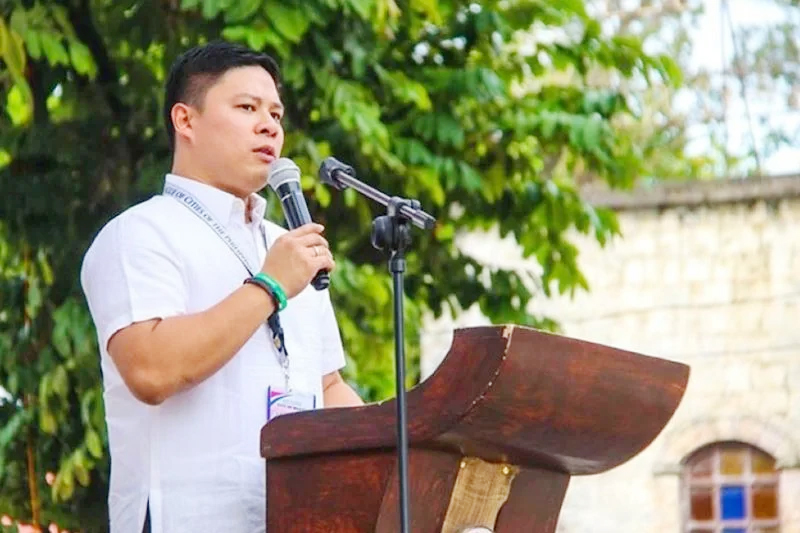
A lonely voice in the wilderness
ASSOCIATE PROFESSOR III
I start talking about corruption – its direct correlation with poverty,” he told the PNP. “When I start doing that, they all start looking at their cell phones.”
Baguio Mayor Benjamin Magalong was featured on the news last week for the right reasons, but even though it was a just and appropriate story, it put everyone in an awkward position.
You see, Mayor Benjie discussed corruption as well as good government. He said friends have cautioned him that he is going to step on many toes and it’s better to just keep silent. Ina column , written by Philstar Ana Marie Pamintuan , Mayor Magalong said;
“I don’t think that’s the right attitude,” he said. “We have to do what is right even if it’s unpopular… it’s about time that people should now demand good governance from their political leaders. It will be difficult, there will be a lot of challenges along the way. It will become a journey. Sa akin lang, maumpisahan ko. I may not be able to finish it during my term and during my lifetime, but one way or the other we have started it and hopefully the younger generations will be able to continue and sustain it.”
The Chiefs TV Program interviewed and wanted Magalong to expound on a speech he made last July 3 before the Philippine National Police (PNP) at Camp Crame. The speech addressed proposals to make the military and other uniformed personnel contribute to their pensions to prevent what the economic team leader says is a looming “fiscal collapse.”
While Magalong, a retired PNP general and pensioner, says he is open to the proposal, he said government officials including lawmakers should also do their part in promoting fiscal prudence.
Magalong digressed from his prepared speech and recalled that in several of his recent speeches before mayors and vice governors, the audience listened enthusiastically when he discussed how technology could enhance governance.
“And then I start talking about good governance. I start talking about traditional politics. I start talking about corruption – its direct correlation with poverty,” he told the PNP. “When I start doing that, they all start looking at their cell phones.”
The Speech of Mayor Benjie Magalong created a stir and pointed out the naked reality that people refused to call out as downright obscene.
The unpalatable truth that most of our public leaders carry something that is tucked away in their stomachs, knowing that they are corrupt. And who can blame them—not the people who persistently solicit assistance from and receive endorsement from purported public servants, the public who receives substantial bribes during and in every election.
Magalong is a voice in the wilderness, but it is a voice that must be heard. Even if we have a detached attitude toward all of this, we are conscious of how this nonchalance will ultimately harm us. Our apathy and indifference will be the cause of the impending catastrophe.
Mayor Magalong may cut a strange figure since he is swimming against a powerful stream that is rushing in the opposite way, but his bravery and forward motion are exactly what we need in a time when corruption and the evil it has bred are the norm.