TACLOBAN CITY– Government troops recovered a cache of high-powered firearms allegedly belonging to the communist rebels in Can-avid, Eastern Samar.
The recovered high-powered firearms include five M14 rifles, four M16 rifles, a shotgun, an M79 grenade launcher, and assorted ammunitions and explosives in Barangay Buco.
The firearms were recovered after the soldiers belonging to the 42nd Infantry Battalion conducted a strike operation on July 15.
“We will be stepping up our military and non-military operations to track down the location of communist New People’s Army (NPA) terrorists’ loose firearms and prevent their recovery efforts here in Eastern Samar,” said Lieutenant Colonel Rodito Gotladera, commander of the 42nd IB.
Meantime, Major General Camilo Ligayo, the commanding general of the 8th Infantry Division, lauded the accomplishment of the 42nd IB saying it will contribute to the ending of the communist insurgency in the region.
He also reiterated their target to quell the decades-long insurgency problem of the region within this year.
“During the visit of President Bongbong Marcos (in Northern Samar), he said that he is confident that we can finish the fight against the insurgents by the end of the year in the region. Having been said by the President, I am also confident we can really end the insurgency problem but of course through our collaborative efforts,” he added.
TACLOBAN CITY– After much of waiting, former members of the New People’s Army (NPA) who earlier surrendered to the government will soon have a house of their own.
Next month, a groundbreaking for the construction of houses for reformed rebels will be held in San Jose de Buan, Samar, Emilda Bonifacio, Samar area manager of the Office of the Presidential Adviser on Peace Reconciliation and Unity (OPAPRU), said.
Initially, 17 former rebels have been identified to occupy the housing village, she added. All are from San Jose de Buan and have a family of their own and does not own a house of their own.
The OPAPRU did an orientation to the former rebels who were made to understand the basic concepts of peace and conflict and a deeper appreciation of the conflict-sensitive and peace-promotion (CSPP) approach for contextualization purposes and in ensuring the efficiency and effectiveness of its project implementation.
The housing project cost P4 million of which P2.5 million was donated by the provincial government of Samar through Governor Sharee Ann Tan while the remaining P1.5 million will come from the local government under Mayor Joaquin Elizalde.
Personnel from the 546Engineer Construction Battalion (ECB) and 543ECB did the site development and house design.
Partner agencies of the project like the Technical Education Skills Development Authority (Tesda) helped in training the former rebels in carpentry which is necessary for constructing the house that will be built thru bayanihan while the Department of Science and Technology will do the social preparation for the upcoming implementation of Community Empowerment thru Science and Technology (CEST) activities for the former rebels. (ROEL T. AMAZONA)
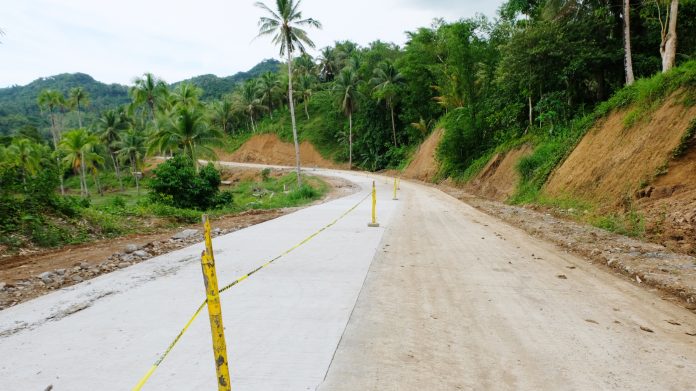
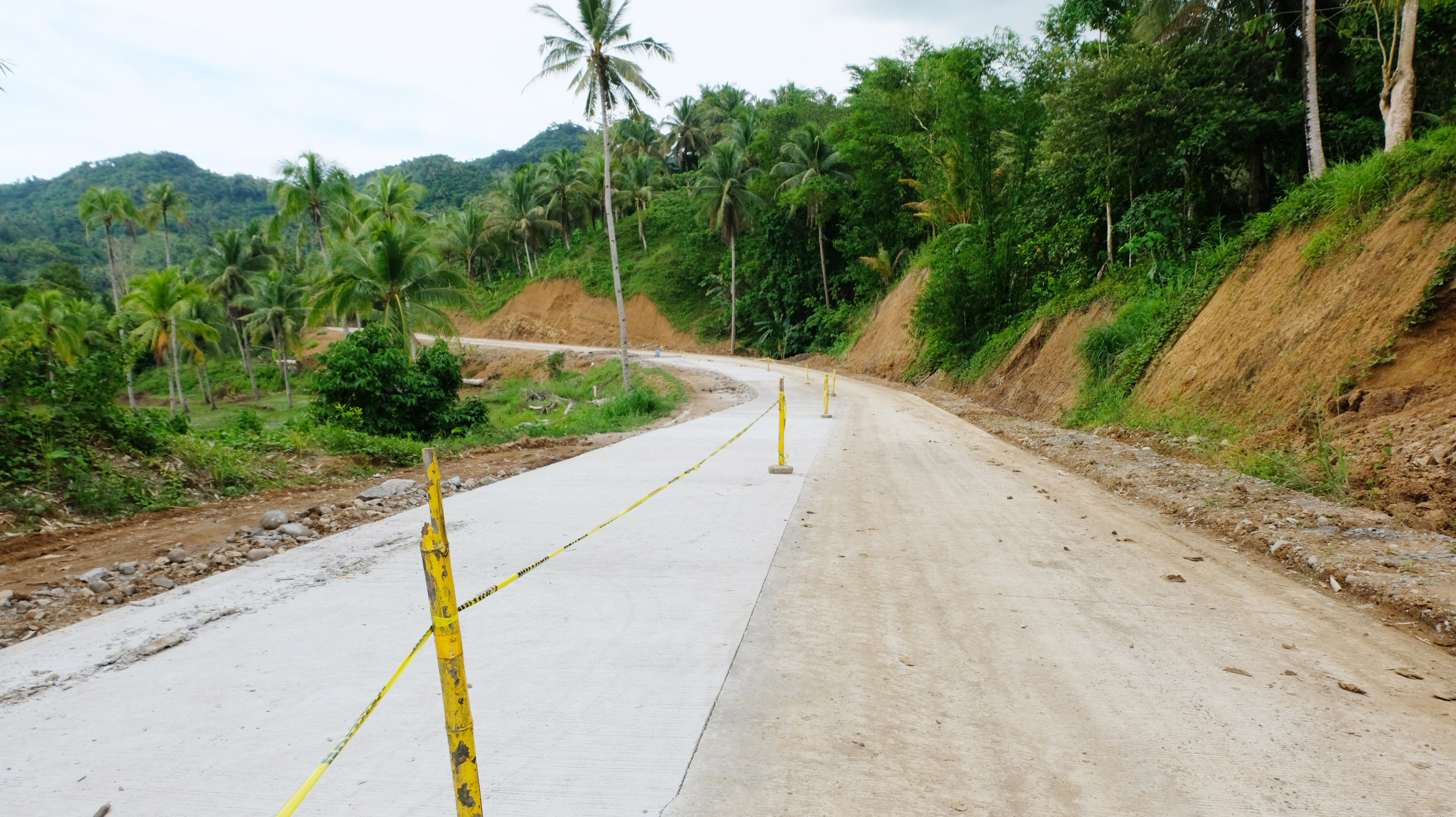
ORMOC CITY & MATAG-OB, Leyte– The Department of Public Works and Highways (DPWH) Leyte 4th District Engineering Office (DEO) is currently undertaking the Construction of Manlilinao – San Sebastian Road in Ormoc City and Matag-ob, Leyte which has a completion rate of 53.59% at present.
With a contract cost of Php 96,353,817.11 funded under the General Appropriations Act (GAA) 2023, the project encompasses a length of 3.2 lane kilometers and a total width of 6.10 meters. The scope of works for this endeavor includes earthworks such as excavation and embankment, construction of Portland Cement Concrete Pavement (PCCP), and installation of reinforcing steel and structural concrete.
Upon completion, the Manlilinao – San Sebastian Road will not only improve the connectivity between Ormoc City and Matag-ob, Leyte, but it will also greatly contribute to their socio-economic growth. The enhanced road will stimulate trade and commerce, opening up new opportunities for business and boosting the overall prosperity of the area.
While this project is progressing, the DEO is also actively engaged in similar road construction projects in other areas within its jurisdiction such as the Construction of Concrete Road in Puertobello – Puting Bato Road leading to Mt. Magsanga, Merida, Leyte as well as the Construction of Liberty – Burauen Brgy. Road, Ormoc City to name a few. (PR)
TACLOBAN CITY – The Bureau of Fisheries and Aquatic Resources (BFAR) has significantly improved the monitoring of transport of fish products to and from Leyte following the setting up of the first permanent fisheries checkpoint at the San Juanico Bridge, an official said on Friday(July 21).
BFAR Eastern Visayas Regional Director Hannibal Chavez said that since the checkpoint was put up two months ago, there have been no interceptions of illegally-caught fish products.
BFAR and the Philippine National Police (PNP) personnel have been checking all vehicles carrying fish and fishery products passing the 2.16-kilometer bridge.
The BFAR regional office here has assigned two staff members from the fisheries inspection and quarantine section and the fisheries protection and law enforcement group to man the checkpoint along with the PNP.
“Through the implementation of this measure, the stationed law enforcement team effectively prevents and apprehends illegally caught and transported fishery products, safeguarding the integrity of the checkpoint and ensuring compliance with regulations,” Chavez said.
The permanent checkpoint is stationed at the foot of San Juanico Bridge (Leyte side), being the main gateway for products not only for Samar and Leyte provinces but for all the products transported to and from Luzon, Visayas, and Mindanao.
The law enforcement team checks the auxiliary invoice and the local transport permits of vehicles carrying fishery products to determine the origin of the fishery commodities they carry and conduct other necessary standard procedures on the appropriate transportation of aquatic and marine products.
“With great optimism, we anticipate nothing short of positive outcomes resulting from the implementation of the first joint permanent fisheries checkpoint. Together, let us continue to work hand in hand, progressing towards a prosperous fishing industry, safeguarded marine resources, and a thriving community,” Chavez added.
Setting up the fisheries checkpoint at the San Juanico Bridge is crucial since the infrastructure forms part of the nautical highway that links the islands of Luzon, Samar, Leyte, and Mindanao. (PNA)
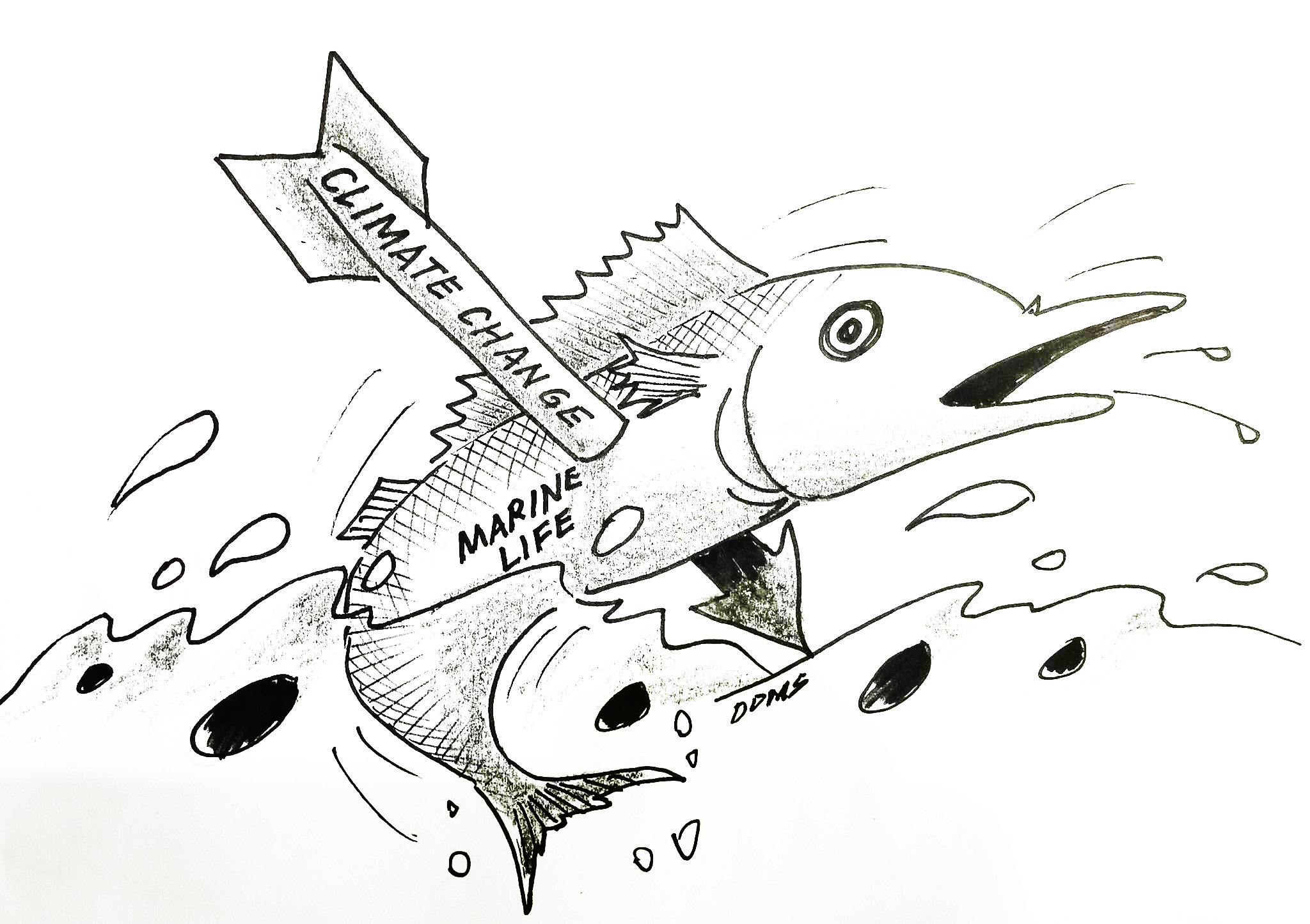
The rising temperatures and weather patterns are becoming more erratic nowadays, affecting fishing communities around the world. Increased ocean acidification threatens the delicate balance of marine ecosystems, further jeopardizing fish stocks and the livelihood of fishermen. These detrimental effects underscore the urgent need for sustainable fishing practices and effective environmental policies to mitigate climate change and safeguard the fishing industry for future generations.
One of the most significant impacts of climate change on the fishing industry is the alteration of fish migration patterns and distribution. Rising water temperatures force many species to seek cooler habitats, often resulting in range shifts. Fishermen who were accustomed to specific fishing grounds find themselves travelling greater distances to catch once-abundant species or, in some instances, facing the complete disappearance of certain species from their local waters. This not only disrupts the fishing economy but also creates social and economic challenges for fishing communities, including unemployment and the loss of cultural traditions centered around fishing activities.
Another consequence of climate change for the fishing industry is the threat of ocean acidification. As greenhouse gases accumulate in the atmosphere, they dissolve into seawater, causing the pH levels to drop. This acidification poses serious dangers to various marine organisms, including shellfish and coral reefs, which provide essential habitats for many fish species. Weakening of these key components of marine ecosystems could lead to a collapse in fish populations, triggering a ripple effect throughout the fishing industry. Moreover, the socioeconomic implications of such a collapse would be devastating for fishing-dependent communities, leading to economic instability and food insecurity.
Addressing the challenges posed by climate change to the fishing industry necessitate proactive measures to reduce greenhouse gas emissions and promote sustainable fishing practices. Governments and regulatory bodies must collaborate with local communities to implement effective environmental policies that focus on lowering carbon emissions while protecting marine ecosystems. These policies could include better fishing quotas and restrictions, protecting critical habitats, and fostering the uptake of cleaner and more sustainable fishing technologies.
Urgent action is required to mitigate the effects of climate change, including the implementation of sustainable fishing practices and environmental policies that prioritize the preservation of marine ecosystems. Failure to address these challenges adequately will not only impact local economies but also undermine food security for countless communities that rely on the fishing industry.
The geographical distribution of our country into islands poses some disadvantages that significantly impact its economic, social, and political development. While island nations may possess unique cultural, ecological, and strategic advantages, it is imperative to address the inherent challenges they face due to their fragmented nature.
One primary disadvantage of an island nation is the higher cost of transportation and limited access to markets. Due to the absence of a contiguous landmass, transporting goods and services becomes more costly, leading to higher prices of imported goods and resulting in a greater burden on the local population. Furthermore, the insular nature of islands often limits the availability of natural resources and restricts the scope for large-scale agricultural or industrial development, thus hindering economic growth and diversification.
Being fragmented across multiple islands makes our country more susceptible to the detrimental impact of natural disasters such as hurricanes, tsunamis, and earthquakes. Island populations’ dispersed nature amplifies the challenges of evacuating and providing immediate relief in the aftermath of such calamities. Additionally, the rebuilding and recovery process become arduous, as resources need to be distributed and coordinated across various islands, prolonging the nation’s overall vulnerability.
Island nations often encounter difficulties in developing and maintaining critical infrastructure due to their scattered topographies. Building bridges, Roads and other transportation networks require significant investments, both in terms of finances and engineering expertise. Moreover, the maintenance of infrastructure becomes more challenging due to its exposure to natural elements such as erosion and rising sea levels, further impeding progress.
With multiple islands under its jurisdiction, our country often struggles to effectively manage its natural resources. The division of our country into islands can lead to inter-island conflicts over control and exploitation of resources. Additionally, maritime boundaries can be a subject of contention among neighboring countries, potentially leading to disputes and strains on diplomatic relationships.
Island nations face the challenge of ensuring effective governance across different islands. The decentralization of power can result in administrative difficulties, slower decision-making processes, and a lack of uniform laws and regulations. Coordinating policies and implementing reforms that suit the diverse needs of different islands becomes a complex and time-consuming task, hindering the overall progress and development of the country.
A fragmented country may find it challenging to achieve economies of scale and specialization, which is crucial for sustainable economic growth. The dispersed nature of islands impedes the concentration of skilled labor, knowledge, and resources required for the development of specialized industries or sectors. Consequently, this limits the potential for technological advancement, innovation, and competitiveness on a global scale.
The scattering of a country into islands can result in social isolation and cultural discontinuity among its population. The physical separation between The free movement of people, ideas, and cultural practices may be hampered by islands. ultimately hampering social cohesion and creating regional disparities. Maintaining a sense of national identity and unity becomes more challenging, as each island may develop its own unique cultural, linguistic, and social characteristics.
While islands possess inherent beauty, exotic charm, and ecological significance, it is essential to acknowledge the disadvantages that a country scattered into islands may encounter. Addressing the economic, infrastructural, governance, and social challenges become crucial to ensuring the holistic the strength and development of these nations. Innovative techniques and tools management frameworks and regional cooperation are vital to maximizing the opportunities presented by island nations while mitigating the inherent disadvantages they face.