

THAT gospel episode where Christ shocked his apostles when they saw him walking on the water (cfr. Mt 14,22-36) reminds us that the ways of God can overwhelm us and even throw us into the grip of fear. We should just remember what Christ told his apostles. “Take courage, it is I; do not be afraid.”
We should just be prepared for this eventuality which can happen anytime. We may not deserve to be given such extraordinary intervention of God in our life, but it is really up to God to give us that favor.
We should just have to learn when to be afraid and when not. We have to distinguish between a good fear and a bad fear, a healthy one and a sick one. We need to know how to handle and deal with our fears that are unavoidable in our life.
Fear is an emotion that we need to educate also. It just cannot be on its own, guided only by our spontaneous judgments and reactions, and appearing when it’s not supposed to, and not appearing when it’s supposed to. It has to be grounded and oriented properly, expressing the sublimity of our dignity as persons and children of God.
Let’s remember that among the gifts of the Holy Spirit is the fear of the Lord. It’s the good and healthy fear of a child who is afraid to offend his father. It’s a filial fear, not a servile one. It’s one that, instead of being tempted to run away from God, would rather motivate one to get closer to him. It’s the fear of losing God, even if we may have offended him and have to do something to atone and repair.
It’s the fear that we should foster, especially these days when we see a lot of people who are not afraid anymore to offend God. Though to be fair, we can also say that many do not fear God anymore because in the first place they don’t know him. No one fears what he doesn’t know.
Look at little children. They have to be watched closely because in their carefree spirit of playing and running around, they do not know the many potential dangers that can befall them. In a sense, they have no fear, which is why we have to watch them closely.
There are, of course, those who do not fear God because they don’t believe in him. This is reflected in one of the psalms: “The fool has said in his heart, ‘There is no God above.’” (52)
Lastly, there are those who lose the fear of the Lord because they think they can escape or hide from him. It’s kind of a funny predicament to be in, but actually many fall under this category. For sure, it’s the devil’s work, supported by one’s weaknesses and self-inflicted delusion.
We have to contend with these possibilities and wage a battle of love and peace, of truth and charity, with a lot of patience to boot. Prayers, heroic sacrifices are definitely needed, but concrete, doable plans on how to tackle these problems should also be made.
We have to learn to lose our fear, allowing our faith to make that leap in the dark that is integral to it. That is the secret. Instead of fear, what we should have is awe. Though it may have some freezing effect, awe actually attaches us with God. Not so with fear. Fear makes us to run away from God.




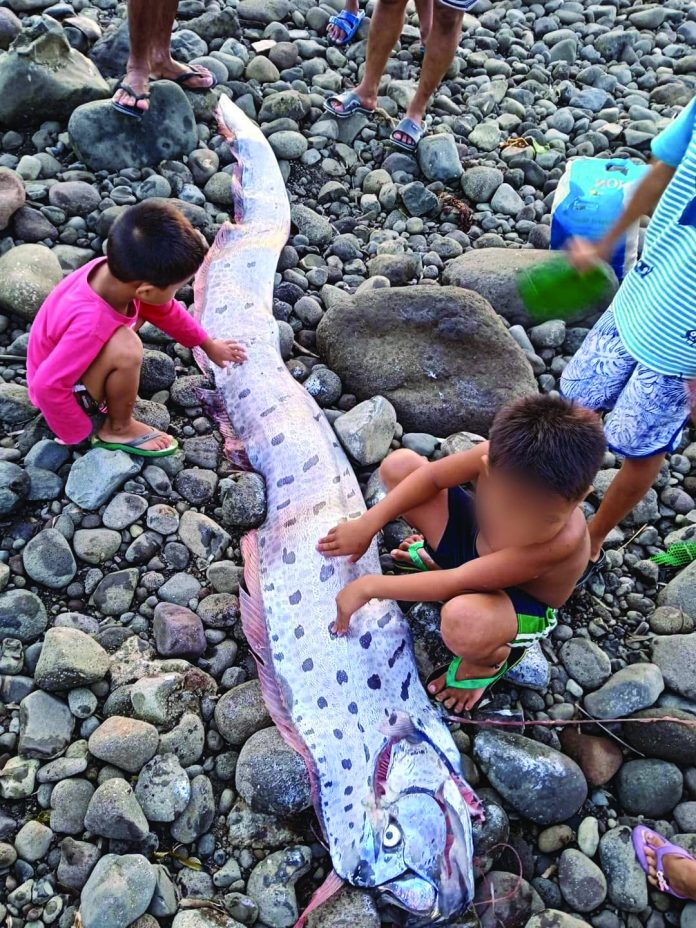
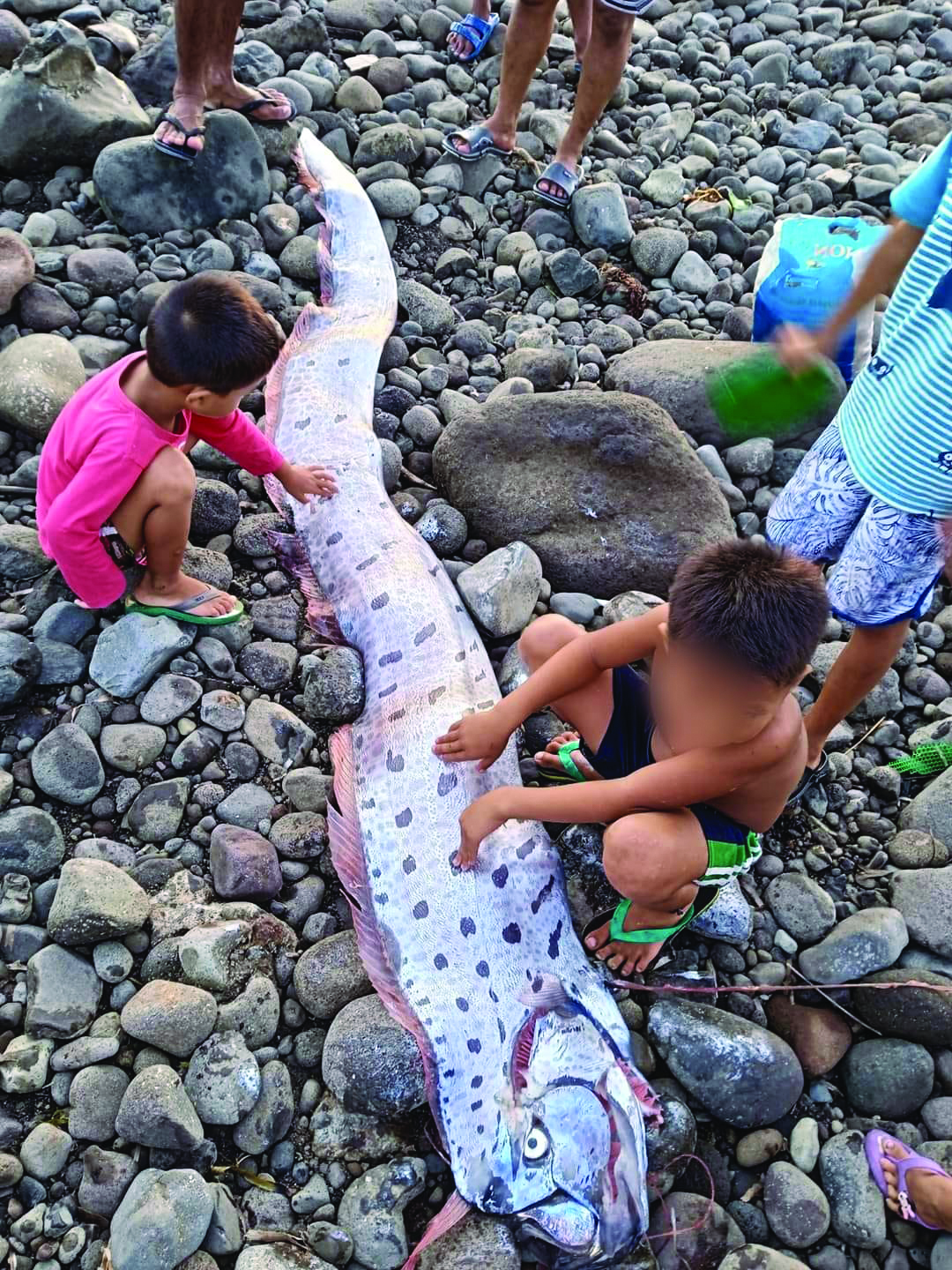
Nano-Plastics traced in human stomach?
I have special interest on the subject microplastic and opted to re quote portions of Mr. Boo Chanco’s article in his column “Demand and Supply” (PhilStar May 1, 2023). I owe this to my academic foundation and research in Science!
I refer to the results of the study commissioned by the World Wide Fund (WWF) for Nature published in the New York Times (NYT) “that the average person may be consuming as much as much as five grams of plastic every week – the equivalent, of an entire credit card.” quoted and published by NYT. It started by saying “there is plastic in our bodies, It’s in our lungs and in our bowels and in the blood that pulse3s through us,” …we can’t see it, and we can’t feel it, but it is there. It is there in the water we drink and the food we eat, and even in the air we breathe.
“We don’t know, yet, what it’s doing to us, because we have only quite recently become aware of its presence, but sincere have learned of it, it has become a source of profound and multifarious anxiety. “Maybe it’s nothing; may it’s fine. Maybe this jumble of fragments – bits of water bottles, tires, polystyrene packaging, microbeads from cosmetics – is washing through us and causing no particular harm. But even that was true, there would still remain the psychological impact of the knowledge that there is plastic in our flesh.”
This knowledge registers, in some vague way, as apocalyptic; it has the feel of a backhanded divine vengeance, sly and poetically appropriate. Maybe this has been our fate all along, tgo achieve final communion with our own garbage.”
MY COMMENT:
Nano-plastics particles are several times tinier than microplastics, the former needs a high-powered research electron microscope to examine, identify. Indeed, these (nano-plastics) “are capable of crossing the membranes between cells and have been observed to accumulate in the brains of fish.”
My closest encounter with the aforementioned case, was (while doing MS Fisheries at Kagoshima University, Japan) was the infamous “Minamata Disease” so-called after the coastal town of Minamata, Kumamoto, Japan, a neighboring Prefecture of Kagoshima. The case was Lead (Pb) wastes thrown to the sea from manufacturing companies, engulfed by shallow water-dwelling fish species; the same fish eaten by coastal inhabitants of Minamata, including nursing mothers, from which mother breastfed their babies (inakay), milk upon laboratory examinations and tests found strong traces of Lead. This made the end ‘user babies’ test positive to the toxic-lead element in the milk. I was able to visit and interviewed several victim mothers in Minamata and confirmed that their fish source came from the nearby Bay.
ooo000ooo
NEXT TOPIC : “Phils invites investors for Cancer Center Project”
SHARE S & T THOUGHTS through EW-Mail: drpacjr@yahoo.com.