

We’ve talked in my last column about the requirements of a worthwhile alumni homecoming, the first being the shared beginning. The next requirement, as we continue, is shared growth.
For a reunion to be meaningful, participants should not just trace themselves to the same beginning—they should have shared growth. These were the times when they and their batch mates were undergoing rigid mentoring, given the same exams, asked to submit the same projects, made to do the same assignments, and required to pass the same subjects. These were the moments when their friendships deepened as they extended help to one another and thus learned to treasure one another’s company, burning the midnight candles together, working on group projects, and not leaving anyone behind.
Shared success likewise constitutes an exciting reunion. You shared the same beginning, the same growths, and the same successes. There might be some who, for some reason, didn’t make it to the graduation ceremony, hence their exclusion from the gathering. But for the most part, many had made it, holding the same diploma, wearing the same togas, and assuming the same degrees. Again, there might be those who received meritorious awards and medals as exceptional graduates, but the majority comprise the typical, successful graduates.
Another requirement is shared memories and experiences. Good or bad, shared memories are fun to recall. They add meaning to class reunions. Who would forget the joy of attending special evening programs that usually climaxed with a dance for all? Who could forget their crushes, first loves, and true loves on that memorable campus? Most of all, who could forget the wonderful people of that place?
Last but not the least of these requirements is a shared learning institution. Or the school where the alumni participants graduated from. Yes, a grand alumni homecoming is exclusive for those who began in this school, grew academically in this school, graduated from this school, have had memories and experiences in this school, and shared this school with the rest. They conduct this reunion because they are products of this prestigious institution that they altogether share. And that’s an honor and privilege.
It’s not just remembering the most cherished moments. It’s not just greeting old friends and acquaintances. It’s not boasting to others about what some have become, or looking down on others who were unfortunate to finish their studies and land good jobs. It is also coming back home, to the school that once served as their second home, to this home that provided them with the knowledge and degrees necessary for their journey to the world of work and life in general. This is paying tribute to an alma mater for its significant contribution to what the participants had become.
Rid a class reunion of all these and it will become meaningless. Why? Because these shared moments and experiences determine a homecoming’s sweetness and success.
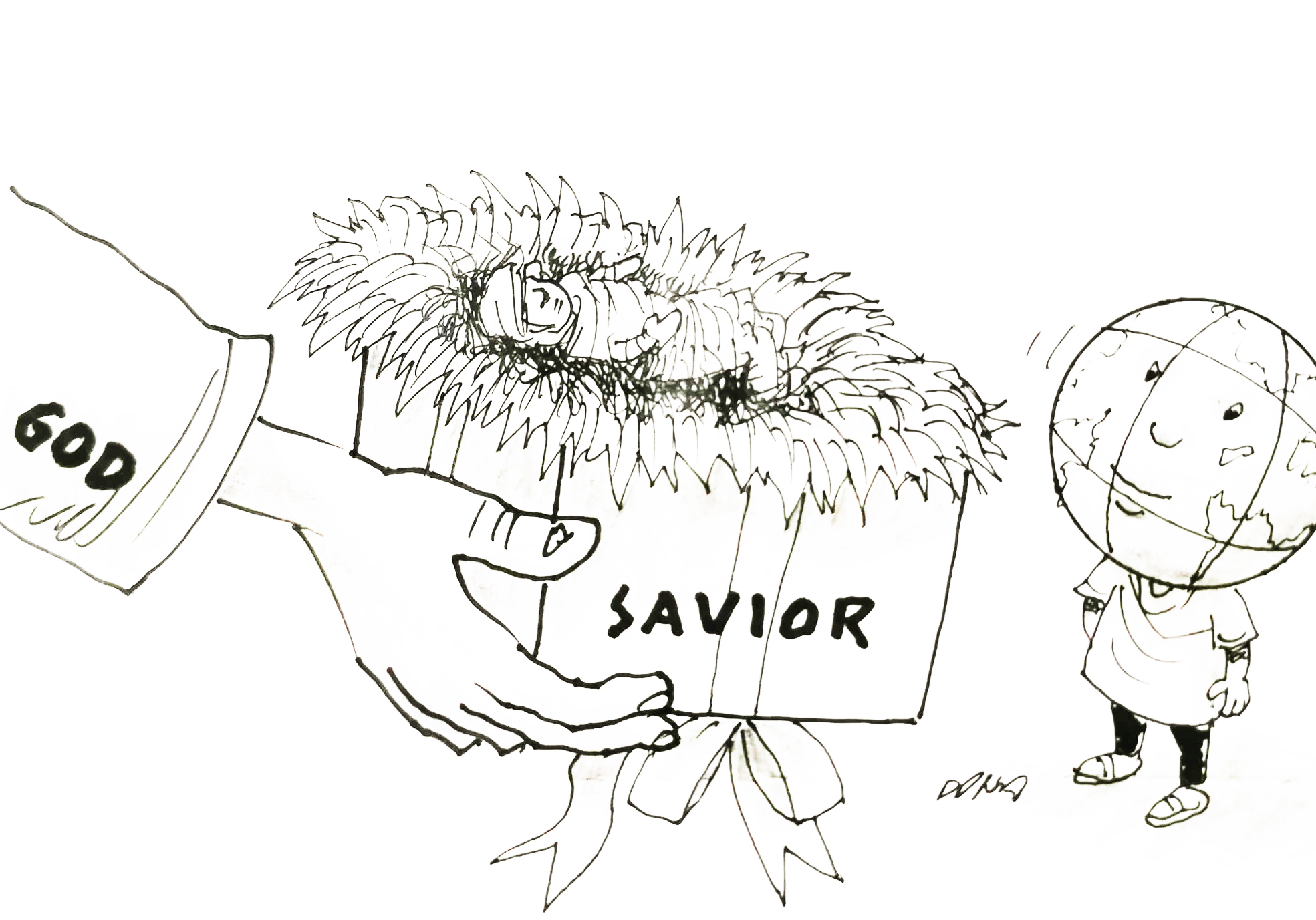

Finally, Christmas!
INDEED, a day of great joy! The Son of God, the perfect image that God has of himself and the image after whom we are patterned, is finally born to be with us and to give us “the way, the truth and the life” that is proper to us.
We should have no doubt about who we really are. That God has to become man to save us from our state of exile and alienation due to our sin, can only mean that we are meant to be God’s image and likeness, sharers of his divine life and nature. We need to start to level up, leaving behind the gaps about our true identity and dignity.
This can happen if we allow Christ to be born in us. That’s what he likes to do in the first place. He is just waiting for us to correspond properly to his desire. Yes, Christ wants to be born in us. That, in a nutshell, is the meaning of Christmas. All the festivities and merrymaking associated with this day should point us to this happy truth. We have to correspond to it and act on it as best that we can.
Let’s hope that the beautiful decorations we have everywhere, especially the Christmas crèche, Christmas tree, lanterns, the Santa Clauses, etc., lead us to this realization, instead of being distractions or, worse, a sweet poison to our soul.
Let’s hope that when we look at the Child Jesus in the belen, we get moved to thank him for wanting to be born in us, and to promise him that we will do our part to welcome and receive him in the best way we can.
Christ wants to be born in us because he is our savior who comes to re-make us after we have fallen into sin. Let’s remember that we are children of God, made in his image and likeness.
Christ wants to be born in us so he can start and continue with his work of redemption which takes place in the whole span of our earthly life. He wants to grow and live with us, experience what we experience so he can guide us.
But do we welcome him? Are we willing to have Christ in us, to work in us and with us? Do we actively cooperate in his redemptive work in us? Are we willing to be another Christ, “alter Christus,” as we ought to be, so we can recover and enrich the dignity God intended for us?
We have to convince ourselves that it is very doable for us to allow Christ to be born in us. This is no fantasy. On the part of God, he is already giving us everything that we need for this wonderful divine will of his to be carried out.
On our part, it is also very doable, because all we have to do is to be open to this divine will and act on it as best that we can. Christ can be born in us by allowing him to enter first into our mind and heart which are the proper places for him to be with us.
Let us get our mind and heart to be engaged with him, knowing him more, increasingly developing the ability to know his will and ways, being docile to his promptings that we can discern in our consciences. And from there, let’s make Christ reign and rule over all our other faculties—emotions, passions, appetites, urges, instincts, etc.