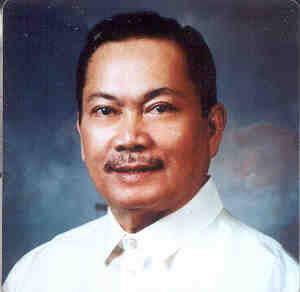
Phils invites investors for cancer center project
Reporters?

Upbeat of being in with trends of the times, we are caught unwittingly in the things that keep us unproductive. The advent of technological tools and gadgets had pushed us away from the basic things we ought to be busy of in order to live. Our desire to be at par with advance countries is silently putting us in a quagmire of dire impoverishment. Looking around would make us see the many irrelevant things that consume most of our precious time that ought to have been utilized in productive matters.
We have for instance even the low-income workers sacrificing so much to own a cellphone mainly because it is the fashion gadget of this generation. So much is consumed for the use of the gadget on not so important matters. The cost goes beyond the earning capacities but is not considered a burden all for the satisfaction of being in.
The trend is so pervasive across economic levels that even the non-earning students are likewise into the craze. While the gadget is important in some aspects as when communication is really too important, much of its use is for the sake of fashion and being updated with less essential things. For the non-earners, it entails so much sacrifice as the fashion would require cutting so much of meager allowances that should have been spent of food and other basic needs.
People in homes who are usually graced with abundant time to do many household chores and what used to be small cottage industries could not anymore find enough time as so much of the waking hours are spent watching television and using gadgets. The gadget is useful in many aspects but it eats up so much productive time that home buddies used to have in the past.
Past generations saw productive housewives doing home industries that add up to family income. That may no longer be true today as most of those left in the house are busy dreaming of instant jackpots that they see in variety shows but they could never have a chance all their lives. Worse, housewives had been tagged lately as fast spreaders of rumors and fake news.
comments to alellema@yahoo.com
When God pulls a surprise on us

THAT gospel episode of Christ walking on the water should remind us that God can intervene in our life in some mysterious and extraordinary way. (cfr. Mt 14,22-33) In other words, he can surprise us, he can come to us when we are not expecting him.
We somehow should be ready for this eventuality, although we should rather prefer that God comes to us in the usual ordinary ways—through the sacraments, doctrine of our faith, the usual events in our life, etc.
I say that we should prefer the ordinary ways because the extraordinary ways can also be pulled by evil spirits who can also appear to us, as St. Paul warned us, as angels of light. (cfr. 2 Cor 11,14) Thus, we have to be very discerning.
In any case, if it is truly God who pulls a surprise on us, he would normally tell us to remain calm and to reassure us that it is him who is doing so. This happened in that gospel episode of Christ walking on the water. Christ told his disciples, “Take courage, it is I; do not be afraid.”
Otherwise, if it is not God or any saint who is doing these extraordinary interventions, we would usually be led to some tense reaction, kind of disabling us to think and behave properly.
Also, we have to remember that the evil spirits can do nothing on us without the permission of God. And if God permits them, it is because a greater good can come out of them. The important thing to do is not to lose our faith in God. If we ever err in our judgments and discernment, but done in good faith, we can be sure that God will do everything to correct things for us.
The Book of Ezekiel mentions these reassuring words of God: “As surely as I live, declares the Sovereign Lord, I take no pleasure in the death of the wicked, but rather that they turn from their ways and live.” (33,11)
We should learn the skill of determining the kind of spirit that is involved in these extraordinary events in our life. St. John was explicit as to which spirit is proper to us. “By this you know the Spirit of God: every spirit which confesses that Jesus Christ has come in the flesh is of God, and every spirit which does not confess Jesus is not of God. This is the spirit of antichrist, of which you heard that it was coming, and now it is in the world already.” (1 Jn 4,2-3)
St. Paul distinguished between the fruits of the Spirit of God and the works of the flesh dominated by the evil spirit. The former include love, joy, peace, patience, kindness, goodness, faithfulness, gentleness, self-control. (cfr Gal 5,22-23)
The latter include fornication, impurity, licentiousness, idolatry, sorcery, enmity, strife, jealousy, anger, selfishness, dissension, party spirit, envy, drunkenness, carousing. (cfr Gal 5,19-21)
We would somehow know the kind of spirit we have by the kind of thoughts, desires and loves we have. If we look more closely at how our consciousness works, what its usual contents are, what we are most aware of, we would have an idea of the kind of spirit we have. All we have to do is to see if our thoughts, desires and loves are those of the fruits of the spirit or the fruits of the flesh.
8 schools compete in TESDA Leyte’s skills competition
TACLOBAN CITY-Some eight schools accredited by the Technical Education Skills and Development Authority (TESDA) 8 as its partner learning institutions slugged it out in a two-day skills tourney.
“You are not competing against each other, but you are competing against standards,” Engr. Gamaliel B. Vicente Jr., TESDA-8 regional director, shared these words to the competitors as he officially opened on Thursday, August 3, the two-day 2023 Leyte Provincial Skills Competition at JE Mondejar Computer College, Naga-Naga, this city.
This means that one has to achieve the scores set by the standards of the World Skills International in order to win in the competition.
The eight competitors will display their skills in the 10 trade areas.
Among the competitors are: Shine Ragonot of JE Mondejar Computer College Inc. and Kaizz Henley P. Respecio of the Western Leyte College of Ormoc City for Baking; Justine Kate Lino of ACLC College of Tacloban and Alyana Marie A. Guiron of Northridge Institute of Business and Technology Inc. for Graphic Design Technology;
Paulo Palanas of ACLC College of Tacloban and Nixon Marc Enerez of ACLC College of Ormoc for IT Network Systems Administration; Aldem Aldrick G. Almaden of STEFTI Technical Vocational Center and Johnrey A. Marilao for SDMF Skills Development for Maintenance and Fabrication for Plumbing and Heating;
Nathan Ganniel Laure, Robert John B. Migallos, and Christian T. Pulminar of the Regional Training Center Tacloban for Automotive Technology; James Lourd Dean G. Otic of JE Mondejar Computer College Inc. and Anthon John C. Hidalgo of Western Leyte College of Ormoc Inc. for Restaurant Services;
Antonie Liezel L. Pacantara of JE Mondejar Computer College Inc. and Joshua Benedict P. Bisnar of Western Leyte College of Ormoc for Cooking; Josh Fretzen Ragas of ACLC College of Ormoc and Lemuel Diaz of ACLC College of Tacloban and Jhoe Alfe Mario S. Bagtong of Northridge Institute of Business and Technology Inc. for Web Technologies;
And Luciano Floren N. Bacarisas of the Regional Training Center Tacloban for Welding and Cristhan Dave Galanza Espiritu of ACLC College of Tacloban for IT Software Solutions for Business.
Director Vicente said those who will win in this competition will compete at the regional level next month, September, for the 2023 Regional Skills Competition.
The winners in the regional competition will compete in the national level and eventually in the ASEAN competition to represent the country.
The conduct of the skills competition aims to promote and develop skills among the participants to prepare them in the international skills competition.
(MMP/CBA/PIA-8)
Globe blacklists, deactivates over 58,000 SIMs in H1 2023 via #StopSpam portal
Leading digital solutions platform Globe continues its vigorous campaign against scam and spam SMS through its #StopSpam portal, deactivating and blacklisting 58,234 SIMs linked to fraud and malicious texts.
This figure represents a striking 226.22% increase from 17,851 during the equivalent period last year.
Over these six months, Globe has blacklisted 53,533 SIMs and deactivated an additional 4,701, demonstrating a robust commitment to protecting its customers and maintaining a secure network.
The figures were the result of Globe’s #StopSpam initiative, which facilitates the reporting of mobile numbers linked to spam and scam messages and calls. Through the StopSpam
#StopSPAM – Report Scams or Spam Messages – Globe.
We invite you to join us in our fight to stop spam by reporting SMS spams or scams, fake websites, and fake social portal, customers can simply upload screenshots of unwarranted text messages, and fill in necessary details such as the sender’s number or caller ID, the recipient’s number, and any suspicious links received.
“As we stride forward into the digital age, our foremost commitment at Globe remains to ensure the safety and security of our valued customers. We have taken a strong stance against online fraud, as demonstrated by our stringent measures in deactivating and blacklisting SIMs, including providing a reporting mechanism for our customers through the #StopSpam portal. These actions are crucial steps towards building a safer, more trustworthy network and preserving the integrity of our communication channels,” said Anton Bonifacio, Globe Chief Information Security Officer.
In addition to blacklisting and deactivating SIMs, Globe also successfully intercepted a staggering 2.19 billion scam and spam messages just in the first half of 2023. This represents an increase of approximately 360%, compared to the 615.01 million messages blocked during the same period the previous year.
These efforts underscore Globe’s commitment to supporting the government’s fight against scammers and fraudsters, in line with the SIM Registration Act. The law mandates individuals to register and present valid identification to telecom entities to keep their mobile and broadband services active.
In its persistent fight against spam and scam messages, Globe has made substantial investments in detection and blocking systems. The company invested $20 million in its Security Operations Center, which operates 24/7 to screen out undesired messages from both international and domestic sources. (PR)


Doing nothing
Societal degradation refers to the decline or deterioration of social values, norms, and overall well-being within a community. While societies rely on the collective efforts of responsible citizens to maintain and improve their communities, instances occur where individuals choose to remain passive in the face of societal degradation.
When good citizens fail to act against societal degradation, moral decline becomes inevitable. A society’s ethical foundation depends on individuals upholding and promoting morality. When members of the community abstain from taking a stand against immoral behavior, societal norms begin to erode. Corruption, dishonesty, and unethical practices infiltrate the social fabric, eroding trust and perpetuating a culture of deceit. Without the vigilance and actions of good citizens, moral degradation can spiral out of control, further exacerbating societal issues.
This inaction against societal degradation can perpetuate existing inequalities, leading to a worsening social divide. Good citizens have a responsibility to challenge unfair practices, discrimination, and disparities that hinder progress. When individuals fail to address or combat systemic issues such as poverty, racism, or gender inequality, they inadvertently contribute to the perpetuation of these injustices. By remaining silent or indifferent, good citizens indirectly endorse the status quo, deepening divisions along socioeconomic, racial, or gender lines.
Another consequence of good citizens not taking actions against societal degradation is the erosion of democratic values and institutions. Democracies flourish when citizens actively participate in shaping their communities and holding the government accountable. When indifference prevails, the very essence of democracy becomes vulnerable, and an environment conducive to authoritarianism and corruption may emerge. Good citizens must exercise their rights to vote, voice concerns, and engage in constructive dialogue to keep democratic values alive and prevent the erosion of democratic institutions.
Moreover, when citizens choose to do nothing against societal degradation, they inadvertently contribute to a loss of social capital. Social capital refers to the networks, relationships, and trust that exist within a community, enabling individuals to work together for common goals. By refusing to address societal problems, good citizens inadvertently weaken the bonds that hold society together. This erosion of social capital can hinder collective action, cooperation, and the ability of communities to address pressing issues and find innovative solutions.
The lack of action by good citizens against societal degradation might result in a loss of personal and collective well-being. Neglecting societal problems can lead to deteriorating living conditions, increased crime rates, and diminished access to essential resources such as education, healthcare, and infrastructure. When citizens fail to rally against these issues, they compromise their own quality of life and contribute to the decline of collective well-being. Inaction may lead to a sense of apathy and hopelessness, undermining the general spirit of unity and resilience required to rebuild and strengthen communities.
The consequences of good citizens choosing to do nothing against societal degradation are far-reaching and detrimental to the well-being of societies. We have a responsibility to recognize and address societal problems head-on, championing positive change and actively participating in shaping a more equitable and just society. Only through collective action can we reverse the course of societal degradation and build a brighter future for all.