The 122-meter bridge connecting the towns of San Roque and Pambujan was officially open to traffic Wednesday(Feb.8) which is seen not only to hasten transportation of people and services but open up for more economic opportunities for two Northern Samar municipalities.
(NOTHERN SAMAR PROVINCIAL INFORMATION OFFICE)
TACLOBAN CITY– A 122-meter concrete bridge connecting the towns of San Roque and Pambujan, both in Northern Samar was opened Thursday (Feb.8) which is expected to hasten transportation and boost economic activities.
The 122-meter bridge connecting the towns of San Roque and Pambujan was officially open to traffic Wednesday(Feb.8) which is seen not only to hasten transportation of people and services but open up for more economic opportunities for two Northern Samar municipalities. (NOTHERN SAMAR PROVINCIAL INFORMATION OFFICE)
The Laoangan Bridge, built at a cost of P122.81 million, connects several communities considered as rice-producing and dotted with beautiful beaches in both municipalities.
Governor Edwin Ongchuan, who led the opening of the two-lane bridge, said that aside from shortening the time of travel, the bridge will also help boost the economies of the two towns.
“Since there are several beach resorts in the area, it will boost the tourism sector of San Roque since it will be accessible to the tourists,” he said.
The governor added that this new development in San Roque will not only make transportation of agricultural products easier but will also increase access to health, education, and other social services of nearby communities.
Ongchuan pushed for its construction following the request of San Roque former mayor and now provincial board member Don Avalon.
Avalon expressed his gratitude to the governor and Rep. Harris Ongchuan considering of its advantages to the people.
“The bridge will not only hasten transportation but also will make it easy to bring seafood products from Bantayan Bay, where a rich sea and beautiful beaches are located,” Avalon said.
He said residents of Barangays Panenerongan and Doña Anecita of Pambujan and Laoangan of San Roque will benefit from this bridge, the board member added. (JOEY A. GABIETA)
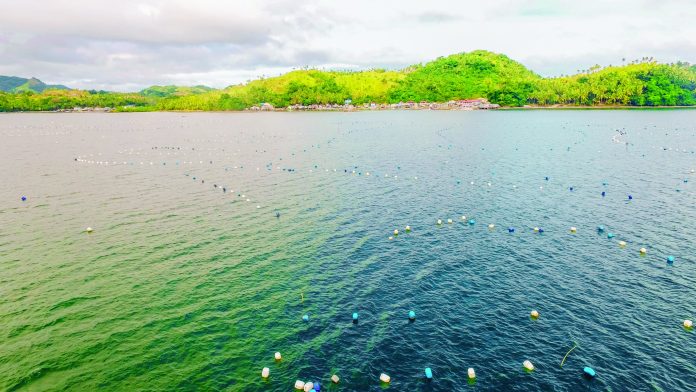
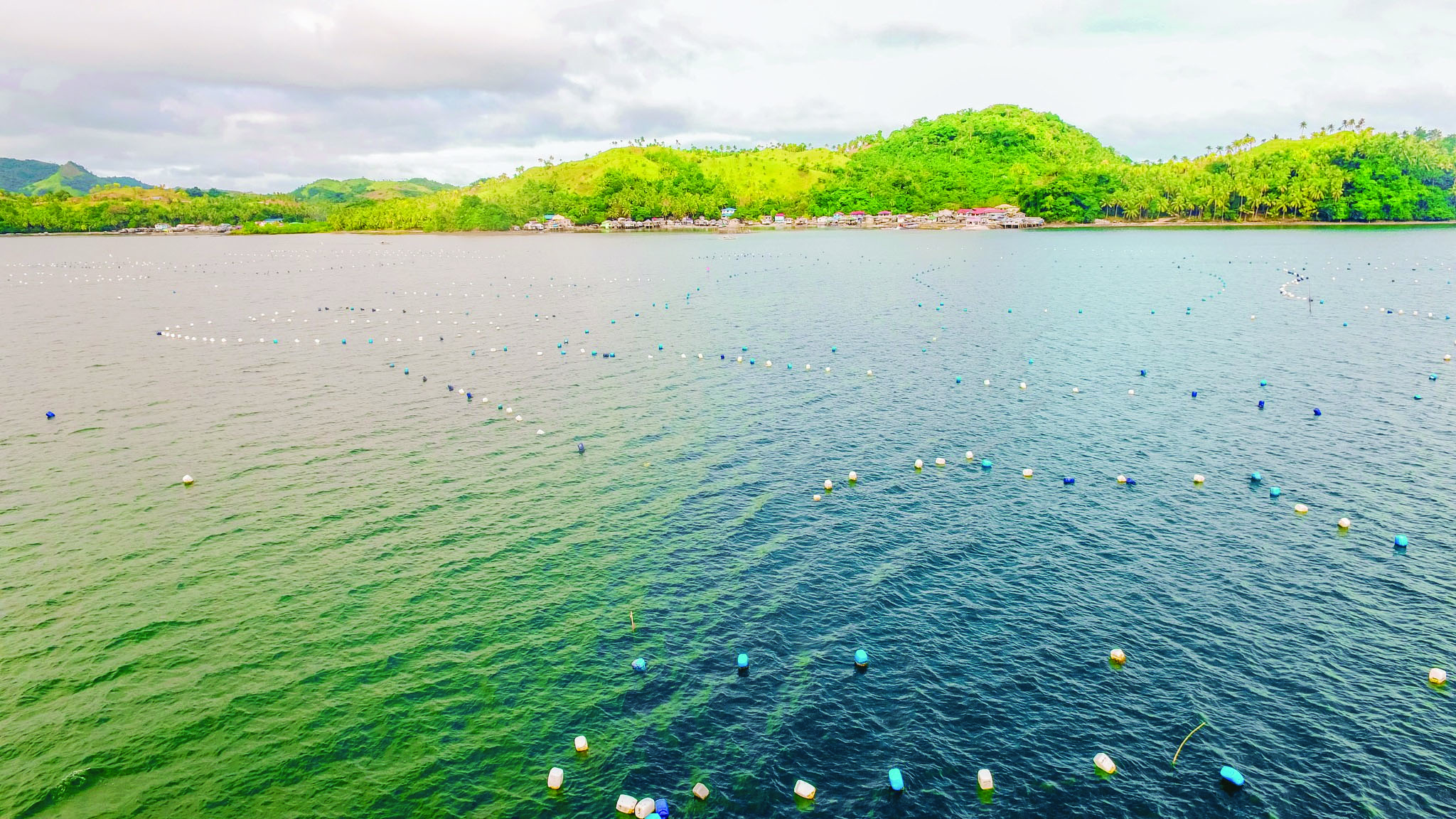
Fishermen from Barangay Baclayan in Daram, Samar have an extra income by planting green mussel through the help of the Bureau of Fisheries and Aquatic Resources. (BFAR PHOTO)
Fishermen from Barangay Baclayan in Daram, Samar have an extra income by planting green mussel through the help of the Bureau of Fisheries and Aquatic Resources. (BFAR PHOTO)
TACLOBAN CITY — Fishers of Barangay Baclayan, Daram Island in Samar no longer have to fish in the deep waters every single day to support their daily living as they discovered an easier and more sustainable way of making money through mussel long-line farming.
Mussel farming, which used to be a seasonal source of income for few fishers in Brgy.Baclayan, has now become the primary source of living of the many in its community.
The 40 members of the Baclayan Mussel and Crab Fishers Association (BMCA) can attest to this as they projected a P14,000-P70,000 per cropping earning from their long-line mussel farming.
This led to an annual production of 524 sacks or 36.68 tons of green mussels worth P700,000 out of the 95 lines installed within the waters of Brgy. Baclayan.
This was made possible through the provision of 240 rolls of PP rope, 4,000 plastic container jugs, 40 marine epoxy sets, 160 bags of cement, and 80 steel bars worth P2,051,120 of long-line mussel farming and installation materials from the Fisheries Coastal Resource and Livelihood (FishCORAL) Project in 2020.
BMCA also practices the use of coconut shells as spat collectors, a sustainable and beneficial method not only for the environment but also for the coconut farmers within their island who serve as their primary suppliers of these materials.
Mussel farmers of BMCA shared that they have used part of their earnings from their initial harvest to purchase additional long-line materials to increase their annual yield and upstart the mussel farming ventures of their family members who have been encouraged to try this mussel farming method.
From being able to pay for their daily needs and investing in more long-line modules in mussel production, BMCA fishers proudly shared that they can now afford to send their children to universities and chase their lifetime dreams, unbounded from the ties of poverty.
“Nakapaayad kami hin panalagudti han amon mga balay ngan an iba ha amon in nakakapagpa-eskwela na han ira mga anak ha college,” shared by Paulino N. Cueso, the BMCA president. (We were able to make minor renovations in our houses while some of us were able to send their children to college.)
“Nakakabulig an pagtahong pamalit-palit han amon panginahanglan ha amon mga panimalay,” Alan Cipra, one of BMCA’s top mussel harvesters added. (Mussel farming helps us buy our needs at home.)
Cueso and his members aired their request on having a floating guardhouse near their mussel farms as thieves occasionally steal their mussels.
They also wish to have a better boat that can be used during seaborne patrolling as illegal fishers frequently intrude on their area, leaving their long lines damaged.
Although faced with these challenges, the mussel farmers of Brgy. Baclayan still hopes that the BFAR and other government agencies will give their earnest support on the future expansion of their mussel farms to provide a dependable source of living for their entire community, lifting the lives of more fisherfolk families in Daram, Samar.
An association thriving and working towards not only their individual growth but also for their community, using a resilient and sustainable mussel farming method. This is the humble Baclayan Mussel and Crab Fishers Association. (ROEL T. AMAZONA/BFAR-8)
TACLOBAN CITY-The light shows at the iconic San Juanico Bridge, which connects the islands of Samar and Leyte, was temporarily stopped Thursday night due to an ‘electrical breakdown.’
However, the problem was immediately fixed immediately, said Michael Cristobal of the provincial tourism office.
“The problem was right away fixed by our in-house team,” he said.
Cristobal said that the problem after its connection tripped.
He, however, could not say what specific time the incident happened and when the power was restored back.
The provincial information office posted an advisory on Thursday night on the shutting off of the aesthetic lighting at the San Juanico Bridge due to what it said electrical breakdown.
To avoid further damage, it was decided to turn off the light show until the problem was repaired, it said.
The aesthetic lighting and sounds at the San Juanico Bridge was inaugurated on October 19 by President Ferdinand Marcos, Jr.
The bridge, having a length of 2.16 kms, was built during the time of the Marcos Sr. administration as a ‘gift’ to his wife, former first lady Imelda, who is from Leyte.
The aesthetic project at the San Juanico Bridge is one of the tourism-related projects undertaken by Samar Gov. Sharee Ann Tan under her ‘Spark Samar’ program which aims to draw tourists to the bridge even during nighttime.
The project was funded by the Tourism Infrastructure and Enterprise Zone Authority(Tieza) of the Department of Tourism in the amount of P80 million.
Meantime, the provincial government of Samar is responsible for the maintenance of the project to include paying the electric cost. (LIZBETH ANN A. ABELLA)
TACLOBAN. The team behind Paytaca, a Tacloban City-based Bitcoin Cash-focused financial technology (FinTech) start-up. (Contributed photo)
TACLOBAN CITY-Paytaca, a bitcoin cash-focused financial technology (FinTech) start-up based here has secured another equity-free pre-seed funding worth P2.5 million this February 2023, following their “successful pre-seed funding” of P7.5 million in May 2022.
“We are flattered that the Bitcoin Cash (BCH) community has once again supported us,” said Aaron JP Almadro, Paytaca’s marketing director.
TACLOBAN. The team behind Paytaca, a Tacloban City-based Bitcoin Cash-focused financial technology (FinTech) start-up. (Contributed photo)
“The campaign was supposed to last 30 days, but it was funded in only five days! We have a lot of activities in store, especially onboarding more merchants where Paytaca users can use their BCH,” Almadro added.
The new funding will help the company in its ongoing marketing efforts and merchant adoption.
“We have a long list of updates to the wallet. Some are already being implemented and will be included in the next releases,” said Joemar Taganna, president and chief executive officer.
In mid-2018, Paytaca started as a fiat wallet app before it shifted to a cryptocurrency wallet in 2019 “due to steep capitalization and licensing requirements.”
The company’s research into cryptocurrencies led them to Bitcoin Cash, according to Almadro.
“Since then, we have been actively building to make it accessible and useful in real-world commerce,” he added.
In July 2021, the company released the prototype of its wallet app after several delays due to the pandemic.
Over 10 releases later, the Paytaca wallet became “a powerful, user-friendly open-source Bitcoin Cash wallet app.”
It is already used in countries like US, UK, Australia, Argentina, Nigeria, Indonesia, Germany, and France.
“Paytaca’s goal is to champion a bottom-up model of BCH adoption that has the potential to scale and become self-sustaining,” Almadro said.
“Paytaca is dedicated to making Bitcoin Cash accessible and useful in real-world commerce. The company’s recent funding, along with the successful pre-seed funding in May 2022, will help to further the company’s efforts in this direction,” he added.
Being at the forefront of cryptocurrency adoption efforts in Eastern Visayas, the company will soon expand to other parts of the Philippines. (RONALD O. REYES)
ORMOC CITY– At least 27 sachets containing white crystalline substances suspected to be shabu estimated to weigh half a kilo, and a .45 caliber pistol and ammunition were recovered by the operatives of the Provincial Drugs Enforcement Team (PDEU) of the Southern Leyte Provincial Police Office and the City Drug Enforcement Team (CDET) from an ex-convict and a drug parolee in a buy-bust operation Monday (Feb.6) in Maasin City.
Maasin City police chief, Lt. Col Jason Balbaron, identified the suspect as Silbo Tombiga, 46, married, jobless, and a resident of Brgy. Sua-angon, St. Bernard, Southern Leyte.
He is listed as a high-valued individual on the drug watch list of the Southern Leyte Provincial Police Office.
Recovered from the possession of the suspect was one medium size sachet containing suspected to be shabu procured by an operative in the amount of P30,000.
Also recovered from the suspect was a backpack containing one sling bag in color black and green pouch. The sling bag contained one. 45 caliber pistol with three pieces of a magazine, 22 pieces of live ammunition of the same Caliber 45.
The green pouch when opened contained 26 medium-sized sachets containing shabu estimated to weight 500 grams with a street value of P3.4 million.
The suspect was arrested in a buy-bust operation in Ormoc City but was released from prison thru a plea bargaining agreement. He was also imprisoned for highway robbery in Bontoc Southern, Leyte, and was released after serving his sentence.
Charges of violation of RA 9165 the Comprehensive Law against Illegal Drugs of 2002, and RA 10591 the Law against Illegal Possession of Firearms, ammunition and explosive were filed against the suspect who is now languishing at the detention cell of Maasin city police station. (ROBERT DEJON)
WHEN Christ told the crowd that their righteousness should surpass that of the scribes and Pharisees if they want to enter the kingdom of heaven, (cfr. Mt 5,17-37) he is actually telling us that we should be wary of our tendency to make and observe our laws that are based only on some human criteria.
“You have heard that it was said to your ancestors, ‘You shall not kill; and whoever kills will be liable to judgment,’” he said. “But I say to you, whoever is angry with his brother will be liable to judgment, and whoever says to brother “Raqa,’ will be answerable to the Sanhedrin, and whoever says, ‘You fool,’ will be liable to fiery Gehenna…”
While we will always have to use some human criteria in making and observing our laws, we should also see to it that it is charity, the charity that comes from God, that should always be the animating spirit when we make laws and especially when we apply and observe them.
And that’s because it is this charity that treats us in the most proper and wholistic way. It knows how to deal with any situation, condition and circumstance in our life, whether considered good or bad, humanly speaking. Charity knows how to blend justice with mercy, truth with compassion and patience.
That is why, Christ gave us as the new commandment that perfects all the other commandments. And that is that we should love one another as he himself has loved us. (cfr. Jn 13,34) And he loved us all the way by offering his life on the cross, as a way of bearing all our sins so that our salvation can be attained. He even offered forgiveness to those who crucified him.
That is the kind of charity that we should also live and give to one another. It does not do away with justice. Rather it purifies and perfects our justice, ridding it of its mainly retributive and punitive character, and always promoting its distributive, procedural and restorative character.
It is with this kind of charity that often may ask us to go beyond but not against our human laws. That’s because our human laws cannot fully capture all the conditions of human life. Neither can they fully fathom the ultimate identity and dignity of man. That’s why in the end we have to defer everything to God. It’s he who makes the last and final judgment.
This definitely is not easy to do. But we can always try. The important thing is that we are aware of the need for charity as we make and observe our human laws. Our laws should be continually updated and refined, so that they channel more and more the charity that comes from God. Especially during these times when rapid developments are occurring, there is a great need for our human laws to reflect more the charity of God.
Thus, in making and observing our laws, we cannot and should not ignore the necessity to refer ourselves and our laws to God. We should not just depend on some ideologies and philosophies, on traditional juridical systems, etc. While they will always have something valid to contribute, they will always need the living spirit of God’s charity to animate them.
It is this charity, as St. Paul said, that delights not in evil but rather rejoices with the truth. “It always protects, always trusts, always hopes, always perseveres.” (1 Cor 13,6).