29.6 C
Tacloban City
October 13, 2026 - Tuesday | 1:31 PM
Home Blog Page 1175

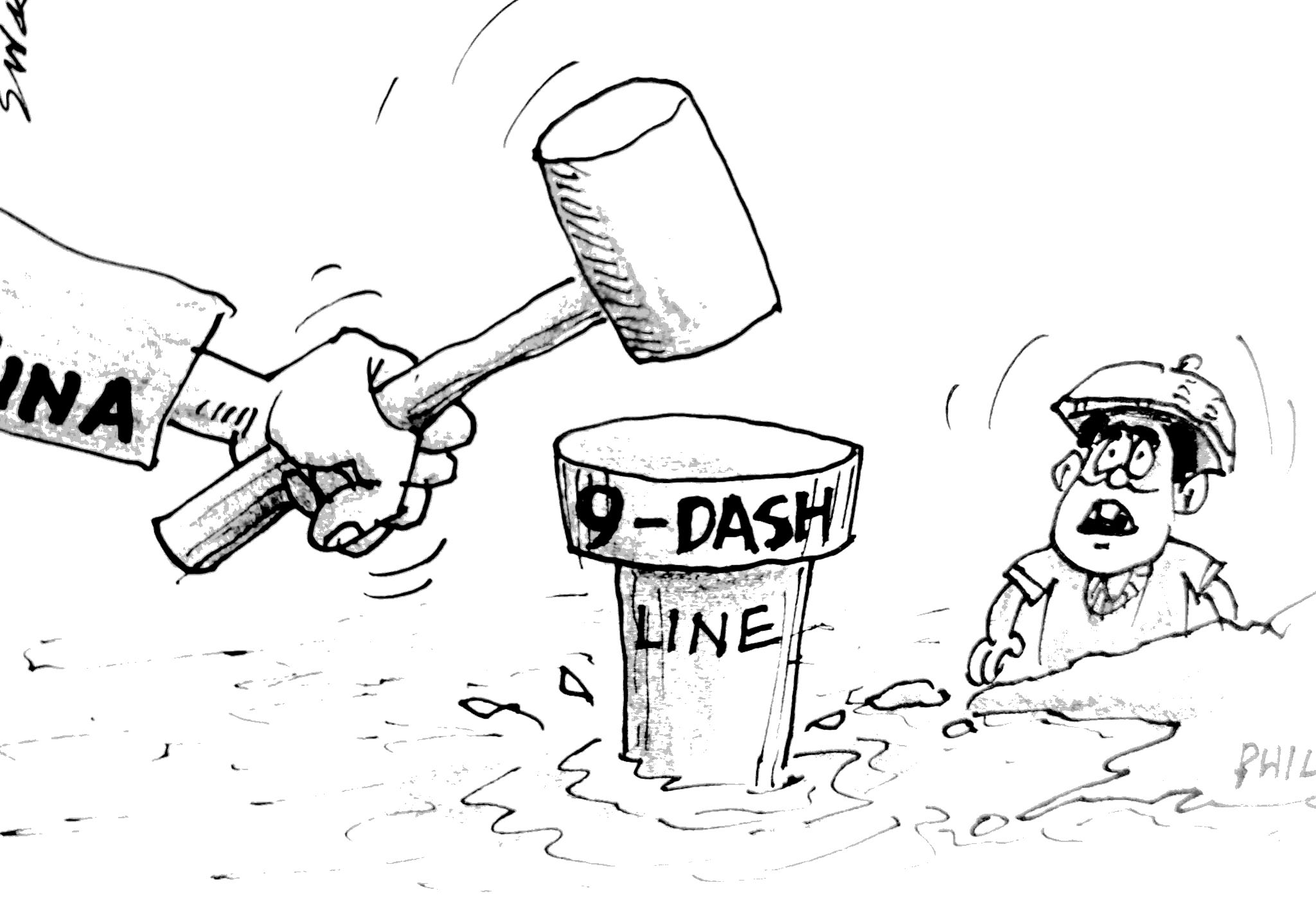
Plain trespassing

0

China’s actions in the South China Sea and other maritime regions have continually drawn widespread international attention and concern. The Chinese government’s assertive stance in territorial disputes with neighboring countries and its increasing military presence in disputed waters have raised serious questions about its intentions and the impact on regional stability.

The South China Sea is a strategically significant body of water bordered by multiple countries, including China, Vietnam, the Philippines, Malaysia, Brunei, and Taiwan. China has claimed a vast portion of this sea, known as the “Nine-Dash Line,” which encroaches upon the maritime territories of other nations. This assertion of sovereignty over the South China Sea has led to increased tensions in the region.

China’s encroachment into the South China Sea has significant geopolitical implications. It challenges the international order based on the United Nations Convention on the Law of the Sea (UNCLOS), which establishes rules for territorial waters and exclusive economic zones. By disregarding UNCLOS principles and infringing upon the territorial waters of neighboring nations, China undermines the credibility of international law and the peaceful resolution of disputes.

Furthermore, China’s actions strain diplomatic relations with neighboring countries, creating an atmosphere of distrust and instability. This undermines efforts to build regional cooperation and peacefully manage disputes, which can have lasting consequences for peace and stability in the Asia-Pacific region.

To address these issues and prevent further escalation, it is essential for the international community to engage in diplomatic efforts aimed at promoting peaceful resolutions to maritime disputes, upholding the rule of law, and preserving regional stability. The South China Sea issue serves as a test case for the effectiveness of international mechanisms in managing and resolving territorial disputes in the 21st century.
Just wondering

0
DOMS PAGLIAWAN

Many of us are perhaps unaware that the transition from traditional internal combustion engine (ICE) vehicles to electric cars has been a growing trend in the automotive industry. We may just wake up someday to see that fuel-using cars are already gone. Well, several factors have contributed to this trend.

First, it is due to environmental Concerns. Electric cars produce zero tailpipe emissions, reducing air pollution and greenhouse gas emissions. As concerns about climate change and air quality increase, electric vehicles (EVs) are seen as a more environmentally friendly alternative. This is to do away with smoke emissions that pollute the air we beath, making the environment free from toxic pollutants.

Advances in battery technology likewise explain this. Improvements in battery technology have made it possible for electric cars to offer longer driving ranges and faster charging times. This has alleviated concerns about the limited range and charging infrastructure for EVs. In fact, many governments around the world offer incentives to promote electric vehicle adoption. These incentives can include tax credits, rebates, and special access to carpool lanes.

As technology advances and economies of scale come into play, the cost of producing electric vehicles and batteries has been decreasing. This makes EVs more affordable for consumers. Moreover, the growing awareness of environmental issues and the desire for cleaner transportation options have driven consumer demand for electric cars. Many automakers have responded by expanding their electric vehicle offerings.

For these reasons, major automakers have made commitments to transition their fleets to electric vehicles in the coming years. This includes plans to phase out the production of traditional gasoline and diesel cars. But while the shift toward electric cars is significant, it’s important to note that the complete replacement of all gasoline and diesel cars with electric cars will likely take many years, possibly decades, to fully materialize.

This transition also depends on the development of charging infrastructure, battery technology, and continued government support. Hybrid vehicles, which combine gasoline or diesel engines with electric power, have also gained popularity as a transitional technology, offering improved fuel efficiency and reduced emissions compared to traditional ICE vehicles.

While it’s true that electric cars are becoming increasingly popular and are expected to play a significant role in the future of transportation, the complete replacement of fuel cars with electric cars may take time and depend on various factors, including technological advancements and policy support. By the way, what will become of the existing traditional vehicles that many people own today if they get phased out? Are we to throw them into the junkshop? Just wondering.

Credit access and improved irrigation – Agri groups plead

0
Dr. Paciente Cordero

Starting June 2, 2023, the effectivity of the Regional Comprehensive Economic Partnership (RCEP), the Filipino agriculture workers are expected to push for an enhanced support, better access to credit and improved irrigation program.

The agricultural groups have adopted the hashtag “Bantay RCEP, Buy Filipino”, a strategy for their sector to be heard as RCEP takes effect based on the guiding principles of food sufficiency and engagement in government. Accordingly, “this is an unprecedented, almost all of the major agriculture-based groups in the country, united and actively opposing RCEP”, as quoted by the Kilusang Magbubukid ng Pilipinas (KMP). This agri workers sentiment is echoed by the Sugar Council representative who said that “. . . the government needs to support the productivity improvement and competitiveness enhancement or measures needed by the entire Philippine agriculture sector.” Briefly stated, “how can we compete against subsidized importation of food products which have export subsidies or other forms of government support that we do not have?”

MY COMMENT:
The issues that the Filipino agricultural group, with support from certain concerned citizens center on (1) small farmers inability to access to affordable and timely loans/credit programs, making it difficult to modernize, buy new machinery adopt farming techniques and new panting materials and (2) agri farmers feel that the country lack an irrigation program, preventing them from advancing away from being rice-centric.

I find the issues worth paying attention to by the government. On the matter of accessibility to loans and credit programs and mechanization of farmlands, the same are being addressed by the government, but initiatives are not spread, implemented equitably in Luzon, Visayas, and Mindanao farmers.
ooo000ooo
NEXT TOPIC : “NEDA awaits 2023 proposals for innovation grant”
SHARE S & T THOUGHTS through E-Mail: drpacjr@yahoo.com.

Christ defines who can belong to God’s family

0
FR. ROY CIMAGALA
FR. ROY CIMAGALA

HE said it very clearly. “My mother and my brothers are those who hear the word of God and act on it.” (Lk 8,21).

If we want to belong to God’s family as we should, since we are meant to be his image and likeness and sharers of his divine life and nature, we should follow what Christ is telling us.
And why should we believe in Christ’s words? That’s because he is the very Son of God, and is God himself, who became man to offer us “the way, the truth and the life” that is proper to us.

Remember that episode of his baptism in the River Jordan? A voice was heard from heaven, clearly telling us who Christ was. “This is my Son, whom I love; with him I am well pleased.” (Mt 3,17) And in the transfiguration of Christ, again a voice was heard from heaven: “This is my beloved Son, listen to him.” (Mt 17,5)

Let’s never forget that God always intervenes in our life. He actually is the main shaper and director of our life. But he always needs our cooperation, because he always respects our freedom.

Thus, we should realize that the ideal condition for us is to unite our will with God’s will. It should identify itself with God’s will and channel it as faithfully as possible all throughout our earthly sojourn.

We have to realize more deeply that God’s will is the source of everything in the universe. The whole of creation in all its existence, unity, truth, goodness and beauty starts from God’s will and is maintained by it.

The entire range and scope of reality—be it material or spiritual, natural or supernatural, temporal or eternal—is “contained” there, not only theoretically but also ‘in vivo.’ It would be funny if we think we can cope with all the demands of our life by simply relying on our own powers. We have to follow God’s will all the time.

We, therefore, have to do everything to polish and sharpen our sense of obedience to God’s will, especially as we head toward maturity since the years tend to deaden our need for obedience. We have to be more aware of those factors that tend to dull our duty to obey.
In fact, the older we get, and the more accomplished and experienced we feel we are, the sharper should be our sense of obedience and more attentive to its finer demands.

Otherwise, we would simply spoil whatever achievements we have gained. It’s like we are gaining ground on the outside but losing ground on the inside, an echo of “what does it profit a man if he gains the whole world but loses his soul.” A terrible collapse would just be a matter of time.

We need to be strongly reminded about this, since we have to contend with formidable undermining forces—culture, lifestyle, media, the scandalous examples of many in politics, business, and even in the church. We have to be ready to do continuing constructive battle of peace and love in this area.

The model for all this is Christ who frequently said, “My food is to do the will of my Father.” And he did so all the way to the cross. Thus, St. Paul said that Christ was obedient until death.

Election?

0
AL ELLEMA
AL ELLEMA

Deciding who we want to lead our localities is the best blessing of our democracy. We enjoy the free exercise of our sacred right to vote for those who deserve the trust and confidence of our people to run the affairs of government. The choice must be based on ideal parameters that would produce officials who possess the qualification, capability, integrity to perform the functions of the office being aspired for. There too is a need to examine the platform or advocacy that a particular candidate is pushing for that would be a good yardstick of what one will do once elected. But all these are mere ideals of bygone days when elections were truly clean and honest in all aspects, including the voter’s respect to his dignity and honor as a sovereign and rationale being.

It is indeed unfortunate that elections are nothing more than commercial transactions with the sacred vote as commodity of the deal. Candidates no longer worry formulating a program of government for voters no longer care asking for the best platform anyway. Even meetings held by candidates during the campaign do not anymore attract the curiosity and interest of the voters. People would attend to listen only if they are given the best consideration for their presence. We can only find a few who voluntarily go to meetings as a manifestation of responsibility. Most do not anymore care to listen and just decide on choices without knowing well the personalities and issues.

Calls to regain our moral bearings had repeatedly been issued by concerned civic, religious and cause oriented groups. Such appeal to resort to conscience and fight every temptation and influence of money, guns and power ought to be heeded by all and sundry. The call is very timely as people appear to have lost its moorings on morality and the independent and free exercise of his sovereign will. We really need to reexamine ourselves and try answering basic questions regarding our moral values that ought to guide us in the exercise of our sacred right to vote.

Unfortunately, we have seen in the recent past how money plays a crucial role in winning elections. Voters had been used to receiving tokens, pennies and small bills from candidates who want their names written in the official ballot. These candidates pretend to be generous givers to the least of their brethren. They try to downplay vote buying as mere acts of kindness and sharing their riches to their constituents who are expectantly waiting for the election money. Those who have the riches have the decided advantage to win over the poor candidates. But upsets are always possible if voters will only decide to defeat the evil influence of money by voting wisely no matter the bribe, else, we will remain asking if the activity to vote is truly an . . . election?
comments to alellema@yahoo.com

Senator Go extends assistance to displaced workers in Leyte town

0

TACLOBAN CITY– Senator Christopher “Bong” Go, in coordination with Mayor Lando Villasencio, provided additional assistance to 315 displaced workers in Merida, Leyte on Friday (Sept.22).

The workers attended an occupational safety and health orientation earlier conducted by the Department of Labor and Employment (DOLE).

The orientation, which was held at the municipal recreational gymnasium, was aimed to educate workers about the importance of workplace safety and health standards.
During the said event, Go’s team handed out shirts, snacks, and balls for basketball and volleyball to the identified displaced workers.

“Nais ko po na iparating sa inyo ang aking buong suporta at pagmamahal sa panahong ito ng inyong pangangailangan. Alam ko po ang hirap na dinaranas ninyo dahil sa pagkawala ng inyong trabaho, at nais kong malaman ninyo na kami ay nandito para sa inyo sa abot ng aking makakaya,” the senator, said in a video message.

“Sa abot ng aking makakaya, patuloy kaming magsusumikap na magbigay ng tulong at oportunidad para sa inyong kinabukasan. Mahalaga na malaman ninyo na kami ay nagtutulungan kasama ang iba’t ibang ahensya ng gobyerno upang hanapan ng mga paraan kung paano kami makakatulong sa inyo,” Go, an adopted son of Leyte, added.

To ensure that those who reside in rural areas lacking job opportunities are taken care of, Go also filed Senate Bill No. 420 which seeks to offer temporary employment to eligible members of low-income rural households who are ready to perform unskilled physical labor for a period of time.

The senator likewise encouraged those with health concerns to seek the assistance of any of the 159 Malasakit Centers nationwide, five of which are established in the province.
Almost all government-run hospitals in the region have their Malasakit Center. Among these are the New Western Leyte Provincial Hospital in Baybay City, Eastern Visayas Regional Medical Center (EVRMC) in Tacloban City, Ormoc District Hospital in Ormoc City, and Leyte Provincial Hospital and Governor Benjamin T. Romualdez General Hospital and Schistosomiasis Center (GBTRGHSC) in Palo.
(LIZBETH ANN A. ABELLA)

Recent Posts

DALMACIO C. GRAFIL
PUBLISHER

ALMA GRAFIL
EDITOR-IN-CHIEF

ROMEO CEBREROS
OFFICE IN-CHARGE

OFFICE
BRGY. SONGCO, BORONGAN CITY

CONTACT NUMBERS
(055) 261 – 3319 | 0955 251 1533 | 0917 771 0320 | 0915 897 7439 | 0921 511 0010

DALMACIO C. GRAFIL
PUBLISHER

RICKY J. BAUTISTA
EDITOR

ALMA GRAFIL
BUS. MANAGER

OFFICE
RIZAL AVENUE, CATBALOGAN
(INFRONT OF FIRE DEPARTMENT, NEAR CITY HALL)

CONTACT NUMBERS
0917 771 0320 | 0915 897 7439 | 0921 511 0010

EMAIL
lsdaily2@yahoo.com

WEBSITE
www.issuu.com/samarweeklyexpress