ORMOC CITY-A 50-year-old man was found dead inside his house in Almeria, Biliran on Sept.26 with the town medical officer reporting that the cause of death could be due to a heat stroke.
The local police identified the victim as Mario Sedaya, a resident of Villa El Blanco in Barangay Jamorawon of the said town.
A bad and nauseating odor emanating from the house of the victim led to the discovery of his dead body, it added.
Dr. Christopher Castro, the municipal health officer, declared the victim could have died due to heat stroke. (ROBERT DEJON)
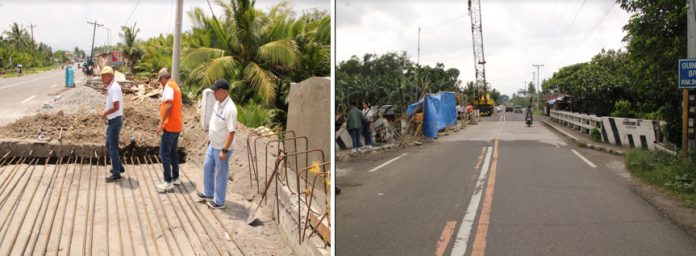
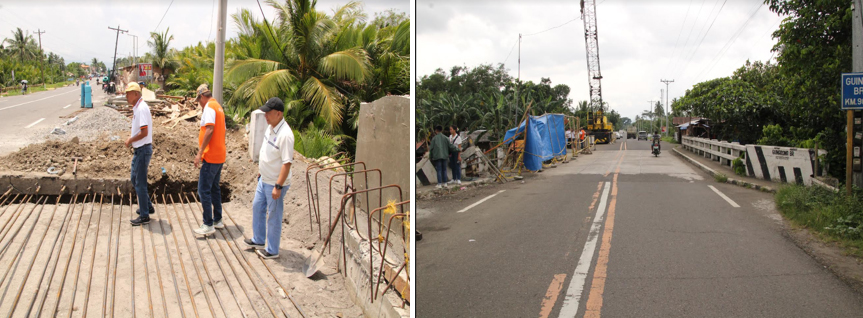
The Department of Public Works and Highways in Leyte’s second engineering district officials recently conducted an ocular inspection on the progress of the widening of Balogohay Bridge in Carigara and Guinarona Bridge in Dagami. (Photo Courtesy)
The Department of Public Works and Highways in Leyte’s second engineering district officials recently conducted an ocular inspection on the progress of the widening of Balogohay Bridge in Carigara and Guinarona Bridge in Dagami. (Photo Courtesy)
TACLOBAN CITY– The Department of Public Works and Highways (DPWH) Leyte 2 District Engineering Office (L2DEO), led by District Engineer Leo Edward Oppura, along with the district office inspectorate team, conducted a site inspection of the ongoing widening bridges.
The bridges inspected were the Balugohay Bridge in Carigara, along the Barugo-Carigara road section, and the Guinarona Bridge in Dagami.
Both bridges will be expanded from two to four lanes to conform to the road widening projects of the department and to accommodate a larger number of vehicles.
The Balugohay Bridge widening costs P12.67 million while the Guinarona Bridge cost P 16.38 million.
The bridge projects involve the expansion of the existing bridge to a 5-meter width on both sides, including the sidewalks, construction with a concrete pile foundation, reinforced concrete deck girders, concrete railings, and the introduction of stone masonry works as slope protection.
The bridge widening project of the department aims to provide wider and safer roads for faster mobility of motorists and goods traveling along the road sections.
The project is funded under the DPWH-CY 2023 General Appropriations Act (GAA) Bridge Program- Retrofitting and Strengthening of Permanent Bridges. (LIZBETH ANN A ABELLA)
TACLOBAN CITY– A South Korean national was found dead in a transient inn in Pintuyan, Southern Leyte on Saturday (Sept.30).
Police identified the fatality as Youngsik Shin, 36, a businessman who said to live in Pampanga.
He was found dead inside his room at D and G transient house located in Barangay Sta. Cruz of the said town at about 9:45 pm.
It was learned that the victim, together with his girlfriend Chris Roxanne Gadia,36, arrived in Pintuyan on Sept.28 to attend the town fiesta the following day, Sept. 29.
However, the two reportedly had a heated argument which resulted for the South Korean to leave DD Lodge where the couple originally had checked in, and transferred to D and G transient house where he was found dead.
Gadia contacted the South Korean national through his cellular phone but did not receive any response.
Prior to the discovery of his lifeless body, Gadia’s sister, Christine Rodriguez, received a text message from Youngsik informing her that he was suffering from acid reflux.
Police had ruled out any foul play on the death of the South Korean national as he was said to have died due to a natural cause based on the examination conducted by the town’s health officer, Dr. Kayessa Lyona Bunagan. (JOEY A. GABIETA/ROBERT DEJON)
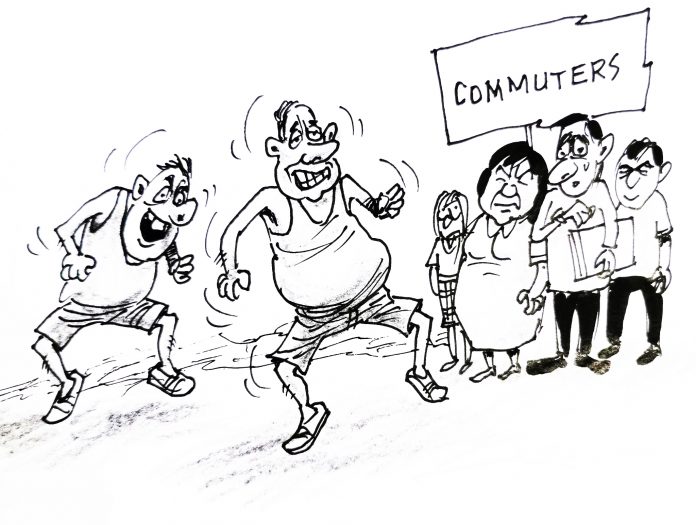
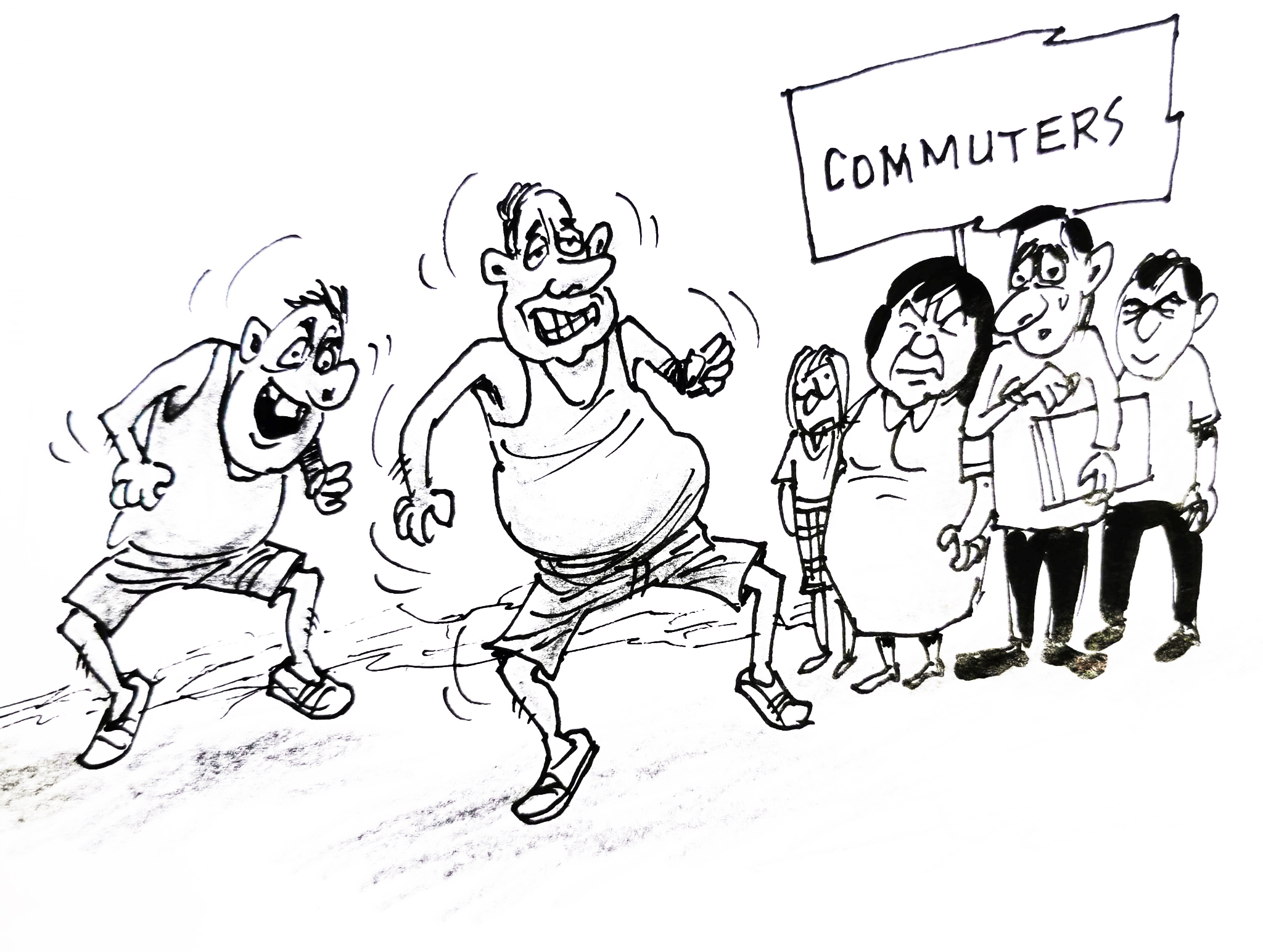
Fun runs have become increasingly popular in recent years, attracting participants of all ages and fitness levels. But their impact on traffic and commuter mobility should not be overlooked, making sure that measures are taken to ensure it does not paralyze traffic and hinder the mobility of commuters.
Fun run organizers should carefully plan the routes to minimize disruptions to traffic flow. By utilizing less busy roads or scheduling the run during off-peak hours, the impact on commuter mobility can be significantly reduced. Additionally, collaboration with local authorities and implementing traffic control measures such as detour signs, temporary road closures, or appointing traffic marshals can further alleviate the congestion caused by such events. This proactive approach would demonstrate consideration for both the participants of the fun run and the general public affected by the traffic disruptions.
Promoting alternative modes of transportation can also mitigate the impact on traffic. Encouraging participants to carpool or use public transportation not only reduces the number of vehicles on the road but also improves air quality and reduces greenhouse gas emissions. Offering incentives such as discounted public transport tickets, organizing shuttle services from central locations, or providing secure bicycle parking facilities can motivate individuals to adopt these alternative modes. Furthermore, strategically locating the starting and finishing points away from major traffic routes can avoid significant disruptions to the daily commute.
Lastly, leveraging technology and communication systems can enhance traffic management during fun runs. Utilizing real-time traffic updates and sending notifications to commuters about route changes, delays, or alternative travel options can help them make informed decisions. Mobile applications that provide detailed information about the event’s impact on traffic and suggest the best alternative routes can significantly reduce frustration and inconvenience. By utilizing these technological advancements, the effect of fun runs on traffic congestion and commuter mobility can be effectively minimized.
While fun runs provide numerous fitness and community benefits, it is important to ensure that they do not paralyze traffic and impede commuter mobility. By striking a balance between promoting physical activity and considering the needs of the larger community, fun runs can continue to be enjoyable events without hindering the mobility of commuters.
It is an essential activity that should never be disregarded, regardless of the level of education one has attained. It serves as a continuous source of expansion for our intellectual horizons and offers countless benefits that enrich our lives. Whether one is an undergraduate student, a working professional, or a graduate school student, neglecting it can have detrimental effects on knowledge acquisition, analytical skills, critical thinking abilities, and overall intellect. It is then imperative to understand and appreciate the significance of reading at any stage of life.
At higher levels, reading is even more crucial. This is because they demand a higher level of critical thinking and analysis compared to lower levels. Engaging with scholarly articles, books, and research papers broadens one’s understanding of complex concepts, theories, and methodologies. Through By reading, one can delve into the minds of experts in their field, gaining insights and perspectives that would otherwise be inaccessible. This, in turn, enhances one’s ability to discern strengths and weaknesses in existing literature, develop well-rounded arguments, and contribute meaningfully to academic discourse.
Reading aids in the development of strong analytical skills, which are indispensable in the realm of education. By reading extensively and intensively, students learn to dissect written material, identifying key components, main arguments, and supporting evidence. This skill becomes especially valuable when conducting thorough literature reviews for research projects or when critically evaluating the work of others. Precise and meticulous reading allows students to engage with complex subject matter, recognize nuances, and develop substantial arguments. As a result, their ability to comprehend and articulate complex ideas improves significantly.
Furthermore, reading facilitates the cultivation of critical thinking abilities, which are vital for success at higher educational levels. Reading stimulates intellectual curiosity and encourages individuals to question assumptions, challenge existing beliefs, and approach problems from multiple perspectives. It fosters an environment where students can develop independent thought and engage in constructive debates. By actively reading, students can dismantle arguments, evaluate evidence, and form their own informed opinions. This intellectual agility ultimately leads to improved academic performance and an enhanced capacity for creative problem-solving.
Reading, of course, is not confined solely to academic literature. Engaging with a diverse range of literary genres, including fiction and non-fiction, introduces one to different writing styles, cultures, and perspectives. Exploring literature from various periods, countries, and genres provides an enriching cultural experience, broadens horizons, and nurtures empathy. By reading classic novels, poetry, or autobiographies, one can relate to the narratives of others, gain a deeper understanding of humanity, and develop well-rounded perspectives. This exposure to a variety of ideas and narratives strengthens one’s ability to form connections, think critically, and express oneself effectively.
Neglecting reading, on the other hand, can lead to an intellectual stagnation that hinders professional growth. The ever-evolving nature of academia demands a constant influx of knowledge and research in order to remain at the forefront of one’s field. Reading is not only essential during one’s studies but also throughout one’s professional career. By continuously reading, people not only keep up with the latest developments in their field but also expand their knowledge and remain intellectually engaged beyond the confines of their immediate educational focus.
Regardless of the level of education one has attained, reading plays a vital role in intellectual growth and development. Even at higher levels, reading continues to contribute significantly to knowledge acquisition, analytical skills, critical thinking abilities, and overall intellect. It is crucial to acknowledge and value the immense benefits of reading at every stage of academic and professional life.
OCTOBER 2 is liturgically celebrated as the Memorial of our Guardian Angels, reminding us of this tremendous reality that we have these powerful spiritual beings who are assigned to each one of us to help us in our earthly life and, most importantly, to connect us with God.
The gospel reading of this memorial somehow tells us of the crucial role these guardian angels play in our life. (cfr. Mt 18,1-5,10) In it, we are made to understand that there is a connection between being child-like and being great in heaven, and why the angels are important in our life.
When the disciples asked Christ about who is the greatest in heaven, Christ placed a child in their midst and said, “Amen, I say to you, unless you turn and become like children, you will not enter the Kingdom of heaven.” And he further said, “Whoever humbles himself like this child is the greatest in the Kingdom of heaven. And whoever receives one child such as this in my name receives me.”
A little later, he again said, “See that you do not despise one of these little ones, for I say to you that their angels in heaven always look upon the face of my heavenly Father.”
These words are worth considering very seriously because in them Christ somehow tells us the important role angels play in our effort to becoe child-like even as we grow in age and experience.
Let’s remember that angels are spiritual beings who upon their creation have made the eternal decision to be with God. There are also spiritual beings who upon their creation have made the opposite decision whose effect remains with them forever. These are the devils.
That the angels of children “always look upon the face of my heavenly Father,” as Christ said, can mean that these children who still are not in the age of reason, are always connected and guided by God. They are yet incapable of separating themselves from God.
In our case, since we already have our own mind and have accumulated a lot of knowledge and experience, we should try our best to be humble so as to be like children, always guided by the angels who are always on the side of God.
In other words, to be child-like is to be guided always by our guardian angels who will always connect us with God. There is a connection between being child-like and being with God through our guardian angels. We should not downplay the role of angels in our life, taking them for granted or, worse, considering them as unreal or just fictional literary devices, etc.
This is a truth of our Christian faith that we should always remember and act on. We definitely have to train ourselves how to be child-like and how to connect with our guardian angels all the time. Christ told his disciples that they had to humble themselves to become child-like, for the obvious reason that they—and us—are notorious for regarding ourselves as mature and totally independent, with hardly any need for God.
It would be helpful that everyday, we have the habit of consciously entering into a close engagement with our guardian angels. We should not dare to face our day simply relying on our own human powers. Each of us is assigned a guardian angel to connect us with God, and vice-versa, for God to enter into our lives, since these spiritual beings are God’s messengers to us.