
30.2 C
Tacloban City
September 12, 2026 - Saturday | 5:16 PM
Home Blog Page 108

1st ESPMFC harvests vegetables through “Gulayan sa Kampo” program

0
GULAYAN SA KAMPO. Personnel of the 1st Eastern Samar Provincial Mobile Force Company (1st ESPMFC) harvest fresh vegetables, including pechay, from their “Gulayan sa Kampo” project inside the camp premises, promoting food sustainability, teamwork, and community service.(1st ESPMFC FACEBOOK)

TACLOBAN CITY – Personnel of the 1st Eastern Samar Provincial Mobile Force Company (1st ESPMFC) harvested fresh vegetables from their “Gulayan sa Kampo” project, showcasing teamwork, self-sufficiency, and community service within the camp premises.
Major Marval Diaz, officer-in-charge, said the activity demonstrated the collective effort and cooperation of 1st ESPMFC personnel in cultivating and maintaining the camp’s vegetable garden.

The harvest yielded fresh vegetables, particularly pechay, which will help augment the nutritional needs of personnel while promoting sustainable food practices inside the camp.
The gardening initiative was spearheaded by PSSg Benedick Quiloña with the active participation of other personnel assigned at the unit.

Some of the harvested vegetables were also shared with personnel and community members passing by the 1st ESPMFC headquarters as part of the unit’s continuing community outreach efforts.

According to Major Diaz, the “Gulayan sa Kampo” program reflects the organization’s commitment not only to maintaining peace and order but also to promoting environmental awareness, food sustainability, and public service.

He likewise commended the personnel for their dedication and teamwork in sustaining the garden, emphasizing that unity, patience, and perseverance contribute to productive and meaningful accomplishments.

(Leyte Samar Daily Express)

Over 2,800 delivery riders in Eastern Visayas receive fuel aid

0
FINANCIAL AID. Delivery riders from different areas in Eastern Visayas line up to receive ₱5,000 cash assistance from the government as part of measures to help workers cope with rising fuel prices and increasing operational expenses.(DSWD-8)

TACLOBAN CITY — Thousands of delivery riders across Eastern Visayas received government cash assistance on Tuesday, May 27, to help ease the financial burden caused by rising fuel prices and increasing transportation costs.

The Department of Social Welfare and Development (DSWD) Regional Office 8 distributed P5,000 in cash relief assistance to 2,855 delivery riders throughout the region as part of the government’s response to the continuing effects of high oil prices under the country’s ongoing energy emergency measures.

According to DSWD-8, the simultaneous payout activities were conducted in different provinces and cities in Eastern Visayas to ensure that beneficiaries directly received the financial support.

Among the recipients, 1,124 delivery riders received assistance in Tacloban City; 402 in Ormoc City, Leyte; 88 in Biliran; 202 in Southern Leyte; 536 in Samar; 346 in Eastern Samar; and 157 in Northern Samar.

The cash aid aims to provide immediate relief to delivery riders whose daily operations have been heavily affected by fuel price increases, reducing their income while increasing transportation and delivery expenses.

Delivery riders have become an essential part of the transport and service sector, particularly following the rise of online food delivery and courier services in recent years. Many riders rely on motorcycles for their livelihood, making them among the sectors most vulnerable to fuel price hikes.

DSWD-8 said the assistance program forms part of the national government’s continuing efforts to support vulnerable and low-income workers affected by economic challenges and fluctuating fuel prices.

The agency added that the initiative seeks to help beneficiaries sustain their daily needs and continue their operations amid ongoing economic pressures.

(LIZBETH ANN A. ABELLA)

Brace for water shortage

0

The warnings are becoming louder, and the forecasts are becoming more alarming. Weather experts are saying that a severe El Niño may once again affect the country in the coming months. Faced with this threat, conserving water is no longer merely a good habit but an urgent responsibility.

El Niño has always been associated with prolonged dry spells, scorching temperatures, and declining water levels in rivers, dams, and reservoirs. When rainfall becomes scarce, communities immediately feel the consequences. Households struggle with water shortages, farmers watch their crops wither under the heat, and livestock suffer from the lack of drinking water. Conserving water today is one of the simplest yet most effective ways of preparing for the difficult months ahead. Every drop saved now helps reduce the pressure on limited water supplies when drought conditions worsen.

The agricultural sector is particularly vulnerable during severe El Niño events. Agriculture remains heavily dependent on water, and a prolonged lack of rainfall can devastate rice fields, vegetable farms, and other crops that sustain both livelihoods and food security. Reduced harvests often lead to higher food prices, affecting not only farmers but also ordinary consumers. By using water wisely and avoiding waste, communities can help ensure that available water resources are sufficient for both domestic and agricultural needs during periods of scarcity.

Water conservation is also important for maintaining public health and essential services. Hospitals, schools, fire departments, and other institutions require a steady supply of water to operate effectively. During droughts, competition for limited water resources often intensifies, creating hardships for vulnerable sectors of society. Simple practices such as repairing leaks, collecting rainwater when possible, reducing unnecessary water use, and promoting efficient water management can collectively make a significant difference in extending available supplies.

The approaching El Niño should serve as a wake-up call rather than a cause for panic. Waiting until reservoirs are nearly empty and communities are already experiencing shortages would be a costly mistake. Conserving water now is a practical act of preparedness that protects households, supports agriculture, safeguards public services, and strengthens community resilience. The best time to save water is not when the drought has already arrived, but while there is still enough water to save.

Should Congress and the Senate be abolished

0

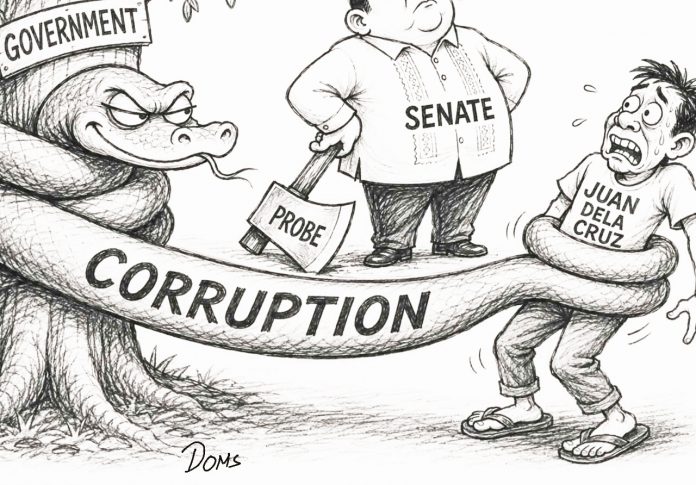
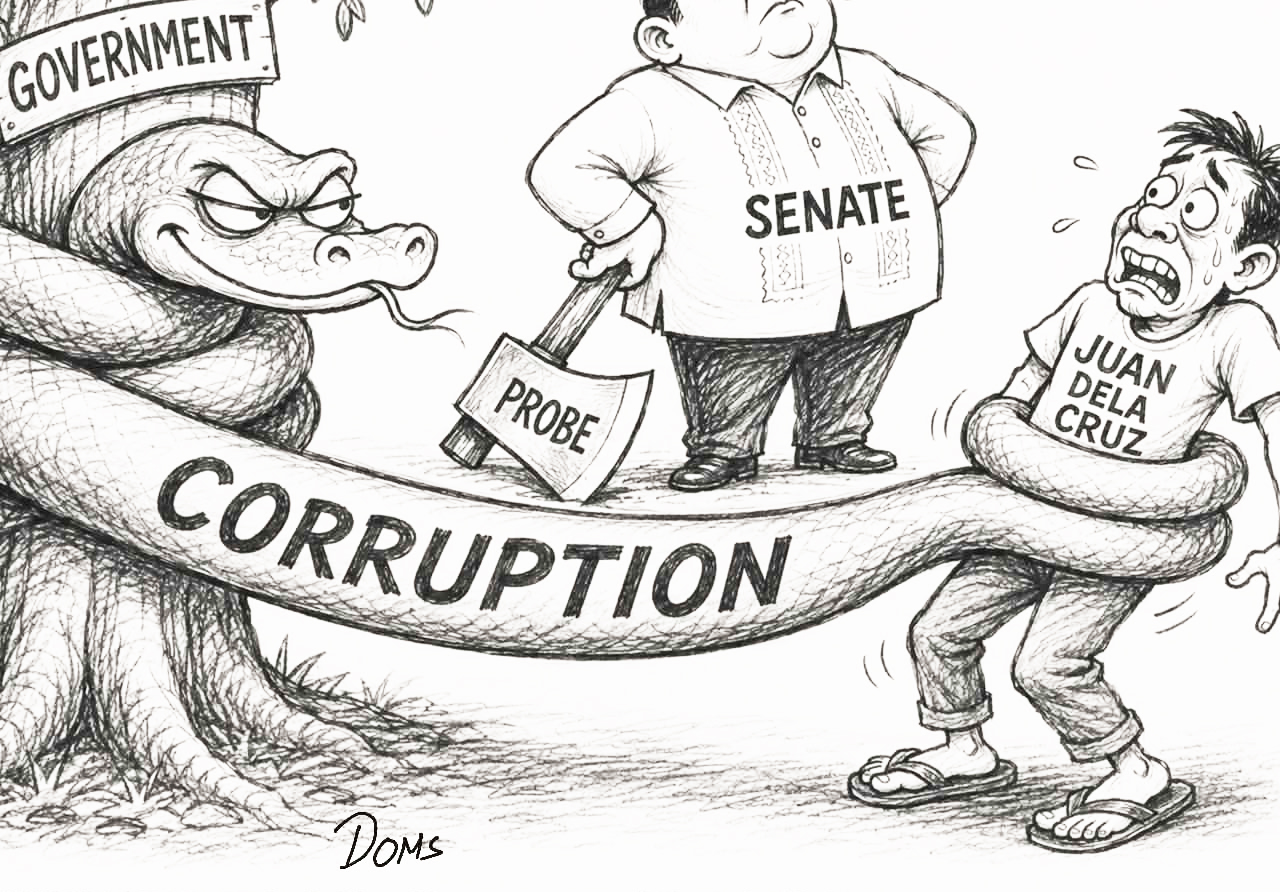
The call to abolish Congress and the Senate has long existed at the fringes of Philippine political discourse, but recent scandals involving pork barrel abuses, corruption allegations, political dynasties, absentee lawmakers, and legislative grandstanding have given the idea renewed attention. Many Filipinos have grown weary of seeing elected officials draw enormous salaries and privileges while basic public services remain inadequate. To some sectors, the country’s legislative chambers have become symbols of waste, privilege, and corruption rather than engines of national progress.

Those who advocate abolition point to the enormous cost of maintaining the legislature. Every year, billions of pesos are spent on salaries, offices, staff, travel, consultants, hearings, and various legislative operations. Critics argue that despite these expenditures, many laws passed do little to address poverty, unemployment, inflation, poor healthcare, and weak public education. They contend that taxpayers are funding an institution that often appears more interested in political maneuvering than in solving the nation’s pressing problems.

Another argument raised by abolitionists concerns the prevalence of political dynasties and entrenched interests. Congress and the Senate are frequently dominated by wealthy families whose members occupy public offices across generations. Critics claim that this concentration of political power limits genuine representation and allows a small elite to shape legislation according to their own interests. In their view, abolishing the current legislative structure could create opportunities to design a more efficient and representative system of governance.

Some reform advocates also point to examples of countries that operate with a single legislative chamber or have significantly streamlined their lawmaking processes. They argue that the bicameral system can result in duplication, delays, and unnecessary conflicts between the House of Representatives and the Senate. A leaner structure, they suggest, could reduce government expenses and speed up decision-making while still providing democratic representation.

Yet the proposal to abolish Congress and the Senate carries serious risks. In every democratic system, legislatures serve as a check on executive power. They scrutinize budgets, investigate government activities, debate national policies, and prevent excessive concentration of authority in one branch of government. Removing these institutions without establishing equally strong safeguards could weaken democratic accountability and open the door to authoritarian rule.

Moreover, corruption is not unique to Congress and the Senate. Corruption can also exist in executive agencies, local governments, state corporations, and even the judiciary. Eliminating the legislature does not automatically eliminate the individuals, networks, and practices that enable corruption. The problem may simply migrate to other institutions. Structural reform, therefore, must address the roots of corruption rather than merely the venues where it occurs.

There is also the practical question of who would perform the legislative functions currently assigned to Congress and the Senate. Laws governing taxation, national security, education, healthcare, labor, and public spending require deliberation, amendment, and approval. If lawmakers are removed entirely, another institution would inevitably assume these responsibilities. The danger is that the replacement body could become even less transparent and less accountable than the existing system.

Perhaps the real issue is not whether Congress and the Senate should exist, but whether they should finally be transformed into institutions worthy of public trust. The widespread frustration fueling abolitionist calls is understandable and rooted in legitimate grievances. However, the challenge may lie not in destroying democratic institutions altogether but in reforming them through stronger anti-corruption measures, electoral reforms, transparency requirements, stricter qualifications for candidates, and greater public accountability.

Democracies do not become stronger by removing checks and balances; they become stronger when citizens demand that those entrusted with power perform their duties honestly and faithfully.

Strategies for building and maintaining strong brand awareness and loyalty

0

In an increasingly competitive marketplace, where countless brands are vying for consumer attention, simply offering a good product or service is no longer enough. Businesses must actively work to build “brand awareness”—ensuring consumers recognize and remember their brand—and foster brand loyalty, where customers return again and again, often becoming vocal advocates.

Strong brand awareness introduces customers to your business, but brand loyalty keeps them coming back. The most successful companies master both. Here are key strategies to help you build and maintain strong brand awareness and lasting loyalty.

1. Define and Communicate a Clear Brand Identity

A strong brand starts with a clear identity. This includes your brand mission, vision, values, voice, and visual elements like logos and color schemes. When these components are well-defined and consistently communicated, your brand becomes easily recognizable and memorable.

Ask yourself:

* What does my brand stand for?
* How do I want customers to perceive my brand?
* Is this perception consistent across all touchpoints (social media, packaging, website, etc.)?

A compelling, authentic brand story not only differentiates you from competitors but also forms the emotional foundation for customer loyalty.

2. Leverage Social Media to Your Advantage

Social media is a powerful tool for increasing brand visibility and engagement. Platforms like Instagram, TikTok, LinkedIn, and X (formerly Twitter) allow brands to communicate directly with their audiences in real-time.

Tips:
* Post consistently with brand-aligned messaging and aesthetics.
* Engage with your followers—reply to comments, share user-generated content, and participate in trending conversations.
* Use hashtags, influencers, and collaborations to expand your reach.
By showing up regularly and authentically, you not only increase brand awareness but also build relationships that foster loyalty.

3. Deliver Consistent, High-Quality Customer Experiences

Every interaction a customer has with your brand—whether it’s visiting your website, opening a package, or speaking with a support agent—affects how they perceive you. Consistency builds trust, and quality experiences build satisfaction.

To achieve this:

* Ensure product or service quality meets (or exceeds) expectations.
* Provide seamless, omnichannel customer support.
* Gather and act on customer feedback.

Loyalty is often a byproduct of consistently positive experiences. Customers return to brands they can rely on.

4. Invest in Content Marketing

Educational, entertaining, and valuable content helps position your brand as an industry leader and builds ongoing trust. A good content strategy increases visibility and keeps your audience engaged over time.

Effective content formats include:
* Blog posts and articles
* Videos and tutorials
* Infographics and whitepapers
* Podcasts and webinars

The key is to provide content that aligns with your audience’s needs and reflects your brand’s personality. This keeps your brand top-of-mind, even when customers aren’t actively buying.

5. Use Loyalty Programs and Customer Incentives

One of the most direct ways to encourage repeat business is by offering loyalty programs and rewards. These programs provide tangible incentives while also deepening emotional connections with your brand.

Popular formats include:

* Points-based rewards (earn points per purchase)
* Tiered memberships (e.g., silver, gold, platinum levels)
* Referral bonuses for bringing in new customers
* Birthday or anniversary perks

Make the program simple, accessible, and genuinely valuable. Customers who feel rewarded are more likely to stay engaged.

6. Collaborate with Influencers and Brand Advocates

Influencer partnerships can rapidly increase brand visibility and credibility, especially among niche audiences. People trust recommendations from real individuals more than traditional ads.

In addition to influencers, your existing customers can be powerful advocates. Encourage happy customers to leave reviews, share their experiences, and participate in ambassador programs.

Word-of-mouth marketing, both online and offline, is still one of the most effective tools for building trust and awareness.

7. Adapt and Evolve With Your Audience

Brands that stay static risk becoming irrelevant. To maintain both awareness and loyalty, you must evolve with changing customer needs, market trends, and technology.

Steps to stay relevant:

* Monitor customer behavior and feedback regularly.
* Keep an eye on industry trends and competitor strategies.
* Be willing to rebrand or pivot when necessary.

Showing that you listen and adapt builds deeper loyalty and helps your brand stay fresh in consumers’ minds.

Final Thoughts

Building brand awareness gets you noticed. Building brand loyalty keeps you in business. Both are ongoing processes that require consistency, authenticity, and a deep understanding of your audience.

By clearly defining your brand, engaging meaningfully through various channels, delivering great experiences, and rewarding loyalty, you create more than just customers—you create a community. And in today’s relationship-driven economy, that’s the true foundation of long-term success.
————–
If you have any questions or would like to share your thoughts on the column, feel free to send an email to jca.bblueprint@gmail.com. Looking forward to connecting with you!

Pursuing the Trinitarian life

0

WITH the celebration of the Solemnity of the Blessed Trinity, we are reminded of the most important mystery of our faith, the fount of all the other truths and mysteries of our faith, since it shows us the inmost and intimate life of God in himself, even before being the Creator of the universe.

The relevance of this mystery in our life stems from the basic truth that we, as man, are created in God’s image and likeness, adopted children of his, and therefore made to reflect and, in fact, participate in this very Trinitarian life of God. The implications and consequences of this truth are endless, but let’s tackle at least a few of them for now.
Through this mystery, which was revealed to us in full by Christ, we are told that God, though one, are three persons, Father, Son and Holy Spirit, because the absolutely one and simple God is never an idle God, nor a lonely God.

He is rather a God who is full of dynamism, an eternal dynamism of knowing and loving. His knowing and loving are no mere acts that begin and end, that come from potency to act, but are so perfect that they create the three eternal persons in that one God.
Since the life of God is Trinitarian, we need to know how to deal even while here on earth, even while pursuing our exciting earthly affairs, with the Father, the Son and the Holy Spirit. This will guarantee that whatever we do here would redound to our authentic good, that they are done with God and for God, and not just for ourselves.

In fact, our life should somehow reflect the Trinitarian character of divine life. God, though absolutely simple and one, is triune. That’s because even though he is one, he is not alone nor idle.

With his eternal dynamic life of knowing and loving, he generates within himself an eternal kind of spiral of relationship of Father, he who knows, the Son, the self-knowledge of God, and the Holy Spirit, the love between the Father and the Son.

These are persons who are consubstantial with each other, that is, each one of them is the fullness of God, and not just a part of God. They cannot be separated from one another. In the very one God, there’s one person who knows, another one who is known, and a third one who is the love. All these acting in eternity, and all at once.

For our life to reflect this Trinitarian life, we need to follow the teaching and example of Christ, the Son of God who became man who revealed to us this mystery of the Blessed Trinity.

Like him, we have to do no other than the will of the Father, and to do it in the Holy Spirit for it to acquire its ultimate eternal value proper to us. This is how our life and all our activities and concerns should be developed.

Perhaps as a guiding formula, we can use the expression: “By the Father, through the Son, in the Holy Spirit.” Such motto would also give us ideas of how to deal with each person of the Blessed Trinity, and really live in a Trinitarian way daily, as we ought.

We have to learn to deal with God in his Trinitarian life—that is with the Father who knows and loves, and with the Son who is the known and the loved, and the Holy Spirit who is the very love of God. Our knowing and loving should reflect the eternal knowing and loving of the Trinitarian God.

Recent Posts

DALMACIO C. GRAFIL
PUBLISHER

ALMA GRAFIL
EDITOR-IN-CHIEF

ROMEO CEBREROS
OFFICE IN-CHARGE

OFFICE
BRGY. SONGCO, BORONGAN CITY

CONTACT NUMBERS
(055) 261 – 3319 | 0955 251 1533 | 0917 771 0320 | 0915 897 7439 | 0921 511 0010

DALMACIO C. GRAFIL
PUBLISHER

RICKY J. BAUTISTA
EDITOR

ALMA GRAFIL
BUS. MANAGER

OFFICE
RIZAL AVENUE, CATBALOGAN
(INFRONT OF FIRE DEPARTMENT, NEAR CITY HALL)

CONTACT NUMBERS
0917 771 0320 | 0915 897 7439 | 0921 511 0010

EMAIL
lsdaily2@yahoo.com

WEBSITE
www.issuu.com/samarweeklyexpress