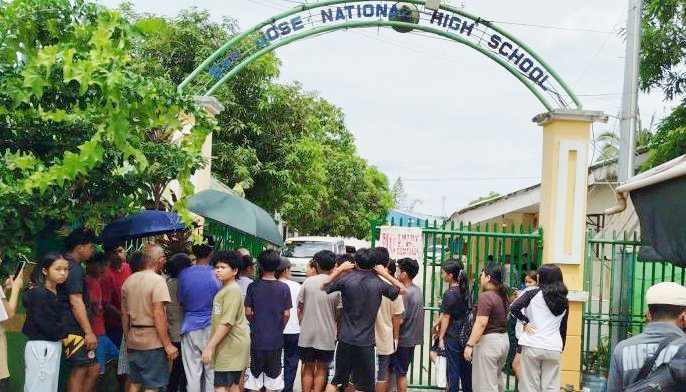
TACLOBAN CITY – As students prepare to return to classes following the deadly shooting at San Jose National High School (SJNHS), the City Schools Division here is calling for sustained mental health interventions, warning that the psychological effects of the tragedy could persist long after the incident if left unaddressed.
The Department of Education (DepEd) Tacloban Schools Division has underscored the need for continuous psychological support for students affected by the June 22 shooting at San Jose National High School (SJNHS), saying recovery from trauma extends far beyond the immediate aftermath of the tragedy.
DepEd Tacloban Schools Division Senior Guidance Coordinator Julienne Rosa Saballa said students who underwent Psychological First Aid (PFA) immediately after the shooting should continue receiving follow-up interventions to help them recover emotionally and prevent long-term mental health problems.
She explained that while PFA is designed to stabilize the emotional responses of individuals following a traumatic event, healing is a gradual process that requires continuous monitoring and professional support.
“If these emotional responses are not addressed early, they may manifest later in adulthood as mental health conditions such as anxiety, depression, and post-traumatic stress disorder,” Saballa said.
She noted that guidance personnel have already provided Psychological First Aid to affected students and school personnel, but emphasized that regular follow-up assessments remain necessary as learners gradually return to the classroom.
“Healing does not happen in one or two days. It is a process, which is why follow-up is necessary,” she said.
Saballa also urged parents to closely observe changes in their children’s behavior and seek assistance from the City Health Office or qualified mental health professionals if they notice signs of emotional distress or trauma.
The June 22 shooting at San Jose National High School left three students dead and injured 20 others, sending shockwaves through the school community and raising concerns over the long-term psychological impact on survivors, classmates, teachers, and families.
The tragedy has also highlighted the shortage of licensed guidance counselors in public schools, prompting DepEd to push for the full implementation of Republic Act No. 12080, or the Basic Education Mental Health and Well-Being Promotion Act.
Saballa said only two of Tacloban City’s four public high schools have registered guidance counselors, while the remaining secondary schools and dozens of elementary schools rely on teachers assigned to perform guidance-related duties.
“The ideal ratio is one registered guidance counselor for every 500 students. At Leyte National High School, we are only two guidance counselors serving more than 8,000 students,” she said.
She explained that registered guidance counselors are licensed professionals who provide counseling, career guidance, crisis intervention, and mental health services that are vital to students’ overall well-being and the prevention of behavioral problems and school violence.
According to Saballa, the full implementation of Republic Act No. 12080 would create additional plantilla positions for school counselors, school counselor associates, and school division counselors. The law also mandates the establishment of care centers in every public basic education school to provide counseling services, mental health first aid, and preventive psychosocial programs.
As schools prepare for the resumption of classes, DepEd guidance counselors are also conducting orientation sessions for teachers to help them recognize and appropriately respond to students who may continue to experience trauma, anxiety, or emotional distress following the shooting.
Saballa said the combined support of schools, families, and mental health professionals will be crucial in helping affected learners safely transition back to the classroom while rebuilding their sense of security and well-being.
(ROEL T. AMAZONA)