23.3 C
Tacloban City
March 22, 2026 - Sunday | 9:32 AM
Home Blog Page 1046

TCPO assures ‘full force’ security on June 29 and 30

0

TACLOBAN CITY-On June 29 and 30, almost a thousand uniformed troops will be stationed in key locations throughout the city to provide security during the Sangyaw Festival festivities.

Tacloban City Police Office (TCPO) Public Information Officer, Police Major Marjorie Manuta, said that this is part of the security plan prepared by the local police office for the Sangyaw Festivities.

Manuta disclosed in an interview over the radio program “Oras Han Tacloban’’ of the City Information Office on Monday that the full force of the TCPO will be on duty on the eve of the City Fiesta and on June 30 and will have augmentation coming from the Police Regional Office 8.

She also stated that since the start of the month-long Sangyaw Activities, security details have been consistently posted at the Festival venues.

As part of the security preparations on June 29, downtown area roads will be closed to vehicular traffic, starting at 4:00 p.m., namely Real, Independencia, Imelda Avenue, Salazar, Paterno, and Burgos Streets.

Along with this, Manuta also mentioned that the TCPO will run mobile and ‘beat’ patrol units to monitor the situation during the Sangyaw Festival.

The Sangyaw Festival is the official festival of Tacloban City, and displays the artistic talent and cultural diversity of the people of Tacloban and the other participating communities. The Parade of Lights serves as the festival’s centerpiece.

Twelve floats and dance groups, two of which will be from local government units outside the city, will take part in this year’s Parade of Lights.

The float and dance contingents are composed of Sagkahan National High School, JE Mondejar Computer College, Barangay 91 Abucay, Tacloban City National High School, Tacloban Institute of Electronics, Tacloban City Night High School, San Jose National High School, KFDMT Barangay 43-B, Barangay 85 San Jose, Tacloban Angelicum Learning Center, LGU Basey, and LGU Caibiran, Biliran.

Also joining the parade at 5:30 on Thursday are competing and non-competing groups of Merrymakers, officials, and employees of the Tacloban City local government unit.
The parade route includes Justice Romualdez, Rizal Avenue, Imelda Veteranos, Real Street, and Magsaysay Boulevard, where the winning dancers and floats will be announced at the Balyuan Amphitheater.

In order to avoid attracting the attention of criminal elements, the TCPO advises those who will attend the festivities to refrain from wearing valuables and to be vigilant of their surroundings. Other lethal weapons, such as those with blades are also prohibited.
(TACLOBAN CITY INFORMATION OFFICE)
Fiesta time

0

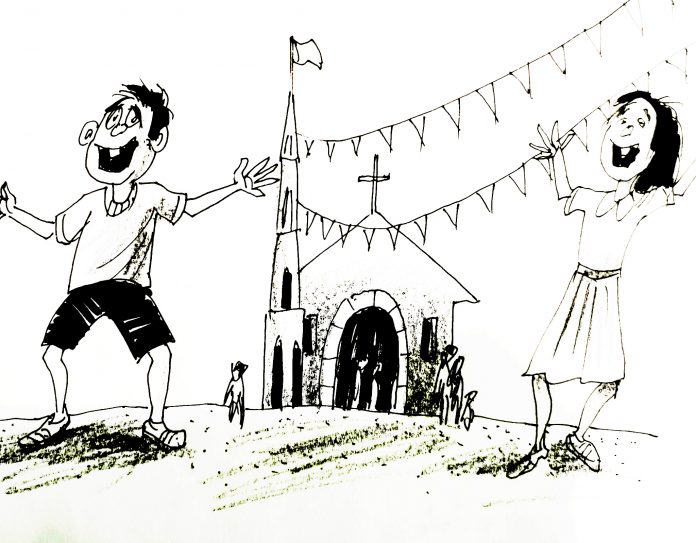
Tacloban City, the capital of the province of Leyte, observes its annual fiesta every June in honor of its patron saint, Sto. Niño. The fiesta typically involves parades, processions, and numerous cultural and religious events that celebrate the city’s rich heritage and traditions. Thousands of locals and tourists gather in Tacloban City to join in the festivities, which are a testament to the city’s strong sense of community and devotion.

One of the highlights of the Tacloban City fiesta is the Fluvial Parade, where the image of Sto. Niño is placed on a decorated barge that sails along the Leyte Gulf. This event is meant to symbolize the city’s close connection to the sea, which has played a role in Tacloban’s economy and way of life. People from different parts of the region come to participate in this parade, dressing in colorful costumes and singing as they escort the image of their patron saint.

Aside from the Fluvial Parade, the Tacloban City fiesta also features the Pintados-Kasadyaan Festival, which showcases the city’s indigenous tribal dances and music. The festival aims to promote the local culture and traditions of the Waray people, who are the dominant ethnic group in the region. Through this festival, visitors can witness and appreciate the unique cultural identity of Tacloban City and the surrounding areas.

The annual fiesta is not only a time of celebration; it is also an opportunity for the city to strengthen its bond with its community, both locally and abroad. The fiesta allows people to come together and share their love and devotion to their patron saint, as well as their appreciation for their shared history and culture. Overall, the Tacloban City fiesta is a testament to the city’s resilience, unity, and deep-rooted faith.

Balancing livelihoods

0
DOMS PAGLIAWAN

Farming and fishing in our country are the two largest livelihoods of the economy, and they play a crucial role in the country’s food security and development. However, in recent years, farming and fishing have been facing numerous challenges, such as climate change, declining soil fertility, and overfishing, among others. This has led many to question whether Filipinos should prioritize farming or fishing.

In terms of food security, both farming and fishing are essential. Agriculture contributes the majority of the country’s food supply, accounting for about 90 percent of total food production, while the fishing industry provides the remaining 10 percent. Therefore, it is critical to ensure that both sectors receive the support they need to meet the rising demand for food in the Philippines.

However, when it comes to economic development, farming and fishing have different potentials and challenges. While farming provides a more stable source of income for farmers, fishing is more volatile, as it is heavily dependent on weather conditions and fish stocks. Additionally, farmers have access to a wider range of government programs and support, while fishermen have traditionally received less attention from policymakers.

One argument in favor of prioritizing farming is that it has the potential to generate higher income and employment opportunities for rural communities. With the right support, such as access to affordable credit, technology, and infrastructure, farming can be a profitable and sustainable source of livelihood for Filipinos. Moreover, by investing in farming, the government can reduce rural poverty and create more balanced economic development across the country.

On the other hand, the fishing industry also holds significant potential for economic growth, especially in areas with abundant fishery resources. With proper management, fishing can generate substantial income and employment opportunities, especially for coastal communities. Fishing also has a strong multiplier effect, as it can stimulate economic activity in related industries, such as processing, transport, and marketing.

Another argument in favor of the fishing sector is its potential to contribute to the country’s export revenues. The Philippines is home to many fish species that are in high demand in international markets, such as tuna, shrimp, and seaweed. Therefore, by prioritizing fishing, the Philippines can tap into the global seafood market and increase its export earnings, thereby strengthening its economy.

However, there are also various challenges associated with both sectors that require attention from policymakers. For example, farming is facing issues such as declining soil fertility, inconsistent water supply, and natural disasters, while fishing is threatened by overfishing, climate change, and illegal fishing practices.

The government should take a balanced approach to prioritize both the farming and fishing sectors, depending on the context and circumstances in each region. This could include measures such as improving irrigation systems, increasing investment in research and technology, promoting sustainable water management practices, and strengthening fisheries management and regulation.

While both farming and fishing are essential for the Philippines’ food security and economic development, each sector faces unique challenges and opportunities. The government should take a balanced approach and prioritize both sectors as needed, depending on the specific context and requirements of each region. By doing so, the Philippines can ensure a sustainable and secure food supply, promote rural development, and contribute to the country’s economic growth and prosperity.

Skills and Microcredentials

0
CLEMELLE L. MONTALLANA,DM, CESE ASSOCIATE PROFESSOR III
CLEMELLE L. MONTALLANA,DM, CESE
ASSOCIATE PROFESSOR III

We would like to have our people ready to get jobs even without the degree as long as they have the skills . They can just go back later and finish the degree.

In today’s rapidly changing job market, skills – not degrees – are becoming increasingly valuable to employers. The nature of work and careers is changing fast, and in the future, the right skills will be prized over academic qualifications alone 1.

For generations, we have spent the first third of our lives acquiring the college degrees we need to find jobs. These degrees are the stamps on our professional passports that paved the way for the remaining two-thirds of our journey. However, this implies that the nature of our work, along with the skills and knowledge required to execute it, remains unchanged for a lifetime – which is no longer true 1.

While our parents likely held one job for life, most of us have had several – and not just jobs but careers, too. Our children can expect to have many jobs and careers through their professional lives – perhaps even at the same time, with the maturing of the gig economy.

Clearly, the future of work will not be about college degrees; it will be about job skills.
Microcredentials are mini qualifications that can help individuals learn new skills, progress in their careers or change careers entirely. Also known as microdegrees or nanodegrees, they are often on-demand online courses that can be completed in your own time and provide certification upon completion. They are designed to be fast, accessible and specialized.

Microcredentials are mainly offered by universities, business schools, colleges and further education centers. These shorter courses are often listed along with the more traditional degrees for anyone to access. Professional bodies may also work with institutes or licensed organizations to offer microcredentials directly to employees.

Microcredentials offer numerous benefits for employees, employers and organizations of all sizes. When designed correctly, microcredentials are flexible, portable and cost-effective to implement.

In Abuyog Community College, we will be implementing Project Baton (Abuyog Community College Response) a shift towards Skill-based and Microcreditailing approach to education. To me, this is something old yet given a new lease of life and demanded by the times.
We would like to have our people ready to get jobs even without the degree as long as they have the skills. They can just go back later and finish the degree.

When life gets tough

0
FR. ROY CIMAGALA
FR. ROY CIMAGALA

GIVEN our human condition, marked always by all kinds of weaknesses, limitations, mistakes and other negative things, we should be ready to face and bear them, never by our lonesome, but always with Christ who is always around, ever ready to help us in many and often mysterious ways. We should develop the instinct to do this, training ourselves to always go to Christ especially when times get tough.

We are somehow reminded of this piece of advice in that gospel episode where a leper, despite his condition and the big crowd he had to contend with, managed to approach Christ asking for healing. And true enough, without further ado, he was healed. (cfr. Mt 8,1-4)

There is just one thing we have to bear in mind when we carry out this advice. We should see to it that our plea for help from Christ should not just be in pursuit of some personal convenience or advantage.

While that may be the immediate motive, the constant and ultimate motive should be that we would like be like God, sharers of his life and nature, as he wants us to be. When God gives us what we ask, our sense of gratitude should make us progress in our pursuit to become like God.

We should always remember that every event and circumstance of our life, whether good or bad in human terms, is meant to test us if we want to be like God as we should or we would simply want to be by ourselves.

The same is true when we ask for forgiveness for our sins which in the end is more important than just healing of some health issues. The contrition or repentance we have to make for our sins should be the perfect one, not the imperfect type.

In the latter, we would be sorry for our sins because of the ugliness of our sin. We would be sorry for our sins so we can feel good about ourselves. In the former, we would sorry for our sins out of love of God, out of our desire to be more and more like God as we should.
While we would always be forgiven even if our contrition is imperfect, that kind of repentance would sooner or later spoil us and would not give us the grace to avoid the same sins for which we are asking forgiveness. It may even lead us to a subtle kind of spiritual pride and vanity that is worse than the material or external one.

We should try our best to make a perfect contrition that will keep us humble and in need of God always, never daring to be simply on our own. With perfect contrition, we continue to make our journey toward heaven. With imperfect contrition, we somehow make a stop along the way which can open to some dangers.

It’s important that we purify and rectify our intention when we ask for forgiveness for our sins. For this, we need to do some practical and relevant exercises, since we have to contend with subtle enemies that can undermine our desire to make a perfect contrition.
Nowadays, those of us who simply make imperfect contrition when we go to confession, cannot help but fall to the same sins again and again. That’s because the grace of real, deep and thorough conversion has not been received properly.

Santo Niño

0
AL ELLEMA
AL ELLEMA

Believers and non-believers converge this year when Catholics revere in faith the Holy Child Jesus through the image of the Señor Santo Niño of Tacloban whose image is now in Saint Michael the Archangel of Basey in this writer’s impoverished and perennially graft-ridden beautiful province of Samar. The pages of history bare that the fiesta celebration of Señor Santo Niño was moved from the usual January to June 30 as the significant day of its finding after being lost on a shipwreck. Its return to Tacloban City resulted in a miracle that cured a cholera pandemic that had caused many deaths and illness among the people of the city.

Since then, the celebration of the city fiesta was held every June 30 even if the Santo Niño parish join the whole country in celebrating the feast every January. Indeed, the Holy Child Jesus had attracted a myriad of devotees all over the country as it is uniquely a Filipino celebration not practiced in other Catholic countries. The celebration had been renowned all over the world.

The revelry in adoration and homage of the Holy Child Jesus are often through a dance parade and merrymaking, with colorful and well-crafted costumes flooding the streets in every place of celebration with people on the sidelines not merely standing spectators but are joining the beat of street dancers in choreographed motion.

As years went by, the celebration transformed from a mere religious event, to a socio-civic parade, to an eco-tourism activity and now a commercial moneymaking venture. The religious aspect had gradually been over-glossed by the commercial overture where the image of the Holy Child Jesus is submerged by giant commercial advertisements.

The religious prayers and songs accompanying the land procession had already been overwhelmed by the noisy rock metallic music of commercial products. The distribution of religious items such as novenas, rosaries and photo stamps of saints are now substituted with candies, juice tetra packs and other items being thrown to the crowd.

Worse, the celebrations had been marred by political power-play where one event is forced stopped as the powers that be are brandishing their clout and power over their defeated political adversaries. Amid all these brouhaha, people are made as blind followers of their political leaders, ready to rumble with their adversaries. The peace, love and happiness that are supposed to be the blessings from the grace of the Holy Child Jesus, are lost in the topsy-turvy stinky mud of dirty politics.

Then we see non-Catholic politicians getting the best seats and accommodation in church, as if they are not the root cause of the rattling outside the church. And people get on fanatical rituals that appears godly but mayhap be deceptively satanic as manifested by their praying to the Holy Child Jesus akin to venerating Saints by invoking “pray for us.”
Because the Holy Child Jesus is God the Son, we take a sigh in sincere prayer by saying, Señor Santo Niño, have mercy on us.
comments to alellema@yahoo.com

Recent Posts

DALMACIO C. GRAFIL
PUBLISHER

ALMA GRAFIL
EDITOR-IN-CHIEF

ROMEO CEBREROS
OFFICE IN-CHARGE

OFFICE
BRGY. SONGCO, BORONGAN CITY

CONTACT NUMBERS
(055) 261 – 3319 | 0955 251 1533 | 0917 771 0320 | 0915 897 7439 | 0921 511 0010

DALMACIO C. GRAFIL
PUBLISHER

RICKY J. BAUTISTA
EDITOR

ALMA GRAFIL
BUS. MANAGER

OFFICE
RIZAL AVENUE, CATBALOGAN
(INFRONT OF FIRE DEPARTMENT, NEAR CITY HALL)

CONTACT NUMBERS
0917 771 0320 | 0915 897 7439 | 0921 511 0010

EMAIL
lsdaily2@yahoo.com

WEBSITE
www.issuu.com/samarweeklyexpress