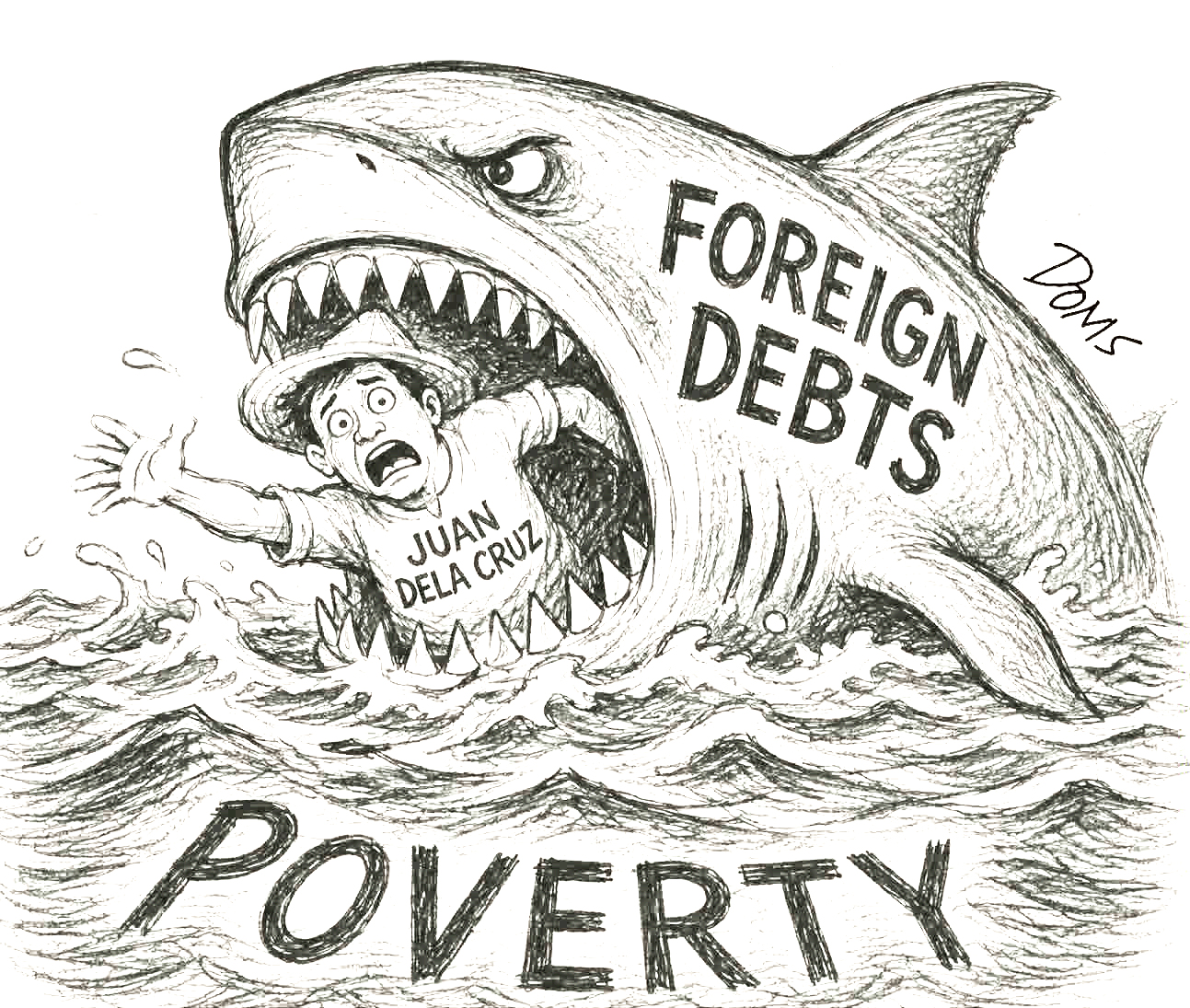
The Philippines’ continuing accumulation of government debt under the present administration has reached a point that demands serious public scrutiny. Borrowing heavily year after year cannot be treated as ordinary fiscal housekeeping, especially when the public struggles to identify transformative projects commensurate with the liabilities being accumulated. A government that enlarges the nation’s obligations must be able to show clearly what lasting national value is being created in return.
Debt itself is not necessarily bad. Governments borrow to build infrastructure, strengthen essential services, respond to emergencies, and finance investments that can expand the economy enough to repay the borrowed funds. The problem begins when borrowing grows faster than the visible productive assets and economic capacity it creates. Official government records show that national government debt remains enormous, while the Bureau of the Treasury continues to publish monthly figures on outstanding obligations. The proper question, therefore, is not simply how much has been borrowed, but what durable economic returns Filipinos are receiving from every additional peso of debt.
The cost is already becoming harder to ignore. The government’s own 2026 budget documents projected P950 billion for interest payments on public debt, an increase of about P102 billion from the amount allocated in the 2025 General Appropriations Act. That is money that cannot simultaneously be spent on classrooms, hospitals, irrigation systems, disaster protection, agricultural support, transportation, or other services. Debt, therefore, has an opportunity cost: the heavier the interest burden, the more future budgets are constrained by decisions made years earlier. When a large portion of public money must first satisfy creditors, succeeding governments inherit less freedom to respond to the immediate needs of their own people.
The greater injustice may be borne by Filipinos who are still children—or have not even been born. Future taxpayers will inherit both the obligation to repay and the consequences if today’s borrowing fails to produce sufficient economic growth. They may face higher taxes, reduced public services, more borrowing to refinance old obligations, or tighter government spending because previous generations consumed fiscal resources without leaving equivalent productive assets behind. Foreign obligations also carry additional exposure because exchange-rate movements can increase their peso cost. Borrowing becomes defensible when future generations inherit highways, railways, power systems, schools, industries, stronger institutions, and a more productive economy along with the debt; it becomes morally difficult to justify when they inherit mainly the bill.
The administration must therefore account for every major borrowing program with the same seriousness demanded of any steward spending money that does not belong to him. Congress, fiscal authorities, and state auditors must insist on transparent accounting of where borrowed funds went, what projects or programs they financed, what measurable benefits resulted, and how repayment will be sustained without crippling future budgets. The country should borrow for investments that create lasting economic and social value, not merely because borrowing remains available. Every loan contracted today is a claim against tomorrow’s taxes, and no generation of leaders has the right to leave future Filipinos a mountain of obligations without leaving them a nation substantially stronger for having incurred them.