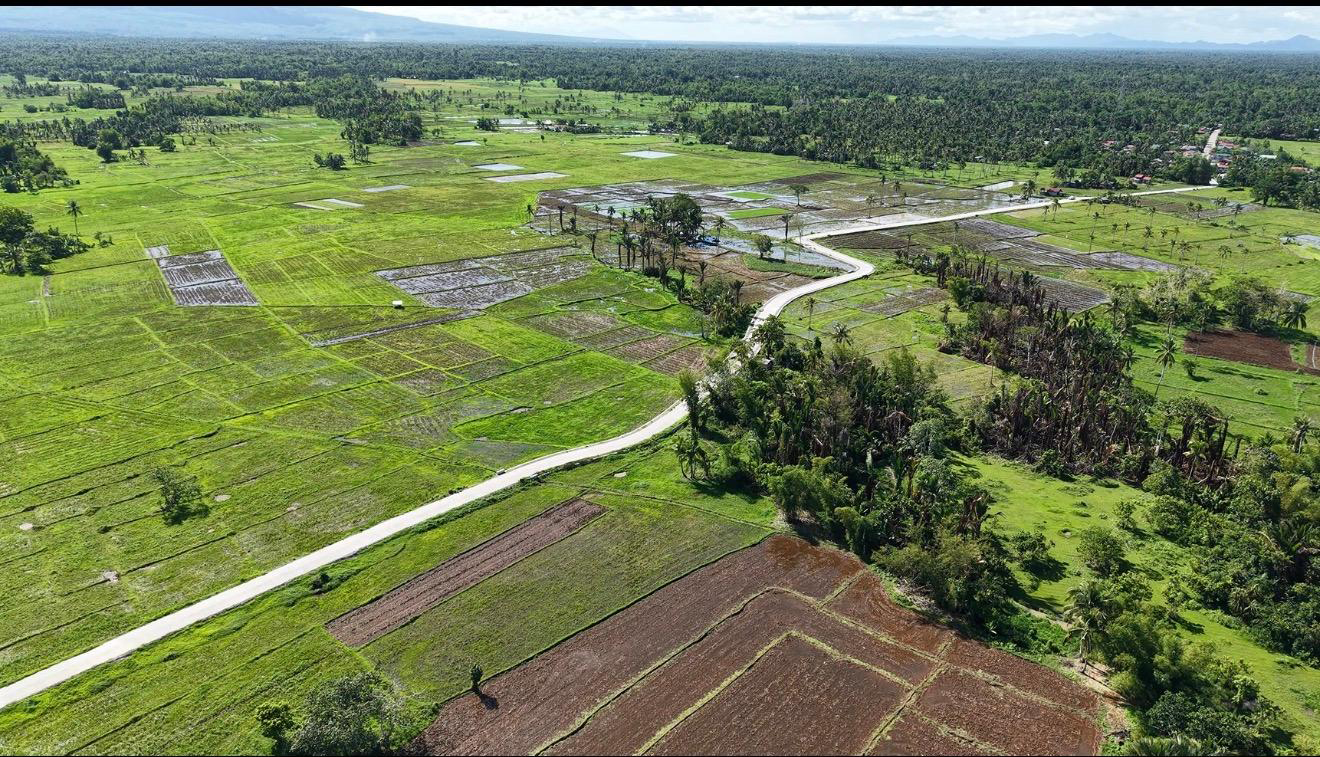
TACLOBAN CITY-Residents and farmers in La Paz and Julita now enjoy improved mobility and easier access to markets following the completion of a 970.82-meter farm-to-market road project implemented by the Department of Public Works and Highways (DPWH) Leyte 2nd District Engineering Office.
The project connects Barangay Canbañez in La Paz and Barangay Sto. Niño in Julita, transforming what was once a difficult and often impassable dirt trail into a concrete road that supports safer and more efficient transport of agricultural goods and daily commuters.
The infrastructure includes a five-meter-wide, 200-millimeter-thick Portland Cement Concrete Pavement (PCCP), complemented by 610mm and 910mm pipe culverts and stone masonry structures designed to improve drainage, prevent flooding, and enhance the road’s long-term durability.
Before its completion, the route—locally known as the “Tagaytay” trail—became muddy and nearly unusable during heavy rains, forcing farmers to carry produce manually and limiting access for vehicles and essential services.
With the new road in place, travel time has been reduced, while transport of farm products has become more efficient and less costly, directly benefiting agricultural households in both municipalities.
One beneficiary, Dolores Reloban of Barangay Sto. Niño, recalled the difficulties they faced before the project was completed.
“Before this project, the road was extremely muddy, with knee-deep conditions during the rainy season. We had to hire people to carry our harvested rice because vehicles could not pass. Now, transporting our products has become much easier and less expensive,” she said.
She added that the improved road has also benefited students, workers, and other residents who regularly travel between the two barangays.
The project was funded under the Department of Agriculture’s 2025 Farm-to-Market Road Program and implemented by Threadstone Construction and Supply with a total project cost of P19.89 million.
DPWH officials said the completed road is expected to enhance agricultural productivity, improve access to basic services, and stimulate local economic activity in La Paz and Julita.
Beyond improving transportation, the installation of drainage structures is also expected to protect the roadway from erosion and damage during heavy rainfall, ensuring long-term usability.
(LIZBETH ANN A. ABELLA)