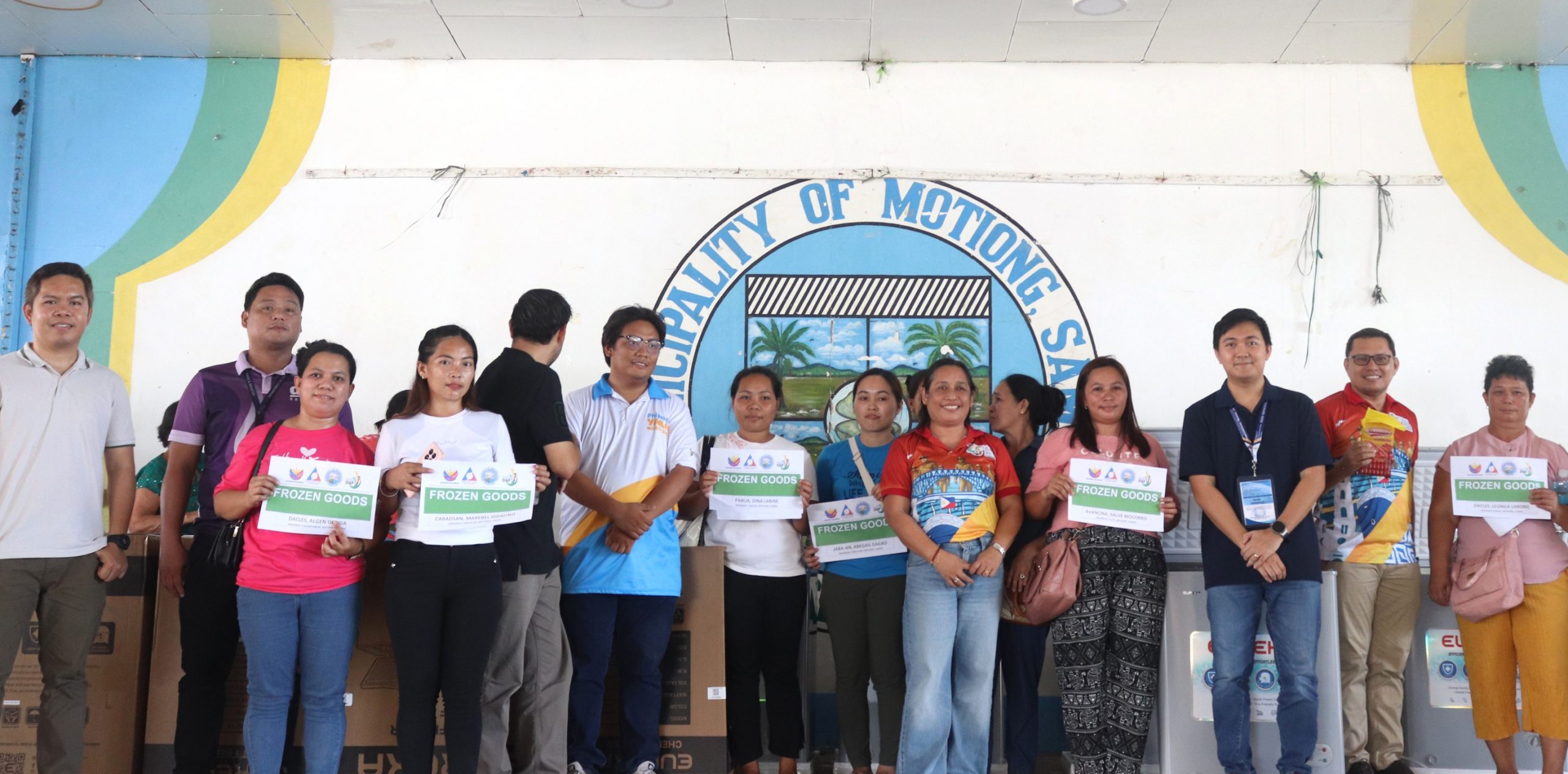
MOTIONG, Samar – The Department of Labor and Employment–Samar Field Office (DOLE-SFO) has provided P3.09 million in livelihood assistance to 103 beneficiaries in Motiong town as part of the pilot implementation of the Graduation Approach under the DOLE Integrated Livelihood Program (GA-DILP).
The assistance, coursed through the Local Government Unit of Motiong as DOLE’s accredited partner, includes tools, jigs, and equipment to help beneficiaries start or expand small enterprises.
The recipients are engaged in various livelihood activities such as food businesses like eateries, bakeries, and street food vending, as well as sari-sari stores and service-based enterprises including beauty care, tailoring, and carpentry.
DOLE-SFO said the GA-DILP is designed as a holistic livelihood program that combines financial assistance with skills training, business management support, and access to social protection programs to strengthen beneficiaries’ economic stability.
DOLE-SFO Labor and Employment Officer and Head Engr. Aleksei Ceasar D. Abellar led the turnover and reminded beneficiaries that regular monitoring will be conducted by DOLE and the local government to ensure project sustainability.
Motiong Mayor Rene Anthony D. Cabael thanked DOLE for its continued support in improving the lives of residents, noting that more beneficiaries are expected to receive assistance in the next rollout, particularly for livestock-based projects.
Also present during the activity was PhilHealth representative Allean Vince Chua, who conducted an orientation on the YAKAP (Yaman ng Kalusugan Program), focusing on healthcare services and preventive health awareness.
DOLE-SFO said the program aims to deliver long-term and meaningful improvements to the economic conditions of beneficiaries through sustainable livelihood interventions.
(ROEL T. AMAZONA)