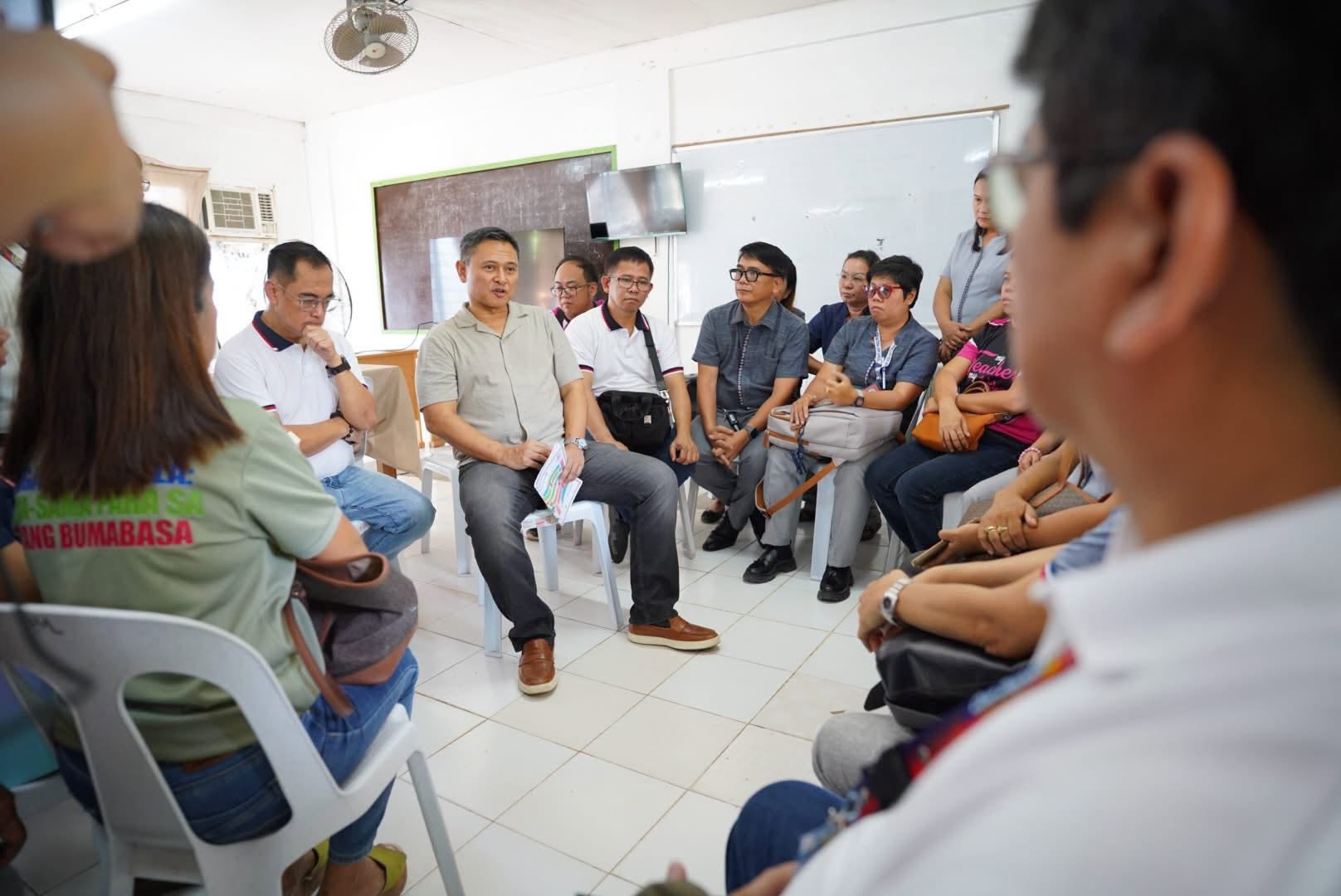
TACLOBAN CITY — Department of Education (DepEd) Secretary Sonny Angara on Tuesday called for closer monitoring of students, expanded mental health programs, and stronger school safety measures following the deadly shooting at San Jose National High School that claimed the lives of three students and injured 20 others.
Speaking to reporters after meeting with the school’s administrators and teaching staff, Angara said the June 22 tragedy exposed deeper issues affecting the country’s youth, stressing that preventing similar incidents requires more than intensified security measures.
“I don’t think this is only a peace and order problem. We also need to manage and guide our children because they are exposed to a lot of violence online, and many of them do not have their parents around,” the education secretary said.
Three students were killed while 20 others were injured, including 15 who sustained gunshot wounds, after two student suspects allegedly opened fire inside the San Jose National High School campus while classes were in session.
Angara said information relayed to him indicated that one of the suspects had a parent working outside the province, prompting him to appeal to teachers and school administrators to become more attentive to the emotional and behavioral well-being of their students.
“My message to our teachers and principals is that we have to be like parents to these children. We should regularly check on them and look for signs that something may be wrong or that they are experiencing difficulties,” he said.
He also welcomed the Philippine National Police’s decision to increase police visibility around schools, saying school officials had observed that the presence of uniformed officers helps deter students from engaging in unlawful activities.
“We thank the PNP chief for increasing police visibility. Teachers have told us that when students see police officers patrolling, they tend to stay away and some plans are no longer carried out,” Angara said.
The education chief said he also hopes to speak personally with the two minor suspects to better understand what led to the shooting.
“I’d like to talk to them just to understand what their mindset was,” he said.
Asked whether the tragedy could have been prevented, Angara said future incidents may be avoided through early intervention, stronger guidance programs, and a better understanding of students’ behavior and emotional struggles.
He also emphasized the need to determine how the suspects obtained the firearm used in the attack, saying accountability should extend to those who supplied the weapon.
“We have to determine where the gun came from because it is not normal for children to have firearms. Not every household owns a gun, so we need to know how these two children obtained one,” he said.
Angara said it is still too early to determine whether school officials were negligent, noting that many students and teachers remain traumatized and are not yet ready to recount what happened.
“Our immediate concern is the welfare of the students and teachers. Many of them are still not ready to talk about what happened,” he said.
The education secretary also cautioned against sensationalizing the incident, warning that excessive publicity could encourage copycat attacks among vulnerable young people seeking attention on social media.
“It seems similar to copycat killings that we have seen elsewhere. We appeal to the media not to glorify these incidents because some children measure their worth through likes and attention on social media. They may do unusual or harmful things to gain recognition,” he said.
Angara expressed gratitude to the Department of Social Welfare and Development, the Philippine Red Cross, church organizations, the University of the Philippines Tacloban, and other groups that have been providing psychosocial support and assistance to victims and their families.
He added that the Department of Education is now reviewing its emergency preparedness policies, including active shooter response protocols, to strengthen campus safety and ensure schools are better prepared for similar threats in the future.
(ROEL T. AMAZONA)