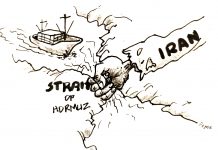
The missiles and drones have already been exchanged between the two countries, with the United States intervening with unmistakable weight, yet still, no side is willing to back down. In my view, that is the strongest indicator that the war is not designed to reach an early conclusion, and the world will pay for it sooner than it can afford to.
I have lived through enough conflicts, read enough about them, learned enough from history books, and seen enough from the shadows they cast on ordinary people’s lives to recognize when a war is not just about the issues at hand, but about decades of unresolved issues, distrust, and unresolved conflicts. The conflict between Israel and Iran is not new; it did not begin this year, or last year, or the year before that. The issues between the two countries have been simmering for years, with proxy wars, clandestine operations, and fiery rhetoric. A conflict with that level of history will not magically disappear with a ceasefire; it will sink deeper, like an indelible stain that cannot be washed away.
I believe this conflict is particularly hard to resolve because it is not isolated. Iran is not fighting alone, nor is Israel. There are armed groups throughout the region that are aligned with Iran, from Lebanon to Iraq to Yemen, who can spark the conflict at will, creating not just one, but multiple fronts. It is like trying to put out a fire that keeps rekindling in different places throughout the house. Even if you manage to put out one fire, another can erupt just as quickly, keeping the conflict alive.
Then there is the unmistakable presence of the United States, whose involvement changes the scale of everything. When the United States commits its military resources, it is rarely half-hearted. But it also cannot afford to commit fully to war without consequences at home and abroad. This is a strange middle ground—too involved to disengage and yet too cautious to commit fully. And in this strange middle ground, war seems to stretch on interminably, drawn out by calculation and the constant weighing of risks.
I also cannot ignore the role of domestic politics in this equation. All three nations have politicians whose circumstances force them to compromise on issues they cannot resolve on their own terms. In Israel, security is an existential issue; in Iran, resistance is an issue of national pride and survival; in the United States, global credibility is on the line at all times. When politicians feel boxed in by their own narratives, they stop looking for a way out and dig in harder. War in this context is not about victory but about survival.
And yet, in all this turmoil, the global economy quietly takes the brunt of it all—like a body absorbing blow after blow. Oil prices fluctuate precariously in response to every escalation in the Middle East, a region that remains central to global energy security. Shipping routes become tense, insurance costs climb, and markets become nervous and uncertain. I feel this even from where I am; I feel it in the rising cost of oil and goods in general, and in that nagging sense of unease every time I check the news and think to myself: what’s going to spike next?
There is also the rhythm of war, which is dangerous and extends suffering without ever providing closure. Precision strikes, cyberattacks, and targeted assassinations are not the sorts of things that decisively end wars. They keep the war going at a level that is just enough to keep the conflict from completely collapsing, but at a level that is also enough to keep peace from ever arriving. It is like watching a storm that never fully breaks or ever fully passes, leaving all of us stuck in a long, uneasy downpour.
If there are ever agreements, I don’t think they will be in the grand declarations or the decisive battles. I think it will be in the small decisions not to escalate, in the secret meetings that never make the front page, and in the leaders’ decisions to hold back even when they are called upon to move forward. It is not the way that anyone wants the war to end, but it might just be the only way that the rest of us are not forced to carry the burden of a war that was never ours in the first place.