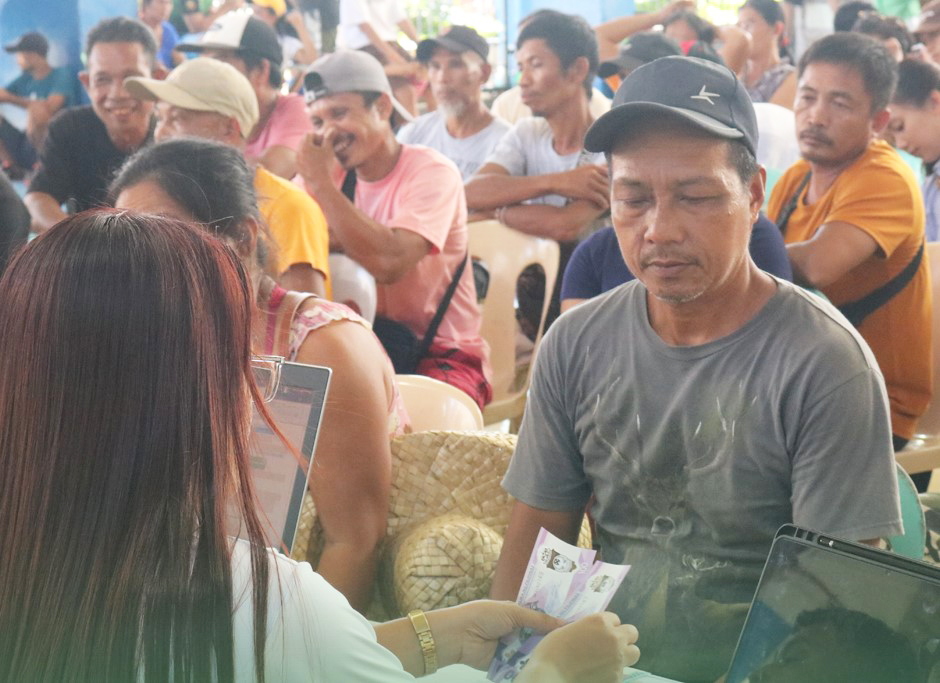
TACLOBAN CITY — More than 14,000 farmers and fisherfolk in Eastern Samar have received government financial assistance aimed at strengthening agricultural and fishery production, easing the burden of rising input costs, and helping rural communities prepare for the next planting and fishing seasons.
The assistance was distributed through a three-day payout caravan under the Presidential Assistance for Farmers and Fisherfolk Program (PAFFP), implemented by the Department of Agriculture Regional Field Office 8 (DA RFO 8) across 10 municipalities in northern Eastern Samar.
The program forms part of the national government’s efforts to support food producers facing increasing production expenses, including fuel, fertilizers, seeds, farm labor, and other operational costs that have affected the agriculture and fisheries sectors in recent years.
Under the initiative, beneficiaries received direct cash assistance that they can use for farm and fishing-related expenses, helping ensure the continuity of their livelihood activities and maintain productivity.
For rice farmer Aldrin Nofies of Oras, the assistance will help cover fuel expenses for his farm machinery, a critical component of his farming operations.
“The assistance we received is a big help. I can use it to buy diesel for the tractor I use in farming. With the high cost of diesel and labor, this aid can help cover some of our farming expenses,” Nofies said.
Pablo Mengullo, a rice farmer from San Policarpo, said the financial support comes at a crucial time as farmers continue to face increasing costs of agricultural inputs and household necessities.
“It is a big help because we no longer have to worry about where to get funds for some of our farming expenses. Prices of the things we buy are already high, and money is spent quickly. What we received can help sustain our farming operations,” Mengullo said.
For farming couple Lheona and her husband from Dolores, the assistance will help pay for farm workers and support their small rice farming operation.
“Even if the assistance is small, it is already a big help because we can use it to pay workers who help us in the field,” Para said.
To supplement the family’s income while waiting for the next harvest, she has also ventured into backyard vegetable production.
“I do not rely only on rice farming. I also plant vegetables so that we have something to cook and additional food for the family,” she added.
According to DA guidelines, beneficiaries must be registered under the Registry System for Basic Sectors in Agriculture (RSBSA), while fisherfolk recipients must be enrolled under the Boat Registration (BoatR) system.
Eligible rice farmers must cultivate no more than two hectares of land and must have been actively engaged in rice production during periods of market disruption and economic challenges.
The Department of Agriculture said the PAFFP was designed to provide immediate financial relief while helping farmers and fisherfolk remain productive despite rising costs of fuel, fertilizers, feeds, labor, and other essential inputs.
Beyond providing short-term assistance, the program is expected to contribute to food security efforts by helping ensure that farmers and fisherfolk can continue producing food and sustaining their livelihoods amid economic pressures.
DA RFO 8 said the continued implementation of the program reflects the government’s commitment to supporting the agriculture and fisheries sectors, which remain vital to the region’s economy and food supply.
(ROEL T. AMAZONA)