
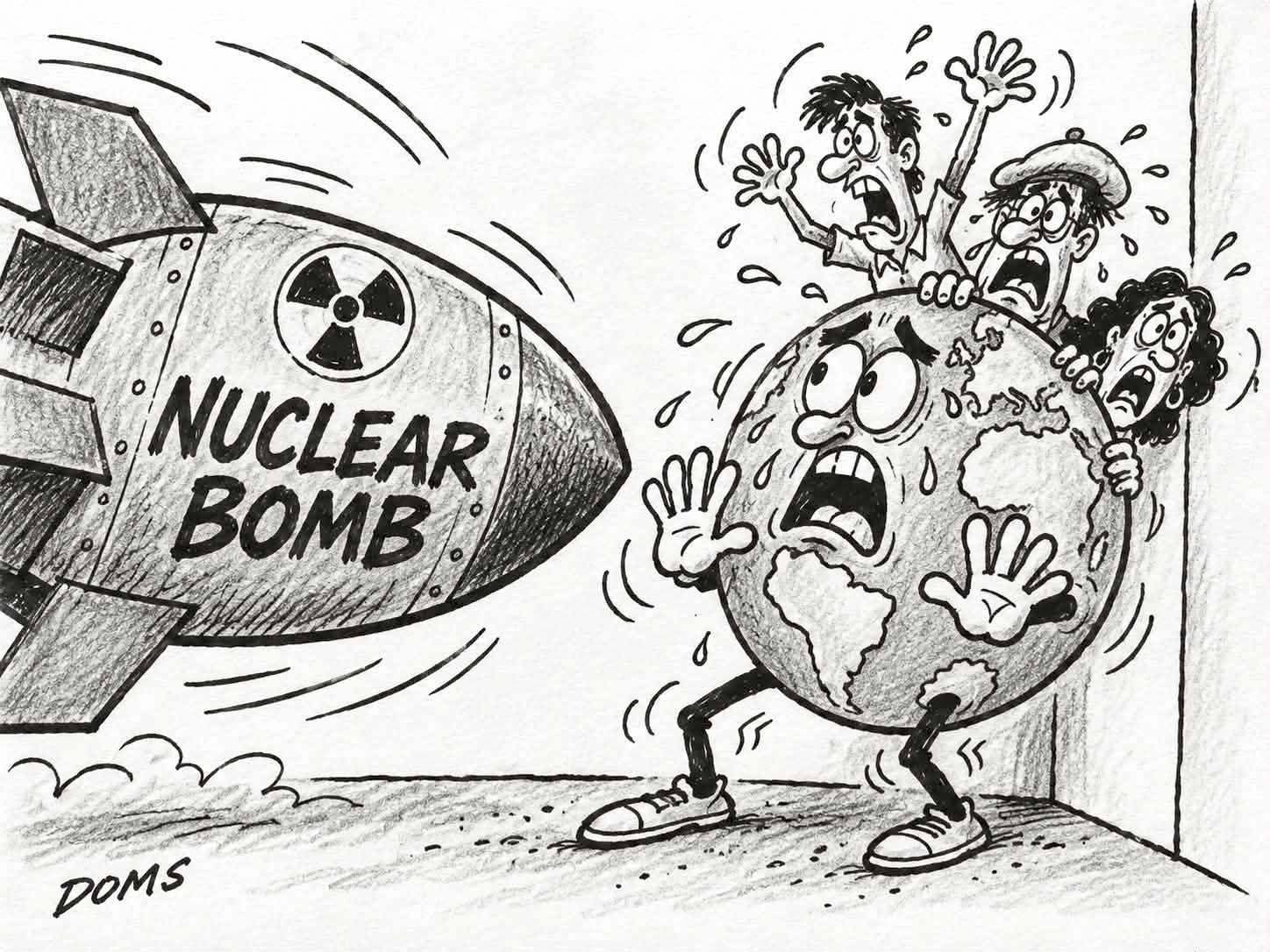
Social media nowadays is full of content regarding the devastating effects of nuclear bombs when detonated, causing much anxiety for the entire world. Hence, countries possessing nuclear weapons must never use them. Nuclear warfare is an unacceptable exercise of state power. Any government that threatens to use them deserves firm international condemnation.
The destruction takes several forms: first, blast waves crush buildings and turn debris into deadly projectiles; second, intense heat causes severe burns and widespread fires; third, radiation can produce acute illness, death, and increased cancer risks; and fourth, radioactive fallout can expose communities far beyond the immediate explosion. Hospitals, roads, power supplies, and communications may be destroyed precisely when survivors need them most. The scale of injury can overwhelm available medical care, leaving even treatable victims without assistance. These consequences make nuclear weapons an intolerable means of pursuing military or political objectives.
The damage also extends beyond the battlefield and the first days of suffering. Fallout can cross national borders, displacement can uproot entire communities, and infrastructure destruction can disrupt livelihoods for years. A wider nuclear conflict could disturb the climate and food production, exposing countries far from the fighting to severe shortages. Filipinos should therefore reject the assumption that geographical distance guarantees safety. Governments possessing these weapons have a responsibility to prevent escalation, maintain diplomatic communication, and pursue verifiable arms reductions instead of treating civilian survival as a bargaining instrument.
For Filipino households, preparation should begin with identifying the nearest substantial concrete building and its basement or protected interior, away from windows and exterior walls. Families should keep drinking water, sealed food, essential medicines, flashlights, and a battery-powered radio accessible. If a nuclear explosion occurs nearby, people must avoid looking at the flash, take immediate cover, and enter a sturdy building as soon as possible. Where fallout threatens, remain sheltered for at least 24 hours and follow official instructions; leave sooner if fire, collapse, or another immediate danger makes the shelter unsafe. Anyone exposed to fallout should remove contaminated outer clothing, keep it away from others, and wash exposed skin gently with soap and water.
Philippine authorities must make these precautions practical through clear public instructions, assessed shelter locations, reliable warning systems, and assistance for children, older people, and persons with disabilities. Barangays, schools, workplaces, and health facilities should establish procedures before an emergency creates confusion. Yet preparedness can only reduce some consequences; no emergency plan can adequately answer the devastation of a nuclear attack on a populated area. The strongest protection remains prevention. Nuclear-armed governments must abandon threats of use and accept that national security cannot justify placing entire populations at risk of annihilation.