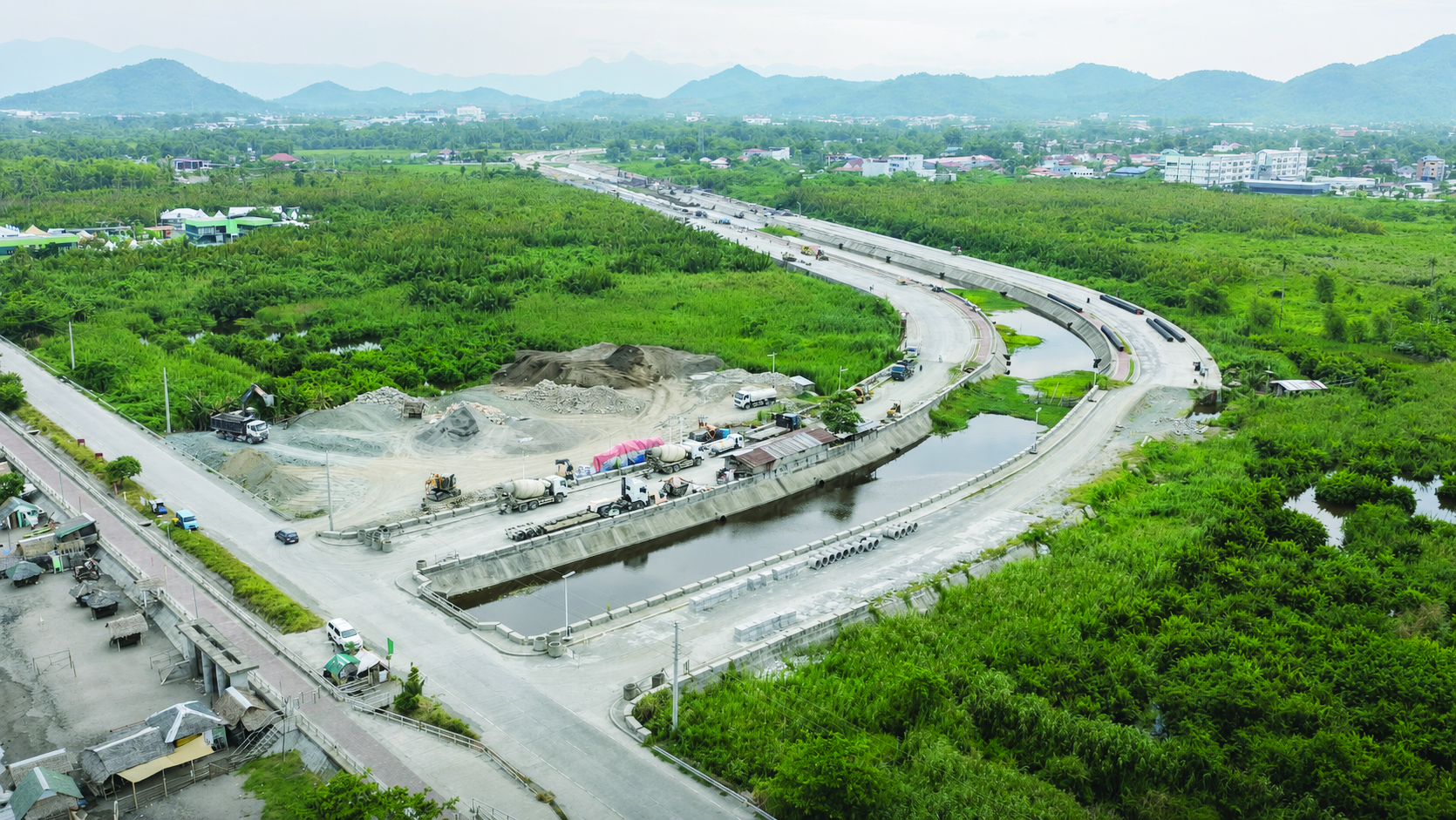
TACLOBAN CITY— Construction of the Tacloban-Palo diversion road has reached 42.30 percent overall progress, with the remaining 1.221 kilometers of the 3.232-kilometer project awaiting about P2.113 billion in funding from 2027 onward.
The project, which includes a drainage system, is intended to provide an alternative route between Tacloban City and its neighboring town of Palo and help reduce traffic congestion and flooding in communities along the alignment.
As of July 2026, 756 meters of the road have been completed, while another 1.256 kilometers are under construction.
The diversion road has an estimated total cost of P4.445 billion. About P2.332 billion has been released under the 2019, 2023, 2024 and 2025 General Appropriations Acts, covering completed portions and sections currently being built.
The remaining 1.221 kilometers, estimated to cost P2.113 billion, have been listed for funding under the 2027 fiscal year and succeeding years. Construction will continue on sections covered by existing appropriations, while work on the unfunded portion will depend on the release of future appropriations.
Once completed, the road is expected to provide motorists with an alternative to existing routes and ease congestion.
The project also includes flood-control and drainage facilities intended to reduce flooding in affected areas of Tacloban and Palo.
Improved drainage and road access are also expected to make currently idle and swampy areas more suitable for future development.
The 3.232-kilometer road begins at the Tide Embankment Project in Barangay San Jose, Tacloban City, and ends at Barangay Campetic along the Daang Maharlika in Palo.
When completed, the project will be a four-lane concrete road with 3.35-meter-wide lanes, bike lanes, sidewalks, a service road, solar-powered streetlights and road safety devices.
(LIZBETH ANN A. ABELLA)