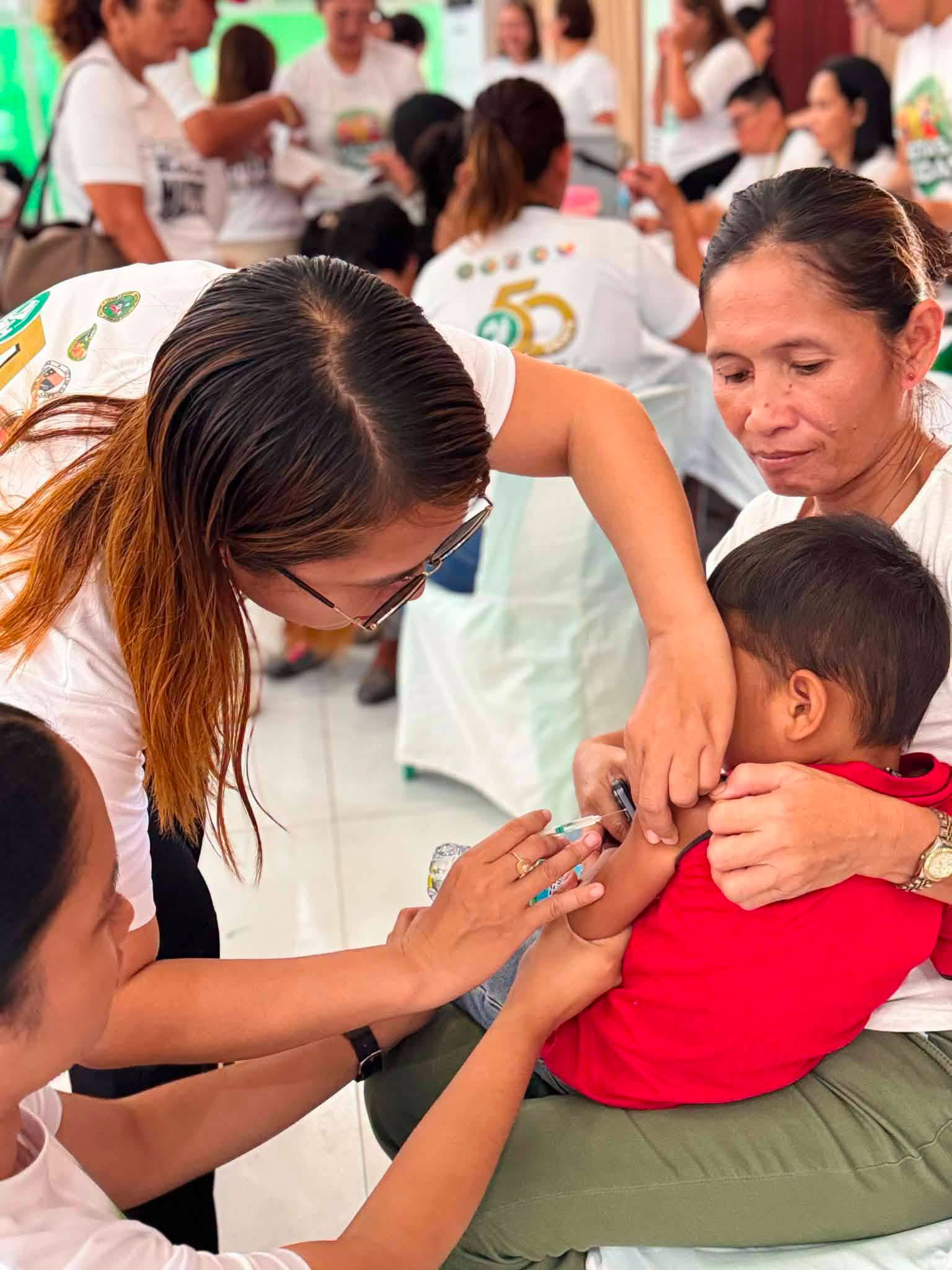
TACLOBAN CITY — Health officials here are urging parents to reject misinformation about vaccines as the city struggles to reach eligible children in its measles-rubella (MR) vaccination campaign, with only 18 percent of the target vaccinated as of Aug. 18.
The City Health Office (CHO) reported that 3,484 children had received the MR vaccine out of the city’s target of 19,225 children, prompting health workers to intensify efforts to convince parents and guardians to have their children vaccinated.
Rowena Bracamonte Faller, city program coordinator for the National Immunization Program, said health workers have encountered parents who became hesitant or resistant to vaccination because of misinformation circulating online and in communities.
In some instances, health workers conducting the campaign have also encountered hostility from parents and guardians.
“Unta diri tumuod sa fake news kay kairo man san aton kabataan,” Faller said in an interview posted online, appealing to parents not to believe false claims about vaccines.
City Health Officer Dr. Sylvia de Guzman earlier said the CHO was “exhausting all means and opportunities to intervene” to improve the city’s Fully Immunized Child coverage.
The CHO is targeting more than 80 percent vaccination coverage to help build community protection against measles and rubella and reduce the risk of outbreaks.
Mayor Raymund Uy has likewise urged parents and guardians of children aged 6 to 59 months to take advantage of the vaccination campaign.
“An bakuna usa nga love language — usa nga paagi san pagpakita san aton gugma, pag-ataman, ngan pagprotekta san aton kabataan,” Uy said in a social media post.
Health officials emphasized that measles and rubella are viral diseases that can be prevented through vaccination. Measles is highly contagious and may lead to serious complications, particularly among young children, while rubella is usually milder but can cause severe birth defects if a woman becomes infected during pregnancy.
The MR vaccine provides protection against both diseases, making high vaccination coverage important in preventing transmission and protecting children and other vulnerable members of the community.
The low turnout in Calbayog highlights the continuing challenge faced by local health authorities in countering vaccine misinformation and rebuilding confidence in routine and supplemental immunization programs.
(ROEL T. AMAZONA)