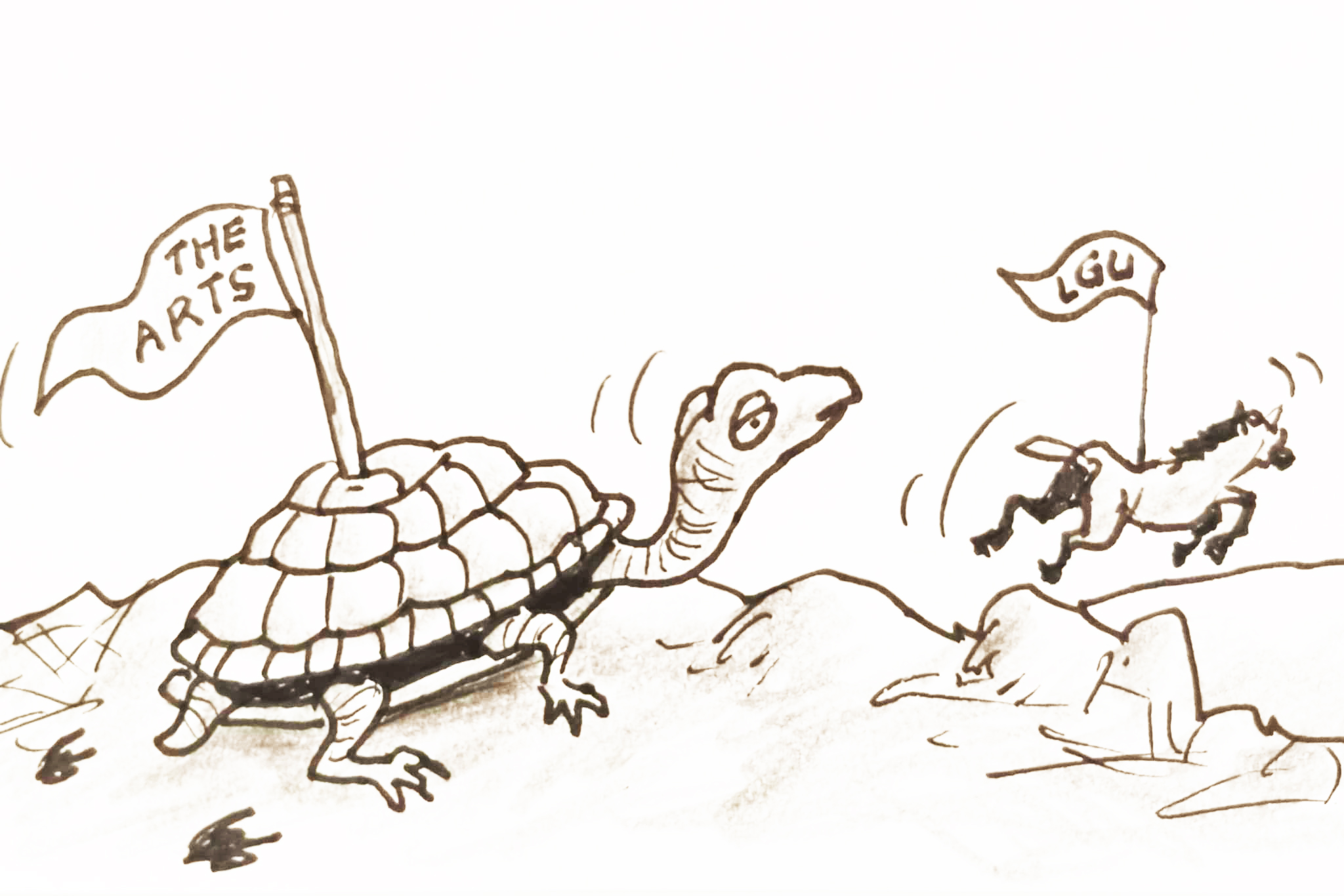
To properly observe February as Arts Month, local government units (LGUs) must do more than simply bankroll religious celebrations and observances. They must be able to support and advocate for the development of creative and imaginative arts within their jurisdictions. This observance will be for naught if LGUs do not take the celebration seriously.
In many local government units, public funds are readily available for religious processions, fiestas, and other religious activities. These activities may be relegated to the sidelines in culture. Painting, theater, literature, music, dance, and other artistic pursuits also define the culture, concerns, and aspirations of a people. The failure of local government units to support artistic expression amounts to saying that culture is solely concerned with religious activities, relegating imagination, creativity, and innovation to the sidelines.
The National Arts Month, through the National Commission for Culture and the Arts, has mandated all government offices to promote artistic excellence and cultural awareness. However, in many local government offices, National Arts Month is simply an annual affair where a tarpaulin is put up, and a program is held during the month. This is not how an artistic community is built. This is how an artistic community is forgotten.
The economic argument is equally compelling: a city that invests in its creative industries can attract visitors, create jobs, and encourage small businesses to thrive. Art markets, film festivals, cultural fairs, and street art can attract tourists who will spend on accommodations, food, and transport. The development of a thriving arts scene can complement heritage tourism and pilgrimage tourism, providing a more diversified economic base rather than one that relies on a single event in the tourism calendar. When artists are supported by institutions, their success feeds back into the community.
LGUs, therefore, must recognize arts and culture as essential public services rather than peripheral indulgences. Budgets must reflect this, and cultural offices must be staffed by competent people mandated to develop the field beyond the religious calendar. February must not just become a benchmark for measurable progress; it must become a reality. If LGUs are serious about development, they must recognize that a community without a thriving, well-supported arts scene is one that has chosen not to develop.