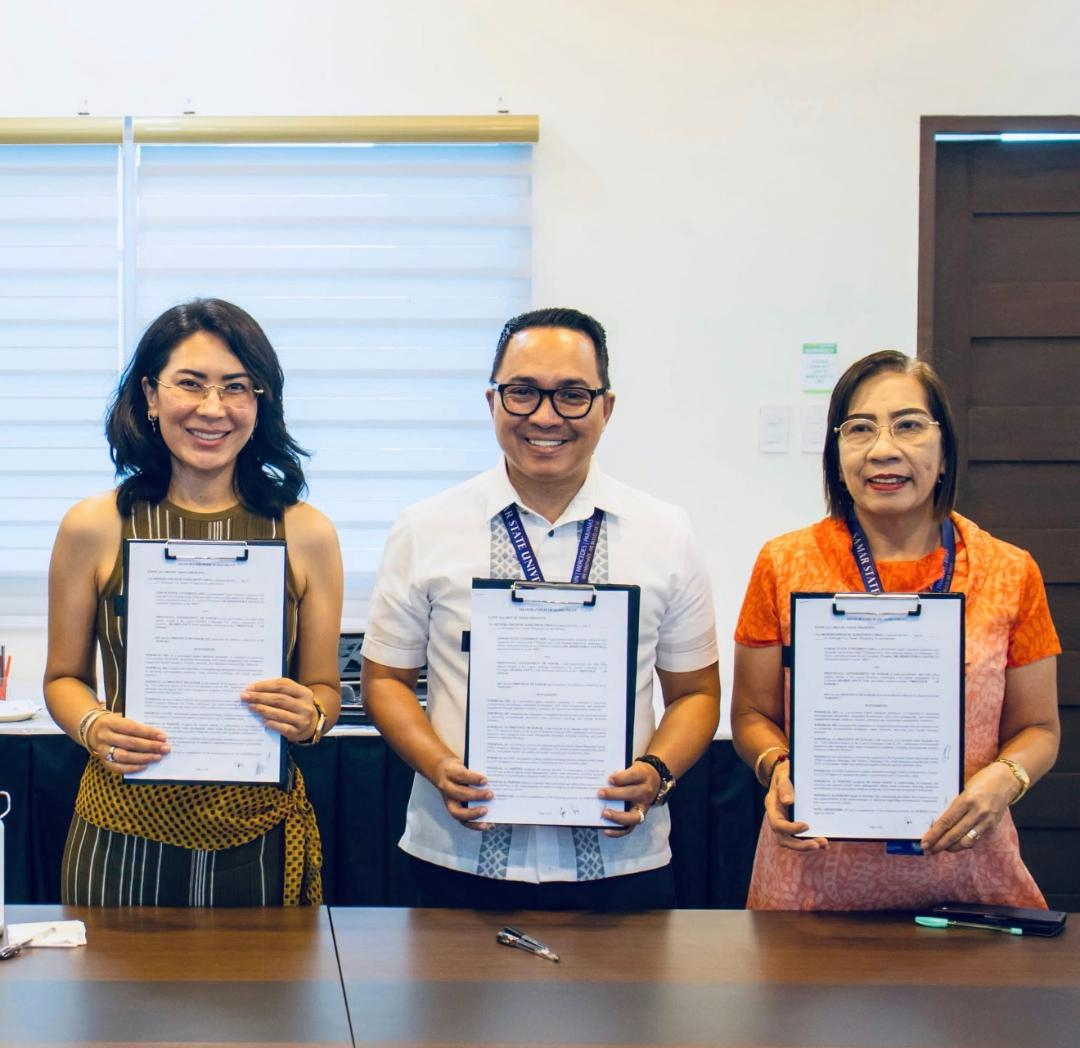
TACLOBAN CITY – The provincial government of Samar and Samar State University (SSU) have formalized a partnership to strengthen plastic waste management efforts by transforming discarded plastics into useful products through research, innovation, and community participation.
The collaboration was cemented through the signing of a memorandum of agreement (MOA), institutionalizing the collection and donation of soft plastics while promoting the development of recycled plastic products as part of the province’s push toward a circular economy.
Under the agreement, the provincial government and SSU will jointly implement programs that convert plastic waste into valuable resources, helping reduce environmental pollution while creating sustainable livelihood and development opportunities.
Officials said the partnership reflects the shared commitment of the provincial government and the university to address the growing problem of plastic pollution through science-based solutions, research, and public engagement.
The initiative also aims to strengthen environmental awareness and encourage responsible waste management practices among communities across Samar.
The collaboration forms part of the province’s broader environmental agenda, which promotes conservation, climate resilience, and sustainable development by forging partnerships with academic institutions and other key stakeholders.
With the agreement now in effect, the provincial government and SSU reaffirmed their commitment to building a cleaner, greener, and more climate-resilient province through innovative and sustainable environmental programs.
(LIZBETH ANN A. ABELLA)