21.5 C
Tacloban City
March 31, 2026 - Tuesday | 5:18 AM
Home Blog Page 929

5 killed in a collision in Palo town

0

TACLOBAN CITY-Five persons on board a multi-cab died during a collision with a passenger van at about 5:45 am on Thursday (Nov.9) along a national highway in Barangay Guindapunan, Palo, Leyte.

The fatalities were identified as Vince Dale Daroy, 16; Dario Daroy, 55; Angel Leigh Daroy, 17; Rochelle Daroy, 45; Mario Daroy, 33; and Christina Daroy. All were residents of Marasbaras, this city.

The driver of the passenger van was identified as Reynaldo Porlas Jr., 42, and a resident of Pob. Liloan Southern, Leyte.

Investigation conducted by the local police disclosed that the fatalities were on board a Suzuki Double Cab, bearing plate number LNE-303, driven by Dario Daroy, came from Tacloban City going to Iglesia ni Cristo Church Palo, Leyte while the Toyota Hi-ace van driven by Porlas was coming from Palo town proper heading to Tacloban City coming from Southern Leyte area.

Upon reaching the place of the incident, the double cab maneuvered to the left and while in a horizontal position at the opposite lane, the passenger van accidentally bumped the right portion of the double cab.

The drivers of both vehicles and their passengers sustained injuries and were rushed to Eastern Visayas Medical Center (EVMC) and Leyte Provincial Hospital, unfortunately Vince Dale Daroy was declared dead on arrival (DOA) by Dr. Rema Dadizon, attending physician Leyte Provincial Hospital Palo, Leyte and Mario Daroy was also declared dead on arrival (DOA) by Dr. Jay Ralph A Posion, attending physician Eastern Visayas Medical Center (EVMC).

The police said that the three other fatalities died while being treated at the EVMC hospital.
Also brought to the hospital were the eight passengers of the passenger’s van identified as Harvey Calma, 21; Jenilyn Retallo, 37; Danny Retallo, 34; Evangeline Opalla, 49; Nazarius Opalla, 48; Rodal Aberte, 43; Geraldine Rosales, 28; and Lailanie Rosales, 28.
(ROBERT DEJON)
10 years after Super Typhoon Yolanda wreak havoc in EV, fossil fuel use in the region increased-think-tank

0

TACLOBAN CITY-On the occasion of the 10th-year commemoration of the landfall of Yolanda, one of the most powerful tropical cyclones ever recorded, a sustainability think-tank raised concern that decarbonization has not advanced in Eastern Visayas even as it hosts ample renewable energy resources.

According to an analysis from the Center for Energy, Ecology, and Development (CEED), energy facilities in the Leyte-Samar grid produce 100% renewables from geothermal energy, yet power contracted in its 11 electric cooperatives comes largely from coal, the dirtiest fossil fuel.

From 51% in 2013, coal’s share in contracted capacity jumped to nearly 90% in 2022, contradictory to the Yolanda tragedy’s biggest lesson of the need to move away from dirty energy.

Meanwhile, off-grid areas are heavily dependent on diesel.

“Typhoon Yolanda left a trail of destruction at an unprecedented scale when it hit a decade ago. In its wake, it also left a hard-taught lesson: that we need to muster all political will and fight to the hilt against having such disasters as a fixture in the future,” Gerry Arances, CEED executive director, said.

“On this end, a radical reduction of greenhouse gas emissions from fossil fuels is necessary. It is thus unfortunate to see how a region that has experienced the worst so far of the climate crisis has yet to mark such lesson as learned,” he added.

With the rise of coal, the share of renewable energy in the total contracted supply in Eastern Visayas shrank from 49.21% renewable energy to 10.25% in ten years, a far cry from the immense potential of the region to wean away itself away off coal and diesel.
Existing and planned renewable energy capacity in Eastern Visayas is more than enough for the region’s electricity needs with installed capacity in 2022 meeting peak demand by 3.3 times and planned capacity for 2030 projected to meet the region’s peak demand in the same year by 6 times, according to data.

“Yolanda is forever etched in history as a tragic illustration of the wrath of the climate crisis. As we remember lives lost, we must also strive to protect and empower those that are living today and generations to come. A just and rapid shift to renewable energy in both generation and consumption in the region, both on and off-grid, will allow communities in the region to benefit from much more affordable and sustainable energy, contribute in climate solutions, and assist in strengthening climate resilience,” said Arances.(PR)

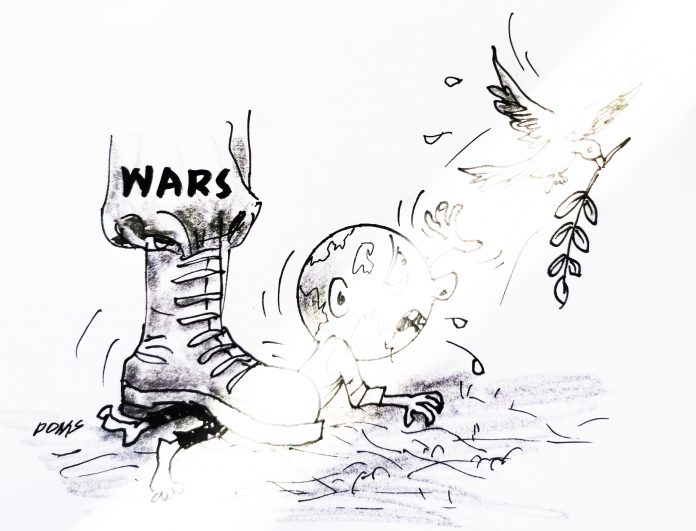
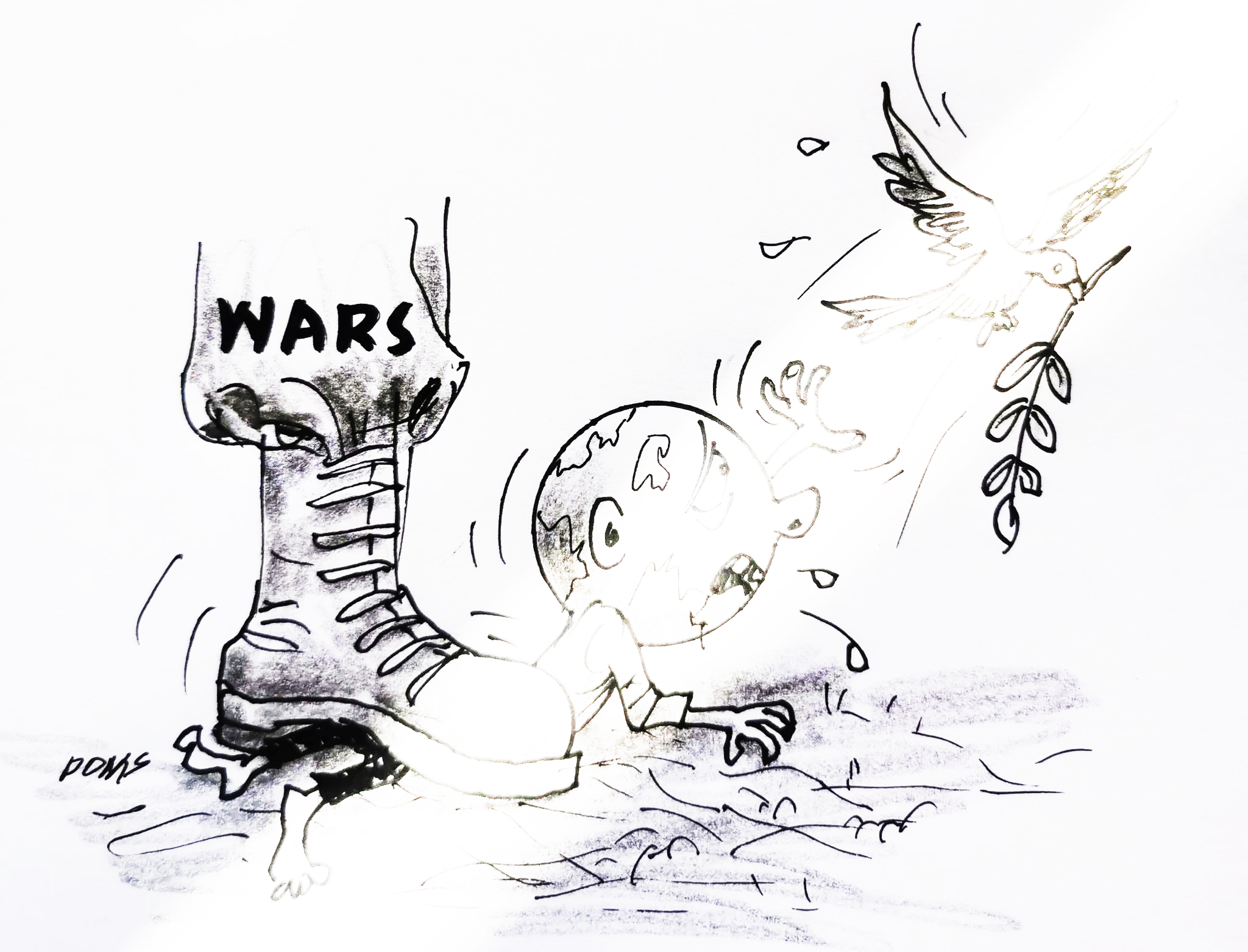
Rid of peace

0

While the desire for peace is universally shared, achieving lasting tranquility has proven challenging. Several reasons can be attributed to this ongoing struggle, including geopolitical conflicts, ideological differences, and socioeconomic disparities. The increasing power dynamics among nations, coupled with the rise of non-state actors, have further complicated the pursuit of peace.

Geopolitical conflicts are a significant contributing factor to the difficulty in establishing and maintaining global peace. These conflicts arise from territorial disputes, power struggles, and competition for resources among nations. The need to safeguard national interests often takes precedence over long-standing diplomatic efforts, leading to a perpetual state of tension and hostility. The involvement of powerful nations in proxy conflicts exacerbates the situation, perpetuating a cycle of violence beyond the boundaries of the original dispute.

Ideological differences pose another significant challenge to peace in today’s world. Conflicting religious beliefs, political ideologies, and cultural norms fuel intolerance and divisiveness, making peaceful coexistence and cooperation seemingly unattainable. These differences are often exploited by extremist groups to propagate violence and hatred, further destabilizing already volatile regions. Bridging ideological gaps requires a concerted effort to promote dialogue, cooperation, and mutual understanding. With individuals and groups becoming increasingly entrenched in their positions, finding common ground becomes an arduous task, perpetuating the elusiveness of peace.

Socioeconomic disparities are a crucial but often overlooked aspect contributing to the lack of peace in the modern world. Unequal distribution of resources, wealth, and opportunities breeds resentment and fuels social unrest. Poverty, unemployment, and lack of access to education and basic services push marginalized populations toward radicalization and violence. Addressing these socioeconomic disparities is vital for long-lasting peace, as it requires equitable distribution of resources, inclusive economic policies, and sustainable development efforts.

The dynamics of power in international relations have significantly changed, rendering peace even more elusive. The rise of non-state actors, such as terrorist organizations or transnational criminal networks, challenge the traditional framework of peace-building. These actors operate outside the purview of state control and often exploit power vacuums, fostering instability. Effectively combating these non-state actors requires coordinated global strategies, intelligence-sharing, and collective action.

Only through collective efforts can we hope to navigate the complexities of the contemporary world and strive to achieve the elusive goal of peace.

No man is an island

0
DOMS PAGLIAWAN

Our reliance on other people is something inevitable. This interdependence refers to the mutual reliance, support, and cooperation between individuals that lead to positive interactions and outcomes. The various instances where interdependence manifests itself could shed light on the complex ways in which human beings are interconnected.

In today’s globalized economy, nations rely heavily on each other for the production, trade, and consumption of goods and services. Advanced technology, such as the Internet and transportation systems, has facilitated interdependence between countries. Look at international trade agreements, such as the North American Free Trade Agreement (NAFTA) or the European Union (EU), which have strengthened economic interdependence. These agreements encourage the exchange of goods, services, and capital between member countries, resulting in shared prosperity and growth.

Healthcare systems also rely on the collaboration and interaction of many individuals, including doctors, nurses, pharmacists, and other healthcare professionals. We could see the importance of interdisciplinary teamwork and patient-centered care, where various healthcare professionals work together to provide holistic treatment. This interdependence ensures optimal health outcomes and represents the intelligence required to comprehend the complexity of medical systems and the integral role played by different actors within them.

The realm of environmental conservation offers another compelling example. The delicate balance of ecosystems necessitates interconnectedness and mutual support among all species and the environment. There is interdependence between plants, animals, and the environment in sustaining crucial ecological processes. For instance, pollinators, such as bees, and their role in plant reproduction are fundamental for maintaining biodiversity and ensuring food security.

In the arena of politics and governance, interdependence also plays a key role. The decision-making process within any political system heavily relies on the input and collaboration of citizens, policymakers, and interest groups. We could see and comprehend the significance of democracy and the interdependence between elected officials and the electorate. Public participation, institutions, and policies are essential for sustaining governance that reflects the will and needs of the people.

The world of technology also provides evidence of interdependence in its various forms. The ever-growing reliance on digital platforms and networks highlights the interconnectedness not only between individuals but also between governments, organizations, and industries. We could observe the shared information, cooperative research endeavors, and the interoperability of technology systems in enabling progress and innovation.

The COVID-19 pandemic likewise demonstrates the global interdependence of people. The spread of the virus across borders has emphasized the need for collaboration between countries in managing the crisis. Researchers, medical professionals, and policymakers have been compelled to share data, knowledge, and resources, transcending geographical boundaries and acknowledging the interconnectedness of humanity.

Yes, our reliance on other people pervades various aspects of life. Whether in economics, healthcare, environmental conservation, politics, technology, or addressing global crises, we are all interdependent. This interconnectedness and reliance between individuals, societies, and systems highlight the importance of cooperation and mutual support in shaping a successful and thriving world.

Resilience?

0
AL ELLEMA
AL ELLEMA

So annoying are politicians who never experienced the storm surge wrought by supertyphoon yolanda would have the temerity to come out in the limelight and hug top stories of mainstream media praising the victims’ resilient spirit amid the catastrophe. The statements were well crafted as if they truly cared for the victims of what was dubbed as the strongest typhoon in human history. Truth is, many of these politicians were far from the vicinity of the supertyphoon, hiding in the safety of their luxurious abode while the people living along the path of the supertyphoon could not leave their homes for lack of capacity to relocate or for the ill-advised decision to cling to their homes and livelihood not having a clear idea of what a storm surge is.

The warning was loud and clear addressed to all and sundry but people did not understand the real danger of the situation. Most people took the warning from their past experience of strong typhoons that hit their place, most bringing strong winds and heavy rains that could be evaded upon its onslaught. Such was the reason why they opted to cling to their residences, trying to protect their homes, belongings and animals which were part of their lives. Some old folks could recall strong typhoons all their lives but nothing was of the magnitude that they are about to be hit in the wee hours of November 8, 2013 exactly a decade ago. The only idea the old folks have in memory are those of tidal waves they learn by radio broadcasts hitting other places.

The hours that strong winds lambasted the homes, peoples and communities in the darkness of dawn was a horrible experience for young and old, including children who were unaware of the risk to their limb and life while in the embrace of their frightened parents. It was a dawn in total cold and darkness and electric power was down even before midnight when the supertyphoon begun pummeling the homes and peoples along its path. The hours that led into the break of daytime were so horrendous that people were caught in high waters as they left their homes, belongings and everything they thought were valuable to them, running to safer grounds or even swimming in uncertain directions just to save their lives.

It took several days of surviving without food or even safe drinking water as deep wells that used to be sources of community drinking water got salinated by sea water that mixed with groundwater. It took several days before relief operations reached the victims. Local governments and non-government organizations that were not affected by the calamity responded to provide food and medicine for the victims. The assistance from church and international non-government organizations focused on relief to recovery until such time that people gained access to markets to buy food.

In the days that followed, assistance were in the form of livelihood and housing. The initial agreements among donors where this writer had the opportunity to be part of the discussions at the provincial and diocesan levels, was to ensure that there is no duplication of assistance. Such policy was followed more on the breach than in the compliance as politicians, chiefly in the municipal and barangay levels, took the assistance as tools for political aggrandizement. They held people in need at their mercy, the livelihood and houses being used as tools for political patronage. Many of the real needy were delisted when identifies as not supporting the political plans of mayor or barangay chairperson. The housing projects of government were below standards as reported by the beneficiaries who are forced to spend more just to make their housing unit livable.

A decade after, politicians are still using the supertyphoon yolanda housing projects as tools for their future political ambitions. Many of those worthy to be granted housing units were deleted from the list of housing beneficiaries for political reasons. Unfortunately, the chosen few who are close to the powers that be, were awarded more than one unit of housing. In some cases, well to do families who have businesses, employment and vehicles, are given priority in the distribution of housing units.

True, the poor and unlucky people who do not have the connection to obtain a housing unit are the real resilient people who survived by their own grit, industry and perseverance to stand the test of time. They survived on their own despite the lack of assistance for livelihood and housing chiefly because of politicians who are thick faced to talk about . . . resilience?
comments to alellema@yahoo.com

Effective vigilance only when we are with God

0
FR. ROY CIMAGALA
FR. ROY CIMAGALA

THAT gospel parable about the 10 virgins (cfr. Mt 25,1-13) obviously reminds us of our serious duty to be vigilant at all times because God can call us anytime and we should be ready for it. We should also be very vigilant because all kinds of evil can come and assault us anytime, and can even dominate us.

Nowadays, cases are increasing of persons with some forms of addiction and obsessions, or of some forms of hidden bondage. They feel helpless before this predicament of theirs because in spite of their efforts to stay away from these conditions, they would just find themselves giving in sooner or later.

The question is raised about how to handle this phenomenon. And the quick answer to that is, of course, for us to be truly united with Christ. Like Christ and with him, we would know how to suffer the unavoidable attacks of evil on us. Like Christ, we can die as a consequence of these evil attacks. But again, if we are to follow what St. Paul once said, if we suffer and die with Christ, we also will rise with him. (cfr. Rom 6,8-11)
Yes, we are assured of victory as long as we are with Christ. It’s this truth of our Christian faith that should fill us with peace and confidence that things would just be all right in spite of the heavy drama we may have to go through in this life.

For us to be effectively with Christ, we need both the human and supernatural means. The latter would include constant prayers, presence of God, recourse to the sacraments, especially the sacraments of confession and the Holy Eucharist. We need to develop and sharpen these practices without let-up, because only with God’s grace can we truly deal with this predicament.

But neither should we neglect the human means. We need to keep ourselves occupied always, because an idle mind and a lazy body are the favorite targets of the agents of evil.
We have to remember that we have to contend with a 3-fold enemy: our own weakened flesh, the many temptations around the world, and the powerful spiritual enemies. In fact, St. Paul warned us that we are actually ranged against powerful evil spirits. (cfr. Eph 6,12)
It would be very helpful if we avail of some regimen that would keep us always in God’s presence and make us feel his love and power which he likes to share with us. For this, we should develop virtues like fortitude, patience, temperance, industry, etc.

Again, since people can be so dominated by their weakness, if not by something more serious, like emotional and psychological disorders, that they are completely helpless if left on their own, they may have to avail of professional care from doctors, psychologists or psychiatrists. Let’s hope that we can have appropriate facilities easily available.

Neither should we ignore the possibility of demonic possession or domination, for which the services for exorcism or deliverance should be resorted to. When people cannot understand why they continue to fall into the same sins in spite of their earnest efforts, it could be that they unknowingly are under the spell of evil spirits.

In the end, it will only be when we are truly with God that we can be properly vigilant and effective in warding off the assaults of evil against us and instead have the zeal to do a lot of good always.

Recent Posts

DALMACIO C. GRAFIL
PUBLISHER

ALMA GRAFIL
EDITOR-IN-CHIEF

ROMEO CEBREROS
OFFICE IN-CHARGE

OFFICE
BRGY. SONGCO, BORONGAN CITY

CONTACT NUMBERS
(055) 261 – 3319 | 0955 251 1533 | 0917 771 0320 | 0915 897 7439 | 0921 511 0010

DALMACIO C. GRAFIL
PUBLISHER

RICKY J. BAUTISTA
EDITOR

ALMA GRAFIL
BUS. MANAGER

OFFICE
RIZAL AVENUE, CATBALOGAN
(INFRONT OF FIRE DEPARTMENT, NEAR CITY HALL)

CONTACT NUMBERS
0917 771 0320 | 0915 897 7439 | 0921 511 0010

EMAIL
lsdaily2@yahoo.com

WEBSITE
www.issuu.com/samarweeklyexpress