ORMOC CITY– Four riders of a carnival ride were injured when the seat of the ride they were riding malfunctioned causing this to tilt and injured the riders who fell from their seats at about 9:40 pm on May 17 in Barangay Maligaya, Jiabong, Samar.
The victims were identified as aliases “Joanne”, 19, student, single, a resident of Purok 6, Canlapwas, Catbalogan City; “Ann”, 19, student, single, Brgy. San Isidro, Paranas, Samar; “Krisha”, 20, student, single a resident of Purok 3, Catbalogan City; and “Maris”, 19, student, a resident of Brgy. Alejandrea, Jiabong, Samar.
An initial investigation conducted by the local police disclosed that victims Ann, Krisha, and Maris were riding in one coaster of the caterpillar ride when suddenly the lug bolt knot of the seats malfunctioned and detached.
The police said that the seat tilted and the victims fell to the ground. The police added that Joanne was hit by the steel railings and sustained a laceration on her head.
The victims were rushed to the Jiabong Rural Health Unit and were referred to Samar Provincial Hospital for medical treatment.
Further, the management of the carnival was advised by the local police to stop the operation while the incident is under investigation. (ROBERT DEJON)
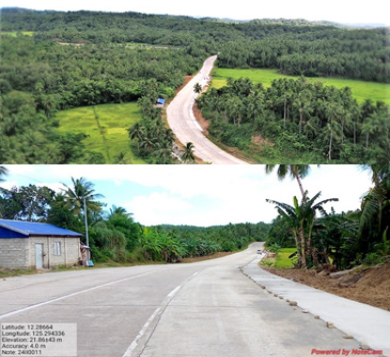
NSSDEO, Brgy. Burabud, Laoang, N. Samar– Better roads are underway in the 2nd District of Northern Samar with the anticipated completion of various improvements of road by constructing a new drainage canal implemented by the Department of Public Works and Highways (DPWH) – Northern Samar Second District Engineering Office spearheaded by District Engineer Charlito S. Carlobos and Assistant District Engineer Atty. Arthur Eric L. Sabong.
This ongoing construction of road shoulder and drainage canal of secondary roads along San Policarpo-Arteche-Lapinig Road, located in Lapinig, Northern Samar, is diligently supervised by Project Engineer Bryan M. Fortes. The DPWH allocated P12.5 million from General Appropriations Act (GAA) of 2024 for the project covering the following: (1) Construction of 480.00 meters of drainage canal, (2) Concreting of 480.00 meters road shoulder, and (3) Installation of 42 pieces Solar LED street light.
Drainage canal projects will prevent probable floods in the road. Thus, road users will experience convenient and safe pavement far from the difficulty of slippery road.
On the other hand, solar LED street lights will provide adequate lighting and reduce the occurrence of accidents in the area.
The completion of this project will provide faster and more convenient transportation, traffic safety and capacity and reduced accidents. It also convenient to local populace especially small-scale traders transporting agricultural products to bigger markets.
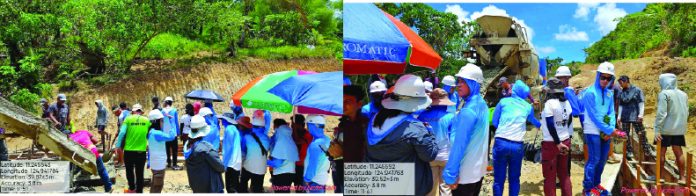
The Tacloban City District Engineering Office, in collaboration with the Department of Agriculture Regional Office 8 through its Regional Agricultural Engineering Division (RAED), conducted a site visit to two farm-to-market roads on May 9, 2024. The roads inspected were the Brgy. Palanog to Brgy. Salvacion farm-to-market road and Brgy. Paglaum to Brgy. Palanog farm-to-market road.(TCDEO)
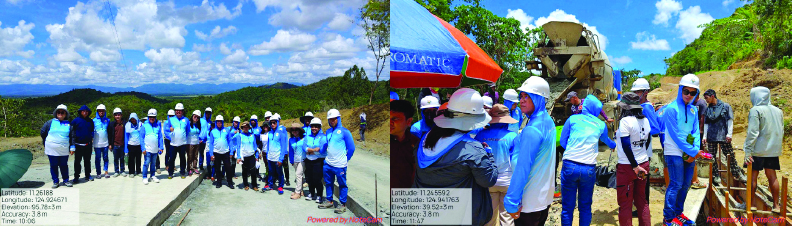
TACLOBAN CITY–The Tacloban City District Engineering Office, in collaboration with the Department of Agriculture Regional Office 8 through its Regional Agricultural Engineering Division (RAED), conducted a site visit to two farm-to-market roads on May 9, 2024. The roads inspected were the Brgy. Palanog to Brgy. Salvacion farm-to-market road and Brgy. Paglaum to Brgy. Palanog farm-to-market road.
The site visit was part of the Training on Material Testing and Quality Control for Agricultural Infrastructure Projects held from May 7-10, 2024 in Leyte.
The training comprised both theoretical and practical application of engineering principles, as well as site visits to the aforementioned Farm to Market Road projects.
During the site visit, the trainees had the opportunity to conduct a Field Density Test (FDT) and a Slump Test. The FDT is a test done on construction sites to check how compact the soil is, ensuring the ground is solid enough for building.
The Slump Test is done on concrete to measure its workability or fluidity. It involves filling a cone with concrete, removing the cone, and observing how much the concrete ‘slumps’ or falls, which helps ensure the concrete is the right consistency for use.
Engineers Reyboy Lantajo and Justine Karl Calinao from the Construction Section of the Tacloban City District Engineering Office assisted the trainees from the Department of Agriculture Regional Office 8 during the site visit and the tests.
“The site visit provided an invaluable opportunity for practical learning and application of engineering principles,” Engr. Reyboy Lantajo said in response to the successful site visit. “The Field Density Test and Slump Test conducted by the trainees are crucial in ensuring the quality and durability of our infrastructure projects.” (PR)
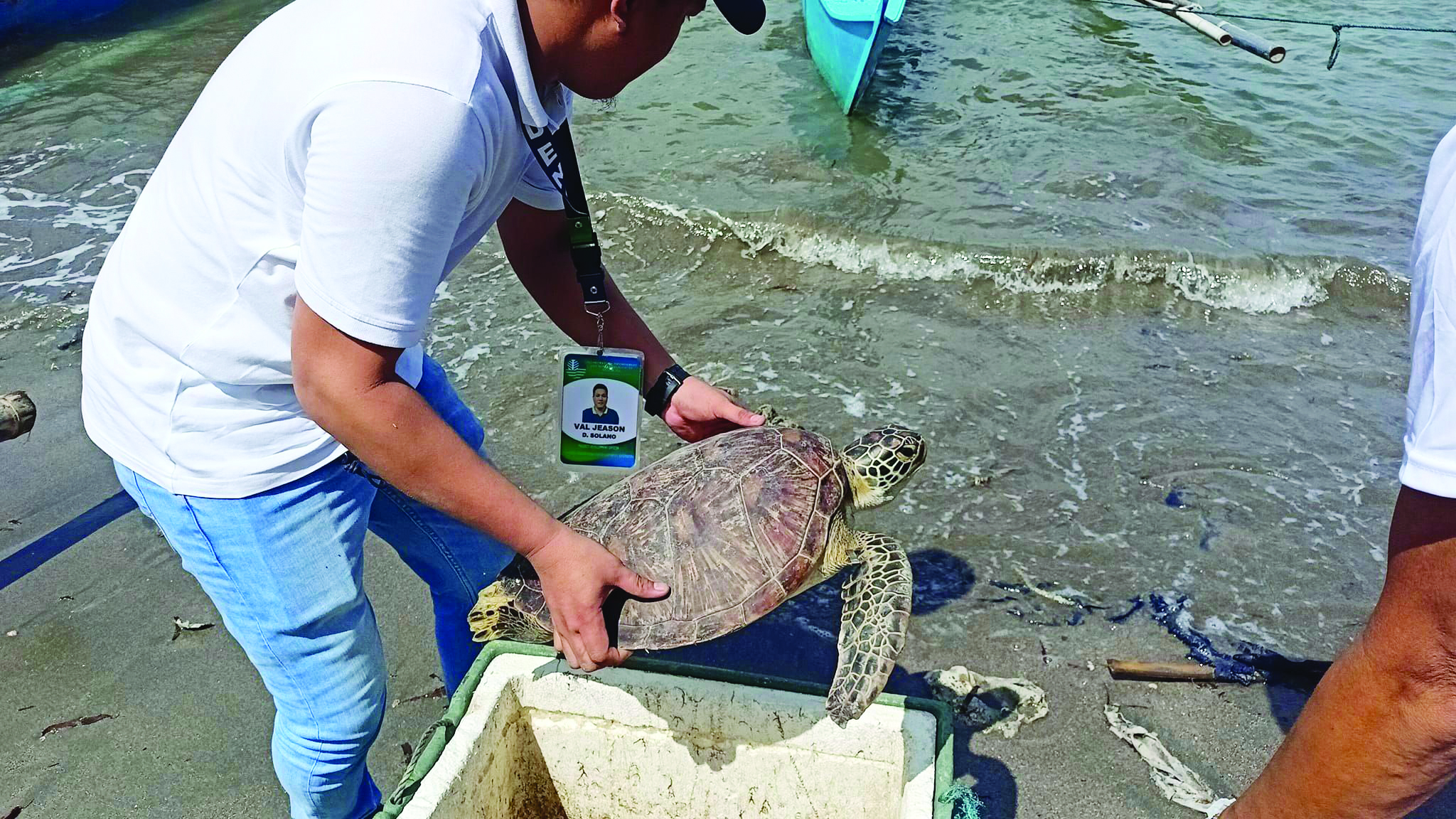
RESCUED. A green sea turtle was rescued by a fisherman from Barangay Rawis, Tacloban City on Monday (May 13) and was turned over to the Fishery Law Enforcement Team(FLET).The green sea turtle, caught inside the fishing net of the fisherman, was tagged and released in the Cancabato Bay area. (FLET)
RESCUED. A green sea turtle was rescued by a fisherman from Barangay Rawis, Tacloban City on Monday (May 13) and was turned over to the Fishery Law Enforcement Team(FLET).The green sea turtle, caught inside the fishing net of the fisherman, was tagged and released in the Cancabato Bay area. (FLET)
Due to rising rabies cases
TACLOBAN CITY – The province of Eastern Samar has declared a state of calamity due to an alarming rise in rabies cases that have already claimed lives.
Governor Ben Evardone disclosed that the decision, made on Monday (May 6) upon the recommendation of the Provincial Disaster Risk Reduction Management Office, aims to prevent further cases of animal bites, particularly from dogs.
The provincial board also passed a resolution supporting this declaration during their session on Friday (May 17).
As of now, the province has recorded three deaths due to rabies this year. Last year, there were also three fatalities.
“With the declaration, we will conduct a massive information campaign down to the barangay levels and enforce strict implementation of local ordinances on stray dogs,” Evardone said on Thursday (May 16).
He also emphasized the responsibilities of dog owners under the Animal Welfare Act and urged them to vaccinate their pets.
The three recent fatalities occurred in the towns of Guiuan, General MacArthur, and Taft.
Gov. Evardone noted that while there have been three deaths due to rabies, reports of additional dog bites are increasing across the province, justifying the state of calamity declaration.
“Many are still receiving vaccines due to dog bites,” he added.
Dr. Melai Costuna, assistant veterinary provincial officer, expressed hope that the declaration would help address the surge in rabies cases.
“One case of human rabies is already considered alarming; having three cases in this quarter alone is much more concerning,” she said.
Dr. Costuna also mentioned that the Department of Agriculture (DA), which supplies animal vaccines, has stopped providing vaccines to their office, leaving them reliant on local government units for their vaccination drive.
Eastern Samar has a dog population of over 22,000, with only 40 percent currently vaccinated.
According to records from the Department of Health, there have been six deaths due to dog bites in the region: three in Eastern Samar, two in Southern Leyte, and one in Leyte.
The DOH is urging dog owners to be responsible by vaccinating their pets and seeking immediate medical assistance if bitten or scratched by an animal suspected of carrying the rabies virus.
The World Health Organization states that the incubation period for rabies ranges from two to three months but can vary from one week to one year.
Symptoms include fever, pain, and unusual or unexplained tingling, pricking, or burning sensations at the wound site.
KANTA BINISAYA. The Department of Tourism (DOT) through its regional director, Karina Rosa Tiopes, throws support on the ‘Kanta Binisaya’ chorale competition which also aims to promote local songs. Among those in the photo were Regional Director Reyan Arinto of the Philippine News Agency and professor Stephen Legarde of the University of the Philippines-Tacloban Campus. (PHOTO COURTESY)
KANTA BINISAYA. The Department of Tourism (DOT) through its regional director, Karina Rosa Tiopes, throws support on the ‘Kanta Binisaya’ chorale competition which also aims to promote local songs. Among those in the photo were Regional Director Reyan Arinto of the Philippine News Agency and professor Stephen Legarde of the University of the Philippines-Tacloban Campus. (PHOTO COURTESY)
TACLOBAN CITY- The Department of Tourism (DOT-8) has announced the eight finalists competing for the title of the first champion of the ‘Kanta Binisaya’ Choral Competition.
At least 19 choral groups from various regions in the Visayas and Mindanao submitted video auditions between March and April 24, the submission deadline.
The panel, including Kanta Binisaya book author and University of the Philippines Tacloban College associate professor Stephen Lagarde, selected eight finalists based on the groups’ track records and audition performances.
The eight finalists are: Calbayog Chamber Voices of Calbayog City; Cebu Normal University Chorale of Cebu City; Coro Recoleto of the University of Negros Occidental-Recoletos of Bacolod City; Koro Seraphim of Tagbilaran City; Southern Leyte State University Glee Club of Sogod, Southern Leyte; Surigao del Norte State University of Surigao City; University of San Carlos Choristers of Cebu City; and Vox Minore Chorum of Talisay City, Cebu
The competition, which aims to promote, disseminate, and popularize the region’s musical heritage, will feature timeless songs from Region VIII.
These songs include “Hadto nga Panahon,” “An Iroy nga Tuna,” “Di Ba?,” “Dinumdum ko Ikaw,” and “Matud Nila,” among others.
DOT-8 Regional Director Karina Rosa Tiopes emphasized that hosting such competitions promotes the region’s tourism potential, including its culture and heritage.
“Supporting Kanta Binisaya is in itself supporting tourism promotion. We are promoting cultural heritage through our songs,” she said.
The finals will be held on June 11 at the People’s Center and Library, this city.
The winning choral groups will receive P100,000 for the champion, P80,000 for second place, and P60,000 for third place. Non-winning teams will receive a consolation prize of P20,000.
Special awards will also be given to winners to receive cash prizes.
Additionally, participating teams will receive a cash subsidy of P20,000 from the provincial government of Leyte.
The DOT-8 is partnering with the Tingog party-list and Leyte Normal University to host the Kanta Binisaya Choral Competition. (ROEL T. AMAZONA)
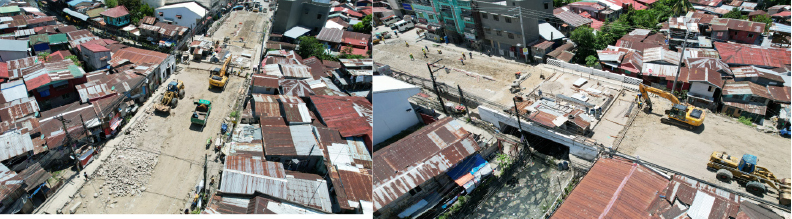
The Tacloban City District Engineering Office is undertaking the construction of the approaches for the Mangonbangon Bridge II in Tacloban City. The project has a cost of P17.63 million and has a current 15% completion.(TCDEO)
The Tacloban City District Engineering Office is undertaking the construction of the approaches for the Mangonbangon Bridge II in Tacloban City. The project has a cost of P17.63 million and has a current 15% completion.(TCDEO)
TACLOBAN CITY-Tacloban City District Engineering Office has initiated the construction of the approaches for the Mangonbangon Bridge II, a significant infrastructure project aimed at enhancing connectivity in the region.
The bridge project, which was launched in March 2022, involves building a sturdy, four-lane bridge with a total width of 12.48m. This project, funded by the General Appropriations Act of 2022 (GAA 2022), has a total contract value of P17,638,577.64.
Despite the completion of the Mangonbangon II Bridge, the construction of its approaches was only approved this year. This indicates that the bridge and the approaches are not a single project, but two distinct projects.
The second project, which includes the construction of a concrete approach and drainage on both sides of the Mangonbangon Bridge, has a total contract value of P 14,647,891.94. This project is funded under the General Appropriations Act of 2024. As of now, the project is in progress and has reached 15% completion.
The Office believes that this circumstance may have led to the recent public and media misunderstanding that the bridge remains incomplete despite the commencement of construction two years ago. The absence of a fully furnished concrete approaches gives the bridge an overall unfinished appearance.
In light of the confusion, OIC-District Engineer Rebecca G. Yuse released a statement to elucidate the situation.
“We wish to clarify to the public that while the Mangonbangon Bridge II is indeed complete, the construction of its approaches has only recently begun. We are dedicated to the expeditious completion of this project for the benefit of the residents of Tacloban,” stated OIC-DE Yuse.
In a bid to expedite the construction of the approaches, Mangonbangon Bridge II has been temporarily closed to traffic from April 29 to May 29, 2024. This measure aims to facilitate uninterrupted construction activities, ensuring the timely completion of the vital infrastructure.
The Tacloban City District Engineering Office remains committed to the timely completion of the approaches, with the goal of fully operationalizing the Mangonbangon Bridge II to better serve the commuting public. (IAN YVES G.DE PAZ, PUBLIC RELATIONS ASSISTANT, PUBLIC INFORMATION OFFICE,TCDEO)