

31.1 C
Tacloban City
April 06, 2026 - Monday | 10:40 AM
Home Blog Page 875

Make it earlier

0

The retirement age is a topic of great significance, particularly in nations grappling with changing workforce dynamics. One case in point is the retirement age in our country—it should be made earlier. By considering the implications of an earlier retirement age on the economy, labor market, and societal aspects, this proposal will shed light on the potential benefits of such a policy change.

Economic considerations provide a strong rationale for lowering the retirement age in the Philippines. With a lower retirement age, there will be more job vacancies available for younger Filipinos seeking employment opportunities. This would stimulate the entry of fresh talent into the labor market, leading to increased productivity, innovation, and growth. Additionally, an earlier retirement age could encourage more individuals to participate in income-generating activities beyond traditional retirement, fostering entrepreneurship and enabling the elderly to contribute to economic development and reduce their dependence on social welfare programs.

Moreover, an earlier retirement age can alleviate concerns related to the sustainability of social security systems. As life expectancies continue to increase, individuals often outlive their retirement savings and rely heavily on pension programs. By lowering the retirement age, individuals can be assured of receiving social security benefits earlier, allowing them more time to enjoy these benefits while reducing the strain on the pension system. An earlier retirement age offers opportunities for retirees to spend quality time with their families, pursue personal interests, contribute to community service, and engage in overall personal growth and fulfillment.

A lower retirement age can also address the physical and mental health challenges faced by employees approaching the current retirement age in the Philippines. Many workers endure high stress levels and physical strain as they continue working until they reach their late 60s. An early retirement option would provide older workers with the opportunity to leave the workforce before their health deteriorates significantly, reducing the risk of work-related health issues and improving overall well-being. This policy change would enable individuals to retire at a time when they can still actively engage in recreational activities, maintain social connections, and enjoy their retirement years instead of feeling burdened or burnt out.

Indeed, lower retirement age has several significant advantages. A thoughtful policy change, taking into account the unique needs and circumstances of our society, can lead to a more equitable and sustainable retirement system while fostering personal growth and quality of life for the elderly population.


An inevitable struggle

0
DOMS PAGLIAWAN

Power struggles involving competition or conflict for influence, control, or authority are inherent in any workplace environment. These struggles can manifest in various forms, such as interdepartmental rivalries, employee-manager conflicts, or even subtle office politics. They seem unavoidable in the workplace based on organizational psychology and studies. It is then crucial for one to understand this phenomenon as it enables one to anticipate, navigate, and mitigate its potentially detrimental effects.

Power struggles arise due to the innate human desire for influence and control over others. Workplace hierarchies, with power concentrated at the top, make this propensity more pronounced. Individuals, regardless of their position within the organizational structure, strive to assert their authority, gain recognition, and achieve personal and professional growth. This striving for power fuels the inevitability of power struggles, even in the most harmonious and well-intentioned workplaces.

In today’s competitive landscape, limited resources and opportunities further exacerbate power struggles. Whether it is a scarcity of promotion prospects, project funding, or other rewards, individuals become more inclined to engage in power struggles to secure those resources for themselves or their teams. This phenomenon intensifies competition and can lead to an adversarial climate within the workplace.

Workplaces are composed of individuals with various perspectives, experiences, and interests. These differences contribute to varying personal and professional goals, leading to diverse opinions and potentially conflicting interests. Power struggles often emerge when these perspectives clash, creating tensions and disagreements between employees or departments. The struggle for dominance in decision-making processes or the imposition of one’s values and viewpoints can be a primary driver of such conflicts.

Organizational culture and structural ambiguity can both fuel and perpetuate power struggles. Workplace cultures that reward competitiveness, individualism, or office politics may inadvertently encourage and amplify power struggles among employees. Moreover, organizational structures with unclear reporting lines or ill-defined roles can create confusion and ambiguity, making it easier for individuals to assert their power inappropriately or engage in disruptive behavior.

Effective communication within a workplace is essential to mitigate power struggles. Lack of proper communication channels, transparent decision-making processes, or conflicts of interest can contribute to misunderstandings, mistrust, and subsequently, power struggles. In an environment where communication is limited or clouded, individuals may resort to power plays as a means of asserting their interests or gaining control.

Leadership style plays a pivotal role in shaping power dynamics within the workplace. Leaders who adopt autocratic or coercive styles may inadvertently create an environment ripe for power struggles, as they concentrate power at the top and limit employee autonomy. Conversely, transformational leaders who emphasize collaboration and shared decision-making can help diffuse potential power struggles by empowering their employees and creating a culture of trust and respect.

Power struggles are an inherent part of any workplace due to human nature, organizational structures, scarce resources, diverse perspectives, cultural factors, communication issues, and leadership styles. What’s alarming is that power struggles can have pronounced effects on employee morale, productivity, and overall organizational performance. This calls for effective management, conflict resolution, fostering positive workplace relationships, and creating a harmonious and successful professional environment.

Plastic

0
AL ELLEMA
AL ELLEMA

We are again brought into a weird unrealistic idea that is clearly no more than mere sloganeering. In order to protect the environment, government has brought the idea of discouraging people from utilizing plastics that are not organic and contaminate the environment. We are all aware of the hazards that plastics bring not only to the environment but to human health as well.

The dangers of the toxic materials that plastics transfer to our food when used as containers are very real. It may not cause immediate adverse effects, but we are all victims of some sort of food poisoning every time we use plastic for our food. The concern raised in keeping these non-biodegradable materials from the bowels of the earth may have some basis. But just how can government stop the use of plastic from dirtying our environment is a big question.

While people are using plastic as part of daily life, it is hard to reorient their ways into non-plastic habits. The use of the material has found wide acceptance that it has eliminated the biodegradable materials. Before, papers were used as wrappers for many items, we now seldom see people using paper for such simple purposes. The convenience of using plastic has caught the mindset of people that they no longer think of the ill effects that plastics bring to the environment. But the concern is really more on the improper disposal of garbage that ruins our environment.

If plastics are hazardous to life, by all means government must take appropriate measures to protect the people. It is very impractical to focus the drive on the end-user. The suggestion to cut the problem at the root cause is always the best option. Efforts should be made to stop its production if the material is hazardous. Making a campaign that discourages end users is deemed ineffective. It speaks of something that is being done for the sake of doing something.

Already, local government units had passed ordinances banning the use of plastics in department stores, malls and food chains. The ordinances are now being observed in many localities. Except where the use of plastics is necessary such as for containers of food items in the wet market section like sea foods, meat and other wet products, the prohibition is gradually being observed by both sellers and consumers.

If government is serious in saving and protecting the environment, it should set its attention on promoting the use of organic materials such as banana leaves for fish and other seafood products. It must also stop the problem at the source by regulating the production of plastic bags, otherwise, all these brouhaha would be mere acts of plasticity.
comments to alellema@yahoo.com

The story of David and God’s inscrutable ways

0
FR. ROY CIMAGALA
FR. ROY CIMAGALA

THE story of how David was anointed to be king plainly tells us that God’s ways are inscrutable. (cfr. 1 Samuel 16,1-13) This story tells us that we need to trust in God’s mysterious ways rather be guided simply by our own estimation of things.

As narrated in the story, God asked the prophet Samuel to choose from the children of Jesse the one to succeed Saul as king. Samuel was quite sure the first ones presented must be the one God would anoint because of how they looked. But God rejected them and corrected Samuel.

“Do not judge from his appearance or from his lofty stature,” God told Samuel after Eliab, one of the first one was presented, “because I have rejected him. Not as man sees does God see, because he sees the appearance but the LORD looks into the heart.”

So, the other sons of Jesse were presented. And still they were all rejected. When Samuel asked Jesse if there was still another son left, Jesse then called David, the youngest who at that time was tending sheep. It was then that God chose David to succeed Saul as king.
We should just be humble enough to realize that our certainties can never cope with all the mysteries of life. No matter how objective and scientific these certainties are derived, no matter how deep and exhaustive our philosophies, theologies and ideologies are made, our certainties just cannot take all the mysteries in our life.

Even in the world of nature where in theory we have the capacity to know things conclusively, we often find ourselves in situations of tentativeness and even of outright error. That is why we are always in the process of discoveries and we would not know when we can end it, that is to say, when we can say that we have known everything to be known in the world of nature.

This does not mean that our certainties can never know the truth, even the absolute, and not just relative, truths. Yes, we can, but the best that we can do is to project ourselves to infinite possibilities, because even the absolute truths are not things that are frozen. They are always dynamic.

Our certainties can only tackle some aspects and levels of the reality that is proper to us. We need to realize more deeply that we have to contend not only with natural and even spiritual realities but also with supernatural realities that simply are above our nature to know, unless some revelation is made which should be corresponded to with our act of belief.

We just have to learn to abandon ourselves to the mysterious ways of God who in his wise providence takes care of everything. We are not expected to know and understand everything. What is expected of us is to have faith in God so we can always be with him no matter how things turn.

With all the things that we have to contend with in this life, we certainly need to have a healthy sense of trust in God’s loving and wise providence, abandoning ourselves in his will and ways that often are mysterious to us and can appear to be contrary to what we would like to have.

We also have to make sure that our inability to fully capture life’s mysteries should not dampen our eagerness to know and love Christ more. Rather it should prod us to know and love Christ better. And with that motive, let us polish and refine our certainties some more.

Contingent from Catarman wins this year’s Agta Festival

0
About 10 contingents from different towns of Northern Samar joined this year’s Agta Festival held in Bobon town last Sunday(Jan.14). The contingency from Catarman, ‘Tribu Kawayanon’ was adjudged as the best among the competing contingents. (Northern Samar Provincial Tourism Office)

Among Northern Samar popular festival of festivals

About 10 contingents from different towns of Northern Samar joined this year’s Agta Festival held in Bobon town last Sunday(Jan.14). The contingency from Catarman, ‘Tribu Kawayanon’ was adjudged as the best among the competing contingents. (Northern Samar Provincial Tourism Office)

TACLOBAN CITY – The ‘Tribu Kawayanon’ of Barangay Cawayan, Catarman town was declared the grand champion in this year’s Agta Festival competition held in Bobon town, Northern Samar.

Tribu Kawayanon bested nine other contingents from other towns of the province of the yearly festival that venerates and gives thanks for all the blessings the municipality receives through the intercession of the Sto. Niňo, its patron.

As grand champion, Tribu Kawayanon won P300, 000.

Tribu Sto. Niňo of Bobon town bagged second place and won P200,000 while Tribu Carang of San Jose town was in 3rd place winning P100,000.

Incidentally, Tribu Sto. Niňo and Tribu Carang were also the 2nd and 3rd place winners during last year’s Agta Festival participated by seven contingents.

Of the 10 contingents that joined the Agta Festival this year, five came from Catarman, two from San Jose, one from Lope de Vega, one from San Roque, and one from Bobon.
Agta Festival is one of the oldest festivals in Northern Samar and in the region which dates back in the 1980s.

In 1980, the Agta Festival was celebrated by having mass, ‘sakay-sakay’ or fluvial procession but the following year, festival contingents and competitions were included to give more glamour and festivity vibes to the annual celebration.

(ROEL T. AMAZONA)

MGB sees no destruction in Homonhon mining

0
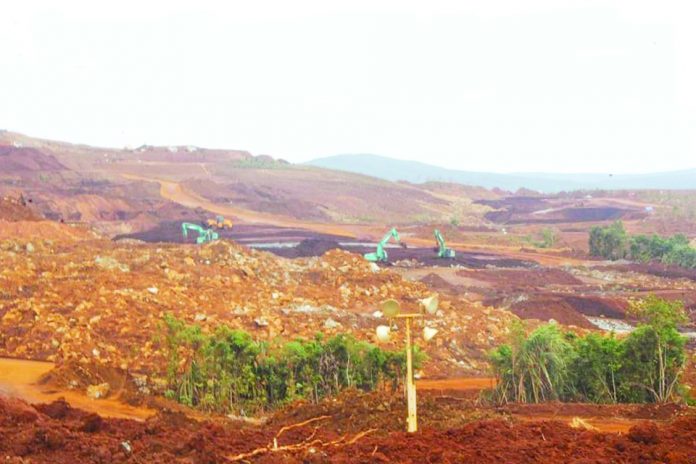
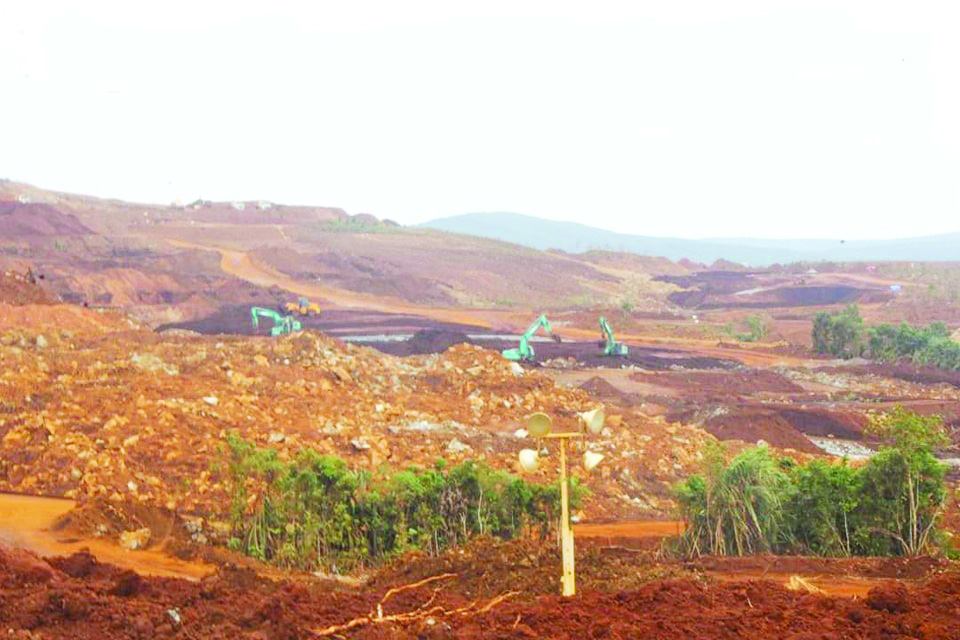
RESPONSIBLE MINING? Thus said the regional office of the Mines and Geosciences Bureau (MGB) on the ongoing mining operations in Homonhon Island, contrary to the claims of residents that the mining operations affects their health conditions but destroys the environment. Photo taken on Jan. 10, 2024. (SAVE HOMONHON MOVEMENT)

Despite claims of Church, residents

RESPONSIBLE MINING? Thus said the regional office of the Mines and Geosciences Bureau (MGB) on the ongoing mining operations in Homonhon Island, contrary to the claims of residents that the mining operations affects their health conditions but destroys the environment. Photo taken on Jan. 10, 2024. (SAVE HOMONHON MOVEMENT)

TACLOBAN CITY – The Mines and Geoscience Bureau (MGB) in the region declared that they had not observed any violations on mining companies operating in Homonhon Island in Guiuan town, Eastern Samar.

This is despite complaints and allegations from residents and the local Church on the negative effects of mining operations on the historic island.

“Binabasa kasi namin yung provisions of the law. What are the grounds for cancellation? None payment of taxes, in terms of environmental, yung talagang grave abuse,” MGB-8 Regional Director Glenn Marcelo Noble said.

“This is my statement, there are no grave violations. Meron mang konti, kunyari nasira yung kaniyang siltation pond eh pwede namang ayusin yan. Nagkaroon ba ng major spills, wala,” Noble added.

He said that there is a multipartite monitoring team (MMT) that conducts visits to mining companies to monitor their operations and check if they committed violations that may be used as grounds for suspension or cancellation of their permit.

This monitoring team is composed of personnel from the MGB, Environmental Management Bureau, Department of Environment and Natural Resources (DENR), local government unit, non-government organizations, and sometimes Church leaders.

“Yung MMT is a very crucial body, multipartite yan, hindi lang MGB yan, hindi yan DENR lang , hindi yan EMB lang, hindi yang LGU lang. So pag usapan nila, at kung ano ang napag-usapan nila that is what they will recommend sa higher body,” Noble explained.
Although they can make recommendations, Noble stressed that the decision on actions against the recommendation will always depend on the DENR Secretary who signs the approval of all mining applications in the country.

At present, three mining companies are currently operating on Homonhon Island, extracting nickel and chromite that are transported to China, the biggest market for mining operations in the country.

The three mining firms are Nickelace Inc., Chromiteking and Emir. Of the three, Emir has yet to be granted the permit for its application for a 25-year mineral production sharing agreement (MPSA), while the two were granted their permits in 2009.

Based on MGB-8 recorded for 2023, Nickleace and Chromiteking were able to ship 8.22 million metric tons of nickel ore and 25,000 metric tons of chromite to China last year.
The tax paid by these mining companies last year in terms of excise tax generated an income for the government amounting to P182.62 million.

Groups such as the Save Homonhon Movement and the Diocese of Borongan are vocal in opposing the mining operations on Homonhon Island which they say destroy the environment and marine ecosystem of the place which is historically known as the first landing site of Ferdinand Magellan’s fleet in March 1521 on the first circumnavigation of the world.

Two ‘Jericho Walks’, a prayer rally in protest against mining operations were initiated last year by the Catholic Church, one was in Borongan in August, and in November in Guiuan town in November but was postponed after the local government unit of the municipality did not grant them a permit.

This year, another prayer rally is scheduled on January 20 in Guiuan town.

ROEL T. AMAZONA

Recent Posts

DALMACIO C. GRAFIL
PUBLISHER

ALMA GRAFIL
EDITOR-IN-CHIEF

ROMEO CEBREROS
OFFICE IN-CHARGE

OFFICE
BRGY. SONGCO, BORONGAN CITY

CONTACT NUMBERS
(055) 261 – 3319 | 0955 251 1533 | 0917 771 0320 | 0915 897 7439 | 0921 511 0010

DALMACIO C. GRAFIL
PUBLISHER

RICKY J. BAUTISTA
EDITOR

ALMA GRAFIL
BUS. MANAGER

OFFICE
RIZAL AVENUE, CATBALOGAN
(INFRONT OF FIRE DEPARTMENT, NEAR CITY HALL)

CONTACT NUMBERS
0917 771 0320 | 0915 897 7439 | 0921 511 0010

EMAIL
lsdaily2@yahoo.com

WEBSITE
www.issuu.com/samarweeklyexpress