
30 C
Tacloban City
April 06, 2026 - Monday | 3:45 PM
Home Blog Page 872

Larrazabal-Gimenez elected as new Liga ng mga Barangay prexy in Leyte

0
Martina ‘Ina’ Gimenez was elected as the president of the Liga ng mga Barangay-Leyte, making her an ex-officio member of the provincial board. Photo shows Gimenez with Governor Carlo Jericho ‘Icot’ Petilla(center)and Rep. Carl Cari (5th district) during the Liga’s election held in Baybay City on Jan.12. (Photo Courtesy, Rep. Carl Cari)

Running unopposed

Martina ‘Ina’ Gimenez was elected as the president of the Liga ng mga Barangay-Leyte, making her an ex-officio member of the provincial board. Photo shows Gimenez with Governor Carlo Jericho ‘Icot’ Petilla(center)and Rep. Carl Cari (5th district) during the Liga’s election held in Baybay City on Jan.12. (Photo Courtesy, Rep. Carl Cari)

TACLOBAN CITY – The newly-elected president of the Liga ng mga Barangay in Leyte, Martina “Ina” Larrazabal-Gimenez, disclosed that she would focus on the welfare of barangays.

Gimenez clinched the post without any opposition during the Liga’s election on Jan.12 held in Baybay City. She will serve in her position until 2025.

“I would like to appeal and advise to our barangay chairman to focus more on the work and the development of each every barangay under them,” she said during an interview.
Gimenez is the wife of Use. Mark Roa Gimenez, the Presidential Management Staff for the Visayas and sister of former elections commissioner Gregorio Larrazabal.

The Liga official added that she hopes to visit all the 1,393 villages in the province to personally see the situation of the people in the community and how she could help the barangay officials in looking after the welfare of their constituents.

She also expressed her support for the proposed bill on the salary standardization of all barangay officials which is still pending in Congress.

“Having that standard pay to our barangay officials will be beneficial to them,” Gimenez said.

Under the law, barangay officials are not entitled to receive a salary instead they are receiving honoraria with no fixed rate.

The Local Government Code of the Philippines mandates that an honorarium for barangay chairmen should not be less than P1,000 and P600 for the kagawad. This compensation was adjusted through Executive Order No. 332 series of 1996.

“Currently, our barangays are dependent on the national tax allocation (NTA). If you have a small allocation, you have a small budget, (while) those with a big share have bigger budget. What I’m more focused is the small barangays with small budgets. They only have minimal honorarium that we give them that is why it is better to have a standard for everyone just like in the municipality,” Gimenez explained.

“We are all barangay officials, we are all barangay chairman, so dapat pareho lang,” she added.

Based on the 4th tranche of the modified salary schedule for local government personnel or the Department of Budget and Management Circular No. 149 issued in 2023 maximum compensation barangay officials ranges from P21, 998 to P33, 843 for barangay captains depending on the class of the municipalities or cities they are elected.

Barangay kagawad or councilor’s honoraria ranges from P15, 064 to P23, 176.
Barangay officials are also entitled to a Christmas bonus, insurance coverage, free hospitalization, free tuition, civil service eligibility based on the number of years they served in the barangay, and preference of appointment to any government position.
(ROEL T. AMAZONA)
China’s threat

0

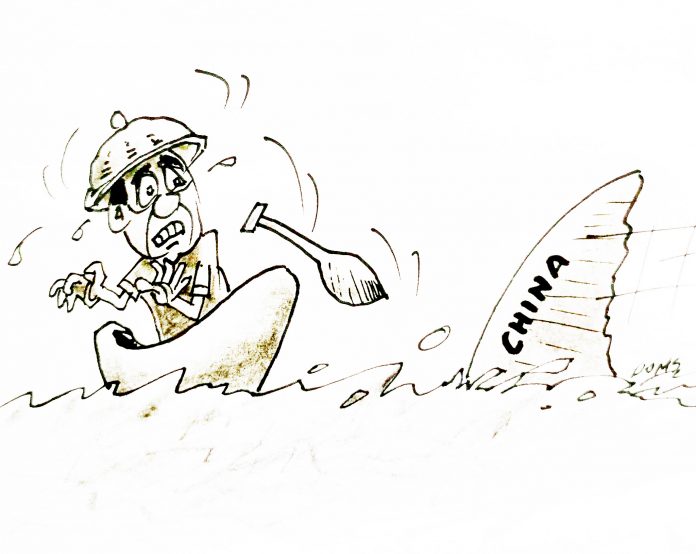
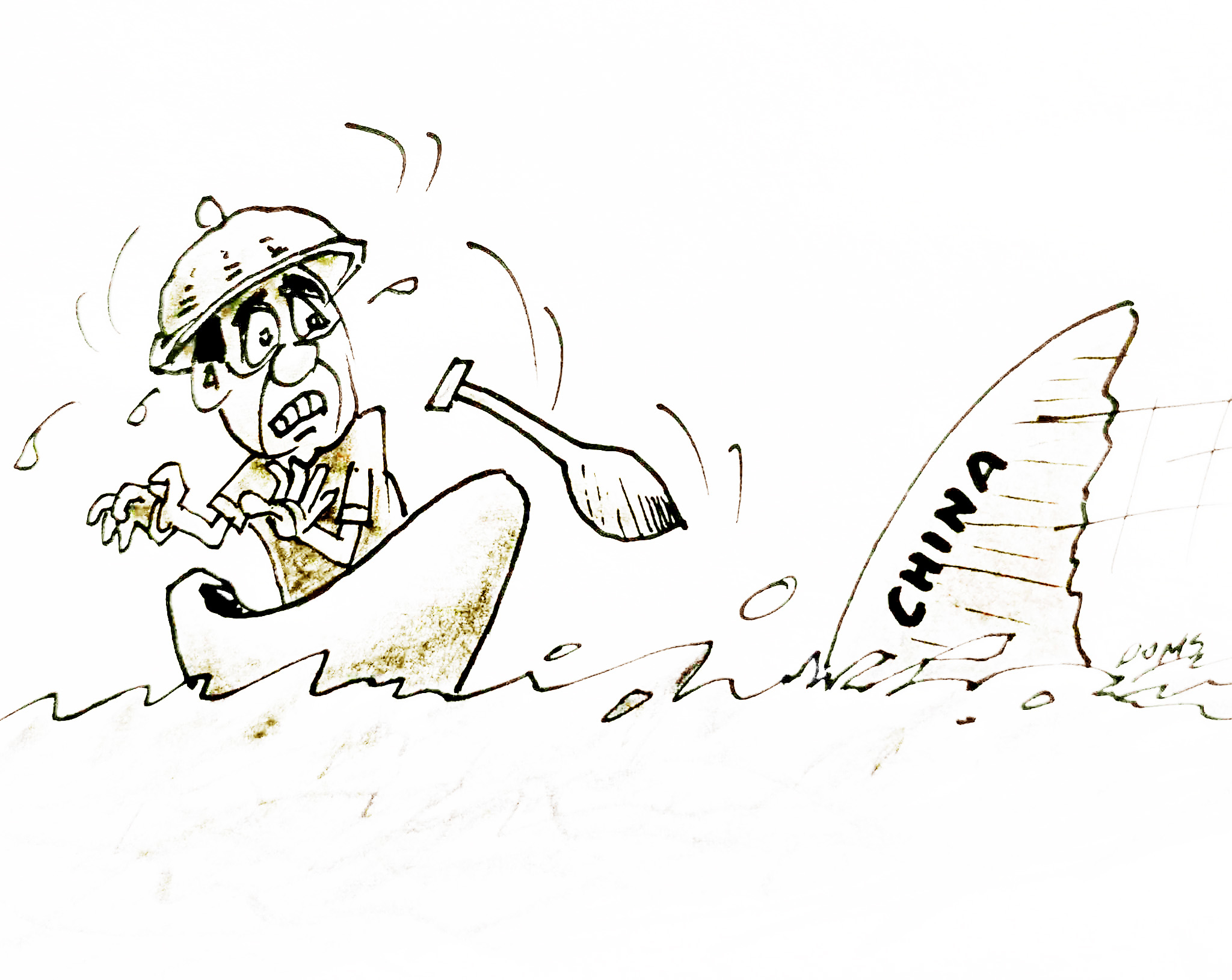
China’s increasing assertiveness in the Asia-Pacific region has raised concerns among its neighboring countries, prompting discussions about when this perceived threat might cease. What are China’s motivations and geopolitical objectives, and how do its Asian neighbors respond? Surely, there must be factors contributing to China’s perceived threat against its Asian neighbors.

Historical perspective and perceived grievances play a crucial role in shaping its foreign policy and approach towards its Asian neighbors. The country’s historical experiences, including its territorial disputes with Japan, Taiwan, and neighboring Southeast Asian nations, have fueled a sense of nationalism and a desire for regional dominance. Furthermore, China’s rapid economic growth and strengthening military capabilities have emboldened its leaders to assert their influence in the region.

Territorial disputes in the East and South China Seas have been a significant source of tension with its Asian neighbors. Beijing’s assertive actions, such as island-building, maritime patrols, and establishment of new air defense zones, have heightened concerns regarding its intentions and potential military expansionism. The increasing number of bilateral and multilateral disputes over territorial claims and resources exacerbates the apprehensions felt by regional countries. As long as these disputes persist, China’s perceived threat against its Asian neighbors is likely to continue.

China’s actions have prompted its Asian neighbors to undertake various responses aimed at safeguarding their national interests. Enhanced defense cooperation, expanding military capabilities, strengthening diplomatic ties with external powers, and engaging in joint military exercises are some of the measures taken by countries such as Japan, South Korea, Australia, and members of the Association of Southeast Asian Nations (ASEAN). Their responses demonstrate a collective effort to uphold regional stability and deter potential Chinese aggression.

Determining when China’s perceived threat against its Asian neighbors may cease is a complex issue, given the multifaceted motivations behind its assertiveness and the responses from its neighboring countries. The future trajectory will depend on China’s adherence to international norms and rules-based order, as well as the collective response from its Asian neighbors. Achieving a peaceful and stable regional environment necessitates open dialogue, cooperation, and the pursuit of mutual interests between China and its Asian counterparts.

Are they real?

0
DOMS PAGLIAWAN

Paranormal occurrences, also known as supernatural phenomena, have long fascinated and perplexed humanity. Despite skepticism and a lack of verifiable evidence, a multitude of accounts and personal experiences continue to claim the existence of paranormal phenomena. I for one have had such experiences since my childhood, hence my confirmation of it.

Defining paranormal occurrences is challenging due to the range of subjective experiences encompassed within this broad term. Ghosts, psychic abilities, UFO sightings, and telepathic experiences are among the phenomena attributed to the realm of the paranormal. However, the lack of a standardized definition makes it difficult to investigate these phenomena scientifically. This inherent ambiguity raises the question of whether paranormal occurrences can be objectively studied or remain merely subjective experiences.

The bulk of paranormal evidence relies on personal testimonials and anecdotes, which are often dismissed by skeptics as unreliable due to inherent biases and misinterpretation. However, the sheer volume of such accounts cannot be discounted without consideration. The credibility of these experiences becomes more complex when multiple seemingly independent witnesses report similar events. While testimonies alone are insufficient to prove the reality of paranormal occurrences, they challenge our understanding of the nature of subjective experiences and offer valuable insights for further examination.

Scientific methodologies play a crucial role in investigating paranormal phenomena.

however, the scientific method itself is built upon empirical evidence, which is often difficult to obtain when studying paranormal occurrences. Traditional scientific frameworks struggle to accommodate phenomena that elude conventional explanations. Nevertheless, notable scientists have dedicated time and resources to studying these phenomena, suggesting the need for alternative approaches to understanding the nuances of paranormal experiences.
Skeptics often attribute paranormal occurrences to psychological and sociological factors such as hallucinations, suggestibility, or the need for a sense of transcendence. The human mind’s inherent complexity and the influence of cultural beliefs undoubtedly shape individuals’ experiences. However, it is crucial to consider whether such explanations can account for the breadth and persistence of paranormal reports across various times, places, and cultures.

While the majority of paranormal phenomena can be attributed to natural or psychological causes, a small fraction remains unexplained. These cases present an intriguing opportunity for further exploration and potential breakthroughs. By approaching them with an interdisciplinary mindset and integrating insights from various scientific disciplines, the academic community may begin to unravel the mysteries surrounding paranormal phenomena.

The reality of paranormal occurrences remains a deep enigma that defies conventional scientific explanations. Although paranormal claims vary in credibility, a careful evaluation of testimonies, alongside scientific exploration, can contribute to a more nuanced understanding of the phenomena. Dispelling preconceived notions, adopting an open-minded approach, and fostering interdisciplinary collaborations may pave the way towards solving the puzzle of paranormal occurrences, elucidating the mysteries of our world, and stretching the boundaries of our knowledge.

It is easy to dismiss paranormal claims as nothing but products of imagination—that’s according to critics. But to those who experienced these themselves, it’s not that easy, for how can they deny something that they have personally witnessed? In my case, for example, how can I convince myself and the people I was with during those occurrences that the same didn’t happen? Why should I be lying to myself if these were not true at all? Even the Bible itself confirms that beings responsible for paranormal activities do exist.

From swaddling clothes to kingly raiment

0
FR. ROY CIMAGALA
FR. ROY CIMAGALA

THANKS to God, our devotion to the Sto. Nino remains strong, deep and growing. Yes, there may still be things that need to be made right and purified, but we cannot deny that this devotion has helped us greatly in pursuing the proper path toward God, especially in a world that is increasingly secularized and paganized.

Thanks to God the image of Christ as both a child and king, from swaddling clothes to kingly raiment, has truly so captured the Filipino heart that whatever situation we may find ourselves in, whether good or bad humanly speaking, we still keep our Christian faith and try our best to live by it.

On this Feast of the Sto. Niño, we are reminded that irrespective of whatever status we have in this life, it is always necessary that we be like children. Why? The quick answer to that is by becoming like children, as Christ wants us to be, we can also become king the way Christ is King.

Christ told his disciples clearly: “Unless you turn and become like children, you will not enter the Kingdom of heaven. Whoever humbles himself like this child is the greatest in the Kingdom of heaven. And whoever receives one child such as this in my name receives me.” (Mt 18,3-5)

Christ reiterated this necessity of being childlike a number of times during his preaching. “Let the children come to me. Do not prevent them, for the Kingdom of God belongs to such as these.” (Mk 10,15) St. James, in his letter, made the same affirmation. “God opposes the proud but shows favor to the humble.” (4,6)

We can ask what it is in children that Christ would want us to be like them? I suppose what can come to mind are the qualities of simplicity, transparency, complete trust to elders, etc.
These qualities enable us to deal with whatever situation and circumstance we can find ourselves in this life of ours here on earth. They enable us to dominate them, the way Christ dominated as king over all the possible human situations in the world.

We need to be clear about what makes for our human and Christian maturity, and how being like a child enters into the equation. We have to explode the myth that for us to attain our Christian maturity and perfection, we have to be an adult in age, with many years of experience, or popular in some religious ways, or knowledgeable about philosophy and theology. All these are helpful, but they are not the crucial elements.

What is essential is that our heart is fully conformed to God’s will, our life therefore somehow reflecting God’s goodness and holiness. And the child, with his inherent innocence and purity of heart, simplicity and openness, among other qualities, has the advantage of easily attaining that ideal almost effortlessly.

To be sure, what is being referred to here about childhood is not about the common proneness of the children to be naïve, thoughtless, or to get easily spoiled and to fall into tantrums when whims and caprices are not met.

It’s just the child’s humility, transparency and docility, among others, that make him easily drawn to God, and to the things spiritual and supernatural. These qualities lead him to believe and to trust. Talk to him about God, prayer and little sacrifices, and he gets it almost immediately and automatically.

With these qualities, we can channel in our life that transformation of the Sto. Nino from swaddling clothes to kingly raiment.


An Early Look at the 2024–2033 Teacher Education Roadmap

0
CLEMELLE L. MONTALLANA,DM, CESE ASSOCIATE PROFESSOR III
CLEMELLE L. MONTALLANA,DM, CESE
ASSOCIATE PROFESSOR III

(Part one of a three-part series of articles)

What can we see in the new Roadmap for Teacher Education 2024-2033 as painstakingly wrote by the DepEd? Personally, it forwards a hopeful view that the department is seriously looking into the conditions and realities of teachers, given its wide array of tasks and responsibilities. In the very Introduction under the segment Understanding the Roadmap it recognizes that the roadmap is primarily centered on enhancing teacher and school leader quality. The recognition that human resource or human capital is the center of all the efforts in the roadmap is undeniably the best feature of the plan. That to me is a signal that good things are coming.

As the nation’s educational condition are put in the microscope due to the seemingly downslides of the metrics the same is subjected from, the DepEd is doing its job and addressing this harsh reality.

This writer attended the National Consultative Assembly on the Roadmap for Teacher Education 2024-2033 as convened by the Teacher Education Council as chaired by Vice President and Secretary Sarah Duterte and facilitated by Director Runvi Manrague and Jonas George.

Ranvi Manrague and Jonas George are officials of the Department of Education (DepEd) in the Philippines. Ranvi Manrague is the Director of the Bureau of Learning Resources, which is responsible for developing and producing quality, relevant, accessible, and cost-effective learning resources for basic education. Jonas George is the Director of the Private Education Office, which is responsible for providing policy direction and guidance to private schools and non-DepEd schools in the country. They are both part of the Curriculum and Teaching strand of DepEd, which is headed by Undersecretary Gina O. Gonong.
Attended by a hundred academics it was really a rare occasion wherein ideas flow freely and was met without prejudice nor frown. Ideas were celebrated and was even agreed on when it was agreeable.

The Roadmap for Teacher Education 2024-2033 of DepEd (as seen in the DepEd Website) is a comprehensive plan to improve the quality and relevance of teacher education in the Philippines. It is aligned with the Basic Education Development Plan 2030 (BEDP 2030), which is the strategic roadmap for basic education in the country1. The Roadmap for Teacher Education 2024-2033 aims to achieve the following objectives:

• To develop and implement a competency-based teacher education curriculum that is responsive to the needs and challenges of the 21st century learners and the changing education landscape.
• To strengthen the quality assurance mechanisms for teacher education institutions and programs, including accreditation, licensure, and certification.
• To enhance the professional development and welfare of teachers and school leaders, including their recruitment, deployment, performance management, and career progression.
• To foster a culture of research and innovation in teacher education, as well as collaboration and partnership among stakeholders.
This early its my prayer that this plan will be heeded and followed.

Moving target

0
AL ELLEMA
AL ELLEMA

People are getting appalled by the continuous resetting of the supposed lowering of rice prices to twenty pesos per kilo in accordance with the presidential election promise of the doubtful president. About two years since the deceitful promise duped millions of gullible voters, rice prices are increasing daily to unaffordable levels.

There is no indication that rice prices would decrease in the next years until the next presidential elections. People who were duped by the presidential promise could not demand for its fulfilment as they voted for a price or even for free because they believed it is the best promise for their future and their family that willingly believed as well. The situation gets worse as income levels are stagnated below the minimum wages level.

Workers suffer from the unjust social order where businesses are adamant to workers’ demand for wage hikes. The contention is always that business will suffer losses if workers’ wages are increased to meet their demand. But over the years, business capitalists are getting richer while workers are gradually buried in the quagmire of unsettled cycle of debts. This reality dispels the capitalists’ excuse that they will suffer losses if workers’ wages are increased.

This could serve as good basis for government agencies in charge of regulating workers’ wages to tilt the balance in for wage increase as capitalists are bent on raising the same baseless if not fallacious excuse of business losses. There are clear indicators that such alleged losses are not true. The disparity in the socio-economic condition between the poor hapless workers and the business capitalists are too glaring to be ignored.

Granting workers’ wages a just treatment would lift them from their impoverished condition. It will improve their purchasing power to be able to buy the basic needs of the family, chiefly rice that had reached prices beyond the present wage levels. So far, only the rich business capitalists are able to enjoy decent living despite the skyrocketing prices of basic commodities.

Meanwhile, people who relied on the campaign promise of rice prices going down to twenty pesos per kilo within the first year of the Marcos administration may just continue keeping their fingers crossed as the deadline of its fulfilment may go beyond the term of office as it is clearly a moving target.
comments to alellema@yahoo.com

Recent Posts

DALMACIO C. GRAFIL
PUBLISHER

ALMA GRAFIL
EDITOR-IN-CHIEF

ROMEO CEBREROS
OFFICE IN-CHARGE

OFFICE
BRGY. SONGCO, BORONGAN CITY

CONTACT NUMBERS
(055) 261 – 3319 | 0955 251 1533 | 0917 771 0320 | 0915 897 7439 | 0921 511 0010

DALMACIO C. GRAFIL
PUBLISHER

RICKY J. BAUTISTA
EDITOR

ALMA GRAFIL
BUS. MANAGER

OFFICE
RIZAL AVENUE, CATBALOGAN
(INFRONT OF FIRE DEPARTMENT, NEAR CITY HALL)

CONTACT NUMBERS
0917 771 0320 | 0915 897 7439 | 0921 511 0010

EMAIL
lsdaily2@yahoo.com

WEBSITE
www.issuu.com/samarweeklyexpress