29.8 C
Tacloban City
April 07, 2026 - Tuesday | 2:34 PM
Home Blog Page 860

What aggravates our poverty

0

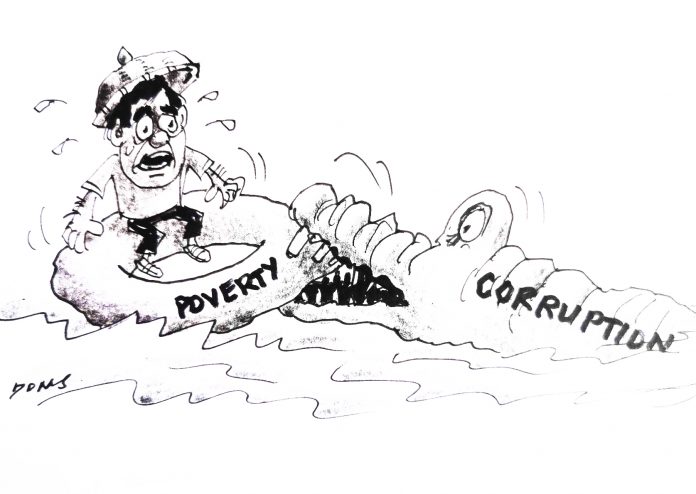
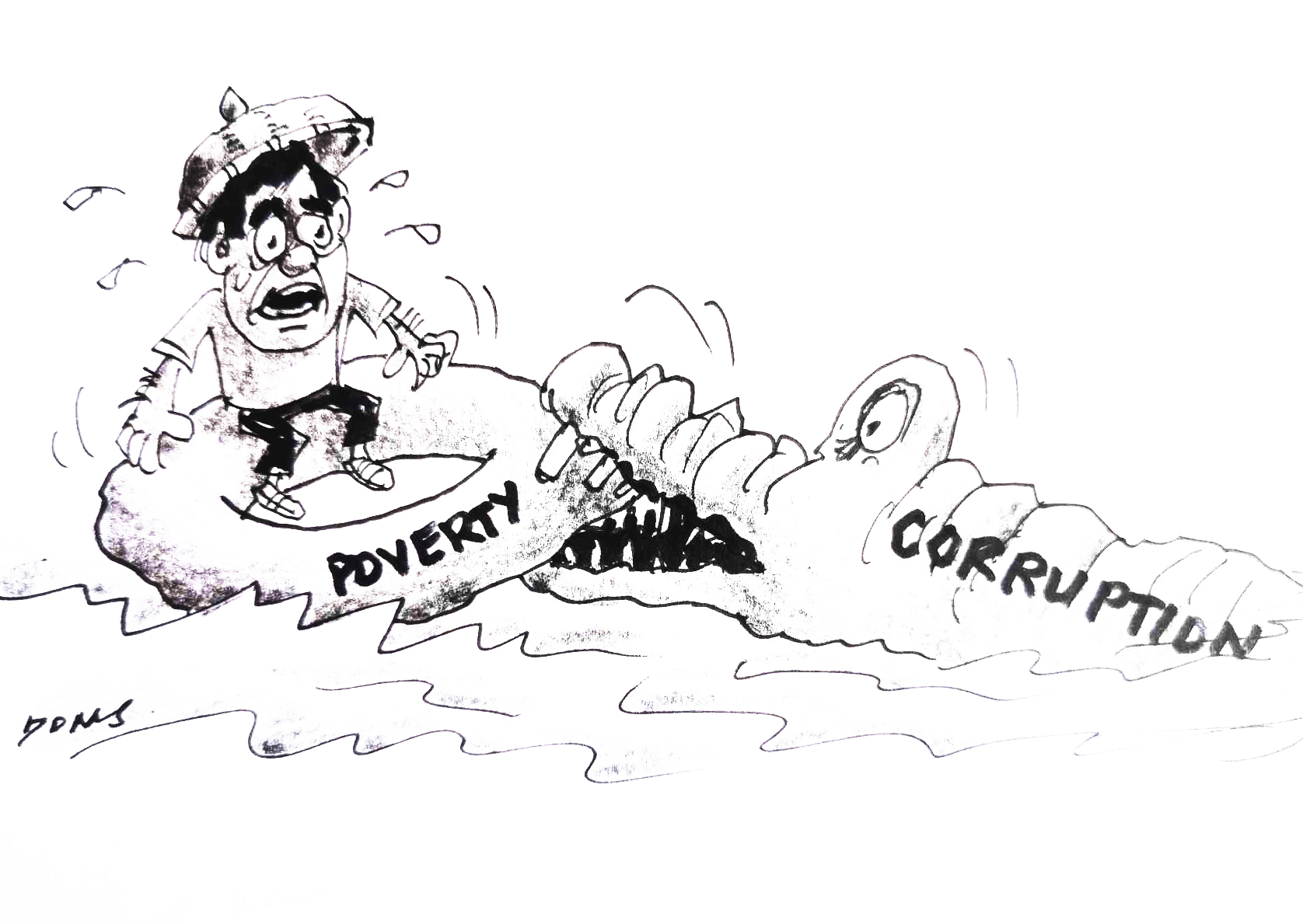
For a country like the Philippines which is plagued by persistent poverty, corruption acts as a catalyst that perpetuates the vicious cycle of poverty. We have yet to see how corruption exacerbates poverty in the Philippines, and how detrimental the effects of corrupt practices are on the economic, social, and political fronts. Imagine the Samar Highway as a classic effect of alleged corruption.

Corruption not only diverts funds intended for public welfare but also hinders foreign direct investment (FDI) and economic growth. Rampant corruption undermines investor confidence, discouraging both domestic and foreign investment. With limited private sector participation, job creation becomes sluggish, leaving millions in poverty. Moreover, corrupt practices inflate the cost of public goods and services, disproportionately burdening the poor. Inefficient allocation of public resources due to corruption restricts economic opportunities and amplifies income inequality, further deepening poverty.

Within the public sector, corruption heightens social disparities and weakens social programs designed to alleviate poverty. Limited government resources are usually misappropriated, reducing the reach and quality of public services such as education and healthcare. This disproportionately affects the poor, who depend heavily on these services. Access to quality education and healthcare then becomes a privilege, perpetuating intergenerational poverty.

Corruption in our country undermines democratic processes and erodes the public’s trust in governance. Corrupt practices allow influential elites to capture political power, impede policy reforms, and weaken institutions that are essential for poverty reduction. The diversion of public resources into private pockets subverts the notion of public service and creates a sense of hopelessness among citizens. The poor lose faith in their government, making it increasingly difficult to effectively foster social inclusion and implement poverty alleviation policies.

Indeed, the corrosive influence of corruption on the economy, society, and politics exacerbates poverty, stifles progress, and perpetuates inequality. It requires a comprehensive strategy that includes robust legal frameworks, transparency, and accountability mechanisms, as well as citizen participation to address corruption. We hope we can still break free from its grip and pave the way for inclusive economic growth and poverty reduction.
Missed chances

0
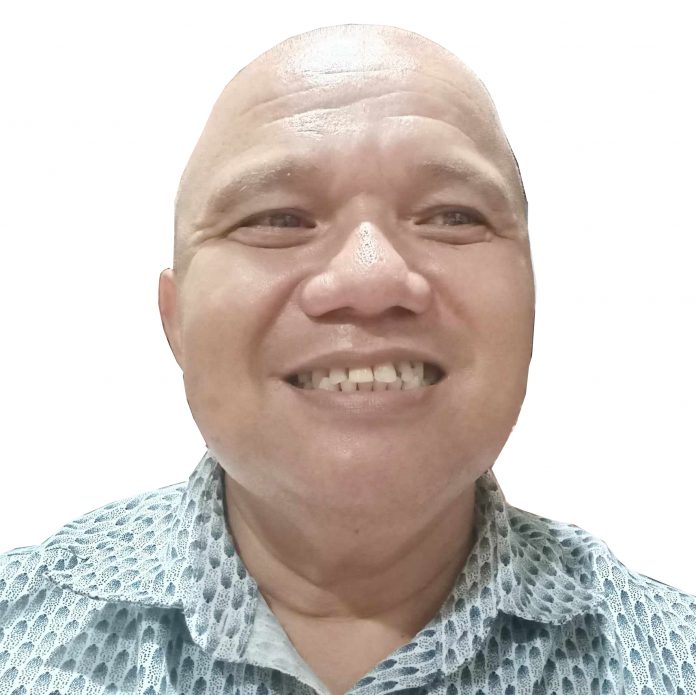
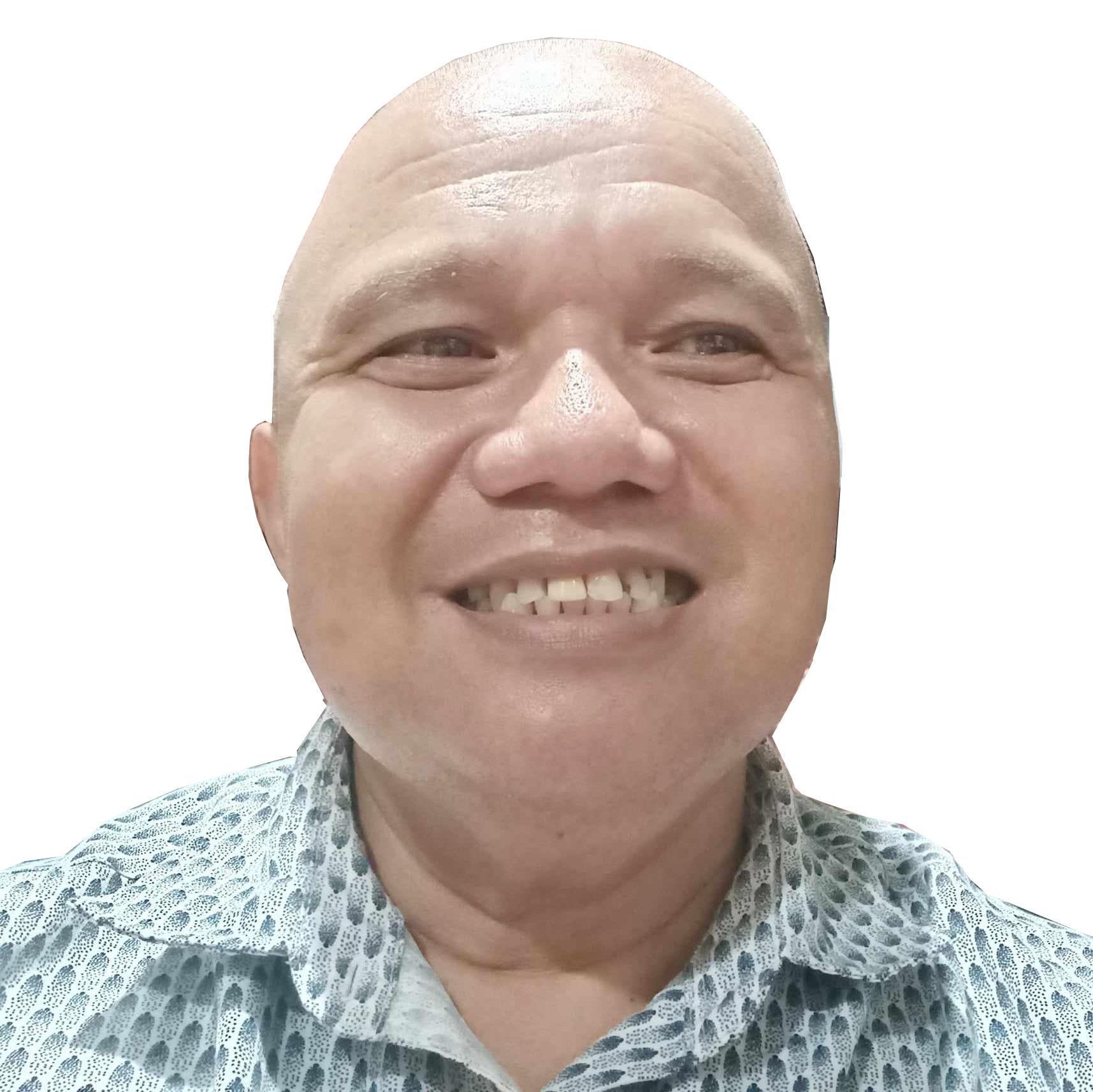
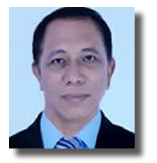
DOMS PAGLIAWAN

Before the last presidential election, Sarah Duterte, the daughter of former President Rodrigo Duterte, was the leading presidential contender next to her father’s regime. She was leading far ahead in the surveys. She could have potentially become the country’s next leader, as her father could see it, but she chose to ignore him in her political decisions and partnered instead with the present chief executive, Ferdinand “Bongbong” Marcos Jr. (BBM) as the latter’s running mate, thus creating a superior tandem.

It turned out that her decision not to challenge BBM was a missed opportunity that seems to hinder her present and future presidential ambitions, ultimately affecting her chances. Her proximity to power, as the daughter of the controversial yet popular President Rodrigo Duterte, granted her significant political influence and a loyal following. Her tenure as Mayor of Davao City demonstrated her capacity to govern effectively and maintain public support. With her reputation and solid track record, she possessed the necessary foundation to launch a formidable presidential campaign.

Although BBM is the son of the late President Ferdinand Marcos and represents a political dynasty with deep historical clout in the country, his family’s controversial rule is remembered for corruption, human rights abuses, and economic turmoil. Despite this, BBM has successfully endeavored to rebrand its image and appeal to younger voters. By challenging BBM, Sarah Duterte could have capitalized on the public’s distrust of the Marcos name and positioned herself as a viable alternative with a cleaner political background.
But she refused, thus missing the opportunity to present a progressive, alternative vision for the country. While the Duterte administration was known for its hardline policies, Sarah Duterte had the potential to distance herself from her father’s controversial practices and articulate a more inclusive and forward-thinking platform. In doing so, she could have attracted a wider range of voters seeking genuine change and reform.

In fact, challenging BBM would have allowed her to forge alliances with other opposition candidates or established parties aiming for regime change. By refusing to contest against BBM, Duterte may have inadvertently isolated herself, limiting cross-party collaboration and missing the chance to pool resources, expertise, and broader support to strengthen her campaign. But then again, it didn’t happen, to her political disadvantage.

Launching a presidential campaign is not merely a matter of personal popularity. Timing and momentum play a crucial role in political success. By failing to challenge BBM, Sarah may have missed her chance at a political environment wherein her message could resonate effectively. Waiting for a future election cycle might have resulted in a different landscape, potentially less favorable for her prospects. Whatever chances she has had at capturing the highest office in the land must have now diminished.

She did possess the necessary qualities, political clout, and public support to mount a credible presidential campaign, but her decision not to confront Ferdinand “Bongbong” Marcos Jr. ultimately hindered her aspirations. This missed chance emphasizes the importance of calculated political choices that can significantly impact a candidate’s electoral prospects. Despite this setback, though, her political journey is far from over, leaving room for future opportunities to arise and shape the Philippine political landscape in unforeseen ways.

Never over-react when evil comes

0
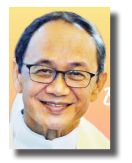
FR. ROY CIMAGALA
FR. ROY CIMAGALA

THE simple reason is that by over-reacting, evil can get worse and can have a greater chance to have a stronger hold on us. We should stay calm and focus our attention on who can best handle any form of evil. And that can only be God.

We are somehow reminded of this very practical indication in that Letter of St. James where he says: “Count it all joy, when you shall fall into diverse temptations, knowing that the trying of your faith worketh patience. And patience hath a perfect work; that you may be perfect and entire, failing in nothing.” (1,2-4)

What wisdom this piece of advice has! It is truly divinely inspired and should be made a principle to follow in our life where we are going to encounter all sorts of evil and to contend with our own limitations and the supernatural goal we are meant to pursue.
We should always remember that evil cannot exist by itself. It has to refer itself to something that is good which it denies, distorts, corrupts, etc. And if we are smart enough, we should not worry too much about all the evils we can encounter in our life. As long as we know how to refer them to the good and the truth that they stand on, we would know how to deal with these evils properly.

As to the many limitations we always have, given the challenges of our life, we have to be ready for them and know not only how to deal with them but also how to derive something good from them. In these instances of the hard predicaments, for example, when we seem to be at a loss as to what to do, we should just see at what God does, after we have done all things possible to solve our problems.

We need to trust in God’s providence and mercy. We have to learn to live a spirit of abandonment in the hands of God. Yes, if we have faith in God, in his wisdom and mercy, in his unfailing love for us, we know that everything will always work out for the good. If we are with God, we can always dominate whatever suffering can come our way in the same manner that Christ absorbed all his passion and death on the cross.

Let’s always remember that God, in his ineffable ways, can also talk to us through these crosses. In fact, he can convey precious messages and lessons through them. It would be good that we have a theological attitude toward them, and be wary of our tendency to react to them in a purely human way, based only on our senses and feelings and on worldly trends.

In all our affairs and situations in life, we should always go to God to ask for his help and guidance, and to trust his ways and his providence, even if the outcome of our prayers and petitions appears unanswered, if not, contradicted.

This should be the attitude to have. It’s an attitude that can only indicate our unconditional faith and love for God who is always in control of things, and at the same time can also leave us in peace and joy even at the worst of the possibilities.

We have to follow the example of the many characters in the gospel who, feeling helpless in the many predicaments they were in, earnestly rushed to Christ for some succor. They went to him unafraid and unashamed and they got what they wanted.

Would a more favorable Philippines come from the conflicts between Congress and the Senate?

0
CLEMELLE L. MONTALLANA,DM, CESE ASSOCIATE PROFESSOR III
CLEMELLE L. MONTALLANA,DM, CESE
ASSOCIATE PROFESSOR III

Would a more favorable Philippine’s result from the conflicts in Congress and the Senate? I am sure, that it will not! Thus, we pray and hope for reconciliation!

The conflict of the two houses had never been pronounced not as it is this late. We are seeing a volatile back and forth between the two, perhaps this is democracy at its best. Disagreements and voicing of opinions may somehow create a better democracy. As others may say, it is the beauty of democracy.

Increasingly strained relations between the two houses of Congress and the Senate can be interpreted as either a sign of democracy or a threat to it, depending on how democracy is defined and assessed.

A democratic system of governance is one that guarantees the involvement, representation, and accountability of the people. As a result of the checks and balances between the many organs of government and the diversity of views and interests among the populace, the phenomenon of deteriorating ties between the two houses of Congress and the Senate might be viewed as a hallmark of democracy. Legislators’ rivalry and conflicts may also promote public discussion and knowledge, as well as civic involvement and supervision.

In the United States, the main precursor of our democratic systems is polarized by the Republican and Democratic parties that dominates their Congress. The United Kingdom has their House of Lords and House of commons at time warring and in conflict.
One time, this writer was buying rice at the V and G Public Market when I overheard two ladies talking.

Lady 1: Mahal na gud an bugas, tag 61 per kilo na an tag 55 han una? (The Price of Rice has gone up this time, from the usual 55 pesos per kilo now its 61).

Lady 2: Amo sige la man pag inaway an aton mga kamagaraman! (True, it maybe because our legislators are busy fighting each other, they may have forgotten their duties!)

Without putting a blame on anyone, this writer hopes that the conflict can be resolved and mended, for a better governance and a better economy. The purported gains in numbers shown in the news that reports the percentage of growth the economy has, is not felt on the ground, the rice is endlessly getting out of reach for the constant increase of its price and the gasoline are also rising in the per liter buying prices.

Ultimately, the phenomena of worsening relations between the two houses of congress and senate are not a definitive mark of democracy, but rather a manifestation of the tensions and trade-offs that are inherent in any democratic system. How these phenomena affect the quality and prospects of democracy will depend on how the legislators and the people balance the competing values and goals of democracy, and how they resolve their differences and conflicts in a peaceful and constructive manner.

Would a more favorable Philippine’s result from the conflicts in Congress and the Senate? I am sure, that it will not! Thus, we pray and hope for reconciliation!

Killer holes

0
AL ELLEMA
AL ELLEMA

The tragic accident that reportedly killed a tricycle driver and the passenger on the back-rider’s seat and caused serious injuries to the passengers inside the sidecar is too revolting to the public mind. The incident that was caught by a private closed-circuit television (cctv) immediately went viral on social media platforms.

It showed the slow moving tricycle going from the left lane just across the Bagolibas Elementary School in Barangay Bagolibas, Santa Rita, Samar, to its proper right lane to the direction from Tacloban City to Catbalogan City after evading a pothole on the right lane that could cause damage to the vehicle and shake the persons on board.

It was at that instant that a fast moving luxury pick-up car flashed instantly on the opposite direction. The two vehicles were too close on such collision course that there was no clear chance for evasion. The collision was too strong that it threw the tricycle to the air as high as the canopy of the nearby house and store.

Truly, vehicles run with the danger of falling into deep cracks on our highways. The cracks pose real risks to both lives and properties. Traveling along the highways of Samar would give one a scare on many portions of the highway that are badly broken. The cracks are not properly marked with warning signs, sending vehicles to leap at high speed or halt in screeching manner as brakes are abruptly applied to avoid from falling in such holes.

Many motorists had certainly encountered these death traps that could cause vehicles turning turtle at an instant mistake of the driver. Passengers are surely cursing government for pushing them into the edge of road mishaps due to badly broken pavements that have no warning signs. Those who are unfamiliar with such road cracks are caught by surprise upon reaching the brink to perdition. If one is traveling at high speed, the risk of jumping into deep cracks or tumbling off the pavement if very high.

The situation is not beyond repair but government is simply not giving enough attention and priority to such problem. It is unfortunate that many repairs are being done on highway pavements that are seemingly still in good condition while dilapidated portions are being left in such bad condition.

What is lamentable is the absence of road signs that will forewarn motorists of the dangers they are about to pass. Some roadblocks are placed to prevent vehicles from going straight into such cracks but even the roadblocks are unpainted are hardly visible especially at night.

People could only wail every time the vehicle they are riding pass over such deep cracks. While many are complaining in murmurs, nothing is being raised to the attention of concerned agencies. But the problem is very glaring for government officials not to notice. It is really bothersome that government would only act when something bad happens. As long as motorists are able to evade the killer potholes and no accident happens, government officials would not lift a finger to repair such killer potholes.
comments to alellema@yahoo.com

U.S. to provide P70 million logistics support for disaster response in Mindanao

0

Manila-The United States government, through the U.S. Agency for International Development (USAID), is providing nearly P70 million ($1.25 million) in humanitarian aid to respond to the needs of communities affected by severe flooding and landslides in Mindanao.

This new funding will provide emergency food, shelter, water, sanitation, and essential hygiene items to support disaster-affected communities in Davao de Oro, Davao del Norte, and Davao City in Mindanao. USAID will partner with Catholic Relief Services and Action Against Hunger to ensure this life-saving assistance reaches the most vulnerable groups, including single-parent households, persons with disabilities, pregnant and lactating women, the elderly, low-income families, and indigenous peoples.

In addition, and at the request of the Philippine government, the U.S. Department of Defense, through the III Marine Expeditionary Force (III MEF), provided two C-130s to assist the Philippines Department of Social Welfare and Development (DSWD), the Philippines Office of Civil Defense, and USAID in delivering 15,000 DSWD food packs to affected families.

Last week, USAID partnered with the Philippines Department of Human Settlements and Urban Development and the International Organization for Migration to provide emergency shelter for more than 5,000 affected persons. USAID also supported the World Food Programme to transport DSWD food packs to 65,000 families.

The United States government issued a “Declaration of Humanitarian Need” on February 8 that will facilitate support for the Philippine government’s response efforts in Mindanao.
“We are proud to partner with the Philippine government to support the immediate needs of Mindanaoans in the areas hardest hit by the flooding and landslides,” said USAID Mission Director Ryan Washburn. “This support will help ensure that food and other life-saving supplies reach communities most in need.”

“Support to our Allies and partners, and their people in a time of need, is a non-negotiable,” said U.S. Marine Corps Lt. Gen. Roger Turner, the III MEF commanding general. “Working in direct coordination with USAID and the Government of the Philippines, we stand ready to support those who need urgent assistance.”

Between January 28 and February 2, extensive rainfall in Mindanao caused significant flooding and landslides, impacting nearly 1.2 million people. An estimated 795,000 people were displaced with more than 97,600 people sheltering in 380 evacuation centers across Mindanao.

USAID works year-round to help communities in the Philippines prepare for and be more resilient to natural disasters. The United States will continue to partner with the Philippine government to respond to natural disasters and support the people of the Philippines in their recovery efforts. (PR)

Recent Posts

DALMACIO C. GRAFIL
PUBLISHER

ALMA GRAFIL
EDITOR-IN-CHIEF

ROMEO CEBREROS
OFFICE IN-CHARGE

OFFICE
BRGY. SONGCO, BORONGAN CITY

CONTACT NUMBERS
(055) 261 – 3319 | 0955 251 1533 | 0917 771 0320 | 0915 897 7439 | 0921 511 0010

DALMACIO C. GRAFIL
PUBLISHER

RICKY J. BAUTISTA
EDITOR

ALMA GRAFIL
BUS. MANAGER

OFFICE
RIZAL AVENUE, CATBALOGAN
(INFRONT OF FIRE DEPARTMENT, NEAR CITY HALL)

CONTACT NUMBERS
0917 771 0320 | 0915 897 7439 | 0921 511 0010

EMAIL
lsdaily2@yahoo.com

WEBSITE
www.issuu.com/samarweeklyexpress