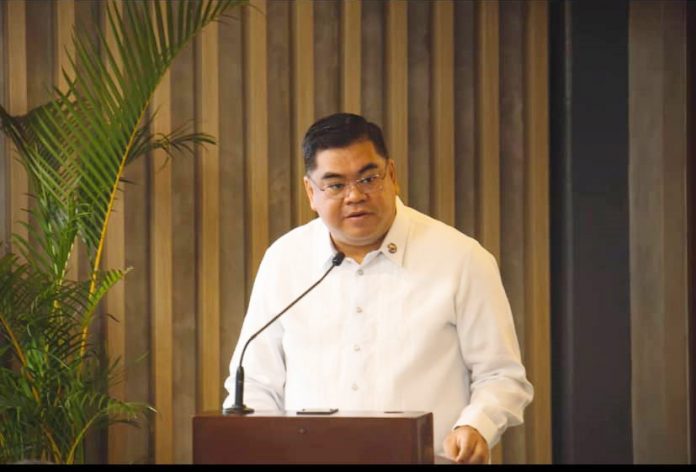
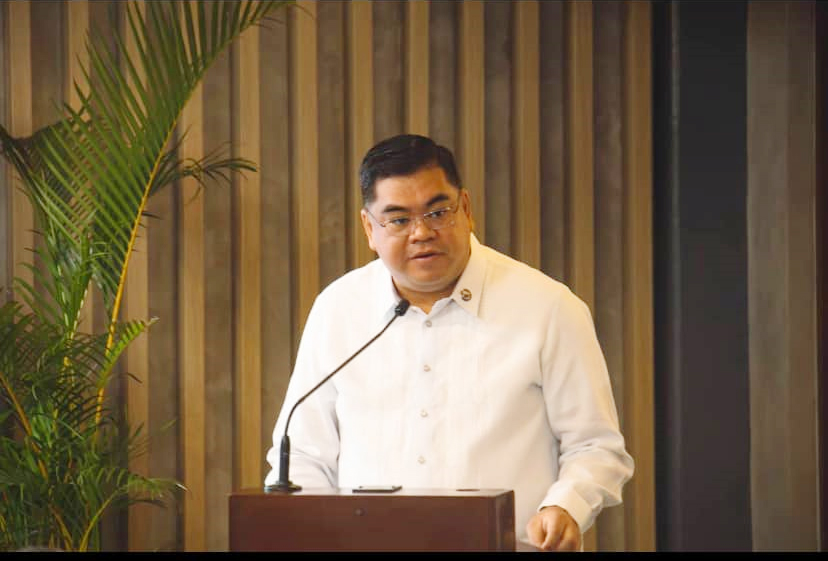
QUIBOLOY ISSUE. Rep. Jude Acidre of the Tingog party-list group commended the leadership of the Philippine National Police how they handled the eventual surrender and arrest of pastor Apollo Quiboloy.
QUIBOLOY ISSUE. Rep. Jude Acidre of the Tingog party-list group commended the leadership of the Philippine National Police how they handled the eventual surrender and arrest of pastor Apollo Quiboloy.
TACLOBAN CITY – Tingog party-list Representative Jude Acidre commended the Philippine National Police(PNP) for its relentless dedication, particularly during the two-week pursuit against controversial pastor, Apollo Quiboloy of the Kingdom of Jesus Christ’s compound in Davao City.
He emphasized that this decisive action has paved the way for justice to prevail for the many victims who have long sought vindication.
“This development is a testament to the PNP’s commitment to protecting the vulnerable and dismantling networks of exploitation,” Acidre said in a statement.
“It sends a powerful message: justice cannot be silenced, and no fortress, however fortified, can shield the guilty from the truth.”
Quiboloy, a self-proclaimed “Son of God,” faces serious charges, including human trafficking and money laundering, both in the Philippines and the United States.
According to Acidre, the religious leader, who is also faces string of criminal cases at the United States, can no longer hide behind his titles, wealth, or the loyalty of his followers.
“The law has found its way, and now Quiboloy must answer for his actions,” Acidre added. “He cannot continue to evade justice, as he has done for months.”
Acidre urged Quiboloy, his legal team, and his supporters to confront the charges against him with respect for the rule of law and due process.
“In a true democracy, no one is above the law—not even a self-declared ‘Son of God,’” he said.
He further stressed that only through accountability can the nation heal and rebuild, ensuring that such acts of exploitation and abuse are never repeated.
“This case highlights the importance of upholding human rights and dismantling the structures that enable such heinous actions to persist in our society,” Acidre said.
He reiterated his support for the victims and commended the authorities for their continued efforts to secure justice on their behalf. (LIZBETH ANN A. ABELLA)
CATARMAN, Northern Samar– “Alliances are important, and I fully support the International Arbitral Court. I am praying for a peaceful resolution,” said Rep. Paul Daza during a press conference held on August 27, 2024, at his congressional district office, this town.
Daza,(1st district) made the statement in response to a question regarding his stance on the West Philippine Sea (WPS) issue, emphasizing that while the matter falls under the jurisdiction of the executive branch, he remains hopeful for a favorable outcome.
“I am optimistic that the ongoing dialogues between the involved nations will result in peaceful solutions without conflict,” Daza stressed.
In addition to discussing foreign affairs, Daza highlighted several recent legislative accomplishments, including the passage of House Bill No. 10699, also known as the “Sana All May Internet Act,” which was passed with 203 affirmative votes.
He also mentioned ongoing budget hearings for the implementation of the Free Public Wi-Fi Law and the Zero Spectrum Bill.
Daza further shared his plans for a new maritime school at the satellite campus in Lavezares town, aimed at providing educational opportunities for retired seafarers in the province.
He emphasized that private colleges offering similar programs would not be negatively impacted by this initiative.
Meanwhile, Daza directed his congressional district office staff, led by former senior board member Jojo Layon, to facilitate the turnover and inauguration of the “One-Stop Shop” district offices for the Commission on Higher Education(CHEd), Philippine Regulation Commission(PRC),National Bureau of Investigation(NBI), and the Department of Foreign Affairs (DFA) before the year ends.
The newly-finished building, located at the University of Eastern Philippines (UEP), was completed through Daza’s initiative. (PETER D. PAREDES)
RECOGNITION. The people of Calbayog City are set to celebrate their 332nd fiesta on Sunday, Sept. 8, with a series of activities in honor of their patron saint, the Nativity of the Blessed Virgin Mary. Despite the looming threat of Typhoon ’Enteng’, Vice Mayor Rex Daguman (in photo), alongside Mayor Raymund Uy, is leading the Calbayognons in this much-anticipated celebration.
(OFFICE OF VICE MAYOR REX DAGUMAN)
Despite of threat of ‘Enteng’
RECOGNITION. The people of Calbayog City are set to celebrate their 332nd fiesta on Sunday, Sept. 8, with a series of activities in honor of their patron saint, the Nativity of the Blessed Virgin Mary. Despite the looming threat of Typhoon ’Enteng’, Vice Mayor Rex Daguman (in photo), alongside Mayor Raymund Uy, is leading the Calbayognons in this much-anticipated celebration. (OFFICE OF VICE MAYOR REX DAGUMAN)
TACLOBAN CITY – Calbayog City is set to celebrate its 332nd annual fiesta this Sunday, September 8, in honor of its patroness, the Nativity of the Blessed Virgin Mary.
Despite the challenges brought by Typhoon ‘Enteng’ earlier in the week, which caused heavy rains and flooding in parts of the region, the city’s weeklong celebration is pushing through as planned.
The festivities officially began on September 1, with adjustments made to ensure the safety of participants and spectators.
Originally scheduled outdoor events were relocated to more secure venues to maintain the excitement and energy of the fiesta.
Vice Mayor Rex Daguman praised the swift coordination among city government offices, ensuring the celebration’s success despite the inclement weather.
“Thanks to the teamwork and support of all our offices, we’ve been able to continue with the activities, ensuring that our residents and guests can still enjoy the fiesta safely,” said Daguman, who has played a key role in overseeing the planning and execution of this year’s events.
Since assuming the city’s second-highest office, Daguman has taken charge of organizing the fiesta, focusing on seamless coordination and execution of the festivities.
Daguman’s exemplary leadership as vice mayor has earned him numerous accolades.
Among these was the prestigious Honorary Vice Mayor Award, conferred by Sustainability Standards Inc. at the Annual Nation Builders and MOSLIVE Awards held on May 3 this year.
In recognition of his continued dedication, the vice mayor is also set to receive two more distinguished honors on September 8, coinciding with the city’s fiesta celebration: the Most Trusted and Inspiring Public Servant Award and the Most Remarkable and Prudent Public Servant Award, both presented by the Pillars of Public Service Awards.
These accolades highlight Daguman’s unwavering commitment to public service and his impact on the community.
Faith and gratitude amidst challenges
Mayor Raymund Uy, for his part, emphasized the spiritual essence of the fiesta, encouraging residents to express their gratitude for the blessings they’ve received through the intercession of the Blessed Virgin Mary.
“No matter the challenges we face, nothing will stop us from honoring our patroness and thanking the Lord for keeping our city safe from calamities and disasters,” Uy remarked.
He noted that the city’s resilience and faith have been key in overcoming obstacles and ensuring the success of their annual celebration.
Exciting lineup of events
The celebration kicked off on September 1 with the opening of the Hadang Festival, highlighted by a live concert featuring the popular band Lola Amour, known for their hit song “Raining in Manila.”
Preceding the festival, a Marian Exhibit opened on August 29 at the Centennial Pastoral Center, offering a spiritual prelude to the festivities.
The adrenaline-filled JIMBOY: Journey Into Motorcycle Excellence and Boosting Outstanding Yields event took place from August 31 to September 1, showcasing an impressive array of big bikes and customized motorcycles at the Calbayog Sports Center.
Sponsored by Samar 1st District Representative Stephen James Tan, the event attracted motorcycle enthusiasts from around the region.
September 1 also saw the first-ever Calbayog City Marathon, as well as the REKURIDA, a traditional parade that adds a vibrant splash to the celebration.
Meanwhile, art lovers flocked to the Ginikanan: Ryan Comilang Sculpture and Installation Art Exhibit at Hamdumanan, which will run until September 30.
Weeklong festivities continue
On September 2, the city hosted a job fair at the Calbayog City Convention Center, providing employment opportunities for locals.
The day’s events also included Uyag Hinahimat’an at Nijaga Park, the launch of the book Pinili at the CACO Theater, and the Baylesan Hiphop Competition featuring guest performer Bugoy Cariño.
Creative competitions dominated the fiesta’s third day, with the 6th Ombok Children’s Art Contest, the Raul Isidro Abstract Painting Contest, and the Lingaw-awit: Waray-waray Songwriting Competition.
A key highlight came on September 4 with the Search for Ms. Hadang Festival Queen 2024, graced by Miss Universe Philippines 2024 Chelsea Manalo as a special guest and judge.
Barbara Sarcida took home the crown, besting 15 other candidates. Sarcida also swept several special awards, including Best in Festival Costume, Miss Eloquence, Miss Allure, and Miss Perfect Smile.
Other winners included Jessica Gaspang as Miss Hadang Tourism, Samantha Kaye Gementiza as Miss Hadang Heritage, Venice Claire M. Merencillo as 1st runner-up, and Jalynna Rich Z. Padilla as 2nd runner-up.
More events leading to Fiesta Day
September 5 featured the launch of a two-day Health Caravan, Hermana Night, and Rakrunggiya: Battle of the Bands. On September 6, the Hadang Ritual Street Dancing Competition took center stage at the Calbayog Sports Center, followed by concerts from The Juans, and celebrity guests Ronnie Alonte and Loisa Andalio, thrilling audiences at the Calbayog Coastal Road.
As the fiesta enters its final stretch, the city will celebrate the vesper day on September 7 with a civic and military parade, a float parade, and a celebrity basketball competition.
The night will culminate with Barangay Night and a Comedy Night featuring performances by Boobay, Pepita, and the Cebu Closet Dolls, promising an evening of laughter and entertainment.
Despite the earlier setbacks caused by Enteng, Calbayog City has shown resilience and determination, ensuring its 332nd fiesta will be a memorable celebration of faith, culture, and community spirit.
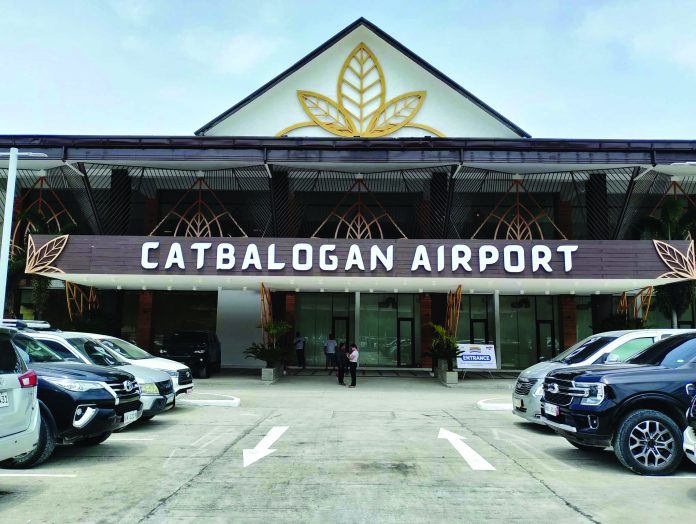
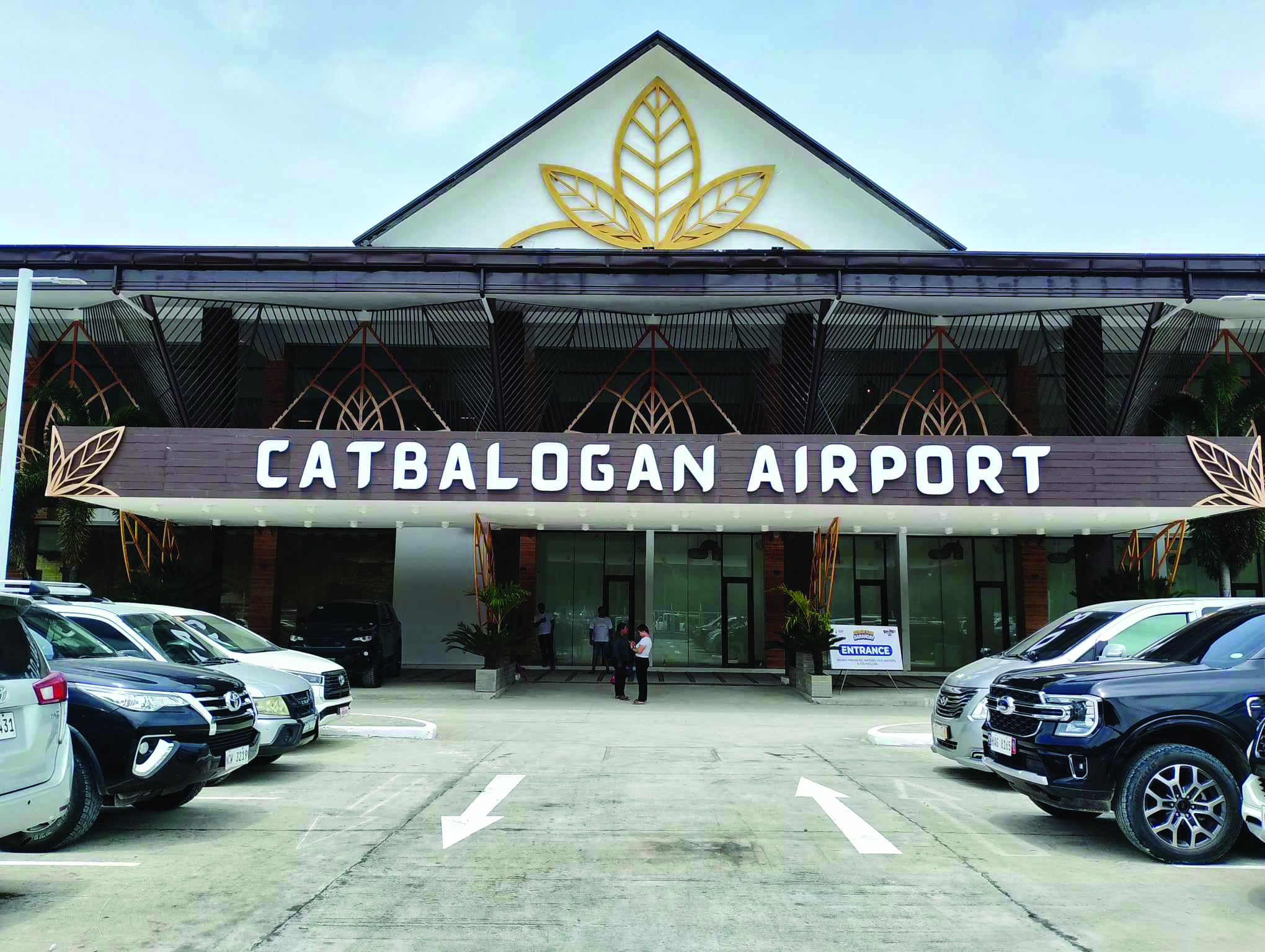
ZERO BUDGET: The future of Catbalogan Airport is at risk as the Department of Budget and Management has not allocated funds for the next fiscal year, a situation lamented by Samar Rep. Michael Reynolds Tan. (JOEY A. GABIETA)
3 other airports get no budget
ZERO BUDGET: The future of Catbalogan Airport is at risk as the Department of Budget and Management has not allocated funds for the next fiscal year, a situation lamented by Samar Rep. Michael Reynolds Tan. (JOEY A. GABIETA)
TACLOBAN CITY – Samar Rep. Michael Reynolds Tan (2nd District) expressed frustration over the lack of funding for the continued development of Catbalogan Airport in the 2025 budget.
During a budget hearing with the Department of Transportation (DOTr) on August 30, Tan emphasized that leaving Catbalogan Airport underutilized would waste the over P2.6 billion already invested in its construction and development.
The airport, located on Buri Island in Catbalogan City, the Samar provincial capital, has faced delays since construction began in 1995 due to various issues, including funding shortages.
Tan stated that at least P750 million is needed to make Catbalogan City Airport fully operational. This amount would cover the construction of a security fence, an asphalt overlay, and the removal of a nearby hill that poses a risk to aircraft.
“I was disappointed when I saw the National Expenditure Program because, for 2025, there was no funding allocated for the continued work at Catbalogan City Airport,” Tan remarked.
He questioned the DOTr’s plans if no additional funds are provided, warning that the airport could deteriorate, leading to even more significant expenses to prevent it from falling into disrepair.
DOTr Secretary Jaime Bautista revealed that the department had submitted a proposal for P750 million to continue work on Catbalogan Airport in 2025, but the Department of Budget and Management (DBM) rejected this request, along with similar proposals for other airports in Eastern Visayas.
The airports whose budgets were rejected by the DBM include Ormoc City (P700 million), Catarman (P350 million), and Calbayog City (P374 million).
Currently, Calbayog City Airport is the only airport in Samar province serving commercial flights, connecting Calbayog with Manila.
The DOTr assured Tan that they would continue to work with local officials, particularly the governor’s office, to address the ongoing work at Catbalogan Airport, which features a 1.59-kilometer runway.
In 2018, Catbalogan Airport briefly served the Catbalogan-Cebu route with Air Juan as the operating airline. However, the service was discontinued due to a lack of passengers and the onset of the pandemic.
TACLOBAN CITY – Tingog party-list, under the leadership of Rep. Yedda Marie Romualdez and Rep. Jude Acidre, in partnership with House Speaker Martin Romualdez, continues its mission to bring government services closer to Filipinos.
Recently, they concluded Ayuda sa Kapos Ang Kita (AKAP) programs in Quezon City and San Juan City, distributing aid to 2,000 beneficiaries and launching two new Tingog Centers in these areas.
Last August 29, the Tingog team distributed P3,000 in financial assistance to 1,000 beneficiaries in Project 4, Quezon City.
“Tingog remains committed to helping Filipinos, especially the poorest of the poor,” said Rep. Acidre. “We are continually expanding our reach through our centers, which now number 136 nationwide. Our goal is to establish 200 Tingog Centers across the country by the end of this year.”
The following day, August 30, Tingog visited San Juan City to distribute P3,000 in AKAP funds to another 1,000 beneficiaries.
In addition, a new Tingog Center was unveiled in the area to enhance access to Tingog services for local residents.
The newly opened Tingog Centers, located on the 2nd Floor of the Barangay Marilag Multipurpose Building in Project 4, Quezon City, and on F. Sevilla Street, Barangay Pedro Cruz, San Juan City, aim to serve as community hubs providing accessible support and resources to residents.
“Tingog Centers are designed to ensure that government programs and initiatives reach the grassroots level effectively, improving the quality of life and promoting inclusive development,” Rep. Acidre concluded. (LIZBETH ANN A. ABELLA)
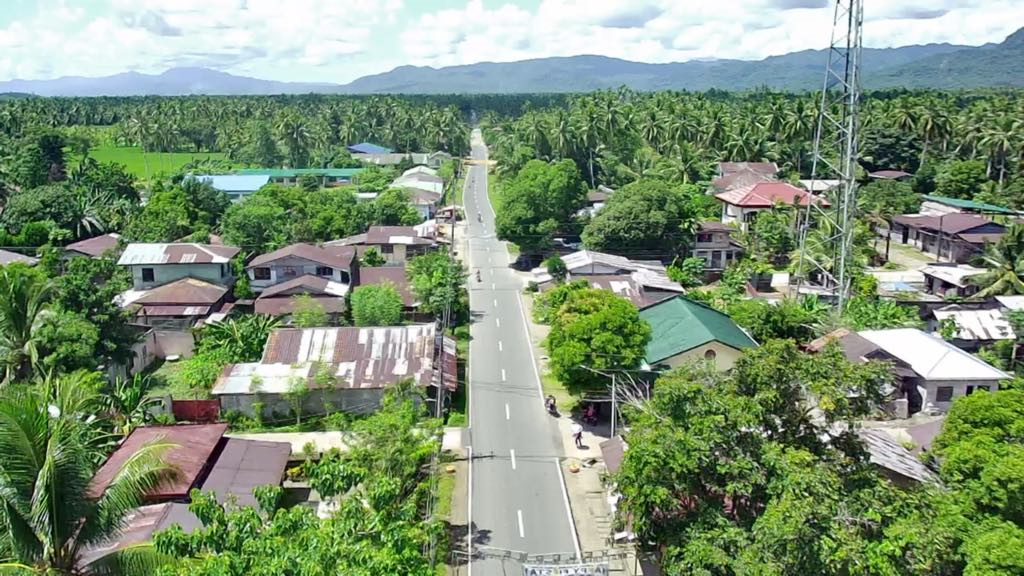
The Leyte 2nd District Engineering Office has completed a preventive maintenance work covering the La 1.053 kms. Paz-Javier-Bito Road network. The department allocated P24.46 million for this project. (L2DEO)
The Leyte 2nd District Engineering Office has completed a preventive maintenance work covering the La 1.053 kms. Paz-Javier-Bito Road network. The department allocated P24.46 million for this project. (L2DEO)
TACLOBAN CITY – Traversing the La Paz-Javier-Bito Road network in Barangay Palale I, MacArthur, Leyte is now safer and more accessible, thanks to the recently completed preventive maintenance project by the Department of Public Works and Highways (DPWH) Leyte 2nd District Engineering Office (L2DEO).
Funded under the 2024 DPWH Asset Preservation Program for Preventive Maintenance, the project allocated P24.46 million for the 1.053-kilometer asphalt overlay, which includes reflectorized thermoplastic markings. This enhancement not only improves the road surface but also ensures more convenient travel for commuters.
District Engineer Leo Edward Oppura emphasized that this asphalt overlay project not only enhances the durability of the road but also ensures safer driving conditions for everyone, facilitating better access to markets and basic services.
In an interview, Ronilo Mende, a motorcycle driver from Palale I, MacArthur, he expressed his gratitude to the DPWH for providing a paved road with an asphalt overlay.
“Our vehicles are no longer constantly damaged. Previously, we had to endure unpaved roads. The potholes and uneven surfaces were a constant source of complaints from passengers,” Mende said.
“Now that these roads have been fixed, commuters are grateful for the convenient travel brought by the newly improved road,” he added.
This vital infrastructure development is expected to significantly reduce vehicle wear and tear, providing a smoother travel experience for both commuters and transport services.
The La Paz-Javier-Bito Road section was completed on June 19 of this year.