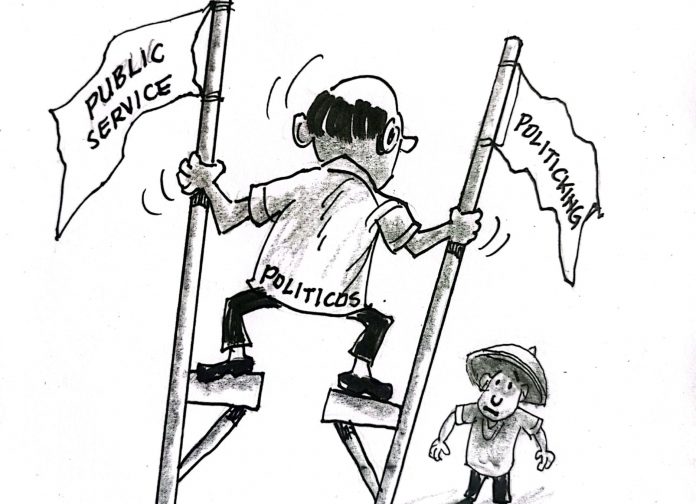
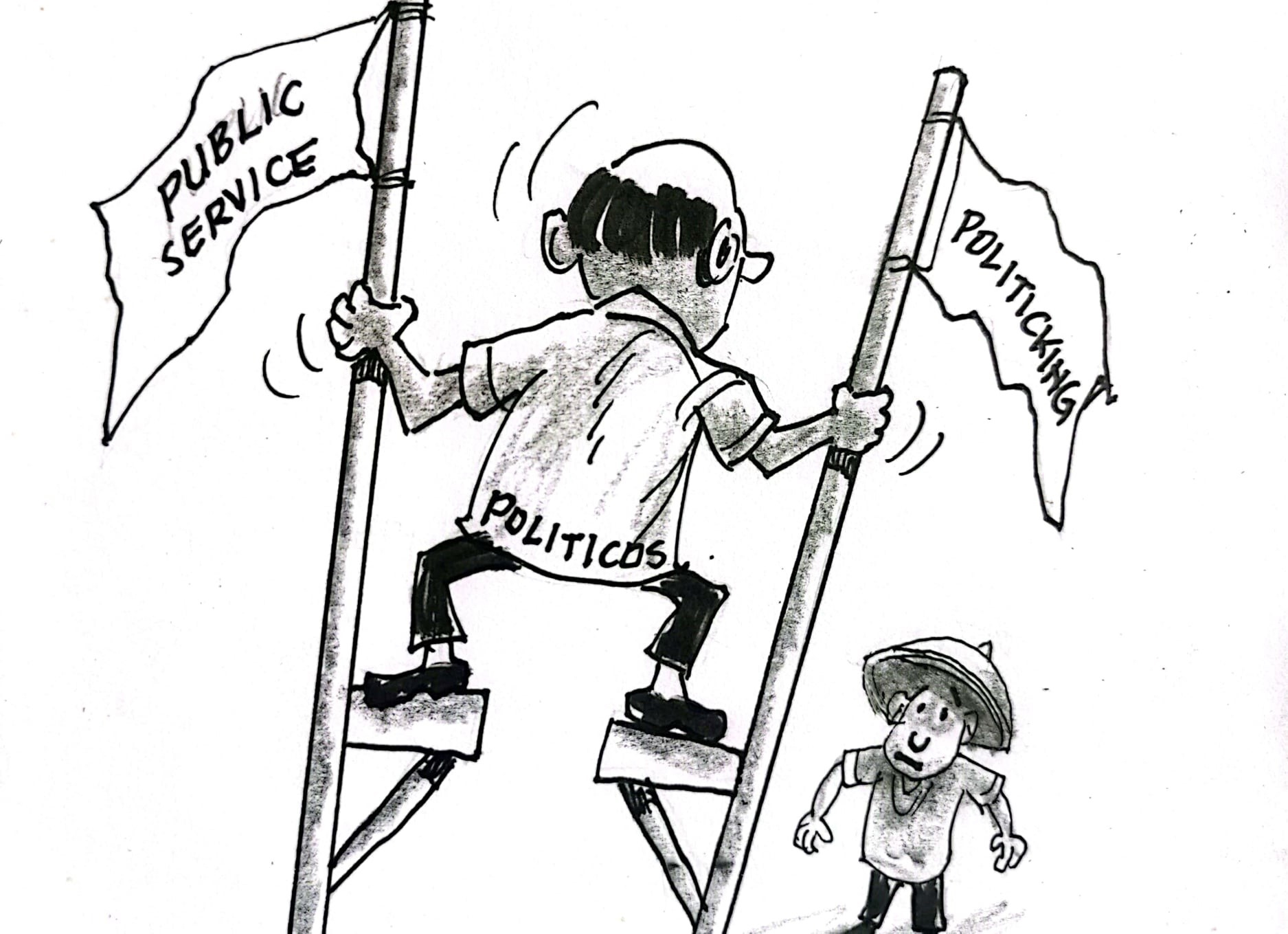
The ugly practice of early campaigning had started subtly with tarpaulin signs bearing the faces of politicians. To the voters, these are clear signs of manifesting the intent of these politicians to be in the public consciousness until election time. These signages are displayed in government projects that are funded with taxpayers’ money. People see the faces and names of politicians with the claim that such project was made through the efforts of the politician which are larger than the details of the project. The signages greet the public daily until the such is destroyed by wear and tear.
Aside from such project signages, there are a lot of tarpaulins all over the communities where celebrations are held such as fiestas and graduations. The aim is the same, to catch public attention on the clear intent of these politicians. The faces of these politicians are similarly larger than the greetings and are displayed long before the fiesta or graduation. Such signages will remain displayed until the same are destroyed by wear and tear which usually last too long after the fiesta or graduation.
The practice is widespread and are well funded as these politicians would have their faces displayed way beyond their political territories. Such signages are clear announcement of the politicians’ intention to run for another elective office apart from the locality where the politician serves. The strategy had somehow been effective as the same is not deemed a violation under existing laws. The election commission treats it not as early campaign for the politician is not deemed a candidate for any elective office until one files the required certificate of candidacy.
In a way, this practice mayhap be deemed as getting at par with incumbent politicians who are exposed on mainstream media and are always in the news. Current issues that are the subject of investigations in aid of legislation are bringing these politicians into the public consciousness. They become the subject of public discussion as the public indulge in debates with their on takes on the issues. Public discussions are not just limited to small group discussions among peers in the community. It goes beyond the usual drinking sessions among friends due to the advance technology where almost everyone has access online.
It is this reality that pushed politicians to employ their own team of social media operators to engage in public discussions as well. The social media influencers are into a lucrative job as they get paid by those politicians who aim to get an edge in the public consciousness. The media influencers operate under the guise of spreading information, albeit untrue in most cases or even intentionally fake. There too are posts on social media bearing the faces of politicians in greetings.
comments to alellema@yahoo.com


Practical songwriting
Before the advent of musical notation, composers employed various personal codes and intuitive methods to document their musical ideas. They did not require formal symbols to capture the essence of their melodies, thus underscoring a vital truth: the soul of music transcends the constraints of written symbols.
In contemporary music, formal training and the ability to read and write music have become standard for many composers. This skill allows for precise communication and preservation of musical ideas. However, the capacity to produce moving and memorable songs is not confined to those who are formally educated. Numerous renowned composers, such as Jose Mari Chan and Rey Valera from the Philippines, started their musical journeys without the ability to read musical notes. Yet their works demonstrate that true musical genius can flourish outside conventional academic frameworks.
Practical songwriting, as I define it, involves creating music without relying on formal musical notation. This approach democratizes music composition, making it accessible to anyone with a creative spirit and a keen ear. It proves that the ability to craft compelling music does not depend on formal training but on the passion and creativity of the individual. By using intuitive methods, such as personal codes or modern technology, composers can capture their musical ideas effectively. The beauty of practical songwriting lies in its pure, unfiltered creativity and accessibility.
The process of practical songwriting often involves a more spontaneous and emotional connection to the music. Without the constraints of notation, composers can focus on the emotional resonance of their work. This often leads to music that feels raw and authentic, deeply connecting with listeners. The absence of formal structure allows for a direct expression of the composer’s emotions, resulting in a more genuine artistic creation.
Moreover, practical songwriting encourages innovation and experimentation. Freed from the conventions of musical theory, composers can explore unconventional harmonies, rhythms, and structures. This freedom encourages unique, groundbreaking music that challenges traditional norms while resonating with audiences. Many musical genres have evolved from such innovative approaches, highlighting the importance of creative freedom in music composition.
The success of practical songwriting underscores the diversity of human creativity. It illustrates that there are multiple paths to creating beautiful music, each valid and valuable. Whether a composer meticulously crafts a piece using notation or improvises a melody intuitively, the true measure of their work is its emotional and aesthetic impact on listeners. This diversity enriches the musical landscape, offering a vast array of sounds and styles for audiences to enjoy.
In my own experience as a composer with five original music albums, despite not being able to read a single note, I have found practical songwriting to be a powerful and fulfilling process. It has allowed me to connect deeply with my music and express my creativity without the limitations of formal training. My journey reinforces the idea that the heart of music lies in its ability to convey emotions and stories, rather than in the technicalities of its notation.
Indeed, practical songwriting celebrates the limitless potential of human creativity. It affirms that anyone, regardless of their formal training, can compose music that touches the heart and soul. With it, we honor the traditions of the past and pave the way for future innovations in music. This approach not only democratizes music composition but also enriches our collective musical heritage with diverse and heartfelt expressions. While many trained composers rely on musical notes to craft their pieces, there remains a special place for those who create beautiful melodies without these traditional tools. This form of composition, which I call practical songwriting, proves that musical creativity is universal and innate.