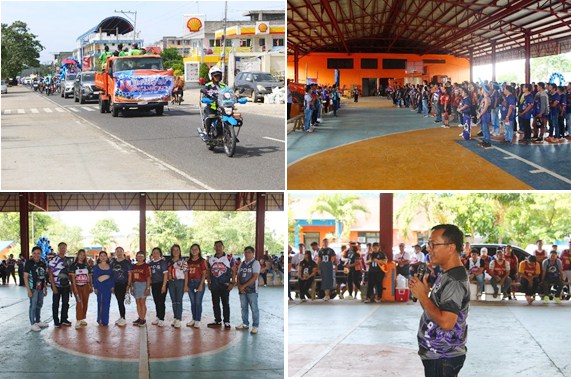
CATARMAN, Northern Samar-The Department of Public Works and Highways (DPWH) Northern Samar First District Engineering Office (NSFDEO) officially kicked off its Sportsfest 2024 with a vibrant and festive opening ceremony on September 27, 2024.
The event began with a lively motorcade that weaved through the streets of Catarman and culminated at the Area Equipment compound in Brgy. Macagtas, setting the stage for what promises to be an exciting week of games and camaraderie.
The opening ceremony was a hit, especially when each section proudly presented their respective muses a fun and nostalgic twist that brought smiles and laughter to everyone in attendance.
District Engineer Alvin A. Ignacio, in his opening message, reminded everyone about the goal of the sportsfest.
“More than winning or showing off of skills in various games, this event is about fostering teamwork, respect, and camaraderie,” he said, encouraging everyone to embrace the value of sportsmanship.
Engr. Vicente Galecio, President of the NSFDEO Employees Association, led the athletes in taking the oath of sportsmanship before the games officially began.
Right after the ceremony, the crowd eagerly moved to the courts as the basketball competitions kicked off, with teams ready to give their all.
Later in the week, employees will compete in other sports like volleyball, badminton, and table tennis.
The friendly rivalry is sure to heat up, but at the end of the day, it’s all about building relationships, relieving stress, and promoting a healthy balance between work and life.
With all the excitement and enthusiasm, the DPWH NSFDEO Sportsfest 2024 is shaping up to be a week filled with memorable moments, team spirit, and, most importantly, a celebration of the employees’ well-being. (PR)
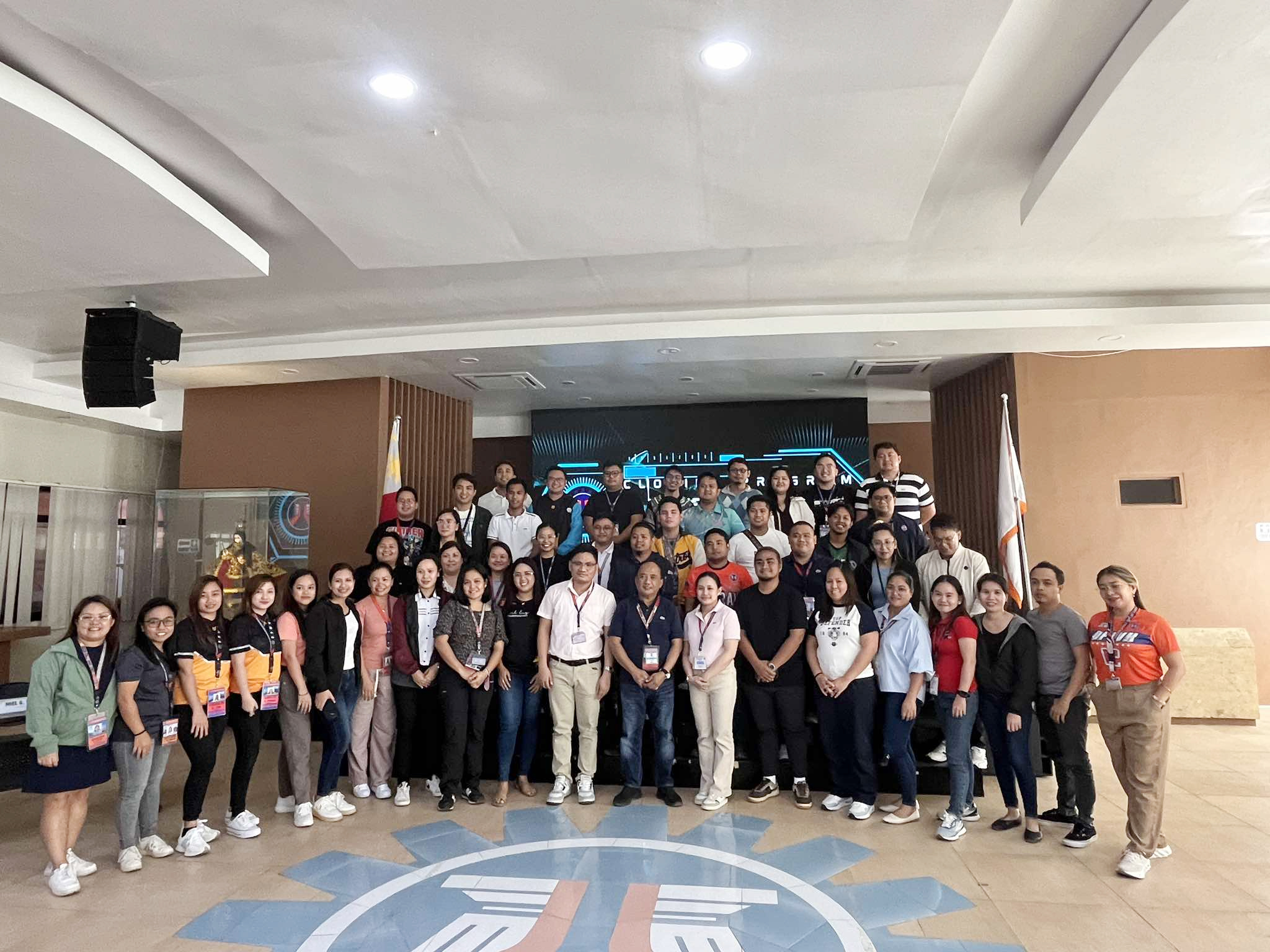
TACLOBAN CITY — Engineers Louiege Genotiva and Jesselle Ven Macasil from the Tacloban City District Engineering Office’s (TCDEO) Planning and Design section participate in a five-day training on the utilization of ArcGIS Pro, a Geographic Information System (GIS) application.
The training, held from September 23-27, 2024, took place at the Multi-Purpose Hall of the Department of Public Works and Highways (DPWH) Regional Office VIII in Baras, Palo. This was conducted in relation on updating of Convergence Program Regional Connectivity Map. Thus, it aims to equip participants with the essential knowledge and skills necessary to properly utilize ArcGis Pro.
ArcGIS Pro is a desktop application used for creating, analyzing, and sharing maps and geographic information. It helps users design detailed 2D and 3D maps, making it a powerful tool for visualizing spatial data. During the training, participants learned about basic GIS concepts, key features of ArcGIS Pro, how to create map layouts, and the basic commands and functions of the application. They also completed hands-on exercises to practice using the software in real-world scenarios.
The training culminated with a major exercise activity that involved creating and presenting map layouts, followed by critiques. A written examination was also administered to assess the participants’ grasp of the application’s tools and capabilities.
Engr. Macasil described the training as a valuable learning experience. “This training provided us with hands-on experience using ArcGIS Pro, which will be instrumental in enhancing our mapping and spatial analysis capabilities at TCDEO,” she said. (PUBLIC INFORMATION UNIT)
The photo shows the ongoing rehabilitation of Lope de Vega Road section
The photo shows the ongoing rehabilitation of Lope de Vega Road section
CATARMAN, N. Samar– The Department of Public Works and Highways Northern Samar First District Engineering Office is currently working on the improvement works along road sections of Poblacion, Lope De Vega providing a smoother and safer travel experience for motorists.
Prior to the road rehabilitation, the district Office received numerous complaints regarding the poor state of the road causing delays in transporting goods and services to neighboring provinces since Lope De Vega is one of essential thoroughfare in the district.
Frequent reports highlighted the need for urgent repairs to ensure road safety and improve traffic flow, especially during the rainy season.
District Engineer Alvin A. Ignacio said that improvement works along Poblacion, Lope De Vega were important since it is one of the major routes connecting the province of Northern Samar to other provinces in the region.
He further revealed that for several months, Lope De Vega was utilized as main passage road for heavy loaded vehicles due to the limited access along Daang Maharlika, caused by the damaged Palanit Bridge.
District Engineer Ignacio further explained that the heavy volume of vehicles contributed to the deterioration of the road, as it was originally designed as a secondary road and not intended to handle the same load as Daang Maharlika.
The improvements made on the Lope De Vega section are just some of the district’s on-going efforts to provide better mobility and accessibility for all motorists. (PR)
MAYORALY CANDIDATE. Kerwin Espinosa, a self-confessed drug lord, has filed his certificate of candidacy on Oct.1, for mayor of Albuera.
(PHOTO COURTESY)
MAYORALY CANDIDATE. Kerwin Espinosa, a self-confessed drug lord, has filed his certificate of candidacy on Oct.1, for mayor of Albuera. (PHOTO COURTESY)
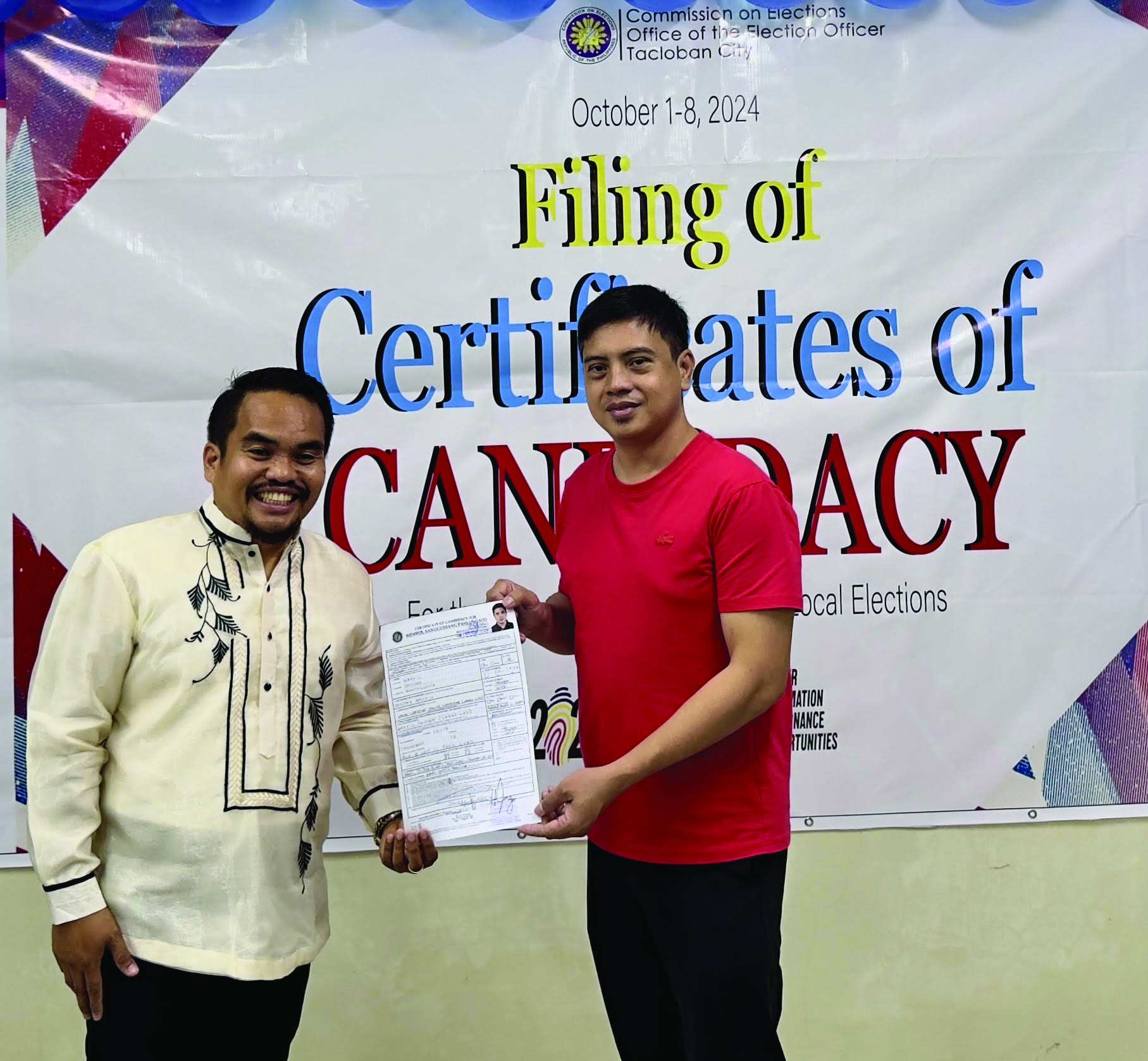
TACLOBAN CITY – Self-confessed drug lord Kerwin Espinosa filed his certificate of candidacy (CoC) for mayor of Albuera, Leyte, on Tuesday, October 1.
Espinosa is running under Bando Espinosa-Pundok Kausaban, a local party he established.
In his speech to supporters after submitting his CoC at the Commission on Elections (Comelec) office, the controversial mayoralty candidate vowed to uplift the lives of the people of Albuera.
“Join me in my campaign to improve the lives of every Albueranon. My administration will focus on the welfare of children, youth, and the elderly,” Espinosa stated.
Dressed in a blue campaign t-shirt, he compared himself to the cartoon superhero Batman, claiming he would help those who are aggrieved. “He fights against those who oppress the poor,” he added.
Outgoing mayor Sixto de la Victoria acknowledged Espinosa’s right to run for office in an earlier interview.
“That is his right unless there is a lawful order against him,” he said. De la Victoria is stepping down due to health reasons.
Among Espinosa’s potential rivals is board member Michael Rama, the brother-in-law of Leyte Rep. Richard Gomez.
Albuera, a third-class municipality with over 47,000 residents, has a poverty incidence of approximately 29%, according to 2021 data from the Philippine Statistics Authority.
The town gained notoriety as a central hub for illegal drug operations in Eastern Visayas, allegedly run by the Espinosa family.
Kerwin’s father, Rolando Espinosa Sr., was elected mayor of Albuera in the 2016 elections but was later arrested for his involvement in drug operations, as claimed by former president Rodrigo Duterte.
He was killed inside his cell at the Baybay City sub-provincial jail during a reported shootout with Criminal Investigation and Detection Group (CIDG) operatives on November 5, 2016.
Kerwin Espinosa was arrested in Dubai and detained on drug charges.
In June of this year, a regional trial court in Baybay City dismissed the drug case against him due to insufficient evidence.
However, he still faces money laundering charges in a Pasay court, along with pending cases for illegal drug possession and firearms in a Manila court.
Espinosa previously implicated former senator Leila de Lima in illegal drug activities but later recanted his statements. (JOEY A. GABIETA)
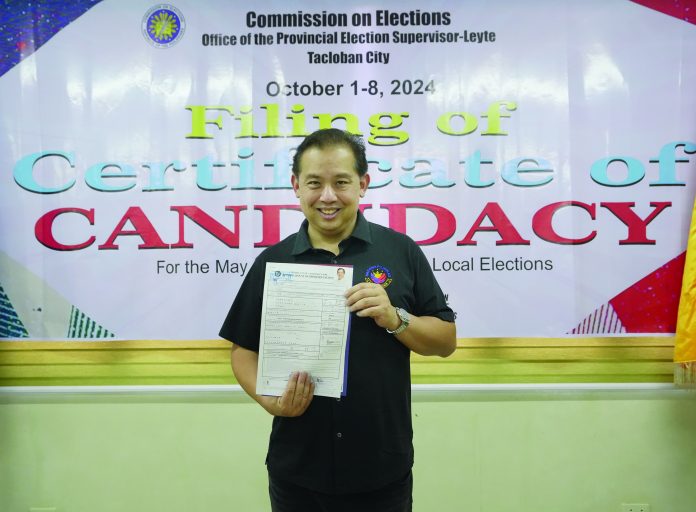
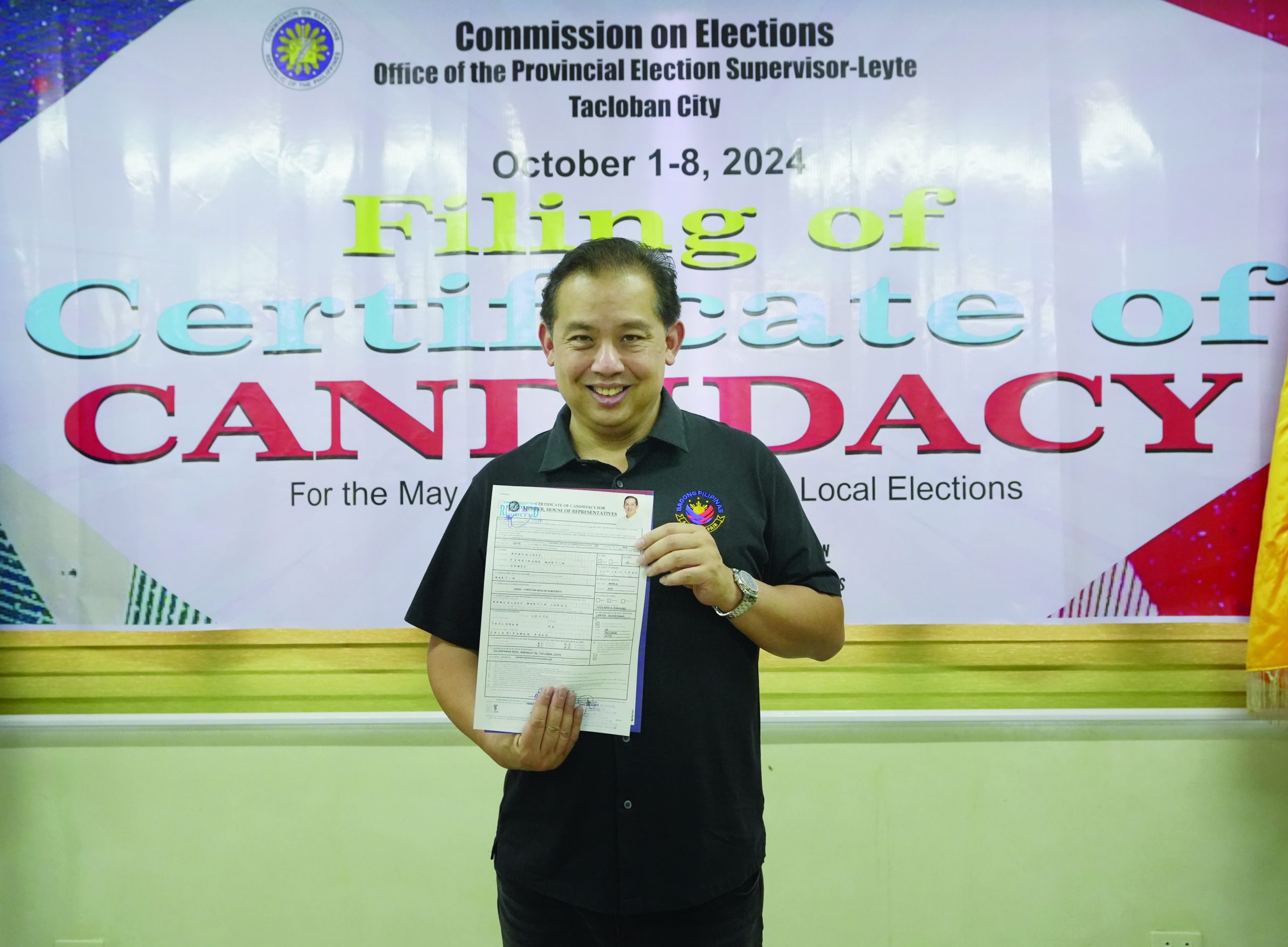
REELECTION BID. House Speaker Martin Romualdez formalized his bid for a third and final term as congressman of Leyte’s 1st congressional district by filing his certificate of candidacy (CoC) on Tuesday, Oct. 1, the first day of filing for the May 12, 2025, polls. He is the first major candidate to submit a CoC. (Photo courtesy)
Romualdez is seeking for his 3rd term
REELECTION BID. House Speaker Martin Romualdez formalized his bid for a third and final term as congressman of Leyte’s 1st congressional district by filing his certificate of candidacy (CoC) on Tuesday, Oct. 1, the first day of filing for the May 12, 2025, polls. He is the first major candidate to submit a CoC. (Photo courtesy)
TACLOBAN CITY – House Speaker Martin Romualdez officially filed his certificate of candidacy (CoC) on Tuesday, October 1, seeking his third and final term as the congressional representative of Leyte’s 1st district.
Romualdez submitted his CoC at the Leyte Provincial Office of the Commission on Elections (Comelec) around 11:15 am.
The document was accepted by Leyte elections supervisor, Atty. Maria Goretti Cañas.
At the city office of the Comelec, Romualdez’s son, Ferdinand Martin, Jr. has filed his own CoC, seeking for a seat at the Tacloban city council seat.
Aside from the younger Romualdez, among those who filed his CoC during the first day of submitting the certificates for those running in next year’s polls was Dandee Grafil.
Grafil is the husband of outgoing Councilor Aimee Grafil who is to serve out her nine-year in office until June 30, 2025.
COUNCIL BID. Dandee Grafil formalized his intention to run for a seat on the Tacloban City Council by submitting his certificate of candidacy on Tuesday, Oct. 1. He is the husband of incumbent Councilor Aimee Grafil.
In a rare show of unity, Romualdez was accompanied by Leyte Governor Carlos Jericho Petilla, Vice Gov. Leonardo Javier and his wife, Rep. Karen Javier(2nd district) and several mayors from the province, led by Palo Mayor Remedios Petilla, president of the League of Municipalities.
He was the first congressional candidate in Leyte to file his candidacy.
“I am grateful for the presence and support of our governor, vice governor, mayors, and Tacloban city officials,” Romualdez said in a brief ambush interview after filing his CoC.
However, the Speaker did not entertain further questions from local media.
Gov. Petilla, who is seeking his second term in next year’s elections, explained that he and the mayors accompanied Romualdez to show their “total support” for his reelection bid.
The governor emphasized Romualdez’s significant contributions to Leyte, particularly in infrastructure and other assistance.
“The Speaker is from Leyte, and he has done a lot for us. Infrastructure projects are happening left and right across all districts of the province. Why would we go against him?” Gov. Petilla remarked.
“Leyte has greatly benefited from Speaker Romualdez,” he added.
Mayor Remedios Petilla echoed the governor’s sentiment, saying Romualdez’s reelection is crucial for the continued progress of Leyte.
Palo, her municipality, is part of Leyte’s 1st District, which also includes Tacloban City and seven other towns.
“We support him because we want Leyte to continue improving,” the governor’s mother said.
The mayor expressed her gratitude to Romualdez for allocating P60 million for the expansion of Palo’s municipal building.
The Petillas and Romualdezes have long been considered political rivals in Leyte.
In 2007 elections, Remedios Petilla, then congresswoman of Leyte’s 1st district, withdrew her reelection bid to make way for Romualdez after former President Gloria Macapagal Arroyo intervened.
Before filing his own CoC, Speaker Romualdez accompanied his son, Ferdinand Martin Romualdez Jr., who filed his candidacy for a seat on the Tacloban City Council at 10:57 am.
The younger Romualdez is seeking public office for the first time. He also declined media interviews.
Additionally, Raymund Romualdez, son of Tacloban City Mayor Alfred Romualdez and cousin of both Speaker Romualdez and President Ferdinand Marcos Jr., submitted his CoC for vice mayor.
Raymund, who is now a barangay chairman, is seeking the post again after an unsuccessful bid in the 2022 elections.
The Comelec in the region started accepting CoCs from candidates running in next year’s elections on Tuesday, October 1.
All six incumbent governors and 12 congressional representatives in the region are expected to seek reelection in the upcoming May 12, 2025 elections.
Jenette Fariola Ruedas, the Comelec regional information officer, said that the CoC filing will run from October 1 to October 8.
“We are fully prepared to accept the CoCs for the May 25, 2025 elections,” Ruedas stated.
She emphasized that based on the guidelines issued by their central office, there will be no extensions to this filing period, which will also include Saturday, October 5, and Sunday, October 6, from 8 am to 5 pm.
Candidates are required to submit five notarized copies of their CoCs along with a documentary stamp.
Here in the region, up for grabs are six gubernatorial and vice-gubernatorial positions, 12 congressional seats, 56 provincial board seats, 143 city and municipal mayoral positions, 143 city and vice mayor posts, and 1,152 seats on city and municipal councils.
Ruedas also noted that candidates can only be accompanied by three companions when filing their CoCs at local Comelec offices. However, supporters will be allowed on the premises to maintain an orderly process.
“We want to ensure that everything proceeds smoothly,” she explained.
To further enhance safety and order during the eight-day CoC filing period, Comelec has coordinated with local police and personnel from the Traffic Operation Management Enforcement Control Office (TOMECO).
The Tacloban and Leyte Comelec offices, along with the regional office, are located in the same building at the Abucay terminal, which is equipped with a standby generator to handle any potential power outages.
Ruedas mentioned that several local offices have requested additional space due to constraints, with some temporarily relocating to a gymnasium. She emphasized that these changes are not related to any security threats.
In light of safety concerns, Ruedas urged any Comelec personnel facing threats in connection with the 2025 elections to report these incidents immediately to higher authorities.
“So far, none of our personnel has reported a threat, but we have reminded them to inform us promptly about any such cases,” she said.
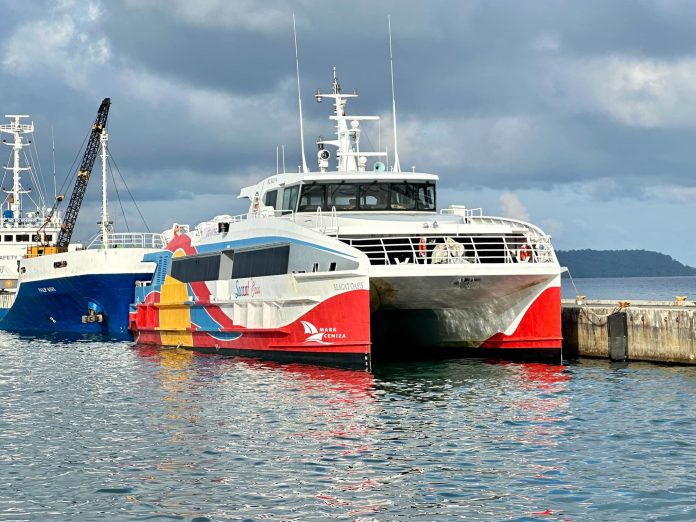
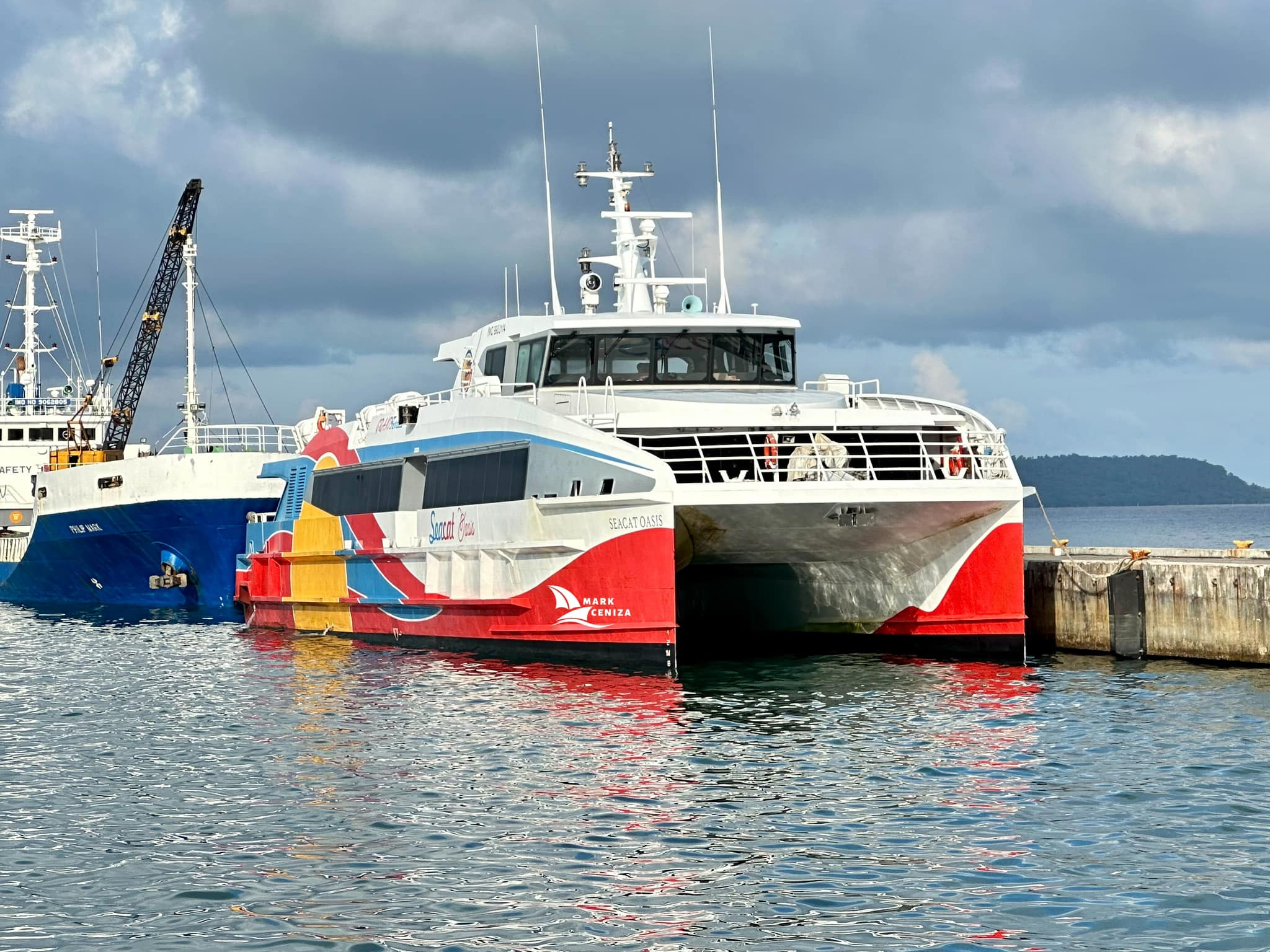
SEA TRAVEL. SeaCat Grand Ferry starts its sea operations plying the Naval-Cebu and Naval-Calbayog City route. The opening of this sea travel is seen to help boost Biliran’s tourism and economy.
(PHOTO COURTESY)
SEA TRAVEL. SeaCat Grand Ferry starts its sea operations plying the Naval-Cebu and Naval-Calbayog City route. The opening of this sea travel is seen to help boost Biliran’s tourism and economy. (PHOTO COURTESY)
TACLOBAN CITY – The provincial governor of Biliran, Gerard Roger Espina, has welcomed the launch of SeaCat Grand Ferry, which will now connect the province to Cebu and Calbayog City.
SeaCat Grand Ferry began its operations on September 27, providing faster sea transport for Biliran residents, particularly for those traveling from Naval to Cebu.
The trip from Naval to Cebu via the SeaCat Grand Ferry takes approximately 3.5 hours, significantly shorter than the 4-hour journey via the Naval-Ormoc-Cebu route.
“With this improved travel time, we anticipate an influx of tourists and potential investors, as our province becomes more accessible, offering convenient travel options,” the governor said.
Biliran is being positioned as Eastern Visayas’ mountaineering haven, with its friendly mountain terrain attracting trekking and mountaineering enthusiasts.
The province is also home to popular tourist destinations such as Sambawan Island, Higatangan Island, and several picturesque waterfalls.
To ensure the sustainability of the ferry service, Gov. Espina mentioned plans to subsidize fares for certain passengers, such as persons with disabilities, pregnant women, and senior citizens.
“I told the management that I don’t want them to suffer losses, especially in the first year of operations. For the provincial government, this service is a big deal as it opens up endless possibilities for development, including potential investments in the province,” he added.
The Naval to Cebu trips are every Monday, Wednesday, Friday, Saturday, and Sunday while it departs from Cebu at 7:30 am and 11:40 am from Calbayog.
Meantime it leaves at 2 pm from Calbayog to Naval and 4 pm from Naval to Cebu.
Arthur Von Zosa, managing director of the SeaCat Grand Ferry, urged Biliran residents to support the Naval-Cebu route to ensure its sustainability.
He also emphasized that aside from providing efficient transportation, the new route will help in promoting and marketing Biliran to tourists from Central Visayas. (ROEL T. AMAZONA)