MUTYA HAN SAMAR. The official candidates of Mutya han Samar 2026 were presented and formally sash-worn during the pageant’s launch at the Samar Convention Center in Catbalogan City on July 26. The provincial beauty pageant is one of the featured events of the Tandaya Festival and aims to promote Samar’s culture, heritage, and tourism through its young ambassadors. Photo shows some of the 20 candidates for this year’s province-wide beauty and brains pageant. (MUTYA HAN SAMAR FACEBOOK)
MUTYA HAN SAMAR. The official candidates of Mutya han Samar 2026 were presented and formally sash-worn during the pageant’s launch at the Samar Convention Center in Catbalogan City on July 26. The provincial beauty pageant is one of the featured events of the Tandaya Festival and aims to promote Samar’s culture, heritage, and tourism through its young ambassadors. Photo shows some of the 20 candidates for this year’s province-wide beauty and brains pageant. (MUTYA HAN SAMAR FACEBOOK)
CATBALOGAN CITY — Twenty candidates representing municipalities and cities across Samar were officially introduced during the launch of the Mutya han Samar 2026 pageant, kicking off one of the major highlights of this year’s Tandaya Festival.
The candidates were formally presented and sash-worn during ceremonies held on July 26 at the Samar Convention Center, this city.
Carrying the theme, “Rooted in Samar. Crowned by Culture. Going Back to the Roots,” this year’s pageant seeks to showcase the province’s rich cultural heritage, promote its tourism destinations, and develop young Samareñas as ambassadors of their respective localities.
The official candidates represent Almagro, Basey, Calbayog City, Catbalogan City, Gandara, Hinabangan, Jiabong, Marabut, Matuguinao, Motiong, Pagsanghan, Paranas, Pinabacdao, San Jorge, San Jose de Buan, Sta. Margarita, Sta. Rita, Talalora, Tarangnan, and Villareal.
The ceremonial sashing was led by reigning Mutya han Samar 2025 Kyrus Babon, Samar Vice Governor Arnold Tan, and Provincial Tourism Officer Marvin Piczon.
Organizers said the pageant encourages contestants to reconnect with the traditions, history, and values of their hometowns while promoting Samar’s identity and cultural pride.
Mutya han Samar is the province’s premier beauty pageant and serves as a platform for young women to champion Samar’s heritage and tourism. Pre-pageant activities will be held in Pinabacdao, while the coronation night is scheduled on Aug. 9 at the Capitol Grounds in Catbalogan City as part of the Tandaya Festival celebration.
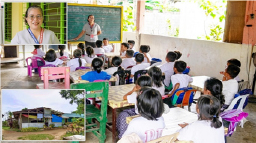
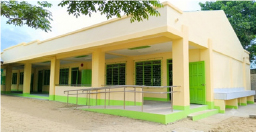
Years of uncomfortable learning in Bantayan Elementary School has now been minimized through the completion of the Construction of School Building in Bantayan Elementary School, Brgy. Bantayan, San Roque, Northern Samar.
Completed on July 4, 2026, the new one-storey school building aims to improve the learning environment for students and teachers who have long endured hot, congested, and poorly ventilated classrooms.
“Before po, duon kami sa Marcos type na classroom, siguro mga anim na taon kami duon nag-stay, sobrang hindi siya conducive for learning para sa mga bata, so, dahil sa kakulangan ng pundo ng DepEd, duon lang muna kami pansamantala. But for now, we are so grateful and blessed, na nagkaroon po ng bagong classroom na ginawa ang DepEd at ang DPWH, sa tulong na din po ng ating gobyerno” Teacher II – Maricel T. Tan said, expressing gratitude for the new classrooms in Brgy. Bantayan after years of using inconvenient facilities.
Under the Department of Education (DepEd) Basic Education Facilities Fund (BEFF) 2025, this project, with Contract ID No. 25II0062, involved the full construction of a one-storey, three-classroom school building with attached toilet facilities, with size of 7.0 meters by 27.0 meters plus a 2.5-meter corridor. It was awarded to EFC Development Corporation for a contract amount of Php 9,944,300.00.
This new facility addresses the long-standing need for safe, spacious, and conducive learning spaces for the learners of Bantayan Elementary School. This school building project will benefit 96 students in Bantayan Elementary School-66 Grade 1 students, and 30 Grade 2 students. By delivering quality infrastructure, the agency supports DepEd’s goal of ensuring every child has access to better education opportunities, aligning with the government’s commitment to human capital development in rural communities.
Furthermore, this completed building will help ease classroom congestion, improve the learning experience for students, and provide a more comfortable working environment for teachers. It also reflects the strong partnership between DPWH and DepEd in building and upgrading school infrastructure across the province.
Through this new school building, DPWH-NSSDEO fulfills its mandate to provide safe, resilient, and quality infrastructure for students as well as for teachers. By addressing overcrowding, Brgy. Bantayan learners can now enjoy comfortable classrooms conducive to learning. The agency will continue to deliver quality infrastructure projects that invest in the next generation, fostering better learning environment and supporting the nation’s.
Faculty members of Leyte Normal University (LNU) holding permanent plantilla positions are preparing their applications for faculty reclassification under DBM-CHED Joint Circular No. 3, series of 2022, with the submission of documentary requirements set on or before July 31, 2026.
The reclassification covers the evaluation period from August 1, 2023 to July 31, 2026 and follows the provisions of the Guidelines on the Reclassification of Faculty Positions in State Universities and Colleges (SUCs).
Applicants are required to submit documents demonstrating their performance and accomplishments in four key result areas: Instruction; Research, Invention, and Creative Work; Extension Services; and Professional Development. The submissions will be evaluated based on the criteria and indicators prescribed in the joint circular.
The documents will first undergo preliminary evaluation, verification, and validation by the university’s Institutional Evaluation Committee (IEC) chaired by the Vice President for Academic Services. The committee also includes two Deans, the Research Director, the Extension Director, a faculty association representative, a faculty representative who is not an officer of the faculty association, and a secretariat.
Applications for reclassification from Instructor to Associate Professor will be endorsed by the IEC to the Regional Evaluation Committee (REC) which will validate the applicants’ qualifications and supporting documentary evidence.
Applications for the Professor rank will be forwarded to the Evaluation and Accreditation of Professors Committee (EAC) which evaluates faculty members seeking promotion to the Professor rank for the first time, as well as existing professors applying for a higher Professor rank.
Meanwhile, applications for the College Professor or University Professor rank will be submitted to the Certification of College/University Professors Committee (CC) for evaluation.
Faculty members seeking the Professor rank must undergo a professorial accreditation interview, while applicants for the College Professor or University Professor rank are required to pass a certification interview.
The university’s governing board will act on the evaluation results and recommendations submitted by the REC, EAC, and CC.
DBM-CHED Joint Circular No. 3 issued in 2022 provides the national guidelines for the reclassification of faculty positions in state universities and colleges.
(Note: The author is the Associate Dean, College of Education, Leyte Normal University)
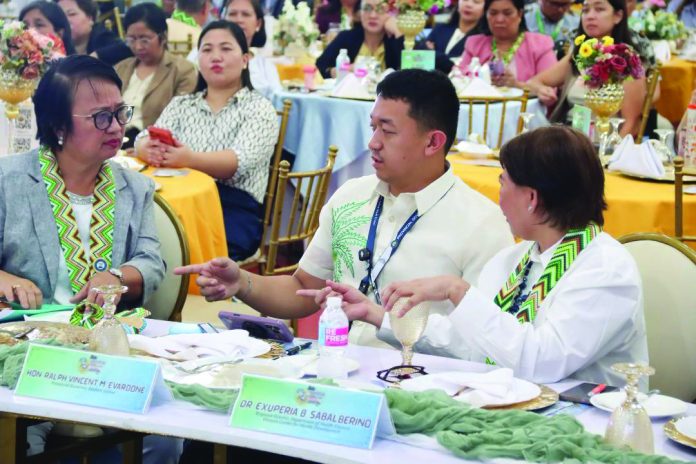
Eastern Samar Governor Ralph Vincent “RV” Evardone discusses the province’s P676-million healthcare investment during the 2026 Universal Health Care Summit, which brought together local officials and health stakeholders to strengthen healthcare delivery across the province. (EASTERN SAMAR PROVINCIAL INFORMATION OFFICE)
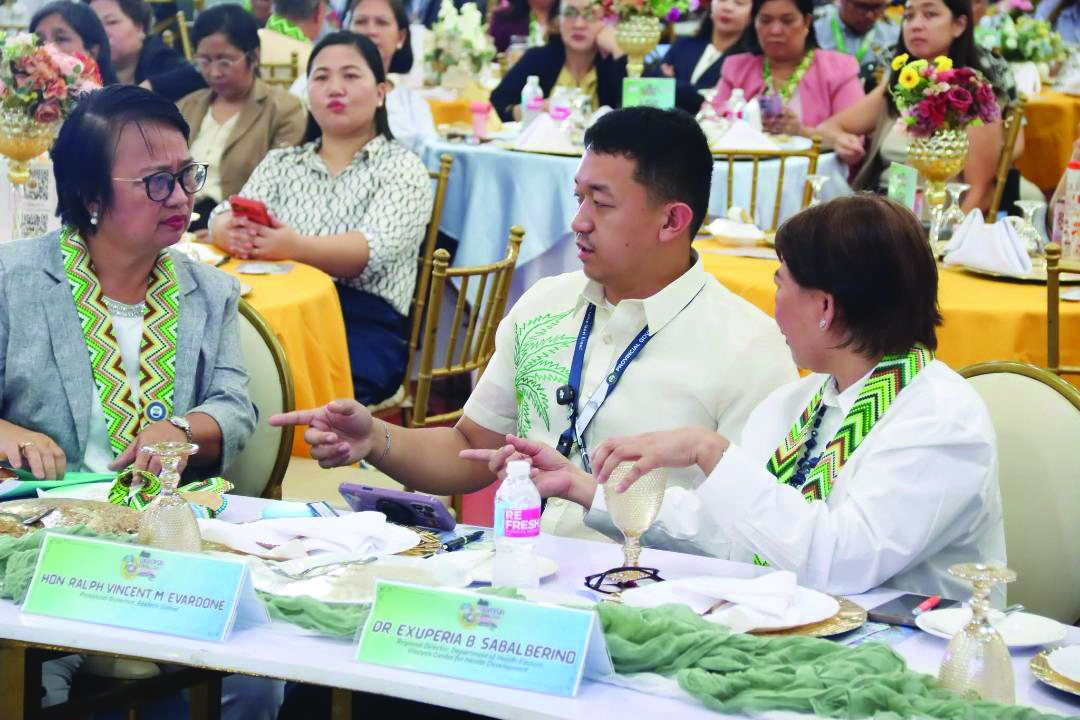
Eastern Samar Governor Ralph Vincent “RV” Evardone discusses the province’s P676-million healthcare investment during the 2026 Universal Health Care Summit, which brought together local officials and health stakeholders to strengthen healthcare delivery across the province. (EASTERN SAMAR PROVINCIAL INFORMATION OFFICE)
TACLOBAN CITY— The provincial government of Eastern Samar has committed P676 million to upgrade healthcare facilities and ensure the availability of medicines and medical supplies as the province strengthens its implementation of universal healthcare.
Governor Ralph Vincent “RV” Evardone announced the funding commitment during the 2026 Universal Health Care Summit held at the Provincial Capitol Gym.
Of the total amount, P500 million has been earmarked for the major rehabilitation of the Eastern Samar Provincial Hospital, while an additional P176 million has been allocated for medical supplies, drugs and medicines for district hospitals.
Evardone said the investments are intended to improve healthcare delivery in a province where mountainous terrain, island communities and limited resources of some local government units continue to make access to medical services challenging.
He said a unified healthcare system and stronger coordination among local government units, municipal health offices and referral hospitals are needed to ensure that residents receive timely and quality medical care.
“Part of UHC is having a unified system and strengthening our local government units’ efforts for preventive measures so that we can address common illnesses that Filipinos encounter,” Evardone said.
The provincial government is also seeking additional assistance from the Department of Health to further improve medical services across Eastern Samar.
During the July 24 summit, the DOH recognized Borongan City for its accomplishments in implementing universal healthcare programs.
Mayor Jose Ivan Dayan Agda received awards for the city’s Libre Medisina program, its performance in the 2024 LGU Health Scorecard and its 2025 PhilHealth performance-based payment.
Borongan was also recognized for securing licenses and PhilHealth accreditation for its primary care facility and various health programs, including its Animal Bite Treatment Center, TB-DOTS, Maternal Care Package, YAKAP and GAMOT services.
Agda also joined a panel discussion on local health governance, where he shared Borongan’s implementation of the Libre Medisina program, which was launched in 2021 to provide free medicines to city residents and reduce out-of-pocket healthcare expenses.
The summit brought together provincial and municipal officials, health officers, healthcare providers and DOH representatives to discuss clinical care, nutrition governance, digital health, solid waste management and health financing under the Universal Health Care program.
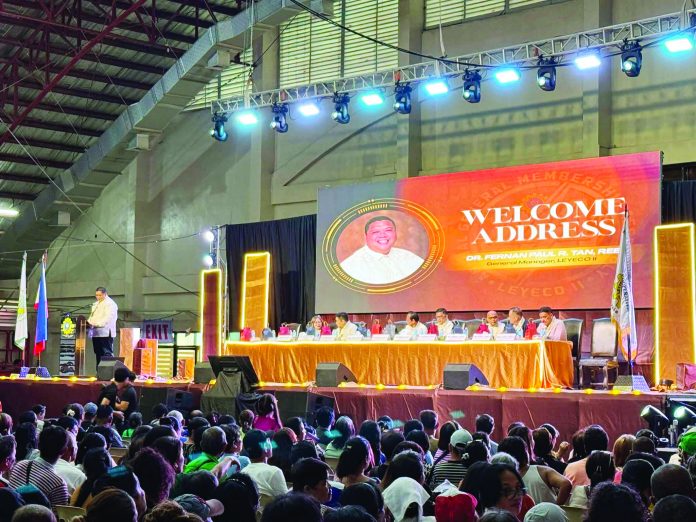
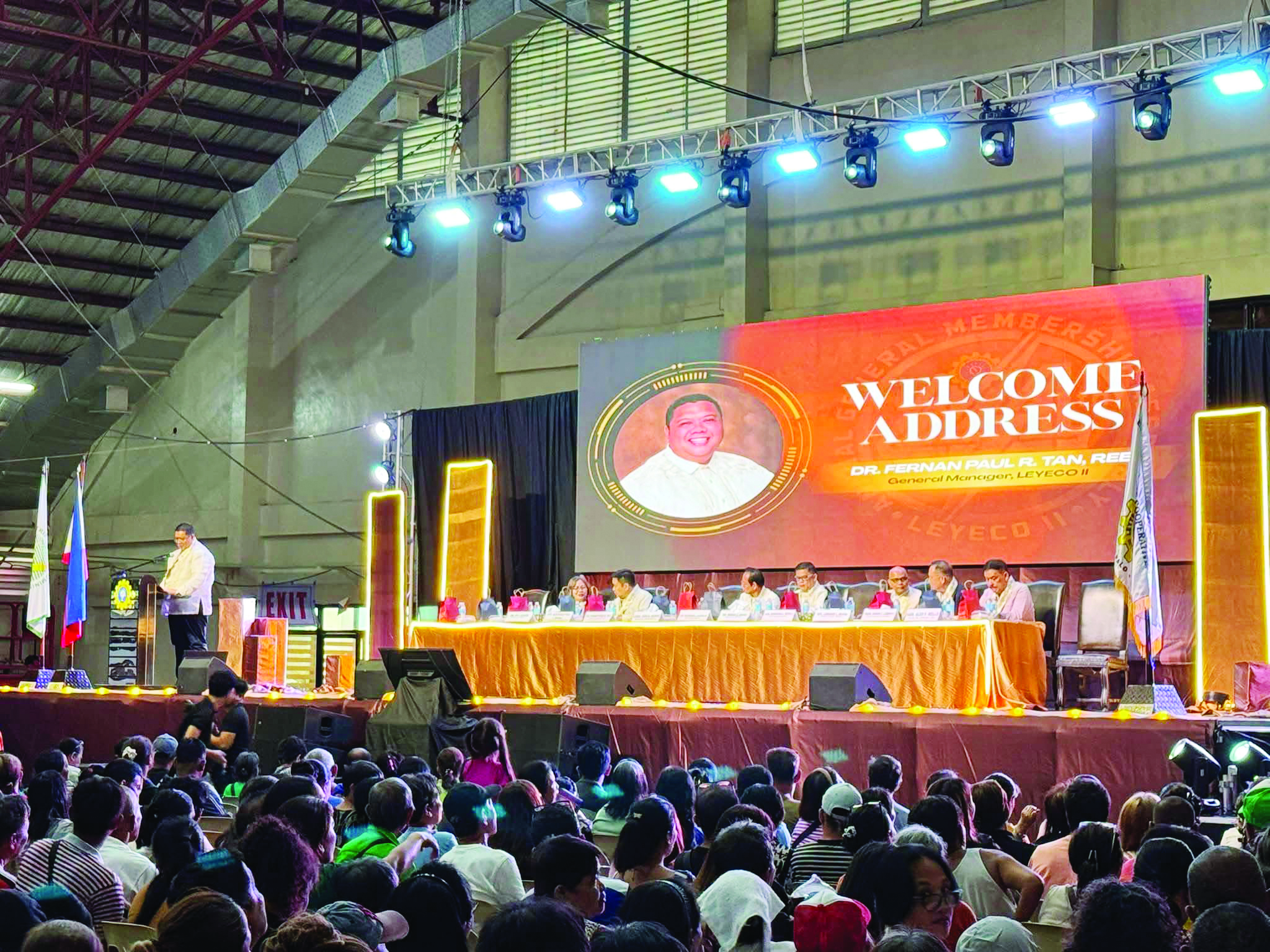
DOING WELL. Leyeco II General Manager Fernan Paul Tan reports the cooperative’s 2025 operational and financial performance during its 44th Annual General Membership Assembly in Palo, Leyte, as the electric cooperative marks its 50th year of service.(Leyeco II Facebook)
DOING WELL. Leyeco II General Manager Fernan Paul Tan reports the cooperative’s 2025 operational and financial performance during its 44th Annual General Membership Assembly in Palo, Leyte, as the electric cooperative marks its 50th year of service.(Leyeco II Facebook)
PALO, Leyte — Leyte II Electric Cooperative (Leyeco II) maintained one of the lowest residential electricity rates in the country while posting strong operational performance in 2025, even as electricity demand continued to rise in its service area.
General Manager Fernan Paul Tan reported the cooperative’s accomplishments during its 44th Annual General Membership Assembly (AGMA) on Sunday, July 26, with over 14,000 member-consumer-owners (MCOs) registered for the event held at the Leyte Academic Center, this town.
Leyeco II now serves 96,623 MCOs from the municipalities of Palo and Babatngon and the city of Tacloban which accounts for more than 71% of its membership. Its overall energization level reached 106.91%, surpassing projected household connections.
The cooperative recorded a peak demand of 66.03 megawatts in 2025, a 1.06% increase from the previous year, reflecting continued growth in residential, commercial and industrial electricity consumption.
Despite the rising demand, Leyeco II kept its average system loss at 6.94%, below the Energy Regulatory Commission’s allowable cap of 8.25%. Its collection efficiency also improved to 98.89% from 98.53% in 2024.
Its average residential electricity rate stood at P10.1258 per kilowatt-hour, the lowest among electric cooperatives in Eastern Visayas and among the 10 lowest residential rates nationwide.
The cooperative’s performance comes as the region faces increasing electricity demand and the need for more dependable power supply and stronger distribution infrastructure.
To strengthen its energy security, Leyeco II has secured 36 megawatts of dependable power through long-term supply contracts with Green Core Geothermal Inc. for 16 MW until 2040 and KEPCO SPC Power Corp. for 20 MW until 2034.
The cooperative is also pursuing additional renewable energy sources and upgrading its distribution network, including the construction of the Babatngon Substation, rehabilitation of distribution lines and optimization of the existing 80-MVA capacity of its Sagkahan, Abucay and Campetic substations.
Tan also reported Leyeco II’s participation in the NEA-PHILRECA Task Force Kapatid program. Its “Warriors of Light” teams helped restore electricity services in neighboring electric cooperatives affected by Typhoons Opong and Tino, including Samelco I, Norsamelco and areas in Southern Leyte.
The assembly also marked LEYECO II’s 50th founding anniversary. Established on Oct. 26, 1975, the cooperative has grown from energizing its first communities to becoming a Triple-A, Mega Large Electric Cooperative serving nearly 97,000 member-consumer-owners.
Tan said Leyeco II would continue investing in modern infrastructure, securing reliable power supply, maintaining affordable electricity rates and strengthening partnerships with government agencies and other energy stakeholders to meet the region’s growing electricity needs.
The AGMA served as the cooperative’s annual forum for reporting its operational, financial and technical performance, as well as its future plans, to its member-consumer-owners. Tingog party-list Rep.Jude Acidre served as the event’s guest of speaker and honor.
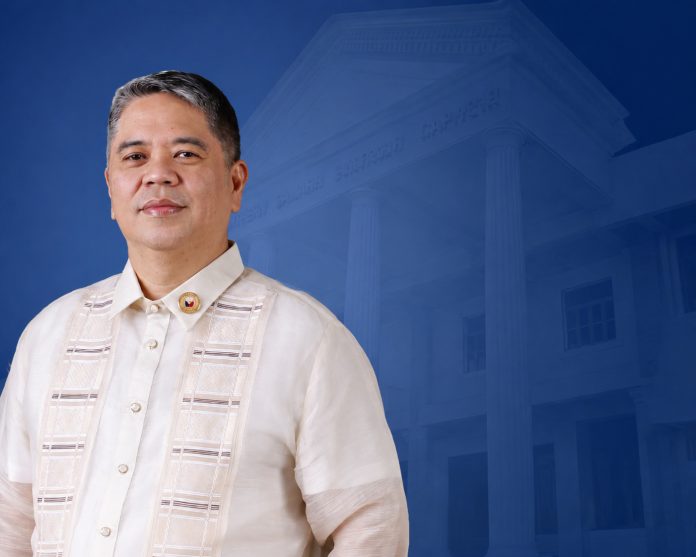
Northern Samar 2nd District Rep. Edwin Ongchuan reports on his first-year legislative and development accomplishments, including measures and programs aimed at improving public services and development opportunities in the province.
(The Provincial Government of Northern Samar Facebook)
Northern Samar 2nd District Rep. Edwin Ongchuan reports on his first-year legislative and development accomplishments, including measures and programs aimed at improving public services and development opportunities in the province. (The Provincial Government of Northern Samar Facebook)
TACLOBAN CITY— Northern Samar’s second district representative, Edwin Ongchuan, has highlighted measures he filed in Congress and programs he helped facilitate for his district during his first year in office.
In a report released Monday, July 27, Ongchuan said he filed several priority bills on his first day as a member of the 20th Congress, focusing on local economic development, infrastructure, social protection, healthcare, agriculture and education.
Among the measures he filed are bills seeking to establish a Green Lane for Micro Business Enterprises, institutionalize Local Economic Development and Investment Promotion Offices (LEDIPOs), upgrade the Simora-Palapag Road into a national road and provide livelihood assistance to beneficiaries of the Pantawid Pamilyang Pilipino Program.
He also filed measures seeking to expand Philippine Health Insurance Corp. benefits for barangay health workers, improve farmers’ access to agricultural technologies, establish a Bachelor of Science in Social Work program at the University of Eastern Philippines, create a proposed Samar Island Region and pursue the proposed Allen-Matnog Tunnel or Bridge project.
Ongchuan also authored resolutions calling for government action on rising fuel prices affecting Small Power Utilities Group areas and an investigation into electricity line rental charges in Eastern Visayas.
As vice chairperson of the House Committee on Appropriations, he also contributed to the passage of several national measures, including Republic Act No. 12316, or the Suspension of Excise Taxes on Petroleum Products Act, and Republic Act No. 12314, or the General Appropriations Act of 2025.
He was also among the principal authors of House Bill No. 4745, the House counterpart of Republic Act No. 12321, or the Last Mile and Geographically Isolated and Disadvantaged Areas Schools Act.
Beyond legislation, Ongchuan said his office coordinated with national government agencies, local governments and development partners to bring assistance to Northern Samar.
These included patient transport vehicles through the Philippine Charity Sweepstakes Office and the Philippine Amusement and Gaming Corporation, quality seeds from the Bureau of Plant Industry, and assistance from the Departments of Social Welfare and Development, Health, Human Settlements and Urban Development, and Agriculture.