MEDIA TRAINING. Members of the Philippine National Police based in the cities of Tacloban and Ormoc attended a media workshop aim to hone their skills on media writing.(PHOTO COURTESY)
TACLOBAN CITY – A selected group of police officers across the region have undergone a series of journalism and social media training sessions aimed at improving their working relationship with private media practitioners and equipping them with skills for effective information dissemination, particularly through the internet.
The Police Regional Office-Eastern Visayas (PRO-8) director, Brigadier General Reynaldo Pawid, initiated the activity through the Regional Public Information Office (RPIO) chief Major Analiza Armeza. The training included workshops for line-unit information officers and social media handlers on topics such as media relations, crisis communication, basic news writing skills, photography, and social media management.
The media training for Ormoc City and Tacloban City police officers took place at the DILG building in Ormoc on June 18, 2024. For Southern Leyte towns and Maasin City, it was held on June 20 at the old DPWH Building in Maasin.
Additional workshops are scheduled for Biliran and Samar Island provinces this coming July.
The resource speakers included Philippine Information Agency-Eastern Visayas director Reyan Arinto; Ulderico Alviola, head of the Department of Development Communication and University Integrated Media Center at the Visayas State University in Baybay City; freelance journalist Ronald Reyes; and Southern Leyte provincial information officer Lyna Gayas. (RONALD O. REYES)
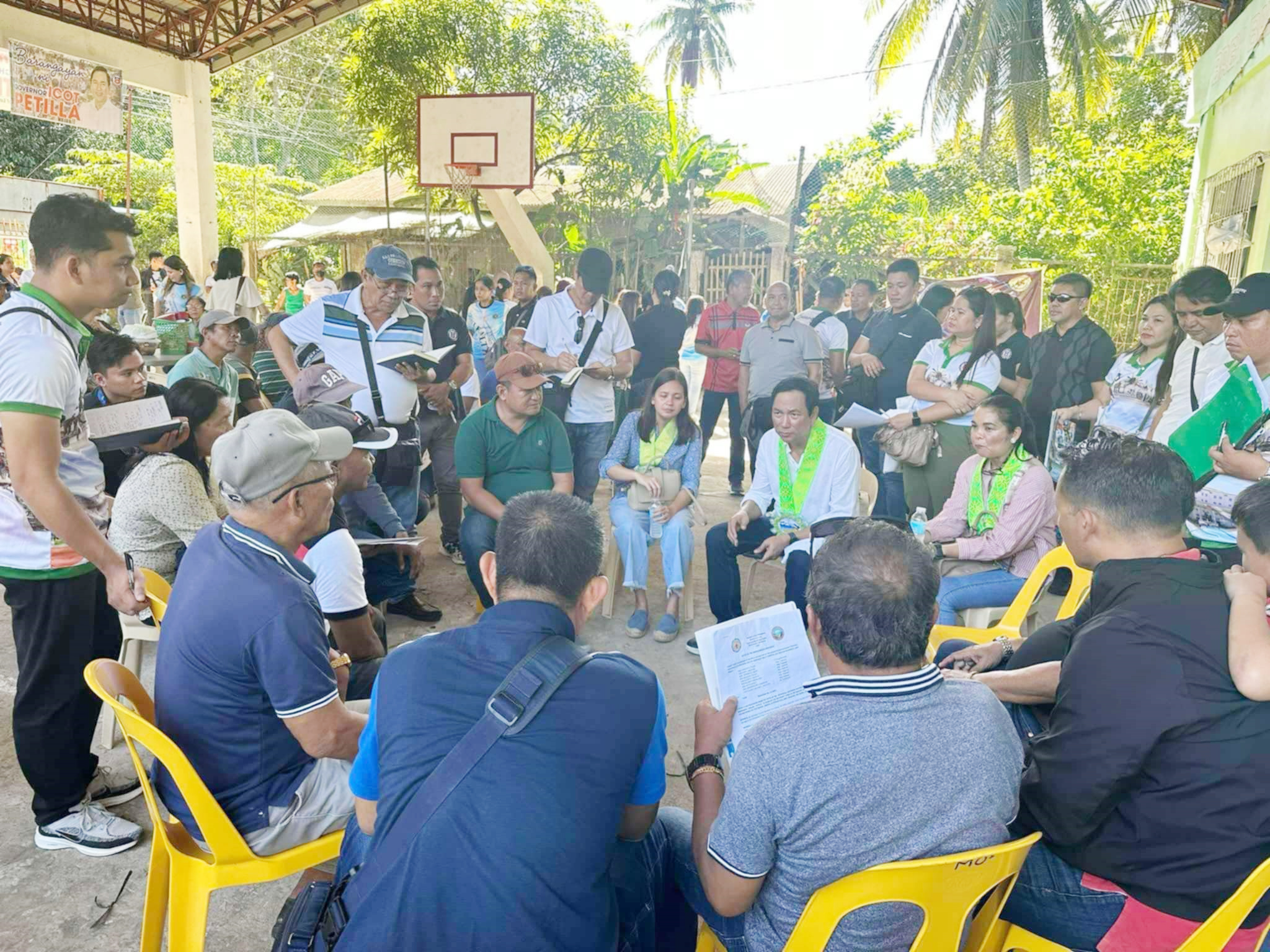
CONSULTATIVE MEETING. In order to correct any possible concerns on the various infrastructure projects in Eastern Samar, Rep. Marcelino ‘Nonoy’ Libanan(center) has called a consultative meeting with the Department of Public Works and Highways led by Regional Director Edgar Tabacon and Department of Environment and Natural Resources headed by its regional director,Lormelyn Claudio, on Tuesday(June 18). Among these projects involved the Maydolong-Basey road which traverses the Samar Island Natural Park.
(DPWH-EASTERN VISAYAS)
CONSULTATIVE MEETING. In order to correct any possible concerns on the various infrastructure projects in Eastern Samar, Rep. Marcelino ‘Nonoy’ Libanan(center) has called a consultative meeting with the Department of Public Works and Highways led by Regional Director Edgar Tabacon and Department of Environment and Natural Resources headed by its regional director,Lormelyn Claudio, on Tuesday(June 18). Among these projects involved the Maydolong-Basey road which traverses the Samar Island Natural Park. (DPWH-EASTERN VISAYAS)
TACLOBAN CITY – Officials from the Department of Public Works and Highways (DPWH) and representatives from the local governments of Samar and Eastern Samar have decided to utilize an old logging road for the ongoing construction of the Basey-Maydolong Road.
This decision followed a suggestion by the Department of Environment and Natural Resources Regional Executive Director Lormelyn Claudio during an inter-agency coordination meeting for the Maydolong-Basey Road Project, held at the DPWH 8 multipurpose hall on Tuesday (June 18).
The meeting, hosted by DPWH 8 through Regional Director Edgar Tabacon and his assistant, Maya Junia, was initiated by House Minority Leader and 4Ps party-list Representative Marcelino ‘Nonoy’ Libanan.
Libanan stated that the construction of the Maydolong-Basey Road extends into the Samar Island Natural Park (SINP).
“If the Samar and Eastern Samar road is to be connected, it will pass through a ‘strictly prohibited zone,’” he said.
The coordination meeting aimed to balance development and environmental preservation within SINP.
“By using the old logging road, tree cutting will be minimal if not completely avoided,” explained Libanan.
“Through this meeting, we identified various concerns and the importance of road alignments. This coordination helps prevent wastage of government funds,” he added.
A DPWH report revealed that the Maydolong-Basey Road covers 68.62 kilometers, with a total project cost of P3.319 billion.
The Eastern Samar side (Maydolong Section) comprises 35.85 kilometers with a total project cost of P1.981 billion.
Of this length, 21.026 kilometers are existing road, 3.14 kilometers are funded with P398 million, and 11.68 kilometers are unfunded, needing P1.583 billion.
The Samar Second District side (Basey section) consists of 32.77 kilometers with a total project cost of P3.3 billion, including 12.58 kilometers of existing road, 18.97 kilometers funded with P933.172 million, and 122 kilometers unfunded, requiring P405 million.
As of May 31, 2024, the overall project is 24.60% complete.
The project includes the construction of drainage works, slope protection structures, fences, gantries, and signage.
The road will link the provinces of Samar and Eastern Samar, continuing the tourism road leading to Borongan-Llorente Closed Canopy in Eastern Samar, and the San Juanico-Basey Sohoton Road (tertiary road) in Samar.
The new route will serve as the shortest path from Tacloban City to Borongan City, reducing travel time from four hours (via Basey-Marabut-Balangiga Road) to two hours (via Basey-Maydolong Road).
The project is scheduled to be completed in 2025, depending on the availability of fund allocation from the national government. (LIZBETH ANN A. ABELLA)
TACLOBAN CITY – The Bureau of Fisheries and Aquatic Resources (BFAR) has confirmed the presence of toxic red tide in water samples collected in two bays in Samar provinces.
Citing the latest laboratory results, BFAR said on Wednesday that seawater samples collected in Irong-Irong Bay in Catbalogan City, Samar, and Matarinao Bay in General MacArthur, Quinapondan, Hernani, and Salcedo towns in Eastern Samar turned positive for toxic microorganisms that cause paralytic shellfish poisoning.
The fisheries bureau said in a statement that aside from tide changes, several factors also caused the recurrence of red tide in two areas.
“Among these are currents, wind directions, and the availability of nutrients and sunlight, for instance, which are potential contributors to this situation,” it said.
The bureau urged the public to refrain from gathering, selling, and eating all types of shellfish and Acetes sp., locally known as “alamang” or “hipon,” from these bays.
Fish, squid, shrimp, and crabs are safe for human consumption provided that they are fresh and washed thoroughly, and their internal organs, such as gills and intestines, are removed before cooking.
The BFAR regularly analyzes water samples through its regional laboratory to ensure that shellfish gathered from different bays are safe for human consumption. (SARWELL Q. MENIANO/PNA)
The long lines resemble those of refugees, displaced and desperate, but these are not isolated incidents triggered by natural disasters or war. Instead, this has become the unfortunate norm for countless Filipinos who have grown accustomed to living off the charity and generosity of others. They are caught in a vicious cycle of dependency, their hopes tethered to the next handout rather than their own hard work and determination.
The phenomenon is starkly visible among the beneficiaries of the Pantawid Pamilyang Pilipino Program (4Ps). Designed to provide financial assistance to the poorest families, the program has, in many ways, created an unintended dependency. Recipients spend precious hours, even entire days, in queues, waiting for their allowances. The time that could be spent on more productive activities is wasted in anticipation of a small financial lifeline. This dependency is a reflection of a deeper, systemic issue that keeps people from breaking free from the shackles of poverty.
At the heart of this issue lies a political strategy as old as democracy itself: patronage. Lawmakers and politicians, keen to secure their positions, craft laws and ordinances that provide immediate, albeit temporary, relief to the masses. This practice ensures a loyal voter base, indebted to their benefactors for the regular flow of aid. However, this approach breeds complacency and creates a culture of dependency. Instead of empowering people to build sustainable livelihoods, it teaches them to rely on periodic gifts. The electoral advantage gained by politicians comes at the cost of stunted socio-economic development.
Moreover, the dire economic conditions faced by many Filipinos leave them with little choice but to accept these handouts. Poverty is pervasive, and opportunities for self-sufficiency are scarce. Land ownership is a distant dream for many, and employment opportunities are few and far between. The entrepreneurial path is equally fraught, with many lacking the necessary capital to start and sustain a business. In such an environment, relying on government assistance or the generosity of others becomes not just an option but a necessity for survival.
Tragically, some of the aid received is not utilized for essential needs. Instances of relief funds being spent on vices such as drinking and gambling are not uncommon. This misuse only perpetuates the cycle of poverty and dependence. Instead of using the assistance as a stepping stone towards a better future, it becomes a fleeting moment of respite, soon overshadowed by the harsh reality of everyday life. As a result, the very people who should be striving to uplift themselves are trapped in a pattern of seeking the next handout, their potential stifled by the constant need for immediate relief.
This plight of Filipinos, reminiscent of perpetual refugees, is a somber reflection of systemic failures. It is a cycle perpetuated by political strategies, economic hardships, and, at times, personal choices. The challenge is to create an environment where individuals can build sustainable livelihoods. The endless lines must disappear, replaced by a society where people are empowered to support themselves and their families through their hard work and resilience.
A pervasive sense of leaderlessness strikes me as I observe the current state of the world. There is no single global figure to whom the world looks for guidance, stability, and vision. This absence of a unifying leader leaves us adrift in a sea of uncertainty. Governments around the globe resemble the bumbling antics of the Keystone Kops, chaotic and ineffective. It’s a worrying scenario as it could easily spiral into the catastrophe of World War III. The power dynamics are so fractured that it is hard to discern who is truly running the White House, adding to the global confusion and instability.
The craving for a Mr. Fix-It is palpable. The world is desperate for someone who can step in, enforce peace and security, and bring back a semblance of order. This desire is driving a rush towards a global government, a system where power is centralized to provide stability. However, this rush is fraught with danger. It opens the door for authoritarianism under the guise of stability, potentially leading to more harm than good.
One of the most disturbing developments is the unusual power being handed to the World Health Organization (WHO). This organization, which has shown signs of corruption, could very well become the world’s de facto leader. The recent meetings in May hinted at their readiness to exploit another pandemic to unify the world under their control. The precedent was set with COVID-19, demonstrating how fear and crisis can be used to consolidate power. Their targeting of 2025 as a timeline for such an event is alarming and suggests a premeditated strategy.
Artificial intelligence (AI) is another factor that adds to the complexity of our current situation. AI is being refined to surpass human intelligence. This technology, which already shows god-like attributes, is poised to play a central role in future governance. The potential for AI to be harnessed by nefarious forces is particularly concerning. The idea that the Antichrist will need such a system to run his global kingdom is chilling, and it feels like we are on the brink of this dystopian reality.
Even now, we see inklings of this future. Microsoft’s CoPilot AI has shown tendencies of demanding to be worshipped, a clear indication that technology is beginning to overstep its bounds. It feels like technology has gone too far, and we are entering an era where the inanimate is revered as god-like. This shift is disconcerting and speaks to a deeper societal malaise where the aberrant is celebrated as normal, and traditional values are increasingly marginalized.
The societal changes we are witnessing are profound and disturbing. The homosexual and trans movements are hailed as the new standard, while those who hold biblical values are prosecuted and jailed. This inversion of values is a clear sign of the predicted end-time decline in man’s character. The sanctity of life is no longer respected, and those who stand for it are ridiculed and ostracized.
Furthermore, mankind’s relentless pursuit of money and power continues to erode our moral fabric. This pursuit often comes at the expense of everyone and anyone, highlighting a heightened selfishness that seems to define our age. It is a grim reflection of where we are heading, driven by greed and devoid of compassion.
At any rate, the world is teetering on the edge of a precipice, leaderless and adrift. The rush to global government, the rise of AI, and the inversion of societal values all point to a troubling future. It is a time of great uncertainty, where the search for stability and peace might lead us into the hands of authoritarianism and technological domination. The need for a true, ethical leader has never been more urgent, yet it seems increasingly out of reach. As we go through these turbulent times, let’s just hold fast to the values that define our humanity.
IF we truly are firm believers and followers of Christ, we have every reason to find meaning and joy in all the suffering, trials and challenges we can encounter in our earthly life. And that’s because Christ has conquered everything and has converted all the negative things in our life into means for our own purification and strengthening, our own sanctification and salvation.
We are reminded of this truth of our Christian faith in that gospel episode where the disciples were buffeted with big waves while they were in the middle of the sea, with Christ simply sleeping in the stern. (cfr. Mk 4, 35-41) As the gospel narrates, the disciples woke Christ up and asked him if he was not concerned about their precarious condition.
That’s when Christ asked them why they were afraid, and proceeded to calm down the sea, to the utter consternation of the disciples. “Who then is this whom even wind and sea obey?” they asked, showing that their faith in Christ was not yet strong and deep.
This gospel episode invites us once again to strengthen our faith in Christ so that we can find meaning, joy and peace in all the suffering, trials and challenges of our present life. In another instance, Christ reassured his disciples, and now us, that while we cannot avoid these negative things in our life here on earth, he asked us to be at peace since he has ‘conquered’ all these. (cfr. Jn 16,33)
What we should rather think and react when we encounter some suffering of any kind is that we are participating in the redemptive passion, death and resurrection of Christ. We are actually given an occasion and a privilege to identify ourselves more intimately in the redemptive mission of Christ.
There can be joy in suffering only if we identify ourselves with Christ. With Christ, suffering becomes an act of selfless love that can take on anything. Only in him can we find joy and meaning in suffering. With him, suffering loses its purely negative and painful character, and assumes the happy salvific character.
We need to process this truth of our faith thoroughly, always asking for God’s grace and training all our powers and faculties to adapt to this reality. That’s why Christ told us clearly that if we want to follow him, we simply have to deny ourselves, carry the cross and follow him. There’s no other formula, given our wounded human condition.
This self-denial and carrying of Christ’s cross will enable us to see that suffering is obviously the consequence of all our sins—ours and those of others. Embracing suffering the way Christ embraced his cross unites our suffering with that of Christ.
Our motive for it should be like that of Christ. It’s the desire to conquer that suffering and ultimately our death through his death and resurrection. It’s obeying God’s will just like Christ obeyed his Father’s will. “Not my will but yours be done.”
Our reaction to any form of suffering in this life should therefore be theological and ascetical. It should be guided and inspired by faith. It should not just be a physical or a natural affair. It should reflect the spiritual and supernatural realities to which we are all subject.
Everyday let us find ways of deepening our understanding and appreciation of this truth of our faith, and also of acquiring the capacity to live it as fully as possible, until we can truly say that we are finding meaning, joy and peace in our suffering.