

Threats to the family are aplenty that we cannot and must not just rely on authorities for protection. Children of school-going age need parental care and protection more than what authorities can provide. We know too well that authorities could only provide limited supervision and protection to school children. School authorities can only oversee school children while in the confines of the school premises.
Beyond class hours and outside the school campus, we cannot expect school authorities to still be responsible for school children. It is the responsibility of parents to do their share in providing care and protection to their children after school. While there are police authorities providing school safety and protection, they too can only do so much of their task within the area of the school.
Reports regarding students being duped into vices and other undesirable activities by peers must be a cause for concern among parents. These problems are prevalent among high school students who are found in groups that engage in off-campus activities. These youthful students call their groups as fraternities and sororities. Observers however consider these groups as gangs for they do not have the characteristics of real fraternities and sororities. All that these groups do are nefarious activities like forcedly collecting money from hapless students who are threatened with harm by the gang.
In other instances, these groups engage in misguided activities. They do not have any clear purpose than enjoy the company of their gang doing what they want to do afar from the sight of their busy parents. Students of this generation seem lacking in parental guidance and influenced by misguided elements of society. We are aware how peer groups take primacy among the influential factors in the life of students. It poses to parents the great challenge of combating the evil forces that drag students to misguided activities. We cannot rely on others, not even authority figures, for the care, protection and guidance of our children.
But we must give attention to the factors that lead to the way students behave today. We may unconsciously be allowing our children to take misguided paths. A lot of media blitz from television programs require parental guidance but parents simply do not care providing children the needed guidance. In school, values education is part of the curriculum but matters like children’s rights and related topics on freedom and privacy sometimes go offhand, giving the students the wrong notion of independence and less respect for parental guidance.
In their eagerness to assert the rights being taught in school, students often go beyond the parameters by totally excluding parental guidance in the vocabulary. The indoctrination of wrong and misguided values by various sectors are the unwitting cause why students are falling into unwanted and undesirable activities. All these may still be traced to seeming lack if not the utter failure of parental guidance.
comments to alellema@yahoo.com


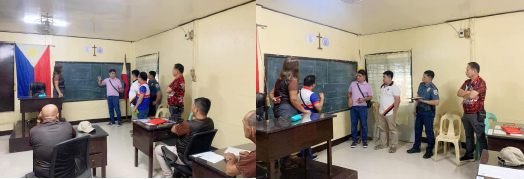
Is this what we are?
We Filipinos find ourselves oftentimes stuck in the mud of poverty, not so much from the outside but largely due to our own doing that, like termites, is gnawing away at the foundation of our collective potential. If we truly want to prosper, we should put behind us the anti-developmental practices that have held us back for many generations. It is not that far-fetched a solution; the real work has to begin within us, and the key is discipline in unlocking our progress.
We seem to glamorize luck as if it is some kind of divine lottery ticket that takes away our efforts. “Bahala na” has become a mantra, or even a crutch as if a mere acceptance of fate justifies poor work or no work at all. I have seen small businesses fold simply because their owners spent more time betting on Lotto numbers than investing in their skills. Prosperity is not a gamble; it is a harvest, and no farmer harvests crops without first planting the seeds and tending to the field. Waiting for a stroke of fortune is no different from expecting a mango tree to grow without ever planting it.
Then there’s the matter of our reliance on others to bail us out. How often do we see capable adults leaning too much on relatives working overseas? I know families who’ve turned OFW remittances into a lifeline for non-essentials like karaoke systems and endless fiestas while ignoring opportunities to start small businesses or improve their living conditions. This dependence drains not just our wallets but our pride. If you’re always expecting someone else to pull your weight, you’re not just staying poor—you’re becoming poor in spirit, too.
Our environment tells a similar story of irresponsibility. Rivers that should be bubbling with life are instead choked with the garbage people throw in the dead of night, hoping no one will notice. But trash has a way of coming back; it floods our streets, clogs up our lives, and leaves us wading through the mire of our own making. It’s a bitter irony: we complain about poverty, yet we defile the very things that could provide us with the wherewithal to rise above it. If discipline means cleaning up after ourselves, why do we refuse to pick up the broom?
Poor sanitation is not just an environmental issue; it is a health risk that will eventually cost us more. Passing by makeshift food stalls near terminals, I cringe at the sight of uncovered dishes swarming with flies. One bout of diarrhea may mean the erasure of a family’s daily income and, with that, lasting productivity diminution. Yet we seem to take these circumstances for granted. Isn’t it strange how we are quick to wash our hands of responsibility but slow in washing our hands before meals?
Laziness is another invisible chain around our ankles. It’s not that we Filipinos are short on talent or intelligence; it’s just that we more often settle for mediocrity. I have seen it myself: farmers who would rather not plant in a planting season because they are too tired, or tricycle drivers who, rather than take on another passenger, would rather idle and gamble. This isn’t just about individuals; this is a national malaise. Productivity is the engine of progress, but an engine needs fuel, and that fuel is hard work.
Worse is when some of us romanticize this lack of responsibility to the point that it is somehow this charming quirk of our culture. “Ganito talaga tayo” (This is just how we are.) (Kay amo man la kita hini—Winaray) is such a dangerous mindset. It’s like saying a broken clock doesn’t need fixing because it tells the correct time twice a day. If we continue to cower behind these excuses, we’re only passing the same broken clock to the next generation, ensuring that not only do they inherit poverty, but our complacency as well.
If there’s one thing I’ve learned, it’s that discipline isn’t a punishment; it’s liberation. It’s what allows us to break free from the vicious cycles we’ve created and start building something better. Imagine if every Filipino cleaned their surroundings, worked diligently, and invested in their growth instead of waiting for miracles. The ripple effect would be transformative. Discipline, after all, is contagious. The question is, who’s willing to start the wave?
The answer may be simpler than we think. It begins with the small, consistent actions of throwing trash in the right bin, showing up on time, and teaching our kids the value of honest work. If we can master the basics, bigger changes will naturally follow. Stop blaming luck, others, or our culture, and start taking charge. After all, in the end, nothing is standing between us and prosperity but us.