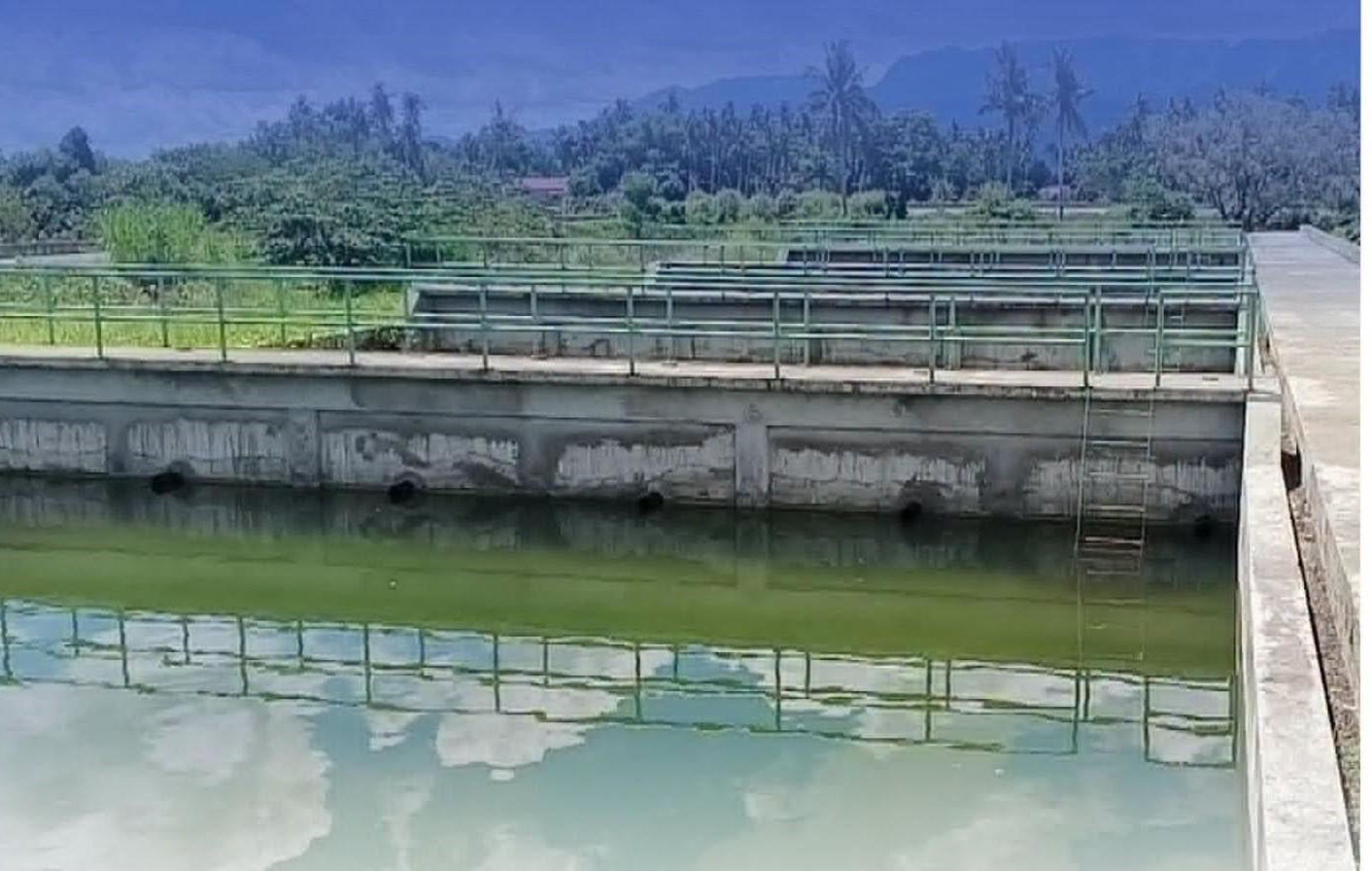
BAYBAY CITY– Setting a milestone for environmental management in Eastern Visayas, the city government of Baybay City has inaugurated and operationalized the region’s first sewerage treatment facility, a pioneering project designed to improve wastewater management, protect water resources, and support the city’s long-term sustainable development goals.
The P80-million facility, unveiled as one of the highlights of Baybay City’s 19th Charter Day celebration on June 18, is expected to significantly reduce water pollution by treating wastewater from urban areas before it is discharged into rivers, creeks, and coastal waters.
Located on a one-hectare site in Barangay Santo Rosario, the sewerage treatment plant began construction in 2023 and utilizes a low-maintenance system that combines physical filtration and natural biological treatment processes.
Under the treatment process, wastewater undergoes primary screening and filtration before passing through an artificial reed bed, where naturally occurring biological mechanisms further remove contaminants and improve water quality prior to release into the environment.
Supporting the facility is a two-kilometer underground sewer network composed of reinforced concrete pipes measuring 1.5 meters in diameter. The system, installed beneath R. Magsaysay Avenue and other major roads, collects wastewater from the city’s commercial and residential districts and channels it directly to the treatment plant.
City officials said the project addresses a critical environmental concern by ensuring that wastewater generated from densely populated areas is properly treated rather than flowing untreated into waterways and coastal zones.
Mayor Jose Carlos Cari said the project reflects the city’s commitment to ensuring that development and environmental protection go hand in hand.
“As Baybay continues to progress and attract more economic opportunities, we must ensure that our development remains sustainable. This facility helps protect our rivers, coastal areas, and communities while supporting the city’s vision for inclusive and responsible growth,” Cari said.
The city government noted that the treatment facility is capable of removing pollutants, harmful bacteria, and other contaminants from wastewater, helping improve public health and reduce the risk of waterborne diseases.
For Baybay City, whose economy relies heavily on fisheries, agriculture, tourism, and commerce, safeguarding water quality has become increasingly important amid rapid urban growth and expanding economic activity.
Local officials expressed optimism that the facility would serve as a model for other local government units across Eastern Visayas and the rest of the country seeking practical and sustainable wastewater management solutions.
(LIZBETH ANN A.ABELLA)