President Ferdinand R. Marcos Jr. on Monday, Jan.26, approved the National Digital Connectivity Plan (NDCP) aimed at accelerating the rollout of fast, secure, and affordable broadband infrastructure and lower internet costs for millions of Filipinos nationwide.
Presiding over the 7th Meeting of the Economy and Development Council in Malacañan Palace, President Marcos gave his nod for the NDCP, the first of its kind in the country.
The strategic framework envisions a Digitally Connected Philippines – ensuring meaningful, inclusive, and transformative connectivity and providing accessible, affordable, high-speed, and secured digital services for all Filipinos.
The vision is operationalized through four strategic pillars. First, by strengthening governance and regulatory framework to liberalize the industry, promote competition, and lower entry barriers; second, by expanding universal access to ensure digital connectivity for geographically isolated and disadvantaged areas (GIDA).
Third, by intensifying infrastructure investment by leveraging public-private partnerships to accelerate nationwide rollout and scale; and lastly by ensuring resilient, climate- and disaster-proof, and cyber-secured digital infrastructure and assets.
During the ED Council meeting, President Marcos noted that the Philippines has been catching up with its Southeast Asian neighbors which have adopted digital connectivity as early as the last decade.
But with the availability of advanced, affordable technology, the President expressed confidence that the country will soon be at par with its regional peers in terms of connectivity, speed, and cost.
The Plan’s key 2028 targets include universal internet access for public schools, barangay halls, and health centers, a 30 to 50 percent reduction in internet costs, and an increase in the nationwide average internet speed. (PCO-PND)
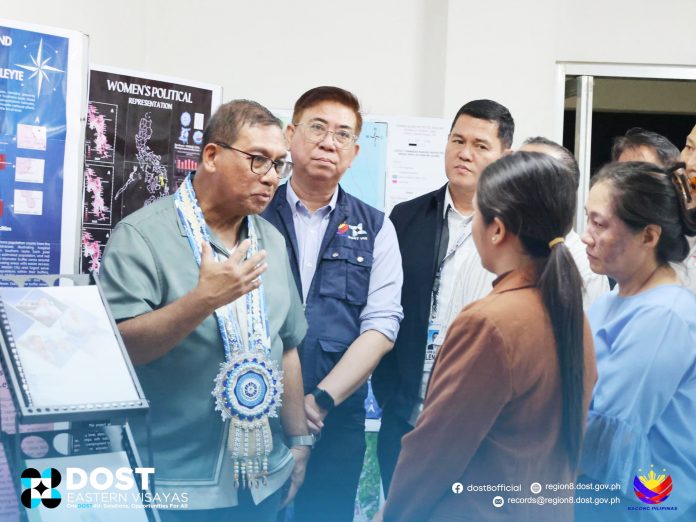
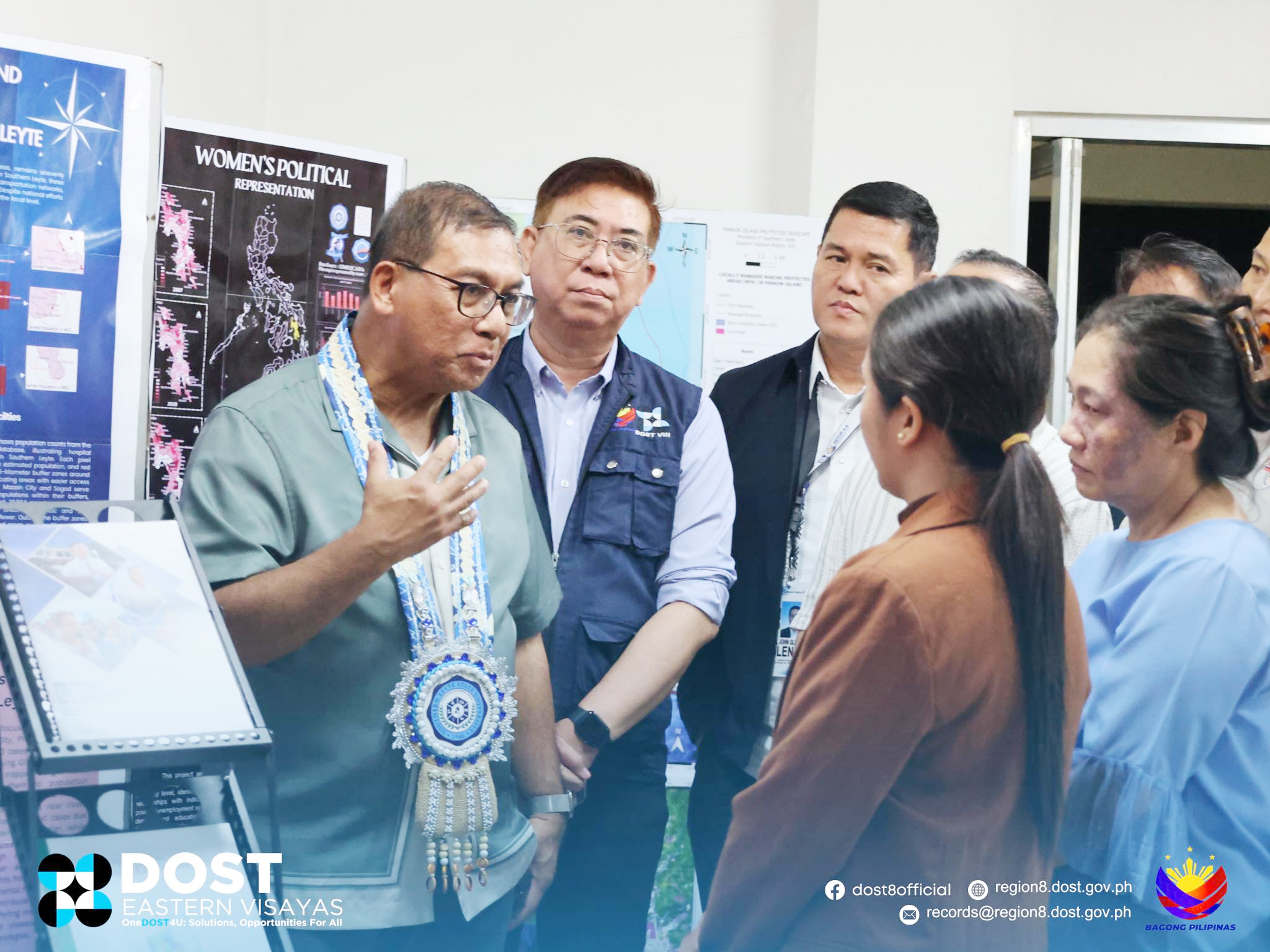
DOST PROJECTS. The province of Southern Leyte is the latest beneficiary of various projects from the Department of Science and Technology (DOST) which aims to improving local governance, boosting livelihoods, and strengthening disaster preparedness. DOST Sec. Renato Solidum, joined by Regional Director Glen Ocana, during his visit to the province on Jan.22.(DOST-8 FACEBOOK)
DOST PROJECTS. The province of Southern Leyte is the latest beneficiary of various projects from the Department of Science and Technology (DOST) which aims to improving local governance, boosting livelihoods, and strengthening disaster preparedness. DOST Sec. Renato Solidum, joined by Regional Director Glen Ocana, during his visit to the province on Jan.22.(DOST-8 FACEBOOK)
TACLOBAN CITY — The Department of Science and Technology (DOST)in Eastern Visayas has rolled out a series of science, technology, and innovation (STI) projects in Southern Leyte aimed at improving local governance, strengthening livelihoods, and enhancing disaster preparedness.
The projects were formally turned over and launched during the Jan.22 ceremony at the Southern Leyte State University (SLSU) Main Campus, led by DOST VIII through the Provincial Science and Technology Office–Southern Leyte, and attended by DOST Secretary Renato Solidum Jr., senior agency officials, 2nd District Representative Christopherson Yap, and local government and university leaders.
Among the beneficiaries was the local government unit of Pintuyan, which received a mobile command and control vehicle (MoCCoV) and a squid drying facility. The MoCCoV is designed to improve emergency response and disaster coordination through real-time communication and monitoring, while the squid drying facility is expected to enhance post-harvest processing, reduce spoilage, and increase income opportunities for local fisherfolk.
SLS also received several technology-based initiatives aimed at strengthening institutional development and innovation. These include the BrIGHT Project (Bringing IT to Governance for Holistic Transformation), which promotes the use of information technology to improve efficiency, transparency, and public service delivery.
Also launched were the Technology Business Incubation (TBI) Lig-on, which will provide mentorship, shared facilities, and technical assistance to startups and innovators, and the Geographic Information System (GIS) Laboratory, intended to support development planning, disaster risk reduction, and environmental management through spatial analysis and data visualization.
Secretary Solidum said the initiatives reflect DOST’s four strategic pillars: promoting human well-being, fostering wealth creation, reinforcing wealth protection, and institutionalizing sustainability.
He added that the projects demonstrate how science and technology can be applied directly to community needs while supporting long-term development goals.
SLSU president Jude Duarte said the university remains committed to serving as a development partner by ensuring that research and innovation translate into practical solutions that address local challenges.
Representative Yap, meanwhile, expressed support for advancing STI initiatives in Southern Leyte, stressing the importance of disaster mitigation, livelihood development, and environmental protection in one of the country’s most disaster-prone provinces.
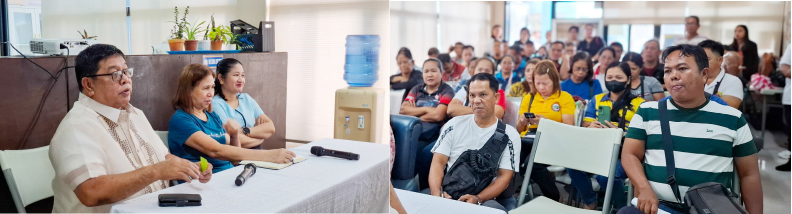
HEARING. The Land Transportation, Franchising and Regulatory Board in the region conducted a Stakeholders’ Meeting with PUJ and FILCAB Transport Service Entities (TSEs) which discussed on the agency’s direction on the non-confirmation of dilapidated units, in strict adherence to existing safety standards and transport regulations, among others.(LTFRB-8)
HEARING. The Land Transportation, Franchising and Regulatory Board in the region conducted a Stakeholders’ Meeting with PUJ and FILCAB Transport Service Entities (TSEs) which discussed on the agency’s direction on the non-confirmation of dilapidated units, in strict adherence to existing safety standards and transport regulations, among others.(LTFRB-8)
Today, the LTFRB Regional Office VIII conducted a Stakeholders’ Meeting with PUJ and FILCAB Transport Service Entities (TSEs) at the LTFRB VIII Office to discuss the agency’s clear direction on the non-confirmation of dilapidated units, in strict adherence to existing safety standards and transport regulations.
The meeting also covered key agenda items, including the imposition of compliance with prescribed standards for public transport terminals, a strong reminder on the full and sustained push for the Public Transport Modernization Program (PTMP), and focused discussions with TSEs whose routes are covered under the now-approved Local Public Transport Route Plans (LPTRPs) in Region VIII, emphasizing that applications may now proceed following LPTRP approval. In addition, the LTFRB reiterated of the three (3) accredited insurance providers in pursuant to the Advisory issued by the Central Office, namely Passenger Accident Management and Insurance Agency, Inc., SCCI Management and Insurance Agency Corporation, and Centerstar Management and Insurance Agency.
The discussion was led by Regional Director Gualberto N. Gualberto, together with OIC-CTDO Veronica Cecilia N. Reposar and TDO II Charmaine Mae C. De Paz, and served as a platform to reaffirm the LTFRB’s firm commitment to ensuring safe, roadworthy, and reliable public transport services for the riding public.
This initiative is aligned with the transport reform agenda of President Ferdinand “Bongbong” R. Marcos Jr., under the guidance of DOTr Acting Secretary Giovanni Z. Lopez and strong leadership of LTFRB Chairman Atty. Vigor D. Mendoza II, underscoring the government’s unwavering drive toward a safer, more efficient, and modernized public transportation system.
Through continued engagement with stakeholders, LTFRB VIII remains steadfast in promoting regulatory compliance, improving service quality, and prioritizing commuter safety across the region. (PR)
The Philippine Statistics Authority – Regional Statistical Services Office VIII (PSA – RSSO 8) is conducting the January 2026 Consumer Expectations Survey (CES) in collaboration with the Bangko Sentral ng Pilipinas (BSP) on 22 January to 05 February 2026.
The CES is a complementary survey to the Business Expectations Survey (BES) of BSP. It is a household-based survey conducted on a quarterly basis. PSA is responsible for undertaking the data collection while generation of tables and analysis of the results is done by BSP. The core questions of the survey cover three broad areas of consumer sentiment: family finances, buying conditions, and economic condition of the country.
Specifically, the CES is used to:
1. Obtain advance information on the short-term outlook of households (on the macroeconomy and their financial situation), including income and savings;
2. Provide a basis for analyzing particular issues on consumer behavior across income groups, especially those who are receiving remittances from Overseas Filipinos;
3. Serve as an indicator of inflation, as indicated by the households’ intention to purchase basic goods and services as well as big-ticket items;
4. Serve as an indicators of exchange rate and interest rate movements; and
5. Serve as input for statistical, research, and policy development purposes of the BSP and other government/research institutions.
The CES utilizes the 2023 Geo-enabled Master Sample (GeoMS) as its sampling frame to generate precise estimates at subnational levels. A total of 192 sample households in Leyte, Northern Samar, Samar, and Tacloban City will be visited by hired Statistical Researchers for this purpose.
The authority to conduct the January 2026 CES has been cleared by the Statistical Survey Review and Clearance System (SSRCS), a mechanism under RA 10625 that ensures sound design, promotes economy, eliminates duplication in data collection, and minimizes respondent burden.
In line with this, PSA–RSSO 8 enjoins the public to support the survey by providing accurate information to authorized Statistical Researchers who will be interviewing sample households. PSA reassures the public that all personnel involved in the survey are bound by the Data Privacy Act of 2012 (RA 10173) to keep all information obtained during the survey in strict confidence. Individual data provided to PSA for statistical inquiries, surveys, and censuses are considered privileged communication and cannot be used as evidence in any court of law, tribunal, or administrative body. (PR)
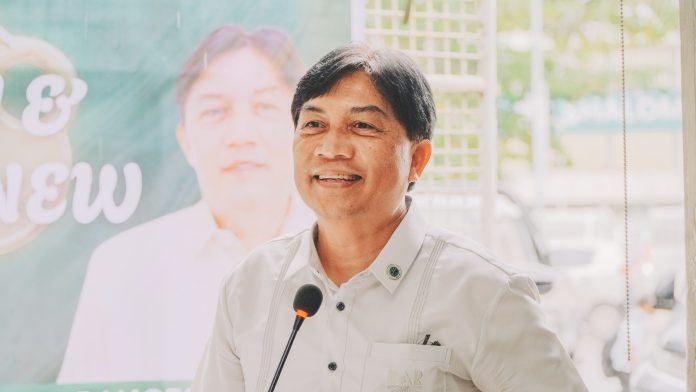
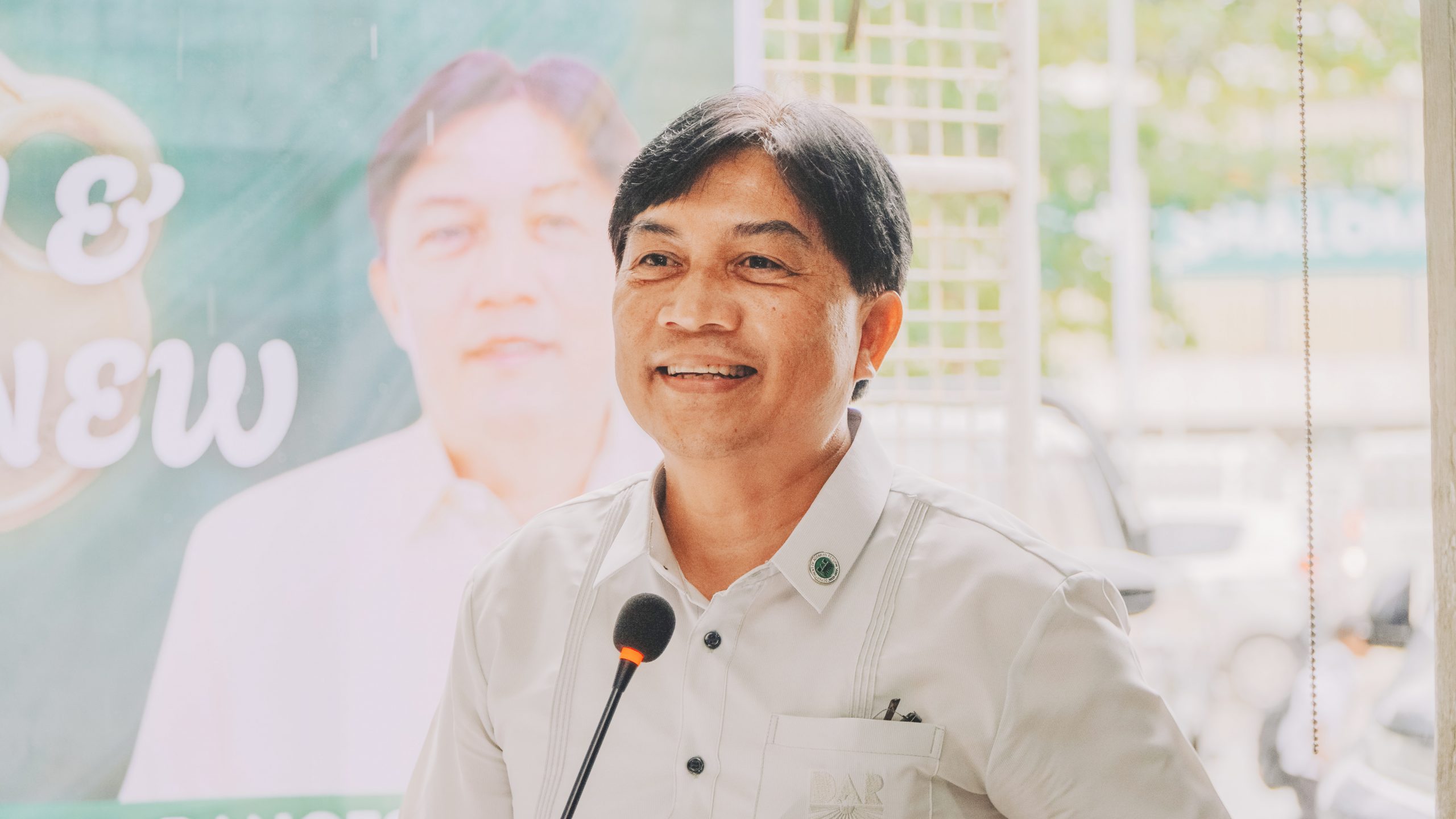
Roderick Rances assumes office as the new Provincial Agrarian Reform Program Officer II (PARPO II) at the Department of Agrarian Reform (DAR) Leyte Provincial Office. (DAR-Leyte)
Roderick Rances assumes office as the new Provincial Agrarian Reform Program Officer II (PARPO II) at the Department of Agrarian Reform (DAR) Leyte Provincial Office. (DAR-Leyte)
TACLOBAN CITY, Leyte — Officials from the Department of Agrarian Reform (DAR) Regional Office VIII formally installed Roderick Rances as the new Provincial Agrarian Reform Program Officer II (PARPO II) of DAR Leyte on Tuesday, January 27 this year, marking a new chapter for the agency’s operations in the province.
The installation was carried out at the DAR Provincial Office of Leyte pursuant to Special Order No. 24, series of 2026, issued by Agrarian Reform Secretary Conrado Estrella III. The same directive reassigns outgoing DAR Leyte OIC-PARPO II, Atty. Daniel Pen, to DAR Southern Leyte, where he assumes the post of OIC-PARPO II.
Assistant Regional Director for Administration (ARDA) Ronelo Jose K. Zamora and Assistant Regional Director for Operations (ARDO) Atty. Bryan A. Lassiter, representing Regional Director Atty. Robert Anthony Yu, led the said installation.
In his acceptance message, PARPO II Rances anchored his leadership on the advocacy of Secretary Estrella. He reminded the workforce that their mission goes beyond targets.
“The ultimate goal of our program portfolio is to bring the national government to the people, to bring the national government closer to the agrarian reform beneficiaries,” Rances stated, echoing the Secretary’s directive.
He acknowledged, however, that fulfilling this mandate is rarely straightforward. Rances noted that in the course of implementation, the agency inevitably encounters “various issues and concerns,” but assured the staff that measures are being established to address these problems.
Building on this reality, Rances called on the DAR Leyte workforce to adopt a mindset of resilience.
“Sa ato pagpanaw, duna na juy ato gitawag na hindering factors,” (In our journey, there are indeed what we call hindering factors), Rances remarked. He urged the personnel not to be stopped by these obstacles, but rather to shift their perspective.
“Adunay hulga, ato himoon nga hagit,” (If there is a threat/hindrance, let us turn it into a challenge), he declared. He urged the personnel to meet recurring issues with solutions, aiming to establish a harmonious relationship within the office to ensure the efficient delivery of agrarian justice.
The transition was marked by a strong pledge of support from the DAR Leyte leadership. Speaking on behalf of the Division Chiefs, Chief Legal Officer Atty. Patrecia A. Ramos formally welcomed Rances “with optimism and confidence.” She emphasized that while leadership transitions are natural, the office’s core mission remains steadfast.
“Leadership may change, our commitment does not. We remain dedicated to serving our farmers with integrity, respect, and hard work in every season and every day,” Ramos stated.
She further assured the new PARPO of the division chiefs’ active assistance in managing stakeholder relations. Recognizing the complexities of the field, Atty. Ramos pledged that the chiefs would be there to help in the “pag-istorya ngan pakig-huruharampang” (dialogue and open engagement) with agrarian reform beneficiaries, landowners, and non-governmental organizations.
In response, Rances expressed deep gratitude for this assurance. He noted that the Division Chiefs’ offer of “tiunay ug tim-os nga pagtabang” (genuine and sincere help) allayed his initial apprehensions about the transfer, setting a collaborative tone for his tenure.
The installation comes at a critical time for the agency. Zamora and Lassiter reminded the body of the urgency of Project SPLIT (Support to Parcelization of Lands for Individual Titling), noting that the region faces a target of 76,000 hectares for 2026, with the bulk of the accomplishment expected from Leyte province.
“Change is crucial and should serve as an opportunity for us to grow,” Zamora noted, challenging the workforce to unite behind the new leadership to meet these time-bound goals.
Also present to witness the activity were Regional Chief of Legal Division, Atty. Jerome L. Paderes, RCAO Ma. Elsa M. Veloso, Regional CARPOs Felix Dante Espina and Engr. Joel M. Encina, with Consultant for Special Project Renato Badilla, alongside DAR Regional and Provincial Adjudicators, Atty. Pacito Canonoy Jr. and Atty. Florenz Hipe, respectively.
In the afternoon following the ceremony, Rances conducted courtesy calls to the various divisions and sections of the provincial office, signaling the immediate commencement of his official duties.
ORMOC CITY– Police operatives have recovered an estimated 9.19 grams of suspected shabu with an estimated value of P62, 492 from two high-value individual drug personalities during a buy-bust operation at Gawad Kalinga Village in Barangay Tambulilid, this city, on Jan.25 at about 12:12 noon.
Lt. Richie Selencio, chief of the City Drug Enforcement Unit, identified the arrested suspects as alias “Chard,” 40, single, sales representative, and alias “Joe,” 51, married, construction worker, both residents of said village.
The two suspects are listed as High- Value Individual (HVI) in the drug watchlist of the Ormoc City Police Office.
Target of the operation was alias “Joe,” who was in possession of one sachet containing a white crystalline substance suspected to be shabu procured by an operative in the amount of P5000, weighing 1.22 grams.
During the conduct of a body search done in the presence of law-mandated witnesses, the searching officer recovered a black wallet that contained seven sachets containing white crystalline substance, also suspected to be shabu, with an estimated weight of 3.15 grams with a commercial value of P21,420.
During the body search to alias “Joe,” the searching officer recovered eight sachets containing white crystalline substance suspected to be shabu, having an estimated weight of 4.82 grams with a value of P32,776, placed inside a plastic candy container.
The two suspects admitted to indulging in illegal drugs due to poverty.
The CDEU said that a total of sixteen sachets containing white crystalline substance suspected to be shabu were seized/confiscated from the two HVI suspects, having a total weight of 9.19 grams and with an estimated Dangerous Drugs value of P62, 492.00.
Charges for violation of Sections 5 and 11, Art II of R.A 9165 as amended by RA 10640, the Comprehensive Law against Illegal Drugs of 2002 were filed at the City Prosecutors’ Office against the two suspects who are now detained at the locked-up cell of Police Station 4 of the OCPO in Brgy. Linao here.